



APA Corporation (Nasdaq: APA) has agreed to acquire Savant Alaska, LLC for approximately $70 million in upfront consideration, plus contingent payments tied to future development of its eastern North Slope position. The transaction gives APA Corporation control of the Badami facilities, supporting field infrastructure and the Nutaaq Pipeline, strengthening its ability to appraise and potentially develop its Alaska acreage. The deal is strategically relevant because it converts infrastructure access from a future constraint into an owned operating lever ahead of the 2026 to 2027 winter drilling season. APA stock closed near $36.78 after the announcement week, leaving the shares well below their 52-week high of $45.66 despite a one-day rally when the deal was announced. The market reaction suggests investors see the Alaska move as useful, but not yet transformational until drilling results and development economics catch up with the infrastructure story.
Why is APA Corporation buying Savant Alaska before proving the full scale of its North Slope resource base?
APA Corporation’s proposed acquisition of Savant Alaska looks modest in headline value, but the transaction is really about control, timing and optionality. The company is not merely buying roughly 1,500 barrels of oil per day of current production through interests in the Badami and Grey Owl units. It is buying a working position around infrastructure that could become critical if APA Corporation’s eastern North Slope appraisal programme confirms a larger commercial opportunity.
That matters because Alaska is not a basin where operators can easily improvise logistics after the geology has already been de-risked. Seasonal drilling windows, remote field access, weather exposure, regulatory scrutiny and pipeline connectivity all create execution friction. By acquiring the Badami facilities and the Nutaaq Pipeline before the next drilling campaign, APA Corporation is trying to reduce the number of external dependencies that could slow development if the subsurface case improves.
The transaction also signals a shift in APA Corporation’s Alaska posture from exploratory participation toward more direct development control. APA Corporation has assumed operatorship of the joint venture with Lagniappe Alaska, LLC and Oil Search (Alaska), LLC, a subsidiary of Santos Limited. That operating role, combined with ownership of nearby infrastructure, gives APA Corporation more influence over sequencing, field design and capital allocation. In simple terms, the company is moving closer to the driver’s seat rather than sitting politely in the back row while someone else holds the map.
How could Badami facilities and the Nutaaq Pipeline change APA Corporation’s Alaska economics?
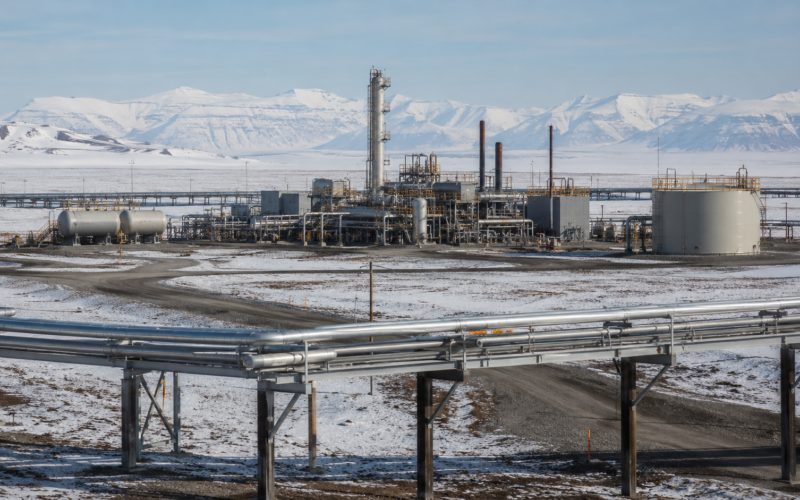
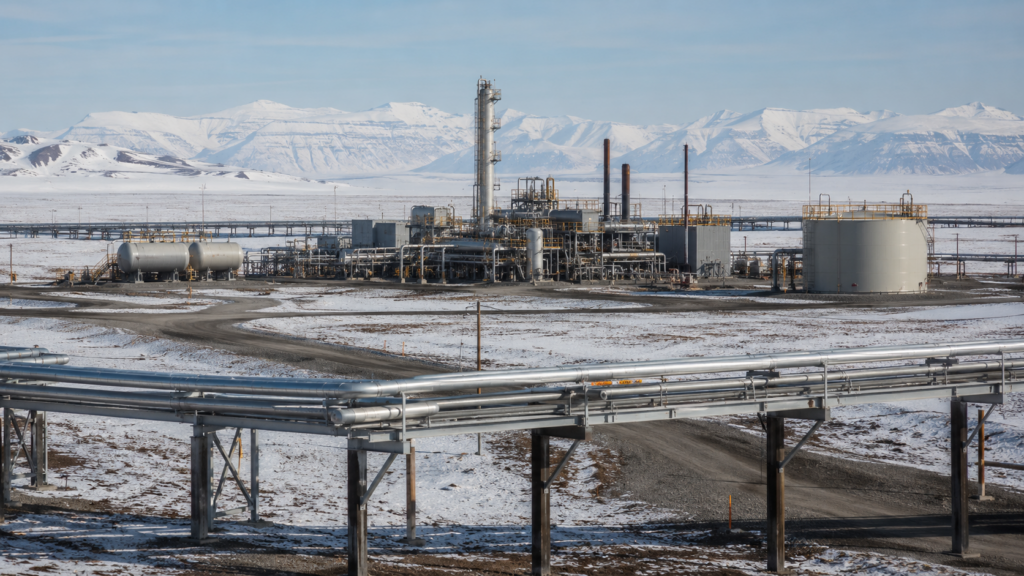
The most important asset in the Savant Alaska transaction may not be the acquired production. It is the infrastructure bridge between APA Corporation’s exploration acreage and a credible development route. The Badami facilities have nameplate production capacity of approximately 40,000 barrels of oil per day, while the Nutaaq Pipeline has capacity of approximately 80,000 barrels of oil per day and provides access to the Trans-Alaska Pipeline System. For an operator trying to turn appraisal success into a development plan, that is not a side benefit. It is the difference between finding oil and having a credible route to monetise it.
The field infrastructure included in the deal also has practical importance. Accommodation facilities, a grind-and-inject system, barge landing and wharf facilities, runway access, gravel resources and other support assets may sound less glamorous than a discovery well, but they can materially influence development cost, schedule reliability and operating resilience. In frontier-style basins, logistics are not background noise. They are often the margin between a project that advances and a project that keeps appearing in presentations.
For APA Corporation, the economic logic is therefore about reducing future capital intensity and development uncertainty. If appraisal results disappoint, the company has still acquired producing interests, acreage and infrastructure for a relatively contained upfront amount. If appraisal results are strong, APA Corporation may have avoided a more expensive scramble for facilities, access and midstream alignment later. The contingent payment structure also appears designed to share upside with Savant Alaska sellers only if future development progress creates additional value.
What does the Savant Alaska acquisition say about APA Corporation’s broader capital allocation strategy?
APA Corporation has been trying to balance growth options with shareholder discipline. In the first quarter of 2026, the company reported adjusted production of 363,000 barrels of oil equivalent per day, generated $477 million of free cash flow and kept its full-year upstream capital investment guidance at approximately $2.1 billion. It also repaid $634 million in near-term bond maturities through April 2026 and continued to emphasise balance-sheet improvement and capital returns. Against that backdrop, a $70 million Alaska acquisition is small relative to the company’s market capitalisation and capital budget, but strategically pointed.
The deal gives APA Corporation a way to build a future Alaska development pathway without immediately committing to a megaproject. That matters because the company already has several portfolio demands, including Permian Basin execution, Egypt production management, North Sea exposure and offshore Suriname optionality. The Savant Alaska transaction does not overwhelm the balance sheet, but it does reserve a more serious place for Alaska inside APA Corporation’s medium-term growth debate.
This is the type of transaction that investors may initially underappreciate because it does not change near-term production guidance in a dramatic way. The stock market often wants barrels now, cash flow now and certainty yesterday. Infrastructure-led resource positioning usually needs more patience. However, if APA Corporation’s 2026 to 2027 drilling programme improves confidence in the Sockeye complex or adjacent prospects, the Savant Alaska deal could look less like a bolt-on acquisition and more like a pre-emptive move to own the bottleneck.
Why does the 2026 to 2027 winter drilling programme matter for APA Corporation stock sentiment?
APA Corporation plans a two-well programme during the 2026 to 2027 winter season, comprising one exploration well and one appraisal well. The exploration well is expected to test a new play in the western portion of the acreage, while the appraisal well is intended to help define the scale of the Sockeye complex and assess the feasibility of using existing Badami infrastructure. This makes the winter campaign the first major test of whether the Savant Alaska transaction becomes a strategic accelerator or simply a sensible infrastructure hedge.
The prior Sockeye-2 flow test gave APA Corporation and its partners a reason to keep advancing the Alaska opportunity, with the well averaging 2,700 barrels of oil per day during the final flow period of a 12-day production test. However, flow tests and commercial developments are different beasts. The appraisal phase must still clarify reservoir continuity, recoverable volumes, development design, operating costs and how efficiently existing infrastructure can support the next stage.
For APA stock, the market will likely watch three things. First, whether the drilling programme supports a larger resource case. Second, whether APA Corporation can demonstrate that infrastructure ownership lowers development cost and accelerates timelines. Third, whether management can pursue Alaska without weakening the capital discipline that investors currently value. Until those points become clearer, the stock may treat Alaska as optionality rather than core valuation support.
How are investors reading APA Corporation’s Savant Alaska deal after the stock’s mixed reaction?
APA stock rose sharply on the announcement day, closing at $38.00 on June 10, 2026, before falling to about $36.78 on June 11, 2026. The shares were roughly flat over the last five trading sessions and down by less than 1% compared with the May 12, 2026 close of $37.09. That is a restrained reaction for a transaction that could improve APA Corporation’s long-term Alaska development flexibility.
The more important market signal is where APA stock sits within its 52-week range. With a 52-week low of $17.74 and a high of $45.66, the current price leaves APA Corporation well above last year’s trough but still meaningfully below its recent high. Investors are not ignoring the company, but they are also not assigning aggressive value to unproven Alaska upside. That is understandable because infrastructure ownership improves the chance of execution, but it does not guarantee commercial scale.
The sentiment picture is therefore cautiously constructive rather than euphoric. The acquisition strengthens APA Corporation’s control over a potentially important asset corridor. Yet equity investors still need evidence that the acreage can deliver repeatable, economic development opportunities. In market terms, the Savant Alaska deal may have improved the quality of APA Corporation’s option, but the option still needs drilling data before it becomes a valuation driver.
What competitive signals does the Savant Alaska deal send across the North Slope energy sector?
The acquisition reinforces a broader point about the Alaska North Slope: infrastructure control remains a strategic weapon. Companies with access to processing facilities, field logistics, gravel, airstrips, barge access and pipeline routes can move faster and negotiate from a stronger position. Companies without those pieces may find that discoveries take longer to develop, cost more to advance or require more complex commercial arrangements.
For other North Slope operators and acreage holders, APA Corporation’s move is a reminder that resource ownership alone is not enough. In mature but logistically demanding basins, midstream and field infrastructure can shape the competitive hierarchy just as much as acreage size. By moving to control Badami-linked assets, APA Corporation is trying to position itself ahead of potential appraisal success rather than waiting for competitors, partners or infrastructure owners to set the terms.
The move also has a policy dimension. Alaska has long relied on upstream investment to support production, state revenues and utilisation of the Trans-Alaska Pipeline System. Any credible new development pathway on the North Slope attracts attention because it can affect jobs, infrastructure usage and long-term production visibility. However, regulatory approvals, environmental considerations and the realities of Arctic operations will remain important constraints. The transaction improves APA Corporation’s operating flexibility, but it does not remove the need for disciplined permitting and stakeholder management.
What execution risks could still limit the upside from APA Corporation’s Alaska expansion?
The main risk is that infrastructure ownership gets ahead of resource confirmation. APA Corporation may now control useful assets, but the value of those assets depends heavily on drilling success, reservoir performance and the scale of future development. If the 2026 to 2027 appraisal programme fails to support a larger commercial plan, the acquisition may still be defensible, but it would not deliver the strategic uplift investors are hoping for.
A second risk is cost inflation in a challenging operating environment. Alaska development requires careful seasonal planning, specialised logistics and strong contractor execution. Even with existing facilities, development costs can move unfavourably if drilling schedules slip, equipment availability tightens or regulatory timelines stretch. The dry joke here is that Alaska rarely rewards anyone who believes a spreadsheet has successfully negotiated with winter.
A third risk involves portfolio prioritisation. APA Corporation has global opportunities, including assets in the United States, Egypt, the United Kingdom and offshore Suriname. Management must decide how much capital and attention Alaska deserves relative to these other areas. The Savant Alaska acquisition gives the company more flexibility, but flexibility itself has a cost if it leads to too many competing capital calls. Investors will want APA Corporation to show that Alaska can compete for capital on returns, not just strategic excitement.
What happens next if APA Corporation successfully converts Alaska optionality into development momentum?
If the next drilling phase supports the resource case, APA Corporation could begin shaping a more coherent eastern North Slope development pathway around owned infrastructure. That would strengthen the strategic rationale for the Savant Alaska acquisition and could improve investor confidence in Alaska as a meaningful long-term growth option. The company would also be better positioned to evaluate how the Badami facilities and Nutaaq Pipeline can support staged development rather than starting from a blank infrastructure slate.
A successful outcome could also raise the competitive value of APA Corporation’s broader acreage position, which is expected to total approximately 487,000 gross acres on Alaska’s eastern North Slope after the transaction. Scale matters because larger acreage positions allow operators to sequence exploration, appraisal and development more efficiently. If multiple prospects become viable, owned infrastructure can support a hub-style approach rather than isolated project economics.
If the programme disappoints, the impact is likely to be contained but reputationally relevant. APA Corporation would still retain production, acreage and infrastructure, but the market would likely treat the acquisition as a limited strategic hedge rather than a growth catalyst. That is why the next winter drilling season is so important. The deal has bought APA Corporation control. The drill bit now has to prove whether that control is worth much more than the upfront cheque.
Key takeaways on what APA Corporation’s Savant Alaska deal means for investors and the North Slope energy sector
- APA Corporation’s acquisition of Savant Alaska is best understood as an infrastructure control move, not simply a production acquisition, because the Badami facilities and Nutaaq Pipeline could shape future development economics.
- The $70 million upfront price is modest relative to APA Corporation’s market value and capital budget, but the strategic significance is larger if Alaska appraisal results support a commercial development pathway.
- The deal adds approximately 104,000 gross acres and about 1,500 barrels of oil per day of production, but the longer-term value depends on whether APA Corporation can convert resource potential into sanctioned projects.
- APA Corporation’s planned 2026 to 2027 winter drilling programme is the next major catalyst, with one exploration well and one appraisal well expected to test both new prospectivity and the Sockeye complex.
- APA stock’s mixed reaction suggests investors are not yet assigning major valuation credit to Alaska upside, even though the acquisition improves operational flexibility and potential project timing.
- The transaction strengthens APA Corporation’s position in a basin where logistics, processing access, pipeline connectivity and seasonal execution can be just as important as subsurface quality.
- The acquisition also increases APA Corporation’s responsibility for disciplined capital allocation, because Alaska must now compete internally with the company’s Permian Basin, Egypt, North Sea and Suriname priorities.
- Regulatory approvals and customary closing conditions remain important near-term milestones, with the transaction expected to close by year-end 2026 if the process proceeds as planned.
- For competitors and partners on the North Slope, the deal reinforces that infrastructure ownership can determine who moves fastest if new discoveries or appraisal results justify development.
- The executive read is balanced: APA Corporation has improved its strategic hand in Alaska, but the market will wait for drilling evidence before treating the Savant Alaska deal as a genuine growth reset.
Discover more from Business-News-Today.com
Subscribe to get the latest posts sent to your email.