
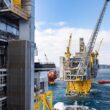




Conrad Asia Energy Ltd. has moved the Mako Gas Field closer to physical development after its majority-owned subsidiary, West Natuna Exploration Limited, signed a binding rig contract for the Admarine 502 jack-up drilling rig offshore Indonesia. The Australian Securities Exchange-listed gas developer, traded under the ticker CRD, will use the rig for a six-well development campaign and Conductor Support Frame installation at the Mako Gas Field in the Duyung Production Sharing Contract in the Natuna Sea. The contract with PT Pertamina Drilling Services Indonesia (PDSI) through the PDSI-ADES Consortium is expected to start in the second quarter of 2027 and has a firm period of 180 days with extension options. The award matters because Mako is moving from commercial planning and gas sales agreements toward contracted field execution, giving investors a clearer view of how the project could eventually supply Indonesia and Singapore through existing regional gas infrastructure.
Why does Conrad Asia Energy Ltd.’s Mako rig contract matter for Indonesia’s gas supply strategy?
Conrad Asia Energy Ltd.’s rig contract matters because Mako is one of the more advanced undeveloped gas projects in Indonesia’s West Natuna region. The field sits in shallow offshore waters and benefits from proximity to existing infrastructure, which gives it a different risk profile from frontier exploration plays that require new export routes, deeper water facilities or untested basins. By securing the Admarine 502 rig, West Natuna Exploration Limited has locked in a core execution requirement for the development campaign.
The strategic value is not only the drilling itself. Rig availability has become an important constraint in offshore gas development, especially when developers need suitable jack-up units within defined campaign windows. A binding rig contract gives Conrad Asia Energy Ltd. greater schedule visibility and reduces one of the practical uncertainties around moving Mako toward production. That matters for gas buyers, lenders and joint venture partners because upstream projects do not become bankable on resource estimates alone.
For Indonesia, Mako supports a wider policy objective. The country wants to maintain domestic gas supply while also supporting regional exports where infrastructure and contracts already exist. Mature producing areas need new projects to offset decline, and the West Natuna area has long been part of the gas supply corridor into Singapore. Mako’s development could help extend the relevance of that corridor while also meeting domestic market obligations.
How does the Admarine 502 campaign move Mako from planning to execution?
The Admarine 502 contract shifts Mako’s development status because it connects the project’s subsurface plan to a defined drilling campaign. The scope covers six development wells and installation of the Conductor Support Frame, which means the contract is directly tied to production infrastructure rather than appraisal-only activity. In upstream gas, that distinction matters. Exploration wells answer whether a field exists. Development wells answer whether the field can become cash flow.
The firm 180-day period also gives the project a more tangible execution window. Offshore campaigns require rig mobilisation, marine support, subsea coordination, weather planning and integration with other field development packages. A contracted rig gives the operator a clearer basis to sequence those workstreams. It also helps counterparties understand when development activity may translate into future gas volumes.
There is still execution risk. Drilling performance, equipment availability, regulatory approvals, cost inflation and contractor coordination can all affect project timing. However, the contract is a meaningful de-risking step because it replaces an open procurement question with a defined supplier and rig. It is not first gas, but it is the kind of milestone that makes first gas look less theoretical.
Why is the Mako Gas Field commercially important for Conrad Asia Energy Ltd. and its partners?
The Mako Gas Field is commercially important because it is Conrad Asia Energy Ltd.’s flagship development asset and has already been supported by gas sales arrangements. Mako has been described as a large shallow-water gas discovery in the West Natuna Sea, with gas quality and reservoir characteristics that make it attractive for development. The project’s relevance is strengthened by access to existing infrastructure, which can reduce the capital burden compared with fully standalone projects.
Conrad Asia Energy Ltd. also benefits from the project’s regional market access. Mako gas is expected to serve both Indonesian domestic demand and Singapore-linked supply requirements, depending on contract structures and infrastructure connectivity. That dual-market potential is strategically useful because gas projects are more attractive when they are not dependent on a single buyer or a single pricing route.
For joint venture partners, the rig contract supports the project’s credibility. Empyrean Energy plc has also disclosed the execution of the rig contract because of its interest in the Mako project. That wider partner interest matters because small-cap upstream developers often need market confidence to support funding, farmout discussions and project-level financing. The more Mako looks like an executable development, the easier it becomes for partners to argue that the asset has moved beyond optionality.
What does the deal reveal about Pertamina-linked offshore service capacity in Indonesia?
The involvement of PT Pertamina Drilling Services Indonesia through the PDSI-ADES Consortium is strategically relevant because Indonesia wants more of its upstream development value chain to be supported through domestic or domestically anchored capabilities. Pertamina-linked service participation can align the project with national industrial priorities while also giving the operator access to local execution knowledge. That is important in a market where regulatory, operational and local content expectations can influence project delivery.
The Admarine 502 is an independent-leg cantilever jack-up drilling rig, a suitable asset class for shallow-water development work such as Mako. Jack-up rigs remain central to Southeast Asian offshore activity because many fields are in water depths where fixed-leg drilling units can be used more efficiently than floating rigs. This can support better cost control if rig availability and campaign execution are managed well.
The risk is that consortium execution must still meet schedule and performance expectations. Local capacity is valuable, but offshore drilling remains technically demanding. If the campaign experiences delays, cost overruns or operational issues, the project timeline could be affected. For Conrad Asia Energy Ltd., the contract is a positive step, but delivery quality will matter more than the identity of the contractor.
How should investors read Conrad Asia Energy Ltd. stock after the Mako rig milestone?
Conrad Asia Energy Ltd. shares recently traded at about A$0.56 on the Australian Securities Exchange, compared with a 52-week range of A$0.400 to A$0.885 and a market capitalisation near A$107m. That places the company in the smaller end of the upstream development market, where valuation can move sharply on project milestones, financing updates and regulatory progress. The Mako rig contract gives investors a clearer execution signal, but it does not remove all project risk.
The stock’s position below its 52-week high suggests that investors still want proof on timing, funding and development execution. Small-cap gas developers often trade at a discount until projects move from agreements and procurement into drilling, construction and gas sales delivery. The rig contract helps narrow that gap because it shows that the Mako development plan is gaining operational form.
However, investors should not treat the contract as equivalent to production. The next valuation catalysts will likely include further project financing clarity, regulatory updates, infrastructure readiness, drilling campaign progress and confirmation of commercial timelines. If Conrad Asia Energy Ltd. can maintain schedule discipline toward the second quarter of 2027 campaign, investor sentiment may strengthen. If delays emerge, the market may return to discounting the project as another long-dated gas development.
Why does Mako matter for Singapore and Southeast Asian gas security?
Mako matters for Singapore because the West Natuna Sea has historically supplied gas to Singapore, and new sources can help extend regional supply reliability. Singapore has limited domestic energy resources and relies heavily on imported gas for power generation. While the city-state has diversified its supply sources, regional pipeline gas remains strategically important because it can complement liquefied natural gas imports.
For Southeast Asia, Mako highlights the continuing role of gas in the energy transition. Many regional economies are adding solar, wind and storage, but gas still supports grid reliability, industrial use and power-sector flexibility. Projects such as Mako can help provide lower-carbon fossil fuel supply relative to coal, although they still face long-term scrutiny as countries develop decarbonisation pathways.
The regional issue is timing. Southeast Asian gas demand remains relevant, but project delays can create supply gaps that buyers must fill with liquefied natural gas at volatile prices. If Mako progresses on schedule, it could support a more predictable regional gas balance. If it slips, buyers may need to rely more heavily on spot or contracted LNG, which brings exposure to global price swings.
What execution risks still sit between Mako’s rig contract and first gas?
The main execution risks are drilling performance, offshore installation timing, infrastructure integration and project financing. The six-well campaign must be completed safely and efficiently, while the Conductor Support Frame installation must align with other field development workstreams. Any slippage in offshore execution can affect downstream commissioning and gas sales timelines.
Infrastructure connection is another key variable. Mako’s advantage is proximity to existing regional gas transportation systems, but tie-ins and commercial access still require technical and contractual alignment. Existing infrastructure can reduce capital intensity, but it does not eliminate integration risk. Developers must ensure that gas can move reliably from reservoir to customers once wells are ready.
Financing risk also remains important. Conrad Asia Energy Ltd. and its partners need to manage capital requirements through the development cycle. Small-cap upstream companies often face dilution, debt or farmout pressure as projects move from planning to execution. The rig contract improves credibility, but funding discipline will decide whether value accrues to existing shareholders or is diluted during the build-out.
Can Conrad Asia Energy Ltd. turn Mako into a repeatable Southeast Asian gas platform?
Conrad Asia Energy Ltd. can turn Mako into a stronger platform if the company delivers the drilling campaign, connects the field efficiently and demonstrates reliable cash flow from gas sales. Mako has several features investors tend to like: shallow-water location, regional gas demand, existing infrastructure potential and a defined development path. The rig contract adds operational credibility to that mix.
The broader opportunity is that Mako could give Conrad Asia Energy Ltd. a foundation for future Southeast Asian gas growth. A producing asset can support balance-sheet strength, technical credibility and regional relationships. That would be materially different from being valued mainly as a pre-production developer.
A neutral reading suggests the Admarine 502 contract is a meaningful milestone, but not the final proof point. It advances Mako from commercial development planning toward field execution, which is exactly the transition investors needed to see. The next question is whether Conrad Asia Energy Ltd. can turn a contracted rig into drilled wells, connected infrastructure and dependable gas revenue.
Key takeaways on Conrad Asia Energy Ltd.’s Mako Gas Field drilling contract
- Conrad Asia Energy Ltd.’s majority-owned subsidiary West Natuna Exploration Limited has signed a binding rig contract for the Mako Gas Field offshore Indonesia.
- The contract with PT Pertamina Drilling Services Indonesia through the PDSI-ADES Consortium covers the Admarine 502 jack-up drilling rig.
- The campaign includes six development wells and installation of the Conductor Support Frame at the Mako Gas Field.
- The rig contract has a firm period of 180 days with extension options and is expected to begin in the second quarter of 2027.
- The contract moves Mako from planning toward execution, strengthening the project’s credibility with investors and gas buyers.
- Mako is strategically important because it sits in the West Natuna Sea, close to infrastructure that has historically supported regional gas supply.
- Conrad Asia Energy Ltd. shares remain below their 52-week high, showing that investors still want proof on execution, funding and first-gas timing.
- The project could support both Indonesian domestic supply and Singapore-linked regional gas security if development progresses on schedule.
- Key risks include drilling execution, infrastructure integration, financing, regulatory coordination and cost discipline.
- For Conrad Asia Energy Ltd., Mako could become a platform asset if the company converts the rig milestone into production and cash flow.
Discover more from Business-News-Today.com
Subscribe to get the latest posts sent to your email.