
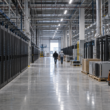



Anthropic has secured its first data-centre lease agreement in Australia, covering planned capacity of about 2.16 gigawatts at a proposed campus roughly 250 kilometres from Brisbane. The project is expected to begin coming online in 2027 and would rank alongside some of the world’s largest computing facilities if fully developed. The deal remains subject to approval by Australia’s Foreign Investment Review Board, while Anthropic and developer Zerra DC declined to comment publicly on the transaction.
The scale of the agreement demonstrates how artificial-intelligence competition is increasingly becoming an infrastructure contest as much as a software race. Frontier-model developers require enormous quantities of electricity, computing equipment, cooling infrastructure and network capacity, pushing companies to reserve suitable sites years before they expect to use all of the available capacity. Australia is emerging as one possible destination because of available land, renewable-energy potential and government interest in attracting data-centre investment.
Why would Anthropic choose Australia for such a large computing commitment?
Data-centre markets in the United States and parts of Asia face growing constraints involving grid connections, land prices and power availability. Australia offers an alternative where developers can pursue very large campuses alongside renewable-energy procurement, although transmission capacity and community opposition remain important constraints.
The proposed Anthropic site is being developed by Singapore-based Zerra DC and is expected to use renewable power-purchase agreements. Reuters reported that the developer would bear grid-connection costs rather than pass those costs directly to existing electricity customers, an important detail because public opposition to data centres increasingly focuses on whether large computing users raise infrastructure bills for households.
The project would also use a closed-loop, air-cooled system designed to reduce reliance on clean water for server cooling. That choice addresses another recurring concern around hyperscale computing because water consumption can become politically sensitive when facilities are located near agricultural communities or areas exposed to drought.
Why is 2.16 gigawatts strategically important?
A 2.16-gigawatt planned campus is enormous by traditional data-centre standards. The capacity figure represents infrastructure potential rather than proof that every megawatt will immediately be filled with servers, but it shows how developers are designing campuses for a generation of AI computing whose power requirements far exceed those of conventional enterprise data centres.
For Anthropic, securing capacity in advance provides optionality. Model inference is becoming an increasingly large workload as businesses and consumers use AI systems more frequently, meaning commercial success can translate directly into higher requirements for computing capacity even after the expensive training stage is complete.
Reuters reported that the Australian facility would be used for inference rather than model training. That distinction matters because inference demand is tied more directly to everyday usage of AI products and can expand as customer adoption rises.
Does Anthropic’s infrastructure expansion conflict with calls to slow AI development?
The agreement arrives at an unusual moment for the AI industry. Anthropic Chief Executive Dario Amodei has recently argued that frontier developers should slow the pace at which model capabilities advance because of concerns about misuse and increasingly powerful systems. Yet Anthropic continues to reserve large amounts of physical infrastructure needed to serve AI demand.
The two positions are not necessarily contradictory. Slowing capability progression does not eliminate the commercial demand for existing models, and inference requirements can rise even if training of the next generation of systems becomes more cautious. A large data-centre lease therefore reflects expectations about customer usage as well as expectations about model development.
Nevertheless, the juxtaposition will intensify debate about what an AI slowdown would mean economically. Semiconductor manufacturers, power companies, data-centre developers and infrastructure investors have committed enormous capital based on assumptions of continuing compute growth. Any sustained reduction in training intensity could change the timing or mix of that demand even if inference continues expanding.
What regulatory hurdle still stands between the lease and operation?
The proposed development requires Foreign Investment Review Board approval, so the agreement should not be treated as an operational facility. Australia is simultaneously encouraging AI investment and preparing tighter rules around the resource use of data centres, particularly electricity, land and water.
The Australian government expects the broader data-centre investment boom could total around A$150 billion, or approximately $107 billion, by 2030. That scale explains why regulation is likely to become more important: computing investment can create construction activity, digital infrastructure and power demand, but it can also compete with other industries and households for grid capacity.
Anthropic’s deal is therefore more than a real-estate transaction. It demonstrates that AI companies are beginning to treat national energy systems as part of their competitive infrastructure. The next milestones will be foreign-investment approval, grid arrangements, staged construction and evidence of how quickly the proposed 2.16GW capacity is actually commissioned.
Discover more from Business-News-Today.com
Subscribe to get the latest posts sent to your email.