



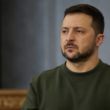


Aker Solutions ASA (Oslo Børs: AKSO) has appointed Paal Eikeseth as President and Chief Executive Officer effective September 1, replacing Kjetel Digre after six years at the helm and putting an executive known internally for restructuring, operational improvement and lifecycle services in charge of the next stage of the Norwegian energy-services group. The board said Digre had chosen to step down and that the timing was appropriate because many of the major projects assembled during his tenure are moving toward completion, creating a natural point to shift leadership emphasis from building the backlog toward executing and extending it.
Eikeseth inherits a company with substantial financial visibility. Aker Solutions generated second-quarter revenue of NOK13.1 billion and EBITDA excluding special items of NOK1.2 billion, producing a 9.2% margin. Order backlog stood at NOK77.2 billion, while first-half order intake reached NOK38.7 billion, equivalent to a 1.5 times book-to-bill ratio. Management expects 2026 revenue between NOK50 billion and NOK55 billion and an EBITDA margin of around 7.5% excluding the contribution from SLB OneSubsea.
The leadership change therefore does not resemble a turnaround appointment forced by collapsing financial performance. Aker Solutions instead appears to be moving from one phase of transformation into another. Digre helped broaden the business beyond traditional project execution and improved profitability, while Eikeseth is being asked to scale productivity improvements, lifecycle activities, standardisation and data-driven execution across a workforce of roughly 11,700 employees.
Why did Aker Solutions choose Paal Eikeseth instead of an outside CEO?
Eikeseth brings a combination of internal operating knowledge and restructuring experience that aligns closely with what the board says Aker Solutions now needs. Since 2022, he has led businesses associated with electrification, maintenance, modifications and lifecycle services, after earlier holding positions spanning performance and transformation. He has also managed operations and growth across markets including the United Kingdom, Angola, Canada and Asia.
The board specifically highlighted his record in operational growth, performance improvement and organisational transformation. That distinction matters because Aker Solutions is moving toward a business model in which more value may come from repeatedly servicing, upgrading and extending existing energy infrastructure rather than relying primarily on a sequence of giant new-build contracts.
Lifecycle businesses can provide a different earnings profile from major engineering projects. Large projects produce substantial revenue but can involve execution risk, lumpier margins and periods of heavy resource requirements. Maintenance, modifications and long-term service activities can potentially provide more recurring work and deepen customer relationships over many years.
Eikeseth’s promotion therefore looks less like a change in strategic direction than a signal about which parts of the existing strategy need to become more important.
What does the NOK77.2 billion backlog mean for the new CEO?
Aker Solutions’ NOK77.2 billion order backlog gives Eikeseth substantial revenue visibility, but backlog is not equivalent to guaranteed profit. The new CEO must ensure that projects are delivered on time, within cost expectations and without margin erosion, particularly as some of the company’s largest contracts move into intensive execution phases.
The company highlighted major milestones during the June quarter, including the load-out of the Hugin B topside for Aker BP and the start of construction activity for second-generation carbon-capture projects in Norway. These projects demonstrate the breadth of Aker Solutions’ portfolio across oil and gas, electrification and lower-carbon technologies.
The backlog also creates a management challenge around replacement. As major projects are completed, Aker Solutions must win enough new work to prevent revenue from falling sharply several years later. First-half order intake of NOK38.7 billion provides some reassurance, particularly because the 1.5 times book-to-bill ratio indicates new orders exceeded reported revenue during the period.
Eikeseth must therefore execute existing work while simultaneously expanding the next generation of opportunities.
Why is productivity becoming a central part of Aker Solutions’ strategy?
Eikeseth said Aker Solutions has already begun reducing project costs through standardised deliveries, greater reuse of engineering work and increased use of digital and autonomous solutions. His stated objective is to scale those improvements across the organisation rather than treat them as isolated project initiatives.
That could become economically important in an engineering business where thousands of employees repeatedly solve similar technical problems across different projects. Standardising designs and reusing validated engineering can reduce labour hours, lower execution risk and improve margins without requiring customers to accept lower technical standards.
Digitalisation also creates potential productivity gains in project planning, engineering, maintenance and offshore operations. Artificial intelligence and automation can potentially reduce repetitive engineering work while allowing specialists to focus on more complex design and execution issues.
The opportunity is therefore not necessarily to employ dramatically fewer engineers. It is to generate more revenue and project output from the same knowledge base.
What does Aker Solutions’ 9.2% EBITDA margin tell investors?
Second-quarter EBITDA excluding special items reached NOK1.2 billion on NOK13.1 billion of revenue, producing a 9.2% margin. Excluding net profit from the SLB OneSubsea investment, the underlying margin was 7.9%.
That distinction matters because investors need to separate earnings generated directly from Aker Solutions operations from contributions associated with its investment in the subsea joint venture. Management’s 2026 guidance of around 7.5% EBITDA margin similarly excludes SLB OneSubsea net profit.
The margin profile shows meaningful improvement compared with earlier periods in Aker Solutions’ history, but the company still operates in a project-driven industry where execution problems can quickly affect profitability.
Eikeseth’s experience in performance improvement therefore becomes financially relevant. Even a modest increase in margin across NOK50 billion-plus of annual revenue can create substantial additional EBITDA.
Why is Kjetel Digre leaving after six years?
Aker Solutions says Digre decided to step down and that the board agreed the current period represented an appropriate leadership transition point. The company has not linked his departure to a disagreement or performance issue. Instead, the board credited him with overseeing one of the most significant periods in Aker Solutions’ history.
During Digre’s tenure, Aker Solutions broadened its energy-services positioning, improved profitability and built one of the largest project portfolios in the company’s history. The board also specifically credited his project expertise with helping secure work that is now approaching completion.
That provides Eikeseth with a relatively strong inheritance. The new CEO is not being asked to repair a broken project book or rescue a severely stressed balance sheet.
The harder task is maintaining momentum once the extraordinary project cycle associated with Digre’s tenure begins to mature.
What does Aker Solutions stock performance say about expectations for Eikeseth?
Aker Solutions shares closed at NOK43.32 on August 31, up about 1.1% for the session. The stock had closed at NOK42.68 on August 24, representing a roughly 1.5% five-session increase, while the July 31 close of NOK42.04 implies a monthly gain of approximately 3%.
The stock’s 52-week range is approximately NOK25.92 to NOK48.48. The August 31 close was therefore around 10.6% below the annual high but roughly 67% above the low, showing that investors have already substantially rerated the company from its weakest point.
That creates a more demanding starting position for the new CEO. Investors are not pricing Aker Solutions as a distressed contractor requiring emergency restructuring.
They are increasingly pricing the company on its ability to deliver backlog profitably, win replacement work and maintain capital discipline.
What should investors watch during Paal Eikeseth’s first year?
Execution on the NOK77.2 billion backlog is the most immediate benchmark. Strong project delivery should support the 2026 revenue and margin outlook, while overruns or delays would quickly undermine the logic behind the leadership transition.
New order intake is equally important. The first-half book-to-bill ratio of 1.5 times is strong, but investors will want evidence that the pipeline remains healthy as major legacy contracts move closer to completion.
Lifecycle services provide another measure. Eikeseth has built much of his recent leadership record around these activities, so faster growth in recurring maintenance, modifications and upgrade work would indicate that his previous business model is being scaled across the group.
Finally, productivity needs to become visible financially. Standardisation, reuse, data and autonomous solutions sound compelling strategically, but investors should ultimately see them through margins, working capital and stronger project execution.
Aker Solutions is therefore handing its new CEO an unusually clear assignment. Kjetel Digre helped build a massive project portfolio and improve the company’s financial profile. Paal Eikeseth must now demonstrate that the organisation can execute that backlog more efficiently while creating the next generation of work before today’s megaprojects roll off.
Discover more from Business-News-Today.com
Subscribe to get the latest posts sent to your email.
