


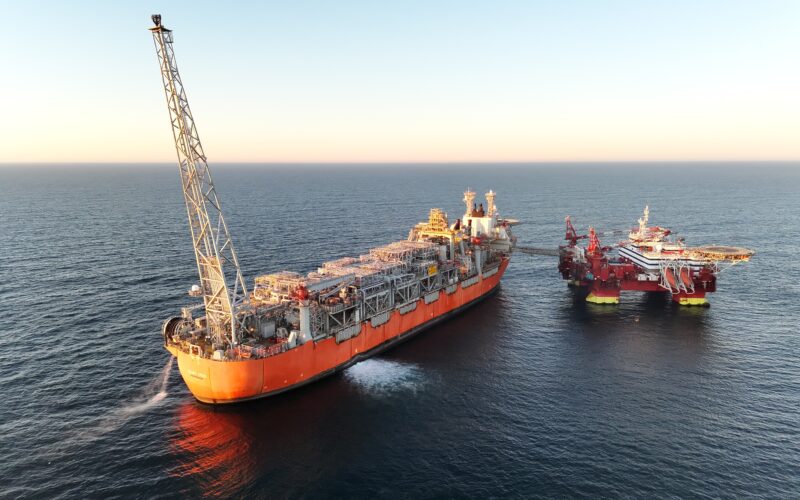
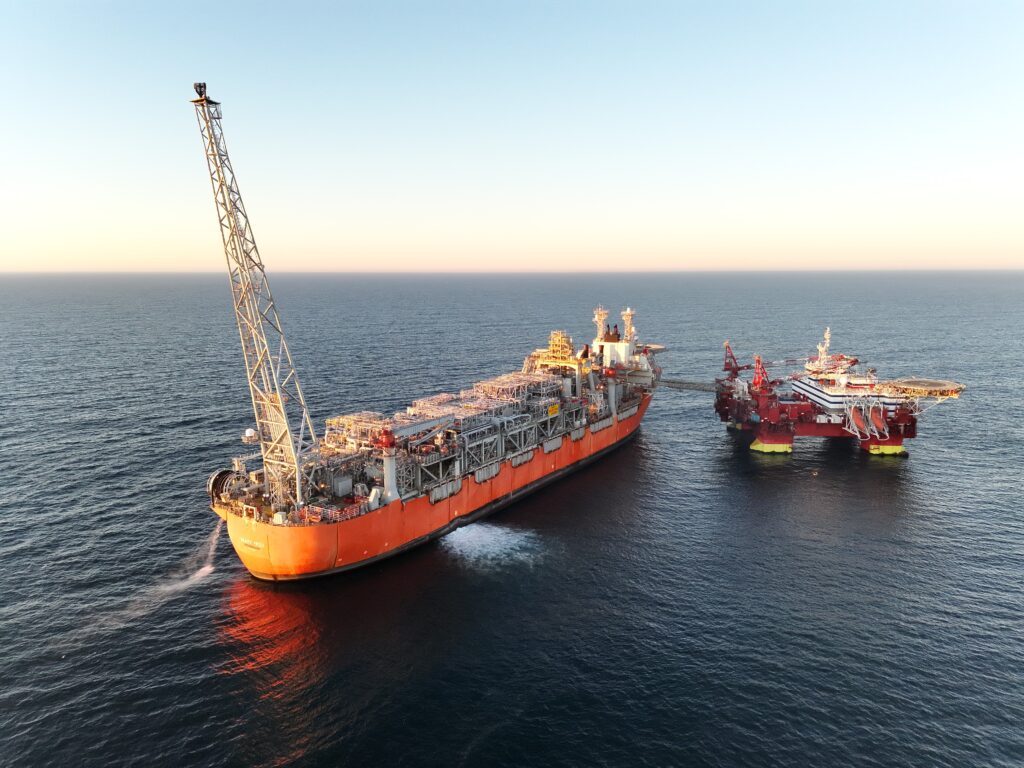
Aker BP ASA (OSE: AKRBP) has started production from the Alve Nord, Idun Nord and Ørn developments in the Norwegian Sea, bringing approximately 120 million barrels of oil equivalent of recoverable resources into the Skarv production system about one year ahead of the timetable envisaged when the projects were sanctioned. The three predominantly gas and condensate discoveries have been developed as separate subsea systems, each using a subsea template and two wells tied back to the existing Skarv floating production, storage and offloading vessel.
The schedule performance is commercially significant because the original 2022 development plan estimated investment at close to NOK17 billion in real 2022 terms and targeted first production in the third quarter of 2027. Production has instead started in August 2026, allowing Aker BP and its partners to begin monetising the resources earlier while using infrastructure whose fixed costs are already supported by the wider Skarv area.
Why does starting Skarv Satellites a year early matter for a NOK17bn offshore investment?
Schedule gains have a direct financial value in upstream projects because capital is typically spent for several years before the first barrel or molecule creates revenue. Moving production forward shortens that non-revenue period and can improve project economics through earlier cash generation, particularly when much of the development capital has already been deployed.
The benefit is even more relevant for tiebacks. Alve Nord, Idun Nord and Ørn do not require three independent production platforms. Instead, six production wells and three subsea templates feed an existing hub, allowing the developments to share processing, export and operating infrastructure at Skarv. That avoids much of the capital and operating burden associated with standalone offshore installations.
Aker BP attributed delivery to its alliance model involving OneSubsea, Subsea7, Aker Solutions, Halliburton and Saipem during the drilling phase. Around 60% of project deliveries were sourced from Norwegian suppliers, meaning the acceleration has also brought forward economic activity across the domestic offshore supply chain rather than simply increasing Aker BP’s production profile.
How can 120m boe of new resources change the economics of the existing Skarv FPSO?
The economic role of the satellites extends beyond their own reserves because offshore hubs become increasingly valuable when additional fields keep their processing capacity occupied. The Skarv FPSO began production at the end of 2012, which means extending throughput into later years can spread fixed operating costs across more barrels and delay the point at which the infrastructure becomes uneconomic.
Aker BP previously estimated that the satellites would account for approximately 60% of its net Skarv-area production for several years. That proportion demonstrates how important the new resources are to the future of the hub: the satellites are not marginal additions but a major new feedstock source for infrastructure that has already operated for more than a decade.
The hub effect can also improve the economics of future discoveries. Once subsea infrastructure, processing capacity and export systems remain available, smaller nearby accumulations can potentially be developed through additional tiebacks that would never justify a standalone platform.
Why can Skarv produce more gas while keeping incremental emissions near 4.5 kg CO2/boe?
Aker BP estimates the satellite developments will have incremental carbon dioxide intensity of approximately 4.5 kilograms per boe, largely because they use existing infrastructure instead of recreating an entire offshore processing and export system.
That figure should not be interpreted as meaning the hydrocarbons themselves carry no downstream emissions. It refers to operational production intensity associated with extracting and processing the resources, not emissions eventually generated when the oil or gas is consumed.
The distinction nevertheless matters for upstream competitiveness. As mature offshore basins compete for investment, projects able to add production with comparatively low incremental infrastructure and operating emissions may remain commercially attractive for longer than developments requiring entirely new offshore complexes.
For predominantly gas resources, that argument also intersects with European energy security. Skarv has historically supplied substantial Norwegian gas volumes into Europe, and keeping the hub productive extends another source of pipeline-linked supply from the Norwegian Continental Shelf.
Could Skarv become the blueprint for Aker BP’s next generation of Norwegian Sea tiebacks?
The three-field development demonstrates how Aker BP is attempting to industrialise offshore project execution rather than treat every discovery as a bespoke megaproject. Coordinated engineering, standardised subsea systems and shared supplier alliances can reduce interfaces and potentially shorten schedules.
This model becomes more valuable as the Norwegian Continental Shelf matures. Future discoveries are increasingly likely to be smaller than the giant fields that originally justified major production hubs. The strategic question therefore becomes whether operators can connect those resources cheaply enough to existing platforms before infrastructure approaches retirement.
Skarv Satellites strengthen that option by extending the productive life and utilisation of the hub itself. A facility expected to remain active for longer creates a larger commercial window in which nearby discoveries can be appraised and sanctioned.
What does Aker BP stock say about investor reaction to the early Skarv start-up?
Aker BP shares closed at NOK347.90 on August 26, the day the start-up was announced, down just 0.14% for the session. The stock finished August 28 at NOK349.90, up 0.72% on the day but still approximately 1.4% below its August 21 close of NOK354.80.
The subdued response suggests investors did not treat early Skarv production as a stand-alone re-rating event, despite the strong execution signal. That is understandable for a company whose valuation reflects a much larger Norwegian portfolio, commodity prices, dividends and multiple development projects simultaneously.
The more durable value will appear in production and cash flow. If Skarv Satellites deliver the expected volumes while avoiding significant post-start-up problems, Aker BP will have converted roughly NOK17 billion of sanctioned capital into 120 million boe of hub-linked resources materially earlier than originally promised.
That combination of early production, shared infrastructure and future tieback optionality is why the project matters beyond six wells. The real asset being strengthened is not simply Alve Nord, Idun Nord or Ørn. It is Skarv’s ability to remain an economic production hub for another generation of Norwegian Sea resources.
Discover more from Business-News-Today.com
Subscribe to get the latest posts sent to your email.