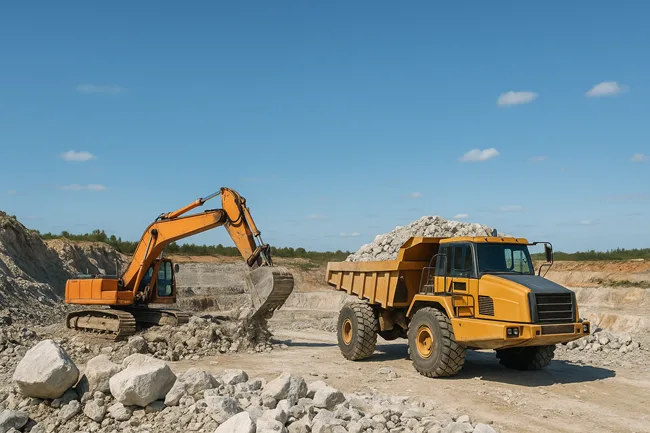
Caledonia Mining Corporation Plc (AIM: CMCL; NYSE American: CMCL), a Jersey-incorporated gold producer with operations and development assets in Zimbabwe, has signed an interim financing facilities agreement of up to US$150 million to support development of the Bilboes gold project. The arrangement, announced on 5 November 2026, comes alongside a previously completed US$150 million convertible notes offering and a gold-price hedging programme intended to protect cash generation. Bilboes is expected to become Caledonia Mining’s second major producing asset alongside Blanket Mine, with first gold currently targeted for October 2028. The financing advances that ambition considerably, although the cost of borrowing and the requirement for additional long-term project funding mean the project’s capital structure is not yet fully settled.
How does Caledonia Mining’s US$150 million Bilboes financing facility work?
The financing has been arranged by Stanbic Bank Zimbabwe Limited and CBZ Bank Limited, acting through CBZ Capital, and syndicated across eight Zimbabwean banking institutions. Caledonia Holdings Zimbabwe (Private) Limited, a subsidiary of Caledonia Mining, has signed the facilities agreement, which has a 36-month termination period from its effective date and an option for a further year. Its two borrowing components are designed to provide different forms of financial flexibility during construction.
Facility A is a revolving credit facility of up to US$50 million carrying interest at the applicable Secured Overnight Financing Rate plus 8.10 percentage points annually. Facility B provides a term facility of up to US$100 million at the same benchmark plus 7.90 percentage points, with an accordion option for an additional US$50 million. The term facility includes an 18-month availability period and capital repayment pause, followed by quarterly repayments on amounts drawn.
These provisions establish access to borrowing capacity rather than an immediate injection of US$150 million in cash. Initial utilisation of Facility A remains subject to conditions, including additional hedging arrangements, while the accordion feature represents optional extra borrowing capacity rather than automatically committed funding.
The cost structure deserves particular attention. If the US$50 million revolving facility and US$100 million term facility were fully drawn, their contractual interest spreads alone would produce approximately US$11.95 million in annual interest expense before adding the prevailing SOFR component. Actual borrowing costs will depend on utilisation, benchmark rates and repayment schedules, but the disclosed pricing indicates that this funding will impose a meaningful financial burden once deployed.
For an operating mining group developing a substantial new gold asset, the facility creates a useful bridge between existing financial resources and a longer-term project-financing arrangement. It also introduces exposure to floating interest rates and creates a repayment schedule that must be managed alongside the construction timetable. The commercial advantage is flexibility; the financial trade-off is the cost of maintaining that flexibility during a period of substantial investment.
Does the Bilboes financing deal complete Caledonia Mining’s funding requirements?
Caledonia Mining has structured its Bilboes financing strategy around four components: gold-price hedging, convertible notes, interim bank financing and long-term project finance. The latest agreement means the first three components have been completed or established, while discussions concerning the final long-term financing element remain underway.
The company completed an upsized US$150 million convertible senior notes offering in January 2026, generating approximately US$130 million in net proceeds after associated costs. It also implemented a gold-price hedging programme in December 2025 through put options covering 3,000 ounces monthly from January 2026 through December 2028, establishing downside protection at US$3,500 per ounce while retaining participation in higher gold prices.
Combining approximately US$130 million of net convertible-note proceeds with the new US$150 million borrowing capacity produces a headline funding figure of US$280 million. That comparison is useful for understanding the scale of the available financing instruments, but it must not be mistaken for unrestricted cash currently sitting on the company’s balance sheet. The notes have their own financial obligations, the bank facility is subject to utilisation conditions, and project spending is occurring over several years.
The November 2025 Bilboes feasibility study estimated peak funding requirements of approximately US$484 million. The difference between that modelled requirement and the two disclosed financing amounts illustrates why management continues pursuing longer-term project financing, although it cannot be treated as an exact funding shortfall without accounting for project cash flows, spending already incurred, timing and other financing sources.
An additional complication is the distinction between construction funding and permanent project capital. A relatively short-dated interim banking facility may support early development work, but the economics of a large mine generally benefit from financing maturities that correspond more closely with the asset’s operating life. Caledonia Mining’s negotiations with regional and international institutions therefore remain an important part of the investment case rather than a formality.
What does the Bilboes feasibility study suggest about future gold production?
The November 2025 feasibility study outlined a substantial change in Caledonia Mining’s future operating scale. Bilboes was assessed as capable of producing approximately 1.55 million ounces over an active mine life of 10.8 years, including around 200,000 ounces in its first full production year in 2029.
The study estimated an all-in sustaining cost of US$1,061 per ounce, with the processing operation expected to use BIOX technology to treat refractory gold ore. These figures represent feasibility-study projections rather than achieved operating performance, and the actual economics will depend on construction costs, metallurgical recovery, throughput, gold prices and operational efficiency.
At a modelled average gold price of US$2,548 per ounce, the feasibility study indicated a post-tax net present value of approximately US$582 million using an 8% discount rate and a post-tax internal rate of return of 32.5%. Higher gold-price assumptions generated stronger theoretical returns, but those scenarios should not be interpreted as independent valuations of Caledonia Mining’s listed equity.
The transition from a predominantly Blanket Mine-backed operating model to a larger, multi-asset producer could materially change the company’s earnings capacity and capital-market profile. However, that potential transformation requires Caledonia Mining to build and commission a technically demanding operation while continuing to manage its existing production base.
Why does weaker Blanket Mine production complicate the financing story?
The Bilboes funding announcement follows a difficult operating update from Blanket Mine on 9 October 2026. Caledonia Mining reported third-quarter gold production of 17,030 ounces, compared with 19,106 ounces a year earlier, while production for the first nine months fell to 49,158 ounces from 58,846 ounces.
Management attributed the weaker performance partly to compressed-air constraints affecting deeper mining areas and delays associated with equipment changes in the processing circuit. The company subsequently reduced its full-year 2026 Blanket production guidance to 69,000-72,500 ounces from 72,000-76,500 ounces, while increasing its cost guidance.
This operating setback has direct consequences for the development strategy because Blanket’s cash generation forms an important element of the financial support underpinning Bilboes. Stronger production and operating margins would provide greater internally generated flexibility during construction, while continued underperformance could increase reliance on external borrowing.
The gold hedging programme helps address one source of uncertainty by establishing a price floor on a specified quantity of output. It does not, however, guarantee that the mine will produce the planned ounces or that operating costs will remain within budget. Production performance and financial protection therefore need to be assessed together rather than as interchangeable safeguards.
Can Caledonia Mining deliver first gold from Bilboes in October 2028?
Caledonia Mining says initial groundworks are underway at Bilboes and that the main construction period is expected to extend across 2027 and 2028. Its timetable currently targets first gold in October 2028, positioning the next two years as the critical period for completing financing and translating project designs into a working mine.
The company’s immediate priorities include securing longer-term project finance, satisfying conditions attached to the interim facilities and maintaining the construction programme. Those steps will be important indicators of whether the project can progress without materially increasing financing costs or requiring further revisions to its capital structure.
For shareholders, the November agreement improves the probability that construction can continue through its early phases, but it does not independently establish that Bilboes will be completed within the feasibility-study budget. Any material change in capital expenditure, financing costs or construction timing could alter expected returns despite an otherwise favourable gold-price environment.
Caledonia Mining’s third-quarter financial results, scheduled for 12 November 2026, will offer the next opportunity to assess Blanket’s financial performance and the wider group’s balance-sheet position. Bilboes could meaningfully expand the company’s future production, but its investment case now requires two separate demonstrations: stabilisation of the operating mine and completion of a financeable construction plan for the new one.
What should Caledonia Mining (CMCL) shareholders know about the Bilboes financing deal?
- Caledonia Mining has signed an interim banking facilities agreement providing access to up to US$150 million for Bilboes.
- The package includes a US$50 million revolving facility and a US$100 million term facility, with a possible additional US$50 million accordion.
- Borrowing costs are linked to SOFR plus spreads of 7.90 or 8.10 percentage points.
- The company previously raised approximately US$130 million net through convertible notes.
- Gold put options protect 3,000 ounces of monthly production at a floor of US$3,500 per ounce through December 2028.
- Long-term project financing remains the outstanding fourth component of the funding strategy.
- Bilboes feasibility assumptions include approximately 1.55 million ounces of production over 10.8 years.
- Weaker Blanket Mine production creates additional importance for cash generation and operating discipline.
- The next evidence points are the 12 November financial results, long-term financing arrangements and construction milestones.
Discover more from Business-News-Today.com
Subscribe to get the latest posts sent to your email.