



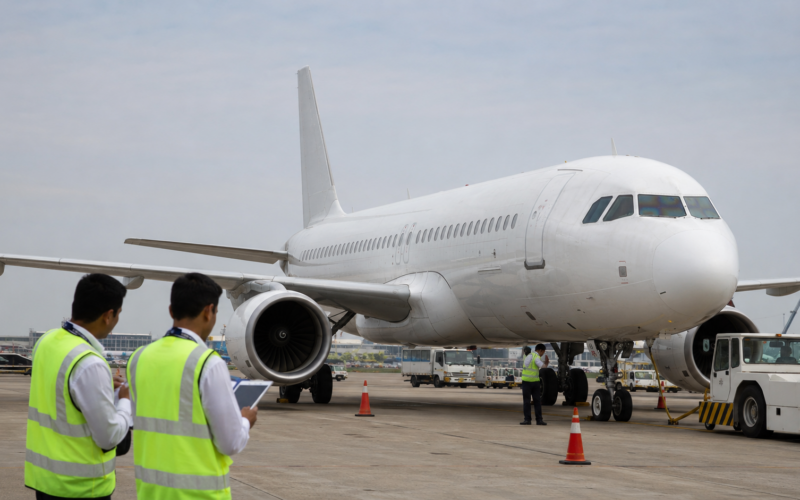
The investigation into Air India flight AI2379 has taken a significant new turn after India’s Ministry of Civil Aviation said the captain’s initial screening for psychoactive substances produced a result requiring confirmatory laboratory testing following the aircraft’s sudden loss of altitude on August 4. The government has not said that the pilot failed a drug test, has not identified any substance and has stressed that a final laboratory report is still awaited, making that distinction critical as scrutiny of the incident intensifies.
The Air India Airbus A320, registration VT-EXO, was operating from Phuket in Thailand to New Delhi when it experienced an approximately 300-foot loss of altitude during cruise. The aircraft subsequently stabilised and landed safely in Delhi, but government officials said eight passengers and four crew members were taken to hospital for medical evaluation. Authorities secured the Flight Data Recorder and Cockpit Voice Recorder shortly after the incident.
India has classified the occurrence as a serious incident, with the Aircraft Accident Investigation Bureau now examining what caused the unexpected altitude variation. Both pilots have been removed from flying duties by the Directorate General of Civil Aviation while the investigation proceeds, and the post-flight psychoactive-substance screening has become one element of a much wider examination involving aircraft data, crew actions, weather conditions and flight operations.
The developing story therefore involves two separate questions that should not be conflated. Investigators must determine why the aircraft abruptly descended, while the confirmatory laboratory process must separately establish whether the pilot-in-command’s preliminary screening result reflects the presence of a prohibited psychoactive substance, another explanation or a screening result that is not confirmed by further testing.
What happened to Air India flight AI2379 between Phuket and Delhi on August 4?
Air India flight AI2379 was operating a scheduled service from Phuket to Delhi when the Airbus A320 experienced what the government initially described as a momentary altitude variation during cruise. Reuters later reported the government’s estimate that the aircraft lost approximately 300 feet before stabilising and continuing safely to Delhi.
The aircraft was carrying 137 passengers and eight crew members, according to the initial government account reported by Reuters. Eight passengers and four crew members were taken for medical evaluation after landing, demonstrating that the event was serious enough to produce physical consequences inside the cabin even though the aircraft itself remained controllable and completed the flight.
Sudden vertical movement during cruise can cause injuries when passengers or crew members are not fully restrained, particularly because cabin personnel may be standing or moving while performing duties. The existence of injuries does not establish what caused the aircraft to descend, and investigators will need to determine whether turbulence, aircraft systems, flight-control inputs or another factor contributed to the event.
The Aircraft Accident Investigation Bureau’s classification of the occurrence as a serious incident reflects the potential safety significance rather than a presumption about fault. The investigation is intended to reconstruct the complete sequence and determine what combination of technical, environmental or human factors produced the altitude loss.

Why is the Air India captain’s initial psychoactive-substance screening being sent for another test?
India’s Civil Aviation Ministry said both flight crew members underwent psychoactive-substance screening after the incident under applicable procedures. The pilot-in-command’s screening produced a result that required confirmatory testing, and the sample has therefore been sent to a designated laboratory.
That wording is materially different from saying that the captain has been conclusively found to have consumed a prohibited substance. Screening tests are designed to identify samples that require further examination, while confirmatory laboratory testing provides a more definitive assessment. The ministry has not disclosed what substance, if any, was indicated by the initial screening.
Air India said the airline knew that the post-flight tests had been conducted but had not been given the results when it issued its response. The airline said it therefore could not comment on the findings and added that it conducts regular testing of crew members in accordance with civil aviation regulations while cooperating with the authorities.
The prudent interpretation on August 10 is consequently straightforward: there is an unresolved screening result, not a confirmed finding of prohibited drug use. Any stronger conclusion would run ahead of both the laboratory process and the official investigation.
Why were both Air India pilots removed from the roster while investigators examine AI2379?
The Directorate General of Civil Aviation has taken both pilots off flying duties pending the outcome of the investigation, even though the reported screening issue concerns the pilot-in-command. The action allows investigators to examine the event without the crew continuing normal operations while critical evidence remains under review.
Grounding or temporarily removing crew members after a serious aviation occurrence should not automatically be interpreted as disciplinary punishment or proof of wrongdoing. Regulators frequently use precautionary restrictions while they reconstruct events, particularly when flight-recording data, medical information and crew statements must be compared.
The Cockpit Voice Recorder and Flight Data Recorder are likely to be central to that process. Flight data can show parameters such as altitude, speed, aircraft attitude, control inputs and system behaviour, while cockpit recordings can help investigators understand communications, warnings and crew responses before, during and after the altitude variation.
That evidence should allow the Aircraft Accident Investigation Bureau to separate the physical event experienced by the aircraft from questions surrounding the post-flight screening. The two issues could ultimately prove connected, unrelated or only partially relevant to one another, which is why drawing a causal conclusion before the data are analysed would be inappropriate.
What do India’s aviation rules say about alcohol and psychoactive substances among flight crew?
India maintains specific regulatory requirements intended to prevent alcohol and other psychoactive substances from compromising aviation safety. Directorate General of Civil Aviation rules include procedures governing testing and restrictions on crew members undertaking flying duties while affected by substances capable of impairing safe performance.
The regulatory framework treats alcohol testing separately through breath-analyser requirements and also provides for examination of aviation personnel for consumption of psychoactive substances. DGCA materials show that India has progressively strengthened testing and reporting systems rather than relying solely on self-declaration by crew members.
The rules are important in the AI2379 investigation because the screening did not occur in isolation as an improvised response. The government says both pilots underwent testing following the serious incident under established procedures, after which one sample required confirmation.
Any regulatory action against an individual pilot would therefore depend on the final laboratory findings and applicable DGCA rules rather than the preliminary screening alone. That procedural sequence protects aviation safety while also reducing the risk of treating an initial screening indicator as a conclusive result.
Could the captain’s screening result explain the sudden 300-foot altitude loss?
There is currently no public evidence establishing that connection.
The government has said the aircraft lost around 300 feet and has separately said that the pilot-in-command’s screening sample requires confirmatory testing. It has not said that psychoactive substances caused the altitude variation, and the Aircraft Accident Investigation Bureau has not issued findings assigning a cause.
That separation is especially important because an aircraft can experience sudden altitude changes for many reasons. Atmospheric turbulence, flight-control responses, automation behaviour, mechanical or sensor issues and other operational factors can all become subjects of investigation depending on the data recorded by the aircraft.
The Flight Data Recorder should help determine whether the aircraft encountered atmospheric forces or whether changes originated primarily through aircraft control systems or pilot inputs. Investigators can then compare that data with cockpit communications, meteorological information, maintenance records and other evidence.
Only after that reconstruction would it be reasonable to assess whether crew condition had any relevance. The presence of an unresolved screening result may understandably attract public attention, but a safety investigation cannot substitute chronology and evidence with inference.
Why has the incident attracted such intense scrutiny around Air India and Indian aviation?
The AI2379 investigation arrives during a period of elevated attention on safety oversight in India’s rapidly expanding aviation industry. Reuters noted that the incident comes amid a series of safety-related investigations and regulatory reviews affecting the sector, which means developments that might otherwise remain specialised aviation matters are receiving considerable public attention.
India is one of the world’s fastest-growing aviation markets, with airlines adding aircraft and international routes while airports expand capacity. Growth increases the importance of maintaining regulatory, training, maintenance and crew-management systems capable of scaling alongside traffic.
Air India itself is undergoing a large transformation under Tata Group ownership, involving fleet renewal, network expansion and operational integration. That makes any serious safety occurrence consequential for the airline’s reputation, although the AI2379 event should be evaluated on evidence from the specific investigation rather than treated as proof of a broader systemic failure.
The appropriate test will be how transparently Air India and regulators respond, whether investigators identify actionable safety issues and whether those findings result in measurable operational improvements. Aviation safety credibility is built not by claiming incidents will never occur, but by investigating them rigorously and addressing the mechanisms that allow risks to emerge.
What could the Flight Data Recorder and Cockpit Voice Recorder reveal about the altitude loss?
Indian authorities secured both recorders after the aircraft landed, giving investigators access to the most important objective sources for reconstructing the event. The Flight Data Recorder can preserve numerous aircraft parameters, while the Cockpit Voice Recorder can provide context around crew communications, warnings and operational decisions.
Investigators will likely seek to establish how rapidly the aircraft descended, whether the movement corresponded with turbulence or a control input, what the autopilot and flight-control systems were doing and how quickly the aircraft recovered. They may also review weather information along the flight path, aircraft maintenance history and any relevant system messages.
The cockpit recording can help explain what the pilots perceived at the time. It may show whether they received warnings, discussed turbulence or system behaviour, communicated with air traffic control or took specific actions that correspond with the flight-data timeline.
Combining these records is generally more informative than examining isolated facts. A sudden drop described by passengers as dramatic may have a very different technical profile when analysed second by second, and that technical reconstruction will determine where investigators focus next.
What happens if the confirmatory laboratory test does not support the initial screening result?
If laboratory testing does not confirm the preliminary indication, the screening issue would become substantially less relevant to the regulatory investigation into the pilot’s fitness. The Aircraft Accident Investigation Bureau would still need to determine why flight AI2379 lost altitude and why passengers and crew were injured, because those questions exist independently of the screening process.
The possibility of a non-confirmed screening result is exactly why careful language matters before the laboratory report is available. Preliminary screening is designed to identify cases requiring additional investigation, not to provide the final evidentiary conclusion on its own.
Conversely, if the laboratory confirms the presence of a substance covered by aviation restrictions, regulators would then need to determine the circumstances, whether relevant rules were breached and whether the finding had any operational significance during the flight. Those would be separate stages requiring additional evidence rather than automatic conclusions.
Until the report arrives, both scenarios remain open. Air India has said it has not received the test findings and is cooperating with authorities, while the government has made no public allegation that the captain deliberately operated the aircraft while impaired.
What are the key takeaways from the Air India AI2379 altitude-loss and pilot-screening investigation?
- Air India flight AI2379, an Airbus A320 registration VT-EXO operating from Phuket to Delhi, experienced an approximately 300-foot sudden loss of altitude during cruise on August 4 before stabilising and landing safely.
- The initial government account said eight passengers and four crew members were taken to hospital for medical evaluation, while authorities secured the Flight Data Recorder and Cockpit Voice Recorder for analysis.
- The Aircraft Accident Investigation Bureau has classified the occurrence as a serious incident and is investigating what caused the altitude variation.
- Both flight crew members underwent post-flight psychoactive-substance screening, and the pilot-in-command’s initial result requires confirmatory laboratory testing. The final report remains pending.
- India’s Civil Aviation Ministry has not disclosed what substance, if any, was indicated by the preliminary test and has not said that the screening result caused the aircraft’s altitude loss.
- The Directorate General of Civil Aviation has removed both pilots from the roster pending the investigation, a precautionary regulatory step that should not be treated as a final finding of misconduct.
- Air India said it knew the tests had been conducted but had not received the results and therefore could not comment on the findings, while confirming that it conducts crew testing under applicable aviation regulations.
- The investigation now has two distinct evidence tracks: determining why the Airbus A320 lost altitude and determining what the confirmatory laboratory test establishes about the preliminary crew-screening result.
Why the confirmatory test and flight-recorder evidence matter more than the early headlines
The Air India AI2379 investigation illustrates how easily two unresolved facts can combine into a narrative that appears more certain than the evidence supports. The aircraft experienced a serious sudden altitude loss, and the pilot-in-command subsequently produced an initial screening result requiring confirmation. Those are both verified developments, but investigators have not established that one caused the other, and the government has deliberately stopped short of describing the screening as a confirmed positive finding.
The next meaningful developments should therefore come from evidence rather than speculation. Flight-recorder analysis can reconstruct what happened to the aircraft, while laboratory testing can determine whether the preliminary screening result is confirmed. Only when those processes are substantially complete will regulators be in a position to assess whether there was a technical issue, an atmospheric event, a crew-related factor or some combination of circumstances.
For Air India, the case will inevitably add to scrutiny surrounding operational safety, but the airline’s response should ultimately be judged against the investigation’s findings rather than the most sensational interpretation of an incomplete test. The same principle applies to the pilot, whose professional conduct cannot responsibly be assessed from a preliminary screen that the government itself says requires laboratory confirmation.
The larger aviation-safety lesson is that serious incidents are valuable precisely because they provide regulators with an opportunity to identify vulnerabilities before they lead to a more severe outcome. AI2379 landed safely, but the injuries, abrupt altitude change and subsequent investigative findings make the event significant enough to warrant a thorough examination. The credibility of the eventual conclusions will depend on keeping the flight-data evidence, laboratory evidence and regulatory process clearly separated until investigators establish how, if at all, they fit together.
Discover more from Business-News-Today.com
Subscribe to get the latest posts sent to your email.