



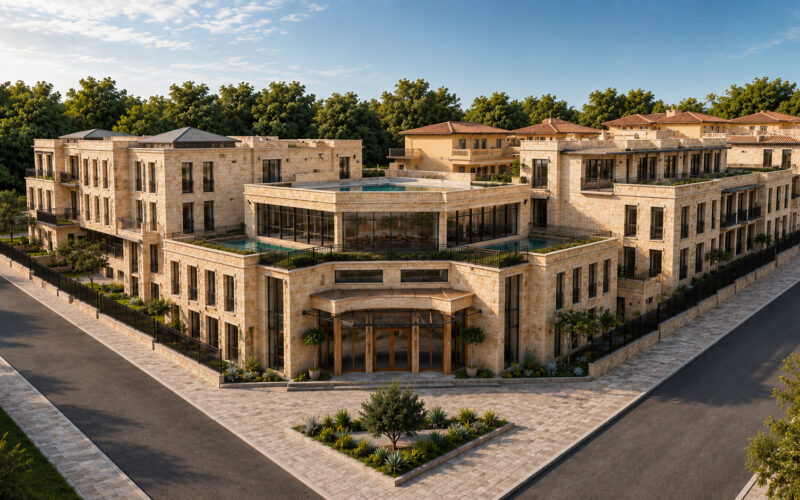
Hotel Okura Co., Ltd. has revived plans for a luxury resort in Türkiye’s Cappadocia region, targeting a 2028 opening for the Hotel Okura Thermal Resort & Spa Cappadocia in the historic village of Mustafapaşa. The Japanese hospitality group is advancing the development with Türkiye-based real estate and hotel investment company KK Universal after signing a new hotel management contract in May 2026. The revised project expands upon a resort first announced in 2015 and adds a stronger thermal, spa and wellness proposition intended to combine Japanese hospitality with Cappadocia’s cultural identity. For Hotel Okura, the agreement offers a route into one of Türkiye’s most globally recognised destinations without requiring the company to build an entirely new operating platform alone. The central question is whether the restructured partnership can convert a decade-old development ambition into an operating hotel by the latest 2028 deadline.
Why has Hotel Okura revived its Cappadocia resort project more than a decade after it was announced?
The latest agreement is significant because this is not a newly conceived hotel project. Hotel Okura originally announced the Okura Spa & Resort Cappadocia in June 2015, with an opening then expected in 2017. The earlier plan envisaged a 130-room resort consisting of separate spa and resort wings, suites with Jacuzzis, indoor and outdoor swimming pools, restaurants, meeting facilities and a substantial wellness offering.
That original timetable was not achieved. Hotel Okura continued to reference the Cappadocia development in later portfolio materials, but the planned opening moved beyond its initial schedule without the property becoming operational. The July 2026 announcement therefore represents a commercial reset rather than a routine construction update.
The revised structure introduces KK Universal as Hotel Okura’s new development partner. KK Universal describes itself as an Istanbul-based real estate and hospitality investment group that develops, owns and operates hotels and other property assets, frequently working with international operators where a global brand can improve distribution and operational certainty. The group already presents the Cappadocia resort among its hospitality developments.
Bringing in a partner with local real estate, development and operating capabilities may help resolve some of the practical issues that can delay complex hospitality projects. A global hotel operator contributes branding, reservation systems, service standards and international customer access, while the local investment partner navigates development, construction, ownership and market execution.
The new arrangement does not erase the project’s history, however. A target opening in 2028 means Hotel Okura and its partners must demonstrate that the redesigned resort has progressed beyond branding and contract formation into financing, permitting, construction and operational preparation.
How does the new management structure divide responsibility between Hotel Okura and its Turkish partners?
Hotel Okura signed the new hotel management contract on May 22, 2026, with Oluşum Grubu Gayrimenkul Yatırımları ve İnşaat Ticaret A.Ş., a hotel operating company backed by KK Universal. The resort is expected to be operated by Okura Saraylı Hotel Management A.Ş., a joint venture created in February 2015 by Hotel Okura, Saraylı Turizm A.Ş. and MSIC Gayrimenkul Yatırım ve Danışmanlık Ticaret Ltd. Şti.
This structure allows Hotel Okura to preserve its original Turkish joint venture while adding a new project-level partner with a stronger role in the current development. It also suggests that Hotel Okura is approaching Cappadocia primarily as a hotel manager and brand operator rather than as the sole developer or owner of the underlying property.
Management contracts are a common mechanism for international hotel expansion because they allow operators to grow room networks and fee-generating businesses without funding the entire cost of land and construction. The property owner typically carries most development expenditure, while the hotel group provides the brand, operating procedures, commercial systems, training and management expertise.
For Hotel Okura, that model can limit direct balance-sheet exposure while still creating a long-term presence in Türkiye. The commercial benefits would depend on the undisclosed management fee structure, hotel performance and the length and conditions of the agreement.
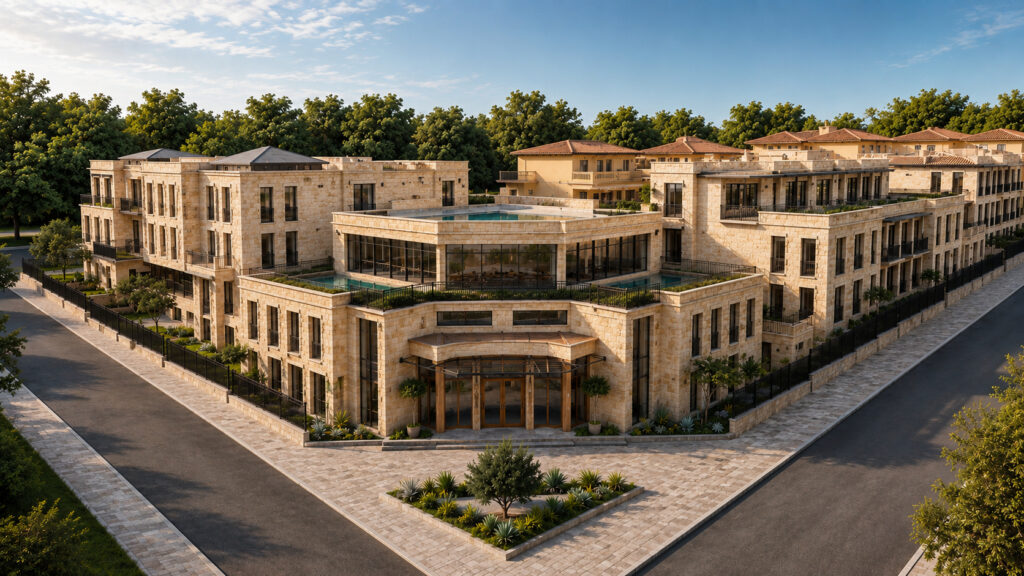
The July announcement did not disclose the project’s total capital cost, financing package, revised room count, construction status or expected opening quarter. It also did not clarify how much the expanded development differs physically from the 130-room plan announced in 2015. Those omissions do not indicate that the project is not advancing, but they leave important execution milestones unavailable to outside observers.
Why is Hotel Okura repositioning the Cappadocia property around thermal tourism and wellness?
The name Hotel Okura Thermal Resort & Spa Cappadocia indicates a clearer attempt to position the property as a destination resort rather than simply another luxury hotel near Cappadocia’s archaeological and natural attractions.
Cappadocia already has a distinctive hotel market built around cave rooms, converted stone mansions, boutique properties and landscape-driven experiences. Competing only on accommodation quality would make differentiation difficult. A more extensive thermal and wellness product could give Hotel Okura a reason to attract guests for longer stays, particularly outside the busiest sightseeing periods.
Wellness facilities can also broaden the resort’s addressable market. Visitors may initially travel to Cappadocia for hot-air balloon flights, valleys, underground cities, churches and volcanic rock formations. A high-end thermal resort can add spa breaks, restorative travel, premium dining, small corporate retreats and longer leisure stays to that demand base.
The concept also fits Hotel Okura’s attempt to combine Japanese service culture with local hospitality. Japanese bathing, spa and wellness traditions could provide an identifiable service layer, while Cappadocia’s stone architecture, thermal resources and regional culture supply the destination character.
The challenge will be achieving integration rather than producing a generic international resort decorated with local references. Cappadocia’s strongest hotels tend to derive their value from a close relationship with the landscape, historic buildings and community. Hotel Okura will need to show that the enlarged development complements Mustafapaşa rather than overwhelming the qualities that attract visitors to the village.
Why does Mustafapaşa offer strategic value beyond Cappadocia’s best-known tourism centres?
Mustafapaşa, historically known as Sinasos, is situated near Ürgüp and is distinguished by stone houses, churches, mosques, carved façades and a cultural history shaped by both Anatolian and Balkan communities. UN Tourism recognised Mustafapaşa as one of its Best Tourism Villages in 2021, highlighting the settlement’s heritage conservation, rural economy, traditional crafts and gradual tourism development.
That recognition strengthens the location’s international credibility while also creating expectations around responsible development. Mustafapaşa is not merely an available plot near a popular destination. It is a living village with a protected architectural character and a tourism model that has historically developed more gradually than the heavily visited centre of Göreme.
Locating a resort in Mustafapaşa may help Hotel Okura offer a quieter, more residential interpretation of Cappadocia. Guests can remain within reach of major attractions while experiencing a village environment that may feel less concentrated than the region’s busiest tourism zones.
The strategy could also distribute tourism expenditure across a wider part of Cappadocia. A large resort can support employment, food procurement, transport services, tours, crafts and other local businesses. The economic value will depend on how effectively the property incorporates regional suppliers and experiences rather than enclosing most guest spending within the resort.
There is an unavoidable conservation tension. UNESCO’s planning documentation for Göreme National Park and the Rock Sites of Cappadocia notes that development around settlements including Mustafapaşa should be strictly controlled and that hotel projects must respect limits affecting room capacity and physical growth.
The resort’s expanded site therefore increases the importance of design discipline, planning compliance and community engagement. Scale may improve the project’s economics, but excessive scale could weaken the local authenticity on which those economics ultimately depend.
Does Türkiye’s expanding tourism economy support another luxury resort development in Cappadocia?
Türkiye enters the project’s latest development phase with a large and growing tourism economy. The country generated approximately $65.23 billion in tourism income during 2025, an increase of 6.8% from the previous year, while the number of departing visitors rose by 2.7% to almost 63.92 million. Average spending by overnight visitors reached $100 per night.
Cappadocia remains one of the country’s most internationally marketable destinations. Regional visitor numbers reached about 4.52 million in 2025, according to figures attributed to Türkiye’s Ministry of Culture and Tourism. The Göreme Open Air Museum recorded more than 1.18 million visits, while Paşabağları, Kaymaklı Underground City and Derinkuyu Underground City also attracted substantial traffic.
These numbers provide a credible demand foundation, but visitor volume alone does not guarantee luxury hotel profitability. The relevant questions are how many travellers will pay premium rates, how long they will stay, which seasons will generate sufficient occupancy and whether spa services can increase spending per guest.
Cappadocia’s tourism demand can also be sensitive to airline capacity, geopolitical developments, currency volatility and changing international travel sentiment. A weaker Turkish lira may improve affordability for foreign visitors, but inflation can increase construction, labour, food, utilities and maintenance costs for hotel operators.
Hotel Okura’s international distribution network may help reduce some market-access risk. Okura Nikko Hotel Management Co., Ltd. operated 80 properties with approximately 24,036 rooms as of July 1, 2026, including 53 hotels in Japan and 27 overseas under the Okura Hotels & Resorts, Nikko Hotels International and Hotel JAL City brands.
That network can direct customers from Japan and other Asian markets toward Cappadocia while supporting the resort through global reservations and loyalty relationships. The brand’s value will be tested by whether it can generate demand that an independent local resort could not easily access.
What will determine whether the revived Hotel Okura Cappadocia resort opens in 2028?
The management agreement is an important milestone, but it is not equivalent to construction completion or commercial readiness. The next two years must include visible evidence of physical progress, project financing, regulatory approvals, contractor mobilisation, recruitment and integration with Hotel Okura’s operating systems.
A confirmed final room count would be particularly useful because the company has said the site has been expanded from the original concept. Room capacity affects construction costs, staffing, utilities, spa capacity, food and beverage operations and the occupancy level required to achieve acceptable returns.
The balance between accommodation and non-room revenue will also matter. A thermal resort with restaurants, wellness treatments, pools, events and destination experiences can earn more from each guest than a conventional sightseeing hotel. Those facilities also require higher capital investment and more complex operations.
Hotel Okura must additionally prepare a workforce capable of delivering its Japanese-influenced service standards within a Turkish cultural and employment environment. Training, language capabilities and local management depth will influence whether the brand promise survives the transition from architectural concept to daily operations.
The strongest evidence of progress would include a disclosed construction timetable, appointment of major contractors, confirmation of the resort’s final design and capacity, and a more precise opening schedule. Without those milestones, the 2028 date should be treated as a target rather than an assured outcome.
Can Hotel Okura turn the delayed Cappadocia development into a credible international growth platform?
The revived Cappadocia project gives Hotel Okura a second opportunity to establish a meaningful presence in Türkiye. The company now has a new local investment partner, an existing Turkish management joint venture, a larger development concept and a wellness proposition that fits the destination better than a standard luxury hotel.
What remains unresolved is the project’s delivery pathway. The previous 2017 opening target was missed, and the latest announcement does not provide enough financial or construction detail to determine how close the resort is to completion.
The project’s strategic logic is nevertheless stronger than it was a decade ago. Türkiye’s tourism revenues have expanded, Cappadocia continues to attract millions of visitors and wellness travel offers a means of increasing both length of stay and guest expenditure.
Hotel Okura’s decisive test will be whether the partners can move from contractual restructuring to measurable site execution. Confirmation of construction progress, final capacity and a detailed opening timetable would strengthen confidence in the 2028 target. Further delays or continued absence of project-level disclosures would weaken the argument that the latest partnership has fundamentally changed the development’s prospects.
What are the key takeaways from Hotel Okura’s revived Cappadocia resort plan for 2028?
- Hotel Okura plans to open the Hotel Okura Thermal Resort & Spa Cappadocia in Mustafapaşa during 2028.
- The development revives a Cappadocia resort project first announced in 2015 with an original 2017 opening target.
- KK Universal has joined as the new Turkish real estate and hospitality investment partner.
- Hotel Okura signed a management contract with a KK Universal-backed operating company in May 2026.
- The resort is expected to combine thermal wellness facilities, Japanese-style hospitality and Cappadocia’s cultural character.
- Hotel Okura has expanded the original development site, although the revised room count and capital cost have not been disclosed.
- Mustafapaşa’s heritage status strengthens the location’s appeal but increases the importance of planning and conservation controls.
- Türkiye’s growing tourism revenues and Cappadocia’s visitor numbers provide a sizeable demand base for the project.
- The management-contract structure may limit Hotel Okura’s direct development exposure while expanding its international hotel network.
- Construction progress, final capacity and a more precise opening timetable will be the main evidence that the 2028 target is achievable.
Discover more from Business-News-Today.com
Subscribe to get the latest posts sent to your email.