





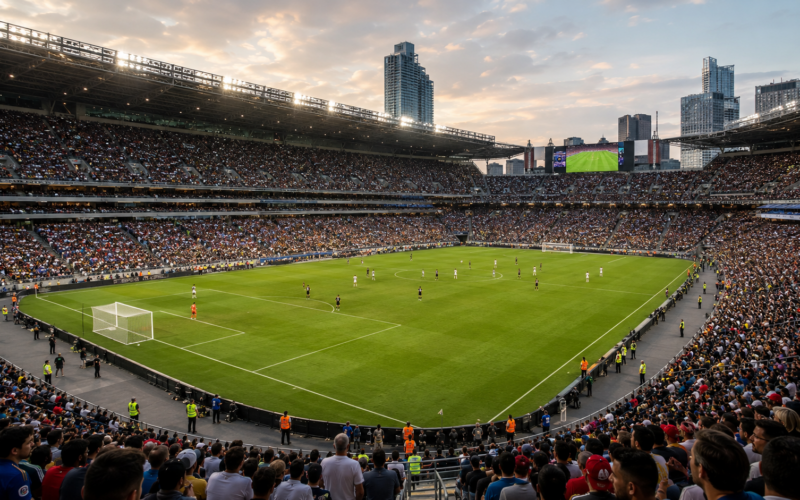
Mikel Merino scored in the first minute of stoppage time as Spain defeated Portugal 1-0 in their FIFA World Cup 2026 Round of 16 match at Dallas Stadium in Arlington, Texas, on Monday, July 6, 2026. The substitute completed a rapid move with Ferran Torres before placing a low finish beyond Diogo Costa.
Spain began with greater attacking ambition and forced Costa into several important saves, including an outstanding double stop from Lamine Yamal and Álex Baena. Portugal responded through Cristiano Ronaldo and Nuno Mendes, whose powerful first-half strike was deflected against the crossbar by Pedro Porro.
Portugal defended increasingly deep after half-time as Spain controlled possession through Rodri, Pedri and Dani Olmo. Merino and Torres were introduced during the closing stages, and the two substitutes combined just as the match appeared certain to enter extra time.
Spain reached the FIFA World Cup quarter-finals for the first time since winning the tournament in 2010 and preserved a fifth consecutive clean sheet at the 2026 edition. Portugal were eliminated from Cristiano Ronaldo’s final World Cup, while Spain will face the winner of the United States vs Belgium at Los Angeles Stadium on Friday, July 10.
FIFA World Cup 2026 Portugal 0-1 Spain full match scorecard and key incidents
How did Spain create the first major opening before Portugal settled into the match?
Spain began by circulating the ball quickly through Rodri, Pedri and Olmo, forcing Portugal’s midfield to retreat before its defensive spacing had been fully established. Yamal held the right touchline, while Baena moved inside from the opposite side to create additional passing angles around João Neves and Vitinha.
The first major chance arrived after Olmo played an incisive first-time pass through Portugal’s midfield. Oyarzabal entered the penalty area with only Costa to beat but dragged his finish outside the left post.
The miss allowed Portugal to recover from an uncertain opening. Rúben Dias and Veiga narrowed their positioning, while João Neves began following Olmo more closely whenever the Spain midfielder moved between the lines.
Spain still controlled more of the ball, but Portugal became increasingly capable of forcing attacks towards the wings. That shift reduced the number of direct passes reaching Oyarzabal and encouraged Spain to attempt from outside the penalty area.
Why was Diogo Costa’s double save one of the most important moments of the match?
Yamal created Spain’s strongest first-half sequence by receiving on the right and cutting onto his left foot. He curled a low effort towards the far corner, forcing Costa to dive across his goal and push the ball away.
Baena collected the rebound outside the penalty area and immediately directed another powerful attempt towards goal. Costa recovered from the first save and extended at full stretch to turn the second shot away.
The sequence demonstrated the goalkeeper’s athleticism and concentration. He did not merely stop Yamal’s attempt but reorganised quickly enough to prevent Spain from converting the second phase.
Portugal’s defensive structure had briefly broken down, leaving Baena with time to select his finish. Costa’s recovery ensured Spain gained no advantage from the opening and gave Portugal confidence to attack more aggressively before half-time.
His five saves ultimately kept the match level until stoppage time. Without them, Merino’s late goal would likely have extended an existing Spain lead rather than deciding a close knockout contest.
How did Portugal turn Spain’s possession into dangerous first-half counterattacks?
Portugal recognised that Spain’s full-backs were advancing simultaneously. Porro moved high to support Yamal, while Cucurella frequently stepped into midfield or continued forward outside Baena.
Fernandes and João Félix attempted to release Neto into the space left behind Cucurella. Ronaldo remained central and waited for the cross or cutback rather than dropping continuously towards midfield.
One transition began when Fernandes dispossessed Pedri and immediately released Ronaldo into the right side of the penalty area. Simón stayed upright and blocked the captain’s effort from a narrowing angle.
Portugal later created another dangerous attack when Neto crossed from the right and Félix redirected the ball towards Ronaldo. Simón saved the header before reacting again to Ronaldo’s attempted rebound.
Those chances showed that Portugal did not need an equal share of possession to threaten Spain. Their most dangerous attacks came from recovering the ball before Rodri and the full-backs could restore Spain’s defensive structure.
Why was Nuno Mendes’ shot against the crossbar Portugal’s clearest opportunity?
Mendes had initially concentrated on restricting Yamal, but he began advancing more frequently as Portugal grew into the first half. His speed gave Portugal a route around Spain’s midfield press and forced Porro to defend while moving towards his own goal.
The left-back received outside the penalty area in the 41st minute and struck with considerable power. Porro attempted to block with his head, but the contact redirected the ball over Simón and against the crossbar.
The deflection made the opportunity particularly difficult for the goalkeeper because the ball changed height and direction after leaving Mendes’ foot. Spain escaped through the woodwork rather than a controlled defensive intervention.
Portugal finished the half with greater momentum, and the chance reinforced the effectiveness of attacking behind Yamal. Mendes’ later injury removed that route and contributed to Portugal becoming more cautious after the interval.
How did Rodri and Pedri gradually establish control after Portugal’s strong first half?
Portugal pressed Spain more aggressively during the final portion of the first half, with Fernandes moving towards Rodri and João Neves attempting to prevent Pedri from turning. Spain responded after the interval by increasing the speed and simplicity of its midfield passing.
Rodri remained centrally positioned and reduced the number of unnecessary forward risks. Pedri moved laterally to create passing angles rather than waiting between Portugal’s defenders and midfielders.
The adjustment forced Portugal to cover greater horizontal distances. Vitinha and João Neves could no longer press one receiver without leaving another available behind them.
Spain’s possession increased, but the more important change was territorial. Portugal were pushed towards their own penalty area and became increasingly dependent on Neto or Félix carrying the ball over long distances during counterattacks.
The midfield control did not immediately generate clear chances. It did, however, prevent Portugal from repeating the sustained attacking period that had produced Mendes’ strike against the crossbar.
How did Lamine Yamal’s movement contribute to Nuno Mendes leaving the match injured?
Yamal repeatedly received near the right touchline before changing direction towards the centre. Mendes therefore had to defend both the direct run outside and the possibility of Yamal cutting onto his stronger left foot.
The Portugal defender attempted to stretch into another challenge early in the second half but immediately showed discomfort. He was unable to continue and was replaced by Semedo in the 56th minute.
Spain did not score directly from the change, yet Portugal lost one of its strongest transition players. Mendes had been capable of defending Yamal at speed while also carrying the ball into Spain’s half.
Semedo offered defensive experience but less natural left-sided progression. Portugal’s counterattacks became narrower, and Leão later had to carry greater responsibility for moving the team forward from that side.
Yamal did not record the winning assist, but his constant threat imposed a physical and tactical cost on Portugal. Spain’s right winger continued drawing multiple defenders even during periods when his final pass was unsuccessful.
Why did Portugal retreat so deeply during the second half?
Portugal’s first-half opportunities had emerged from pressing and counterattacking before Spain could settle. Maintaining that intensity became increasingly difficult as the match progressed and Mendes left through injury.
Martínez’s side began defending with Ronaldo isolated ahead of two compact lines. Neto and Félix dropped closer to João Neves and Vitinha, reducing the space available to Olmo and Pedri.
The structure initially succeeded. Spain controlled the ball but often attempted from distance or sent crosses into areas dominated by Dias and Veiga.
Portugal completed 23 clearances and won 73.3% of the aerial duels. Those figures showed how effectively they protected the immediate area around Costa for most of the second half.
The problem was that the approach created almost no sustained possession. Each clearance returned the ball to Spain, forcing Portugal to defend another attack without gaining enough time to move its structure away from goal.
Why could Mikel Oyarzabal not reproduce his two-goal performance against Austria?
Oyarzabal had benefited against Austria from repeated cutbacks and movements behind an unstable defensive line. Portugal defended much closer together and rarely allowed the striker to receive unmarked inside the six-yard area.
Dias followed his movement aggressively, while Veiga protected the space behind. When Oyarzabal moved towards midfield, João Neves or Vitinha could delay him until the centre-backs recovered.
The striker’s best opportunity arrived before Portugal had settled, but he dragged the eighth-minute shot wide. After that miss, he struggled to find another chance of similar quality.
Spain attempted 16 crosses but completed only one. The lack of accurate service reduced Oyarzabal’s influence because he was asked to compete against defenders holding a clear aerial advantage.
His movement still occupied Portugal’s centre-backs and created space for Olmo, Pedri and Yamal. However, Spain required a different attacking profile before the decisive opening appeared.
How did Ferran Torres change the right side after replacing Álex Baena?
Ferran entered in the 75th minute and gave Spain another player willing to run beyond Portugal’s defensive line. Baena had frequently moved towards the ball, whereas Ferran attempted to receive behind the full-back or inside the penalty area.
The substitution also allowed Yamal to operate more freely. Ferran could move across the attacking line, creating moments when Portugal were required to track two runners on the same side.
His first notable opportunity ended with a shot into the side-netting after Pedri released him down the channel. The finish was inaccurate, but the run showed that Portugal’s defensive line could be attacked rather than only passed around.
Ferran’s movement became decisive during stoppage time. He recognised Merino’s delayed run and delivered the pass into the precise space between Portugal’s midfield and centre-backs.
Why did introducing Mikel Merino provide the solution Spain had been missing?
Merino replaced Olmo in the 85th minute and offered a more physical presence around the penalty area. Instead of remaining primarily between the lines, he moved beyond Portugal’s midfield and attacked spaces beside the centre-backs.
Portugal had defended Oyarzabal’s movements effectively because the striker remained their main central reference point. Merino created an additional runner arriving from a deeper and less predictable starting position.
His aerial ability also forced Portugal to consider another crossing target. Even when Spain did not deliver high, the defenders had to remain aware of Merino’s movement towards the penalty area.
The decisive action combined intelligence and timing. Merino began the move through a quickly taken free kick and continued running rather than remaining behind the ball.
Portugal’s midfield reacted to the restart but did not follow his advance. When Ferran received possession, Merino was already moving into the gap required to finish the attack.
How did Spain construct the 90+1-minute goal before Portugal could reorganise?
Spain won a free kick in midfield as the match entered stoppage time. Merino restarted quickly towards the left and immediately continued his run through the centre.
The speed of the restart prevented Portugal from restoring the two compact defensive lines that had protected Costa throughout the second half. Several players remained focused on the ball rather than the runner moving behind them.
Spain transferred possession towards Ferran, who received with enough time to look inside. Merino had reached the edge of the penalty area without a Portugal midfielder tracking him.
Ferran slipped the pass between the defenders, and Merino controlled the direction of his run before striking low towards the near side. Costa attempted to close the angle, but the finish travelled beyond him and inside the post.
The goal was not created by a complicated passing sequence. It came from restarting before Portugal were ready, continuing the off-ball run and making the final decision with greater speed than the defenders.
Why could Portugal not force extra time after conceding?
Portugal immediately moved additional players forward, with Bernardo, Conceição, Leão and Ronaldo all positioned around Spain’s defensive line. The change produced greater urgency but not enough control.
Spain responded by protecting the central area and forcing Portugal to deliver from wider positions. Laporte and Cubarsí dealt with the first contacts, while Rodri remained close enough to collect the second ball.
Portugal’s best chance came when Bernardo attacked a late cross and headed over. The midfielder had entered only minutes earlier and reached the correct position, but he could not direct the ball below the crossbar.
Spain also used possession and tactical fouls to prevent Portugal from developing another continuous attack. Ferran received a yellow card during the closing confrontation but helped consume valuable time.
The late pressure demonstrated how Portugal might have attacked earlier. Their decision to defend so deeply had preserved the draw for most of the second half but left too little time to change the tactical direction after Merino scored.
How did Spain’s defence preserve a fifth consecutive tournament clean sheet?
Spain’s defensive record has depended on controlling possession as much as traditional defending. Rodri’s positioning prevented many Portugal counterattacks from developing beyond their first pass.
Cubarsí and Laporte remained patient against Ronaldo and resisted following him unnecessarily into midfield. That discipline reduced the central space Félix and Fernandes wanted to attack.
Porro endured difficult moments against Mendes but recovered after the crossbar incident. Cucurella also balanced his attacking role with the need to protect against Neto’s speed.
Simón made two saves and remained decisive when Portugal created its strongest first-half chances. He blocked Ronaldo from an angle, reacted during the Félix and Ronaldo sequence, and claimed several late deliveries without producing rebounds.
Spain have not conceded across five FIFA World Cup 2026 matches. The record provides an important foundation even when their attacking performance becomes slower or less precise.
What did Cristiano Ronaldo contribute during his final FIFA World Cup match?
Ronaldo remained Portugal’s central striker and produced the team’s first shot on target after Fernandes dispossessed Pedri. He later reacted sharply to Félix’s header but could not direct the rebound beyond Simón.
Spain’s centre-backs increasingly controlled him as the match progressed. Ronaldo received limited service after half-time because Portugal were defending deeper and struggling to retain possession.
The captain still occupied both centre-backs and created space for Fernandes or the wide attackers. Portugal rarely used that space effectively because the transition pass was often delayed or inaccurate.
Ronaldo had confirmed before the game that FIFA World Cup 2026 would be his final World Cup. The defeat therefore ended a tournament career spanning six editions, although he did not immediately announce the end of his wider international career.
His departure carried emotional significance, but the result was decided by Portugal’s collective inability to sustain its first-half performance rather than the contribution of one player alone.
Did Portugal become too dependent on protecting Ronaldo’s central role?
Portugal possessed younger forwards capable of creating a more mobile attack, including Leão, Ramos, Conceição and Neto. Martínez nevertheless retained Ronaldo as the central reference throughout the match.
The decision gave Portugal a proven penalty-area finisher but reduced the pressing intensity available against Spain’s defenders. Laporte and Cubarsí often had enough time to find Rodri because Ronaldo could not continuously close both centre-backs.
Ramos remained unused even after Portugal fell behind. That choice meant Portugal finished with several wingers and attacking midfielders but without adding another striker beside Ronaldo.
The tactical issue should not be reduced to Ronaldo’s age. Portugal’s midfield also failed to retain possession, and the substitutes did not enter early enough to transform the match.
However, the next coaching cycle must determine whether the attack should continue revolving around one fixed striker or become more fluid around Leão, Ramos, Conceição, Neto and Félix.
What does Roberto Martínez’s departure mean for Portugal’s rebuilding process?
Martínez confirmed after the defeat that he was stepping down as Portugal coach. His decision followed a campaign in which the team reached the Round of 16 but did not consistently convert its attacking depth into controlled performances.
Portugal produced a 5-0 group victory over Uzbekistan and a dramatic comeback against Croatia. They also drew with DR Congo and Colombia before losing narrowly to Spain.
The next coach will inherit one of Europe’s deepest squads. Costa, Dias, Mendes, Neves, Vitinha, Fernandes, Leão, Ramos, Conceição and Neto provide a foundation capable of competing through another international cycle.
The major decision will concern the balance between experience and renewal. Portugal must preserve the leadership developed during Ronaldo’s era while constructing an attack less dependent on his presence.
The defeat showed that Portugal can compete with Spain, but the next stage requires a clearer pressing identity, greater midfield control and more decisive use of the available substitutes.
What must Spain improve before facing the United States or Belgium?
Spain created enough opportunities to deserve progression but required 91 minutes to score. A quarter-final opponent may punish the early miss from Oyarzabal or the periods when Portugal were allowed to counter through Mendes and Neto.
The crossing quality also requires improvement. Spain completed only one accurate cross from 16 attempts, limiting Oyarzabal’s influence and allowing Portugal to defend the penalty area with confidence.
De la Fuente must decide whether Merino’s performance earns him a starting role. His movement added physicality and vertical running, while Olmo offered greater creativity between the lines.
Ferran also strengthened his case for more minutes after creating the winner. Spain’s depth allowed the coach to alter the attack without weakening the technical level, an advantage likely to become increasingly important.
The defensive structure remains Spain’s greatest source of stability. Their next challenge is combining that control with earlier and more efficient finishing so that another knockout match does not depend on a stoppage-time intervention.
How does Spain’s victory shape the FIFA World Cup 2026 quarter-final bracket?
Spain advanced to face the winner of the United States vs Belgium at Los Angeles Stadium on Friday, July 10, at noon Pacific Time. The opponent had not been confirmed when this article’s source check was completed.
The quarter-final winner will progress to the semi-final and face the winner of France vs Morocco. That potential semi-final will take place at Dallas Stadium.
Portugal were eliminated in the Round of 16 after reaching the knockout stage for the fifth consecutive World Cup. Spain returned to the last eight for the first time since their 2010 title-winning campaign.
Key takeaways from Portugal vs Spain at FIFA World Cup 2026
- Spain defeated Portugal 1-0 through Mikel Merino’s 90+1-minute goal.
- Mikel Oyarzabal missed a major opportunity during Spain’s fast opening.
- Diogo Costa produced an outstanding first-half double save from Lamine Yamal and Álex Baena.
- Unai Simón denied Cristiano Ronaldo and later saved during a dangerous João Félix and Ronaldo sequence.
- Nuno Mendes’ powerful shot was deflected against the crossbar by Pedro Porro.
- Mendes left with an apparent muscle injury in the 56th minute after challenging Yamal.
- Spain controlled the second half but struggled to convert possession into clear chances.
- Ferran Torres and Merino entered as substitutes and combined for the decisive goal.
- Portugal were eliminated from Ronaldo’s final FIFA World Cup, while Roberto Martínez stepped down after the defeat.
- Spain will face the winner of the United States vs Belgium at Los Angeles Stadium on July 10.
Share this:
Discover more from Business-News-Today.com
Subscribe to get the latest posts sent to your email.

