

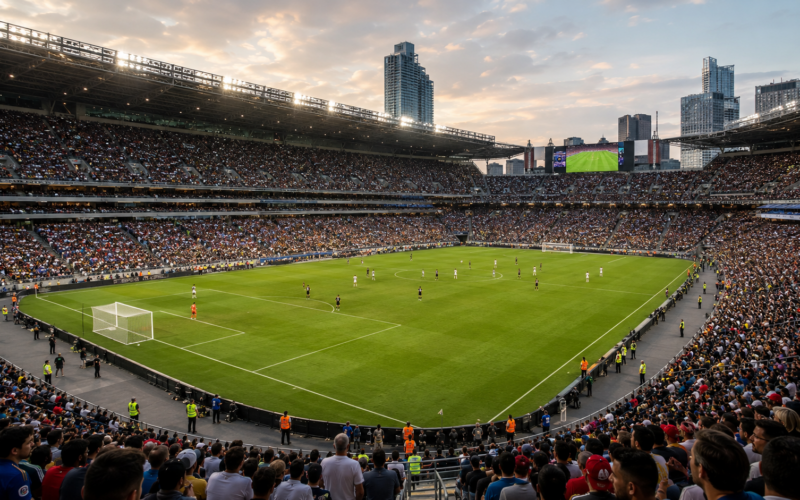
Spain defeated Uruguay 1-0 in their final FIFA World Cup 2026 Group H match at Guadalajara Stadium in Guadalajara, Mexico, on Friday, June 26, 2026. The match finished during the early hours of June 27 in India, with 45,065 spectators watching Spain secure first place and eliminate the two-time world champions.
Álex Baena scored the decisive goal in the 42nd minute after receiving the ball from Marcos Llorente near the edge of Uruguay’s penalty area. His low effort appeared manageable, but goalkeeper Fernando Muslera failed to secure it and watched the ball slip beyond him into the net.
Muslera did not return after half-time, with Sergio Rochet replacing the veteran goalkeeper. Uruguay increased their attacking numbers during the second half but managed only one official shot on target, while Unai Simón denied Mathías Olivera and Nicolás de la Cruz.
Agustín Canobbio was shown a direct red card in the fourth minute of stoppage time for a dangerous challenge on Pau Cubarsí. Spain completed Group H with seven points, five goals scored and none conceded, while Uruguay finished third with two points and were eliminated from the tournament.
FIFA World Cup 2026 Uruguay 0-1 Spain full match scorecard and key incidents
How did Uruguay’s aggressive opening disrupt Spain without producing a clear goal threat?
Uruguay entered the match knowing victory would guarantee qualification and that a draw might not be sufficient. Marcelo Bielsa therefore selected an aggressive midfield containing Manuel Ugarte, Rodrigo Bentancur and Federico Valverde behind Darwin Núñez.
The initial pressure unsettled Spain. Uruguay closed Rodri quickly, directed their pressing towards the central midfield and attempted to prevent Pedri and Baena from receiving between the lines.
Valverde created Uruguay’s most promising first-half moment in the 27th minute. He pressured Rodri into surrendering possession and moved the ball towards Núñez inside the penalty area.
Núñez attempted an improvised backheel rather than turning towards goal or shooting directly. Spain recovered, and an opportunity created by Uruguay’s best pressing action ended without an attempt on target.
That sequence reflected the central problem with Uruguay’s performance. Their energy and pressure disrupted Spain’s rhythm, but their final decisions lacked the simplicity and precision required to turn disruption into goals.
Why did Uruguay contain Lamine Yamal but leave other Spanish routes available?
Guillermo Varela and the players around him defended extremely close to Yamal whenever Spain moved the ball towards the right. Uruguay were prepared to commit a second defender early rather than allow the winger to isolate Varela.
The tactic reduced Yamal’s direct shooting opportunities. He attempted only one shot and rarely produced the extended one-on-one sequences that had influenced Spain’s 4-0 victory over Saudi Arabia.
However, Uruguay’s concentration on the right created opportunities elsewhere. Baena found space from the left and central areas, while Marcos Llorente advanced from right-back when Yamal drew defenders towards the touchline.
Spain also threatened through set-pieces. Baena’s corners found Cubarsí twice during the first half, although the centre-back could not direct either header on target.
Luis de la Fuente’s team did not create many chances, but its structure offered several alternative routes. Uruguay restricted the most obvious danger without completely controlling the surrounding spaces.
How did Fernando Muslera’s error turn a balanced contest into Uruguay’s elimination?
The decisive moment arrived three minutes before half-time. Spain moved possession through Llorente, who found Baena near the edge of the penalty area.
Baena struck a low right-footed shot towards goal. The effort carried enough awkward movement to create uncertainty, but Muslera appeared positioned to make a routine save.
The goalkeeper failed to secure the ball, which slipped beneath his hands and crossed the line. Spain had scored with their only first-half shot on target and forced Uruguay to chase a match they had previously kept balanced.
The error carried particular weight because Uruguay’s two previous group matches had also included costly goalkeeping moments. Muslera was replaced by Rochet at half-time and did not return for what could prove to have been his final international appearance.
Baena’s goal was not the product of a sustained passing move through Uruguay’s defence. It instead showed why concentration and execution remain decisive in low-chance tournament matches.
Why did Marcelo Bielsa replace Federico Valverde while Uruguay needed a goal?
Bielsa made two changes at the interval, introducing Rochet for Muslera and De la Cruz for Ugarte. The second substitution was designed to add creativity and reduce the number of primarily defensive midfielders.
The more controversial decision came in the 56th minute, when Viñas replaced captain Valverde. Bentancur inherited the armband as Uruguay moved towards a more direct attacking structure.
Bielsa later explained that the change was intended to increase offensive aggression. Viñas provided another penalty-area presence alongside Núñez, while De la Cruz was asked to supply passes and shots from deeper positions.
The adjustment did not generate a large improvement. Viñas fired over from a Maxi Araújo delivery, while Spain’s centre-backs continued winning the first contact against Uruguay’s direct passes.
Removing Valverde also reduced Uruguay’s ability to press and recover the ball in advanced areas. The team gained another forward but lost one of its strongest transition players.
How did Spain manage the second half despite producing only six attempts?
Spain controlled 68% possession but did not turn that dominance into a large number of shots. De la Fuente’s priority after half-time was managing the game rather than attacking with excessive numbers.
Rodri remained in front of the centre-backs, while Pedri and Merino helped Spain circulate possession away from Uruguay’s pressure. When the passing lanes became crowded, Spain were willing to restart through Laporte, Cubarsí and Simón.
De la Fuente introduced Olmo and Fabián Ruiz together in the 60th minute. Their arrival gave Spain fresher players capable of receiving under pressure and carrying the ball away from Uruguay’s increasingly desperate challenges.
Olmo missed an opportunity after Yamal’s cross, while Ferran later struck the crossbar after receiving from Fabián. Spain could have secured the match earlier, but their failure to add a second goal did not lead to sustained defensive panic.
The European champions finished the group without conceding. Their ability to protect narrow margins may prove as important in the knockout phase as the attacking quality displayed against Saudi Arabia.
Why did Uruguay’s late attacks fail to create the equaliser they needed?
Uruguay increasingly relied on crosses, loose balls and shots from distance as the second half progressed. Spain protected the centre with Rodri and maintained enough height in defence through Laporte and Cubarsí.
Olivera finally produced Uruguay’s official shot on target during the closing stages, but Simón saved without allowing a dangerous rebound. De la Cruz also tested the goalkeeper from outside the penalty area.
Núñez remained isolated for long periods. Spain prevented the striker from receiving cleanly inside the box, while Uruguay’s five offsides showed how frequently their attacking timing broke down.
The lack of variation was especially damaging because Uruguay needed only one goal to remain in contention. Rather than creating combinations around Spain’s penalty area, the team became increasingly dependent on hopeful deliveries.
Uruguay completed the match with an expected-goals total of 0.20. For a side facing elimination, that figure demonstrated how little genuine pressure Spain’s goalkeeper was required to withstand.
What did Agustín Canobbio’s stoppage-time red card reveal about Uruguay’s collapse?
Frustration became increasingly visible as the clock moved into stoppage time. De la Cruz was booked in the third added minute after stopping Nico Williams and becoming involved in the confrontation that followed.
Canobbio then challenged Cubarsí with his studs raised. Referee Ismail Elfath immediately showed a direct red card in the fourth minute of stoppage time.
The dismissal did not alter the result, but it captured the emotional breakdown of a team that had entered the tournament expecting to progress comfortably. Uruguay’s urgency had turned into frustration rather than coherent attacking pressure.
Spain remained composed during the final confrontation and completed the remaining seconds without allowing another opportunity. The contrast between Spain’s control and Uruguay’s loss of discipline provided an appropriate summary of the match.
Why did Uruguay exit a group containing two tournament debutants without winning?
Uruguay began their campaign with a 1-1 draw against Saudi Arabia before surrendering leads twice during a 2-2 draw with Cape Verde. Those results left Bielsa’s team requiring a positive result against Spain.
The squad contained players from leading European clubs, including Valverde, Bentancur, Ugarte, Núñez and Ronald Araújo. However, Uruguay never developed an attacking structure capable of using that individual quality consistently.
They finished Group H with three goals, four conceded and no victories. More significantly, they became the only South American team eliminated during the group stage of the expanded tournament.
The failure followed another group-stage exit at the 2022 FIFA World Cup. Uruguay’s immediate review will therefore extend beyond one goalkeeper error or one red card.
Questions will centre on Bielsa’s tactical approach, the relationship between his demanding playing model and the squad, and whether Uruguay generated enough variety around Núñez. The talent remained visible in isolated moments, but it never became a coherent tournament performance.
How did Cape Verde’s draw complete the final Group H qualification order?
Spain finished first with seven points after drawing 0-0 with Cape Verde and defeating Saudi Arabia and Uruguay. They scored five goals and did not concede.
Cape Verde drew all three group matches and finished second with three points. Their 0-0 result against Saudi Arabia in the simultaneous final fixture secured a historic knockout place on their FIFA World Cup debut.
Uruguay finished third with two points and a goal difference of minus one. That total was insufficient to qualify through the ranking of third-placed teams.
Saudi Arabia also collected two points but finished fourth because of an inferior goal difference. They scored once and conceded five times across the group.
FIFA World Cup 2026 Group H final points table
What does Spain’s Group J matchup mean for the Round of 32?
Spain will play the team finishing second in Group J at Los Angeles Stadium on Thursday, July 2. The identity of that opponent remained dependent on the final Group J matches.
De la Fuente’s team enters the knockout stage with the competition’s strongest defensive group record. Spain did not concede against Cape Verde, Saudi Arabia or Uruguay.
The attacking picture is less consistent. Spain struggled to convert 27 attempts during the opening draw with Cape Verde, scored four against Saudi Arabia and then generated only six attempts against Uruguay.
Yamal remains Spain’s principal one-on-one threat, but the Uruguay match showed opponents can reduce his influence by committing multiple defenders. Baena, Olmo, Nico Williams, Oyarzabal and Ferran must therefore continue supplying alternative routes.
Spain’s ability to control difficult matches may become especially valuable in the knockout phase. The performance in Guadalajara lacked the fluency expected from one of the favourites, but it demonstrated resilience against an opponent playing with maximum physical intensity.
Key takeaways from Uruguay vs Spain at FIFA World Cup 2026
- Spain defeated Uruguay 1-0 and completed Group H unbeaten with seven points.
- Álex Baena scored the decisive goal in the 42nd minute after receiving from Marcos Llorente.
- Fernando Muslera failed to hold Baena’s low shot and was replaced by Sergio Rochet at half-time.
- Uruguay pressed aggressively but created only five attempts and one official shot on target.
- Darwin Núñez declined a clear first-half shooting opportunity and attempted a backheel instead.
- Marcelo Bielsa replaced captain Federico Valverde with Federico Viñas in the 56th minute.
- Unai Simón denied Mathías Olivera and Nicolás de la Cruz during Uruguay’s late pressure.
- Ferran Torres struck the crossbar as Spain searched for a second goal.
- Agustín Canobbio received a direct red card for a dangerous stoppage-time challenge on Pau Cubarsí.
- Spain won Group H without conceding, while Uruguay exited the FIFA World Cup at the group stage for a second consecutive tournament.
Discover more from Business-News-Today.com
Subscribe to get the latest posts sent to your email.