




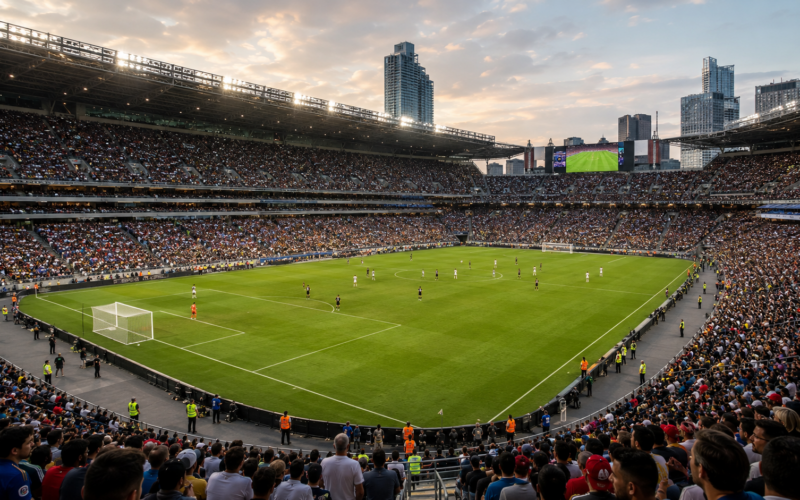
The Netherlands defeated Tunisia 3-1 in their final FIFA World Cup 2026 Group F match at Kansas City Stadium in Kansas City, Missouri, on Thursday, June 25, 2026. The match finished during the early hours of June 26 in India and was watched by an official attendance of 68,391.
An Ellyes Skhiri own goal gave the Netherlands the lead in the third minute after Denzel Dumfries delivered a dangerous cross from the right. Brian Brobbey doubled the advantage four minutes later, converting Virgil van Dijk’s delivery to score his third goal of the tournament.
Hazem Mastouri gave Tunisia brief hope with a 54th-minute header from Hannibal Mejbri’s corner. Jan Paul van Hecke restored the Netherlands’ two-goal lead eight minutes later by meeting Tijjani Reijnders’ corner.
The victory gave Ronald Koeman’s side seven points and first place in Group F. Japan qualified in second place after drawing 1-1 with Sweden, Sweden progressed as one of the best third-placed teams and Tunisia were eliminated after losing all three matches.
FIFA World Cup 2026 Tunisia 1-3 Netherlands full match scorecard and key incidents
How did Tunisia miss an opportunity to change the match before the Netherlands scored?
Tunisia created the first major chance after approximately 70 seconds. Mastouri moved the ball into Gharbi’s path inside the penalty area, but the midfielder failed to convert from a position that could have given Hervé Renard’s team an unexpected lead.
The consequences were immediate. The Netherlands attacked down the right through Dumfries, whose cross travelled into the six-yard area and was diverted past Aymen Dahmen by Skhiri.
The own goal was the 12th of the tournament, matching the record for an entire men’s FIFA World Cup before the 2026 group stage had even concluded. For Tunisia, it represented another defensive setback in a campaign already defined by heavy defeats.
Brobbey made the score 2-0 four minutes later. Van Dijk found the striker unmarked during a set-piece sequence, and Brobbey finished before Tunisia could reorganise.
The opening seven minutes therefore contained the entire tactical contrast. Tunisia failed to convert their best opportunity, while the Netherlands punished two defensive breakdowns with ruthless efficiency.
Why did Denzel Dumfries make the Netherlands’ right side so difficult to defend?
Dumfries repeatedly advanced beyond Tunisia’s midfield line and operated almost as an additional winger. Malen moved inside from the right, creating the space required for the full-back to attack Ali Abdi and the left side of Tunisia’s defence.
His delivery created the opening own goal, and his subsequent movement forced Tunisia’s midfielders to defend facing their own goal. Even when crosses were cleared, the Netherlands recovered possession quickly through Gravenberch, De Jong and Reijnders.
Dumfries also threatened directly. Early in the second half, he arrived inside the penalty area and struck a goalbound volley that was blocked before it could test Dahmen.
Tunisia struggled to decide whether Abdi should follow Malen inside or remain wide to stop Dumfries. That uncertainty opened channels for Brobbey and Reijnders to attack.
The Netherlands’ left side offered creativity through Gakpo, but the more consistent territorial threat came from Dumfries’ repeated forward runs.
How did Frenkie de Jong control a match dominated by Netherlands possession?
The Netherlands finished with 71% possession and twice as many attempts as Tunisia. De Jong was central to that advantage because he consistently offered the defenders a passing route through Tunisia’s first line of pressure.
He dropped alongside Van Dijk and Van Hecke when Tunisia pressed with Mastouri and the attacking midfielders. Once the first pressure had been bypassed, De Jong carried the ball into midfield or found Reijnders between the lines.
Gravenberch supplied physical protection, while Reijnders moved into more advanced positions. This division of responsibilities gave the Netherlands control without leaving the centre exposed during turnovers.
Tunisia occasionally threatened when they recovered possession, but those opportunities were isolated. The Netherlands generally counter-pressed quickly and forced their opponents into direct passes rather than sustained attacking sequences.
Koeman withdrew De Jong in the 72nd minute with the result and first place under control. The substitution protected a central player before the knockout stage while allowing Koopmeiners to manage the final phase.
Why did Hazem Mastouri’s goal briefly place the Group F lead under pressure?
Mastouri scored in the 54th minute after Mejbri delivered a corner into the penalty area. The forward attacked the ball aggressively and directed his header beyond Verbruggen.
The goal gave Tunisia momentum and coincided with Japan moving towards the lead against Sweden in the simultaneous Group F fixture. Had the Netherlands dropped points while Japan won, Koeman’s team could have lost first place.
Tunisia’s pressure did not last long enough to create a sustained threat. The Netherlands continued controlling possession and forced another corner eight minutes later.
Reijnders delivered the ball into the area, and Van Hecke rose to direct his header past Dahmen. The defender’s first FIFA World Cup goal restored the two-goal advantage and removed the immediate uncertainty.
Sweden’s later equaliser against Japan further strengthened the Netherlands’ position. Koeman’s team ultimately finished two points clear at the top rather than relying on goal difference.
What did Brian Brobbey’s third tournament goal add to the Netherlands attack?
Brobbey entered the tournament competing with Depay and Wout Weghorst for the central-forward role. His performances during the group stage strengthened his claim to begin the knockout match against Morocco.
His goal against Tunisia required positional awareness rather than an elaborate finish. Brobbey recognised that Tunisia had lost track of him during the set-piece phase and moved into the space Van Dijk targeted.
The striker also occupied both centre-backs, creating room for Gakpo, Malen and Reijnders to receive around the penalty area. His physical presence gave the Netherlands a direct option whenever Tunisia attempted to press higher.
Brobbey finished the group stage with three goals. That output reduced the pressure on Koeman to rely exclusively on Depay and gave the Netherlands contrasting attacking options.
Depay entered in the 77th minute and nearly converted an acrobatic effort. His presence from the bench underlined the depth available for the Round of 32.
Why did Tunisia finish the tournament with such a damaging defensive record?
Tunisia conceded 12 goals across three matches. Sweden scored five, Japan added four and the Netherlands scored three in Kansas City.
The team changed coach after the opening defeat, with Renard replacing Sabri Lamouchi on a short-term basis. The change did not provide enough time to repair problems involving defensive spacing, set-piece marking and ball retention under pressure.
Against the Netherlands, Tunisia conceded an early own goal, lost Brobbey during a set-piece sequence and then allowed Van Hecke a clear header from a corner. All three goals reflected preventable defensive errors rather than extended periods of irresistible attacking play.
Tunisia still created 10 attempts and scored through Mastouri, but the match was already heavily tilted towards the Netherlands after seven minutes. Their inability to manage the opening phase eliminated any realistic opportunity to produce an upset.
The Carthage Eagles finished with two goals scored, 12 conceded and a goal difference of minus 10. Renard’s future was left open pending a review by the Tunisian federation.
How did the Japan and Sweden draw determine the final Group F order?
The Netherlands finished first with seven points after drawing with Japan and defeating Sweden and Tunisia. They scored 10 goals and conceded four, producing a goal difference of plus six.
Japan collected five points from one victory and two draws. Their 4-0 win against Tunisia proved decisive in securing second place ahead of Sweden.
Sweden finished third with four points after defeating Tunisia, losing to the Netherlands and drawing with Japan. Four points guaranteed progression through the ranking of third-placed teams.
Tunisia finished fourth without a point. Their elimination had already been confirmed before the final match, but the defeat completed a campaign of three consecutive losses.
FIFA World Cup 2026 Group F final points table
What does the Netherlands vs Morocco Round of 32 fixture mean tactically?
The Netherlands will face Morocco at Monterrey Stadium on Monday, June 29. The match brings together the Group F winners and the Group C runners-up.
Morocco will offer considerably greater resistance than Tunisia. Their midfield can compete physically, Achraf Hakimi creates attacking width and their substitutes demonstrated significant impact during the 4-2 victory over Haiti.
The Netherlands will attempt to control possession through De Jong, Gravenberch and Reijnders. However, Morocco’s counterattacking speed means Dumfries and the left-back cannot advance simultaneously without protection behind them.
Brobbey’s form gives Koeman a central reference point capable of occupying Morocco’s centre-backs. Gakpo’s movement from the left and Dumfries’ forward runs could create overloads, but the Netherlands must avoid the complacency that followed Mastouri’s goal.
Morocco also possess greater knockout experience after reaching the 2022 semi-finals. The Netherlands enter as Group F winners, but the tactical margin will be substantially smaller than it was against Tunisia.
Key takeaways from Tunisia vs Netherlands at FIFA World Cup 2026
- The Netherlands defeated Tunisia 3-1 and completed Group F unbeaten with seven points.
- Ellyes Skhiri diverted Denzel Dumfries’ cross into his own goal in the third minute.
- Brian Brobbey doubled the lead four minutes later after a delivery from Virgil van Dijk.
- Brobbey increased his FIFA World Cup 2026 total to three goals.
- Hazem Mastouri scored Tunisia’s only goal with a 54th-minute header from Hannibal Mejbri’s corner.
- Jan Paul van Hecke restored the two-goal advantage in the 62nd minute.
- The Netherlands controlled 71% possession and registered 20 attempts.
- Tunisia finished the group stage with three defeats and a goal difference of minus 10.
- The Netherlands advanced as Group F winners and will face Morocco in the Round of 32.
- Japan finished second and Sweden qualified through the best-third-place ranking.
Discover more from Business-News-Today.com
Subscribe to get the latest posts sent to your email.