Vår Energi ASA (OSE: VAR) and its licence partners have approved an estimated NOK 14 billion, or approximately $1.42 billion, coordinated development of the Cerisa, Gjøa Nord and Ofelia discoveries in the Norwegian North Sea. Vår Energi ASA submitted development plans for Gjøa Nord and Ofelia to Norway’s Ministry of Energy on June 25, 2026, while also taking the final investment decision for the wider Gjøa Subsea Projects programme. The three discoveries will be connected to existing Gjøa and Duva infrastructure, with Cerisa scheduled to start production in the third quarter of 2027 and the other two developments following in the second half of 2028. The programme targets approximately 76 million barrels of oil equivalent in gross proved and probable reserves, including about 27 million barrels net to Vår Energi ASA before recently announced ownership adjustments. The decision is strategically important because it extends the economic life of the Gjøa production hub toward 2040 while supporting Vår Energi ASA’s ambition to sustain output above 400,000 barrels of oil equivalent per day over the long term.
Why is Vår Energi developing Cerisa, Gjøa Nord and Ofelia as one coordinated subsea programme?
The central logic behind the Gjøa Subsea Projects is that three discoveries can create more value when developed together than when treated as isolated assets. Coordinating engineering, drilling, procurement and offshore installation allows Vår Energi ASA and its partners to spread project-management costs across a larger resource base. It also gives suppliers greater visibility over the combined workload, potentially supporting more efficient equipment manufacturing and vessel scheduling.
Each discovery has different partners and licence structures, which makes the coordinated approach commercially more complicated than a single-field development. However, Vår Energi ASA operates all three discoveries, giving the company the ability to establish a unified execution strategy. This reduces the risk of three separate development teams competing for engineering resources, installation vessels and subsea equipment in broadly the same geographic area.
The programme also shows how North Sea development economics are changing. Large standalone discoveries are becoming less common in mature basins, while smaller accumulations can remain valuable when they are located near existing processing and export infrastructure. The commercial skill is no longer simply finding a giant field. It increasingly involves combining several discoveries into a development package that can satisfy return thresholds without requiring a new platform.
The three-field structure does introduce coordination risk. A delay affecting one element of the programme could complicate vessel campaigns, equipment delivery or drilling sequences across the wider project. Vår Energi ASA will need to capture the benefits of integration without allowing the most complex discovery to slow the entire portfolio.
How does existing Gjøa and Duva infrastructure improve the economics of the $1.4 billion project?
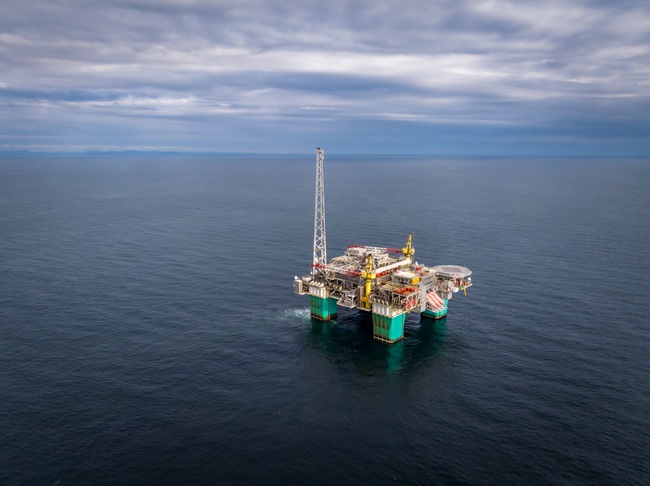
The Gjøa Subsea Projects will use infrastructure that has already absorbed much of the capital required to establish an offshore production hub. The Gjøa field began production in 2010 and is developed through a semi-submersible production facility with processing and export capability. The platform already receives production from nearby fields including Vega, Duva and Nova, demonstrating its ability to function as a regional host rather than merely serving the original Gjøa reservoirs.
Using existing facilities allows Cerisa, Gjøa Nord and Ofelia to avoid the expense of constructing three independent offshore production platforms. The discoveries can instead be connected through subsea production systems, flowlines, umbilicals and control infrastructure. This lowers the capital threshold required to turn smaller discoveries into producing assets and can shorten the period between final investment decision and first production.
Vår Energi ASA expects the projects to achieve a breakeven below $35 per barrel of oil equivalent and a rate of return comfortably above 25%. Those economics reflect infrastructure reuse, standardised subsea designs and the relatively rapid production schedule. Cerisa is expected to start producing approximately 15 months after the June 2026 investment decision, which would be an unusually compressed timeline for a new offshore development.
The NOK 14 billion investment equates to roughly NOK 184, or about $18.70, for each barrel of gross recoverable resource. That simple calculation is not a complete measure of project economics because production profiles, operating costs, taxes, commodity prices and ownership interests all affect returns. It nevertheless indicates why infrastructure-led developments can compete for capital even when the underlying resource base is modest by global offshore standards.
Can the Gjøa Subsea Projects help Vår Energi sustain production above 400,000 boe per day?
Vår Energi ASA produced approximately 406,000 barrels of oil equivalent per day during the first quarter of 2026, following a major expansion of its Norwegian Continental Shelf portfolio. The company has raised its long-term production ambition to more than 400,000 barrels of oil equivalent per day, supported by projects already under construction and a pipeline of around 30 early-stage opportunities.
Maintaining that output is different from reaching it temporarily. Offshore fields naturally decline once reservoir pressure falls and mature wells produce less efficiently. Vår Energi ASA must therefore add new wells, tiebacks and field developments at a pace sufficient to replace decline across its existing portfolio. The Gjøa Subsea Projects contribute to this objective by introducing production in stages from 2027 and 2028.
The programme is unlikely to transform group production on its own. Vår Energi ASA owns between 30% and 40% of the three discoveries before giving effect to recent portfolio transactions, and the net reserve contribution is around 27 million barrels of oil equivalent. Its strategic value comes from being one component of a wider sequence that includes Balder Next, Goliat expansion, Greater Ekofisk projects and other Norwegian Continental Shelf developments.
This portfolio model reduces dependence on any single megaproject. Several smaller developments can create a smoother production profile and may require less concentrated capital than one very large field. However, the model also demands continuous execution. A project factory works only when approvals, drilling, equipment deliveries and start-ups move reliably through the system. A factory with a queue of delayed projects is merely a waiting room with expensive subsea hardware.
Why does extending the Gjøa hub toward 2040 create value beyond the three discoveries?
The Gjøa Subsea Projects are expected to extend the economic lifetime of the wider area from the early 2030s to around 2040. This matters because the value of offshore infrastructure depends partly on how long it can process commercially viable volumes. Once throughput falls below an economic level, fixed operating and maintenance costs become increasingly difficult to support.
Adding Cerisa, Gjøa Nord and Ofelia will increase utilisation of the Gjøa facilities and spread fixed costs across more barrels. Higher throughput can reduce unit production costs for the host field and existing satellite developments. It can also delay decommissioning expenditure, preserving infrastructure that may be needed for further discoveries.
A longer operating horizon improves the economics of future near-field exploration. A small discovery made in 2029 would be less attractive if the host platform were expected to close shortly afterwards. Extending Gjøa toward 2040 gives Vår Energi ASA and its partners more time to drill prospects and connect additional resources.
This creates a reinforcing cycle. New tiebacks extend platform life, an extended platform life improves the value of nearby prospects, and successful exploration creates more potential tiebacks. The cycle remains dependent on technical capacity and reservoir quality, but it can extract considerably more value from infrastructure originally built for a much narrower field-development purpose.
The risk is that long-term operating costs rise as infrastructure ages. Additional inspection, maintenance and modification work may be required to keep Gjøa operating safely through the next decade. Extending economic life is attractive only when incremental production comfortably covers those costs and does not introduce disproportionate reliability risk.
What does Vår Energi’s project factory strategy mean for offshore suppliers and contractors?
Vår Energi ASA is developing the Gjøa programme through strategic supplier relationships rather than restarting procurement from zero for every discovery. The company previously established a five-year collaboration with TechnipFMC for integrated subsea production systems and subsea umbilicals, risers and flowlines across developments in the area. Early engineering and procurement work began before the formal investment decision, helping compress the post-sanction schedule.
This approach can improve cost visibility because the operator and supplier work together while the development concept is still being matured. Standardised equipment can reduce engineering hours, simplify manufacturing and shorten qualification processes. Integrated responsibility may also reduce the commercial friction that emerges when separate contractors blame each other for problems at the interface between subsea hardware and installation work.
For TechnipFMC, the coordinated programme represents more than a single equipment order. It reinforces the company’s integrated engineering and construction model and could create follow-on opportunities if additional Gjøa-area discoveries are sanctioned. A successful programme would also provide another reference for standardised tieback execution across mature offshore basins.
The model transfers significant responsibility to the supplier ecosystem. Manufacturing slots, vessel availability and subsea equipment delivery must remain aligned with an aggressive timetable. If a key component is delayed, there may be fewer alternative suppliers available at short notice because the project has been designed around an integrated execution model.
The wider Norwegian offshore services sector should benefit from the estimated 3,000 person-years of employment expected during development. The economic impact will extend across engineering, fabrication, drilling, marine installation and project services. However, a crowded Norwegian project pipeline could tighten skilled-labour and vessel availability, creating inflation that weakens some of the savings expected from standardisation.
How do the different licence partnerships complicate capital allocation across the Gjøa programme?
Vår Energi ASA currently holds interests of 40% in Ofelia, 30% in Gjøa Nord and 30% in Cerisa before accounting for recently announced transactions. The Ofelia partnership includes Harbour Energy plc, Pandion Energy, DNO ASA and Aker BP ASA. Gjøa Nord includes Petoro AS, Harbour Energy plc and OKEA ASA, while Cerisa includes INPEX Idemitsu Norge AS, ORLEN Upstream Norway AS and DNO ASA.
This broad partner base spreads capital requirements and geological risk across several companies. It also gives each development access to partners with established Norwegian Continental Shelf experience. The presence of Petoro AS ensures direct Norwegian state participation in Gjøa Nord, while the listed partners gain exposure to relatively low-breakeven production without operating the developments themselves.
The disadvantage is that each partner has a different portfolio, balance sheet and capital-allocation framework. A project that is strategically central to Vår Energi ASA may represent only a small non-operated interest for Aker BP ASA or Harbour Energy plc. Cost increases, schedule changes or later expansion decisions could therefore require negotiations across companies with different priorities.
Recent portfolio transactions are intended to improve alignment around the hub. Vår Energi ASA agreed to acquire Pandion Energy’s remaining Norwegian assets and entered into an asset swap with DNO ASA that adjusts ownership around Gjøa, Gjøa Nord and Nova. These moves suggest that the company is not merely developing the hub technically. It is also reshaping ownership to increase exposure to infrastructure and discoveries it considers strategically important.
Greater ownership can create more value when projects perform well, but it also increases capital exposure. Vår Energi ASA must balance its appetite for high-return tiebacks with its dividend commitments and broader development programme. Low breakeven does not mean free, and a dozen attractive projects can still produce a very large capital budget when sanctioned together.
Why are Vår Energi shares falling despite a pipeline of low-breakeven projects?
Vår Energi ASA shares closed at approximately NOK 41.19 on June 24, before the Gjøa investment decision was announced. The stock had fallen around 4.9% over five trading days and approximately 13% from its May 26 close of NOK 47.34. It remained within a 52-week range of roughly NOK 31 to NOK 50.70 and traded near NOK 41 during the June 25 session.
The decline does not necessarily indicate opposition to the Gjøa development. The project has a breakeven below $35 per barrel of oil equivalent and an expected return above 25%, characteristics that generally support rather than weaken the investment case. The more immediate pressure appears connected to falling oil prices, weaker short-term energy-sector sentiment and investor concern about how commodity volatility may affect cash generation.
Vår Energi ASA also carries an unusually strong income-investor identity. The company paid a first-quarter dividend equivalent to $300 million and indicated a similar level for the second quarter, within its policy of distributing 25% to 30% of after-tax operating cash flow across the commodity cycle. Its annualised dividend yield remained around 11% at the June share price.
That yield can be interpreted in two ways. It may indicate that the stock offers substantial income while production remains strong. It may also show that investors are pricing in uncertainty over whether high distributions can be maintained alongside a large project pipeline if oil and gas prices weaken.
The Gjøa programme is therefore strategically positive but unlikely to determine short-term trading by itself. Investors will place more weight on commodity prices, quarterly production, project spending, free cash flow and dividend guidance. The FID strengthens the production outlook from 2027 onward, but the market is currently asking whether near-term cash generation can support both growth and distributions without increasing financial strain.
What execution and commodity risks could weaken returns from the Gjøa Subsea Projects?
The most immediate risk is the compressed schedule for Cerisa. First production is targeted for the third quarter of 2027, requiring engineering, equipment manufacturing, drilling, installation, testing and commissioning to proceed with limited disruption. Early procurement reduces some schedule risk, but it also creates exposure if the final development configuration changes after equipment commitments have been made.
Coordinating three discoveries can generate synergies, but it can also create interdependence. Vessel delays, manufacturing problems or drilling underperformance could affect more than one field. The partners will need to maintain contingency within the installation schedule rather than relying on an execution plan that works only when every component arrives precisely on time.
Reservoir performance is another uncertainty. The 76 million barrels of oil equivalent figure represents proved and probable reserves based on current technical assumptions. Actual recovery will depend on reservoir connectivity, well productivity, pressure support and production reliability. A tieback project can meet its construction budget and still underperform economically if wells produce less than expected.
Commodity prices remain the largest external variable. A breakeven below $35 per barrel of oil equivalent provides a meaningful buffer, but realised value depends on the mix of oil, gas and condensate and the prices achieved when production begins. Norwegian gas can command strategic importance in Europe, yet gas prices are also volatile and influenced by weather, storage levels, liquefied natural gas imports and industrial demand.
Cost inflation could narrow projected returns even without a major delay. Norway has multiple offshore developments moving through fabrication and installation, increasing competition for engineering talent, drilling capacity and specialist vessels. Standardisation helps, but it cannot fully insulate a project from a tightening supplier market.
What milestones should investors watch before the first Cerisa production in 2027?
The first milestone will be regulatory approval of the Ofelia and Gjøa Nord development plans. The Norwegian approval process is established and predictable, but the ministry may still review technical, environmental and economic assumptions before allowing execution to proceed as planned.
The second milestone will be confirmation of major subsea contract awards and equipment manufacturing progress. Investors should watch whether TechnipFMC and other suppliers maintain the expected delivery schedule. Any change in contract value or installation timing could indicate that the original NOK 14 billion estimate is coming under pressure.
Drilling performance will be especially important because Cerisa has the earliest production target. Well completion dates, reservoir results and subsea installation progress will determine whether the third-quarter 2027 start remains realistic. Successful Cerisa delivery would also improve confidence in the more complex Ofelia and Gjøa Nord start-ups expected during the second half of 2028.
Investors should also monitor Vår Energi ASA’s total annual project sanctions rather than examining Gjøa in isolation. The company is targeting more than a dozen subsea tieback approvals during 2026. Each may satisfy return requirements individually, but the combined capital demand, supplier workload and management attention will determine whether the project factory produces dependable growth or stretches execution capacity too far.
The final test will be whether new production stabilises group output above 400,000 barrels of oil equivalent per day while supporting dividends and balance-sheet discipline. That outcome would validate the hub-development strategy. If production declines faster than new projects arrive, the company may need to accelerate further investment simply to remain in the same place.
Key takeaways on what the Gjøa Subsea Projects mean for Vår Energi and Norway’s offshore industry
- Vår Energi ASA and its partners are investing approximately NOK 14 billion to develop Cerisa, Gjøa Nord and Ofelia as a coordinated subsea programme.
- The three discoveries contain approximately 76 million barrels of oil equivalent in gross proved and probable reserves.
- Cerisa is expected to start production in the third quarter of 2027, followed by Gjøa Nord and Ofelia during the second half of 2028.
- Existing Gjøa and Duva infrastructure allows the partners to avoid constructing new standalone offshore production platforms.
- The project targets a breakeven below $35 per barrel of oil equivalent and a return comfortably above 25%.
- Additional throughput is expected to extend the Gjøa area’s economic life from the early 2030s to around 2040.
- The development supports Vår Energi ASA’s ambition to sustain production above 400,000 barrels of oil equivalent per day over the long term.
- Strategic supplier collaboration and standardised subsea designs could reduce development time, although the compressed schedule increases execution sensitivity.
- Vår Energi ASA shares have fallen approximately 13% over one month as weaker commodity sentiment outweighs the longer-term value of new project sanctions.
- The decisive investor test will be whether Vår Energi ASA can execute multiple tiebacks while preserving free cash flow, dividends and balance-sheet discipline.
Discover more from Business-News-Today.com
Subscribe to get the latest posts sent to your email.