





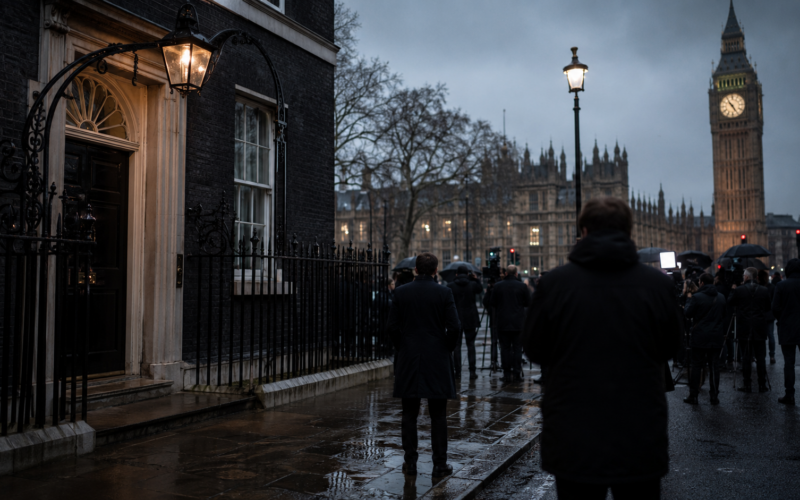
British Prime Minister Keir Starmer remained in office on June 21, 2026, but his political survival appeared increasingly uncertain after more than 100 Labour Party lawmakers publicly called for him to resign or establish a timetable for his departure. An unconfirmed newspaper report published late on June 20 said Keir Starmer was considering an orderly exit, while a government source disputed that account and maintained that the prime minister remained focused on governing.
Pressure intensified after Andy Burnham won the Makerfield parliamentary by-election on June 19, returning to the House of Commons and gaining the institutional platform required to challenge for the Labour Party leadership. Keir Starmer said on June 19 that he would fight any formal challenge and warned that an internal contest could divide the Labour Party.
No resignation had been formally announced by early June 21, and no Labour Party leadership election had begun. Keir Starmer therefore remains prime minister and Labour leader, while Andy Burnham has not formally declared a leadership challenge.
The immediate issue is no longer whether Keir Starmer faces internal opposition. The decisive question is whether the prime minister retains enough authority among Labour lawmakers, cabinet ministers, trade unions and party members to continue governing without prolonged paralysis.
What has been confirmed about Keir Starmer’s position and what remains an unverified claim?
The confirmed position is that Keir Starmer remains prime minister of the United Kingdom and leader of the Labour Party. The official British government directory continued to identify Keir Starmer as prime minister, First Lord of the Treasury, Minister for the Civil Service and Minister for the Union.
Keir Starmer has not formally submitted his resignation to King Charles III, announced an intention to leave Downing Street or triggered a Labour leadership election. The Labour Party has also not announced that the leadership position is vacant.
A report published on June 20 said Keir Starmer was expected to issue a statement about his future as early as Monday and was considering an organised departure. That report relied on unnamed sources and was challenged by a government source who said the prime minister remained focused on his work.
This distinction is central to responsible coverage. Keir Starmer is facing an escalating leadership crisis, but it would be inaccurate to report that he has resigned or definitively decided to resign.
The uncertainty may continue through the weekend because Keir Starmer is reportedly reviewing his position at Chequers, the official country residence used by British prime ministers. Private discussions about political survival do not constitute a formal constitutional decision.
The next confirmed development would need to come through a public statement from Keir Starmer, an announcement from Downing Street, a formal Labour Party process or an official resignation submitted to the monarch.
Until one of those events occurs, the most accurate description is that Keir Starmer remains in office under severe and rapidly increasing pressure.
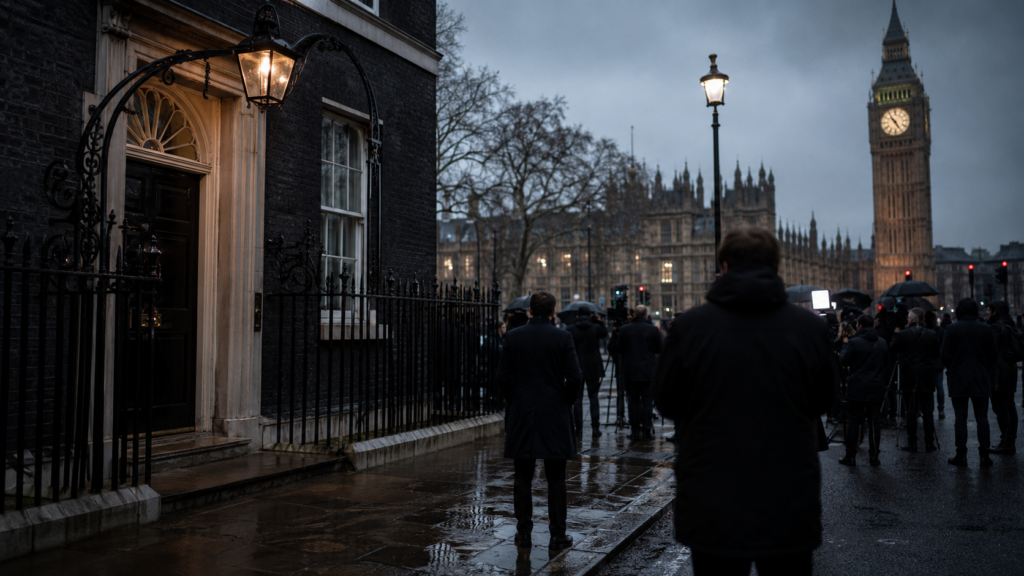
Why did Andy Burnham’s Makerfield by-election victory transform the Labour leadership crisis?
Andy Burnham’s victory changed the internal balance of the Labour Party because it returned a prominent potential challenger to the House of Commons.
Andy Burnham previously served in senior government and opposition roles before becoming mayor of Greater Manchester. Andy Burnham built a substantial regional profile through disputes over public transport, health policy, regional investment and the distribution of political power between London and northern England.
However, Andy Burnham could not realistically become prime minister while remaining outside Parliament. British prime ministers are expected to sit in the House of Commons and command the confidence of a parliamentary majority.
The Makerfield by-election removed that barrier. Andy Burnham won approximately 55 percent of the vote and defeated the Reform UK candidate by more than 9,000 votes, giving Labour a politically valuable victory at a time when the party has faced pressure from Nigel Farage’s movement.
The result strengthened Andy Burnham in two ways. It demonstrated that Andy Burnham could defeat Reform UK in a working-class constituency, and it gave dissatisfied Labour lawmakers a visible alternative to Keir Starmer.
Andy Burnham did not formally challenge Keir Starmer immediately after the result. Andy Burnham instead promised a new political direction and emphasised the need for economic and institutional change.
Supporters of Andy Burnham are expected to demonstrate that he has sufficient parliamentary backing to become the leading candidate in any Labour leadership contest. Some allies favour a negotiated transition that would avoid a prolonged internal campaign, while other Labour figures argue that members should be offered a genuine choice between competing candidates.
The pressure on Keir Starmer therefore comes from more than poor polling or public dissatisfaction. A potential successor now sits in Parliament with a fresh electoral mandate and an organised network of supporters.
Why have more than 100 Labour lawmakers turned against Keir Starmer’s leadership?
Keir Starmer led the Labour Party to a large parliamentary majority in the July 2024 general election, ending 14 years of Conservative-led government. The scale of that victory initially gave Keir Starmer substantial institutional authority.
That authority has weakened through a combination of policy reversals, internal disputes, declining public confidence and dissatisfaction over the government’s response to living costs, public services and immigration.
More than 100 Labour lawmakers, representing roughly one-quarter of the party’s members in the House of Commons, have publicly called for Keir Starmer to resign or establish a departure timetable.
The number is politically significant because prime ministers depend on their parliamentary party to pass legislation, defend government decisions and communicate a united message to voters.
A rebellion involving a small ideological faction can often be contained. Opposition involving lawmakers from several wings of a governing party becomes harder to dismiss because it suggests that dissatisfaction concerns leadership effectiveness rather than one disputed policy.
Some Labour lawmakers fear that Keir Starmer’s unpopularity could cause the party to lose seats to Reform UK, the Conservative Party, the Liberal Democrats and nationalist parties at the next general election.
Others argue that another leadership contest would make Labour appear unstable and distract the government from economic management, healthcare, housing and national security.
The disagreement is therefore not simply between supporters and opponents of Keir Starmer. Labour lawmakers are also debating whether changing the leader would restore public confidence or deepen the impression that Britain has become difficult to govern.
Keir Starmer’s ability to survive may depend on whether cabinet ministers remain publicly loyal. A sequence of ministerial resignations could make it difficult for the prime minister to demonstrate that the government still functions as a coherent administration.
Would Keir Starmer’s resignation automatically trigger a United Kingdom general election?
A resignation by Keir Starmer would not automatically require a general election.
The United Kingdom elects members of Parliament rather than directly electing a prime minister. The monarch appoints the person judged most likely to command the confidence of the House of Commons.
If Keir Starmer resigned as Labour leader and prime minister, the Labour Party could select a replacement while retaining its parliamentary majority. King Charles III could then invite the new Labour leader to form a government.
The outgoing prime minister would normally remain in office until a successor was clearly identified, preventing a gap in executive authority.
A new prime minister could decide to call a general election, but would not be constitutionally required to do so merely because the governing party had changed leader.
This distinction matters because opposition parties would almost certainly demand an election if Labour installed another prime minister without a public vote. They could argue that a new leader with a different programme required a fresh democratic mandate.
Labour could respond that the party won a parliamentary majority in 2024 and retains the constitutional authority to govern until the next election is required.
Recent British history includes several changes of prime minister without an immediate general election. The constitutional test is whether the government continues to command confidence in the House of Commons, not whether the individual prime minister personally led the party at the previous election.
A Labour leadership transition could therefore happen relatively quickly if one candidate secured overwhelming internal support. A contested election involving lawmakers, local parties, affiliated organisations and Labour members could take longer and prolong political uncertainty.
How would a leadership transition affect Britain’s economic and fiscal policy?
Financial markets would focus heavily on whether a new Labour leader retained Chancellor of the Exchequer Rachel Reeves and continued the government’s existing fiscal strategy.
Rachel Reeves has emphasised economic stability, limits on borrowing and rules intended to reduce debt over time. Those policies have constrained government spending and created internal tensions among Labour lawmakers seeking faster investment in public services.
Andy Burnham has advocated a more regionally focused economic approach and has supported greater public investment in transport, housing and infrastructure. A Burnham leadership could therefore create expectations of a change in spending priorities.
However, any new prime minister would inherit the same fiscal constraints facing Keir Starmer. Britain continues to manage high public debt, pressure on healthcare and local government budgets, weak productivity growth and demands for additional defence spending.
A leadership change would not remove those constraints. It would instead reopen political questions about taxation, borrowing, welfare, pensions and the speed of public investment.
Government bond markets could respond negatively if a new administration appeared willing to increase borrowing without a credible funding framework. Businesses could also delay investment if a leadership contest created uncertainty over tax, planning, energy and labour policy.
A rapid and orderly transition might reduce disruption if the incoming leader clearly explained the economic programme and retained experienced ministers during the handover.
A prolonged conflict between Downing Street, cabinet ministers and Labour lawmakers could have the opposite effect by weakening the government’s ability to make decisions and communicate policy consistently.
The leadership crisis is therefore not only a party matter. It could influence fiscal expectations, investment confidence and Britain’s ability to respond to international economic shocks.
What could a change of prime minister mean for British foreign and security policy?
Britain’s core foreign and security commitments are unlikely to change immediately because they are supported by major institutions and broad parliamentary coalitions.
The United Kingdom remains a member of the North Atlantic Treaty Organization, a permanent member of the United Nations Security Council and an important supporter of Ukraine. Britain also maintains close defence and intelligence relationships with the United States and European partners.
A new Labour leader would nevertheless bring different political priorities, ministerial appointments and relationships with foreign governments.
Allies would seek reassurance that Britain remained committed to defence spending, Ukraine, European security and the management of tensions involving Iran and the Middle East.
Ukraine would pay particular attention because British political instability could affect the timing of military assistance, sanctions decisions and diplomatic initiatives.
European governments would monitor whether a new Labour administration changed the approach towards trade, migration, defence cooperation and the post-Brexit relationship with the European Union.
The United States would evaluate the new prime minister’s position on military cooperation, intelligence, energy security and international conflicts.
Foreign-policy continuity is often maintained during leadership transitions, but political uncertainty can reduce a government’s influence during negotiations. Other countries may delay agreements or wait to see whether ministers remain in office.
The wider international implication is that Britain could install its seventh prime minister in slightly more than a decade if Keir Starmer leaves. Frequent leadership changes can weaken the perception of long-term policy stability even when formal alliances remain intact.
Could another Labour leadership contest strengthen Reform UK and the opposition parties?
Reform UK has become a central factor in Labour’s internal debate because many Labour lawmakers believe the party is losing support among working-class voters dissatisfied with immigration, living costs and public services.
Andy Burnham’s victory in Makerfield was interpreted by supporters as evidence that Labour can defeat Reform UK through a more locally focused and economically interventionist message.
Keir Starmer’s allies may argue that leadership turmoil would give Reform UK an opportunity to present Labour as divided and absorbed by internal politics.
The Conservative Party would also use a leadership contest to argue that Labour had abandoned the stability promised during the 2024 election campaign.
The Liberal Democrats could target moderate and professional voters who view both Labour and the Conservatives as unstable or ineffective.
A successful transition could help Labour reset its public image, particularly if the new leader united the parliamentary party and introduced a clear policy programme.
An unsuccessful transition could produce competing factions, ministerial departures and disputes over the legitimacy of the new leader.
The risk for Labour is that changing prime minister may not address the underlying problems driving public dissatisfaction. Household finances, housing shortages, National Health Service pressures and immigration would remain politically difficult regardless of who occupies Downing Street.
The opportunity is that a new leader could communicate those challenges differently and rebuild support among voters who have stopped listening to Keir Starmer.
What happens next in the Keir Starmer and Andy Burnham leadership confrontation?
The first development to watch is whether Keir Starmer makes a statement on Monday, June 22. Reports have suggested that senior Labour figures expect clarity about the prime minister’s future, but no official announcement has been confirmed.
Andy Burnham is expected to take his seat in the House of Commons, giving Andy Burnham the ability to participate fully in parliamentary Labour politics.
Supporters of Andy Burnham may then present evidence that he has substantial backing among Labour lawmakers. A strong public demonstration of support could increase pressure for a negotiated transition.
Keir Starmer could refuse to resign and challenge opponents to initiate the formal Labour leadership process. That decision could lead to a prolonged contest and additional ministerial resignations.
Keir Starmer could also announce a future departure date, allowing the Labour Party to organise a leadership election while maintaining continuity in government.
A third possibility is that Keir Starmer remains in office after securing renewed cabinet support and persuading undecided lawmakers that a leadership contest would damage Labour more than his continued leadership.
The decisive indicators will include cabinet statements, ministerial resignations, the number of lawmakers backing Andy Burnham and whether another candidate enters the contest.
Former health minister Wes Streeting has previously indicated a willingness to challenge Keir Starmer. Other senior Labour politicians could also seek nominations if the leadership becomes vacant.
The situation remains fluid. Keir Starmer has not resigned, Andy Burnham has not formally launched a challenge and Labour has not announced a leadership timetable.
The political reality, however, has changed. Keir Starmer now faces a potential successor inside Parliament, an organised rebellion involving more than 100 Labour lawmakers and growing demands for a decision that could determine the direction of the British government.
What are the key takeaways from the escalating Keir Starmer leadership crisis?
- Keir Starmer remained prime minister and Labour Party leader on June 21, 2026, despite an unconfirmed report that he was considering an orderly departure and could clarify his position as early as Monday.
- Downing Street disputed suggestions that a resignation decision had been made, while Keir Starmer had publicly stated on June 19 that he intended to fight any formal challenge to his leadership.
- More than 100 Labour lawmakers have publicly called for Keir Starmer to resign or establish an exit timetable, creating a rebellion involving approximately one-quarter of the party’s representation in the House of Commons.
- Andy Burnham returned to Parliament after winning the Makerfield by-election on June 19 with approximately 55 percent of the vote, removing a major institutional obstacle to a possible Labour leadership challenge.
- Andy Burnham has not formally challenged Keir Starmer, but supporters are seeking to demonstrate that Andy Burnham has enough backing to become the leading candidate in any leadership election or negotiated transition.
- A resignation by Keir Starmer would not automatically trigger a general election because the Labour Party could select a new leader capable of commanding confidence in the House of Commons.
- Financial markets and businesses would closely monitor whether a new prime minister retained Chancellor Rachel Reeves, maintained Labour’s fiscal rules or shifted towards higher borrowing and faster public investment.
- The next decisive developments are expected around Monday, when Keir Starmer may clarify his future, Andy Burnham is expected to enter the House of Commons and Labour factions could reveal their levels of support.
Share this:
Discover more from Business-News-Today.com
Subscribe to get the latest posts sent to your email.