
The Union government has constituted a High-Level Committee on Demographic Change to study population changes arising from illegal immigration and other abnormal reasons, placing demographic shifts, border management, national security and social stability at the centre of a new policy review.
The Ministry of Home Affairs announced the formation of the committee on May 26, 2026. The committee has been set up to examine demographic changes linked to illegal immigration and other abnormal factors, assess their implications and suggest measures to address the challenge. The move follows Prime Minister Narendra Modi’s Independence Day announcement on August 15, 2025, when he referred to a high-powered demography mission, and the Union Cabinet’s approval of the proposal on September 11, 2025.
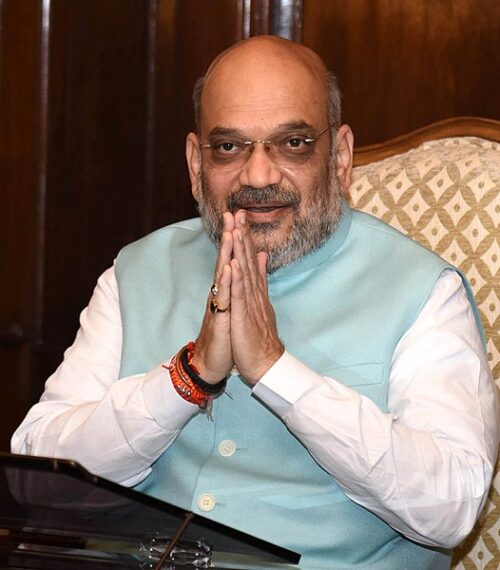
Union Home Minister and Minister of Cooperation Amit Shah said the issue of illegal infiltration and other causes of unnatural demographic change posed a major challenge for the present and future of the country. The government has framed the committee as part of a broader effort to protect national security, sovereignty, social balance and vulnerable communities affected by demographic pressures.
The move comes at a politically sensitive time. Illegal immigration has remained a major issue in border states, particularly in parts of eastern and northeastern India, where questions of citizenship, land, identity, local resources and electoral representation have shaped public debate for decades. The formation of a national-level committee indicates that the Union government now wants a structured assessment of demographic shifts instead of treating the issue only as a law-and-order or state-level concern.
Why has the Union government formed a High-Level Committee on Demographic Change now?
The Union government has formed the High-Level Committee on Demographic Change to study demographic changes arising from illegal immigration and other abnormal reasons. The committee’s mandate is to assess the nature of these changes and suggest measures to deal with them.
The timing is significant because the panel follows an earlier policy signal from Prime Minister Narendra Modi. The Prime Minister announced a high-powered demography mission on August 15, 2025. The Union Cabinet later approved the proposal on September 11, 2025. The May 26, 2026 formation of the committee turns that announcement into an institutional mechanism under the Ministry of Home Affairs.
The government’s position is that illegal infiltration and related demographic changes create long-term challenges for national security, social balance and vulnerable communities. The broader implication is that demographic change is now being treated as a governance issue with security, administrative, legal and political dimensions.
This also means the committee could become an important reference point for future policy decisions. Its recommendations may influence how the Union government and state governments approach illegal immigration, border management, identity documentation, detention procedures, deportation frameworks and welfare access.
How does illegal immigration connect with India’s national security and border management debate?
Illegal immigration connects with national security because demographic changes in sensitive regions can affect border stability, local governance, resource allocation and internal security planning. India shares long and complex borders with several countries, including Bangladesh, Myanmar, Pakistan and Nepal. Some of these borders pass through riverine areas, forests, villages and difficult terrain, making monitoring and enforcement challenging.
The confirmed government concern is that illegal immigration and other abnormal causes may be contributing to demographic shifts. The institutional response is the creation of a high-level committee under the Union government to study the issue. The broader consequence is that the debate may shift from political claims to a more formal review of evidence, patterns and policy options.
Border states often face the most immediate consequences of population movement. Local concerns can include pressure on land, access to public services, labour-market competition, changes in voter rolls, community tensions and questions over documentation. In some areas, illegal immigration has also been linked in political discourse to fears about cultural identity, tribal protections and the rights of indigenous communities.
At the same time, demographic policy must be handled carefully. Population movement can involve refugees, migrants, undocumented workers, trafficked persons and people fleeing violence or poverty. A credible policy framework must distinguish between legal categories, security risks and humanitarian realities while ensuring that enforcement actions remain lawful and administratively sound.
Why are northeastern and eastern Indian states central to the demographic change debate?
Northeastern and eastern Indian states are central to the demographic change debate because border movement, identity politics and population change have long shaped political and social tensions in these regions. Assam, West Bengal and several northeastern states have seen sustained debate over illegal immigration, citizenship verification, land pressure and community identity.
The formation of the High-Level Committee on Demographic Change gives this debate a national institutional frame. The government is no longer looking only at isolated incidents or state-level controversies. It is asking a committee to study demographic changes across India arising from illegal immigration and other abnormal causes.
The broader consequence is that the committee’s work could affect policymaking in regions where demographic anxieties are already politically powerful. In Assam, for example, questions around migration, citizenship and identity have shaped decades of politics. In border districts of West Bengal, illegal immigration has also been a recurring political issue. In tribal and frontier regions, demographic change can be viewed through the lens of indigenous rights, land security and cultural continuity.
The challenge for the committee will be to separate evidence from political rhetoric. Demographic change can result from many factors, including fertility patterns, internal migration, economic movement, urbanisation, conflict, displacement and illegal cross-border entry. The committee’s credibility will depend on how clearly it distinguishes illegal immigration from broader population trends.
What could the committee examine while assessing demographic changes across India?
The committee is expected to study demographic changes arising from illegal immigration and other abnormal reasons, and suggest measures to address them. A serious assessment would likely require district-level population data, border movement patterns, documentation gaps, electoral roll concerns, law enforcement inputs, migration routes, welfare access records and local administrative feedback.
The institutional purpose is to move the issue into a structured review process. Instead of relying only on political speeches or state-level claims, the committee can examine data, identify vulnerable regions and recommend administrative or legal responses. This could include stronger border surveillance, improved identity verification, tighter coordination between central and state agencies, and clearer procedures for identifying and handling undocumented migrants.
The broader implication is that the committee may influence both security policy and civil administration. If the committee recommends tougher enforcement, the government may expand identification, detention and deportation mechanisms. If the committee identifies documentation weaknesses, there may be greater emphasis on identity systems, population registers and inter-agency data sharing.
However, any such process would need safeguards. Identification of illegal immigrants requires due process, documentation review, appeals mechanisms and coordination with foreign governments for deportation. Without procedural safeguards, enforcement can create legal disputes, humanitarian concerns and administrative confusion.
How could the demographic change panel affect citizenship, welfare and electoral policy debates?
The High-Level Committee on Demographic Change could affect citizenship, welfare and electoral policy debates because demographic change is closely tied to documentation and public entitlements. If the committee finds that illegal immigration is affecting local population structures, future policy debates may focus on who is eligible for welfare schemes, who appears on electoral rolls and how citizenship claims are verified.
The confirmed government action is the formation of a committee to study the issue and recommend measures. The institutional consequence is that the Ministry of Home Affairs could receive a formal policy roadmap after the committee completes its work. The broader national consequence is that demographic change may become a more central theme in future lawmaking and election campaigns.
Electoral policy could become especially sensitive. Allegations around illegal immigrants being included in voter lists have appeared repeatedly in political debate. Any recommendation linked to electoral verification would involve the Election Commission of India, state authorities and legal scrutiny. Such processes would need to avoid wrongful exclusion of legitimate citizens.
Welfare policy could also be affected. Governments may review access to ration cards, housing schemes, identity documents, health benefits and other public services if illegal immigration is found to be affecting beneficiary lists. This would require careful balance because welfare systems also serve vulnerable citizens who may have weak documentation.
Why is the committee politically sensitive despite being framed as a policy review?
The committee is politically sensitive because demographic change is not a neutral administrative topic in India’s public debate. It touches identity, religion, citizenship, border security, land rights, tribal protections and electoral competition. These issues can quickly become polarising, especially in states where population change has historically shaped political conflict.
The government has framed the panel as a national security and demographic review mechanism. The institutional objective is to study illegal immigration and abnormal demographic change and recommend responses. The broader consequence is that the committee’s findings may influence political narratives around infiltration, citizenship and national identity.
Opposition parties and civil society groups may scrutinise the committee’s mandate, methodology and language. Concerns may arise over whether the process could stigmatise particular communities, whether demographic claims are supported by data and whether enforcement measures could affect citizens with poor documentation. These concerns are likely to grow if the committee’s work leads to policy proposals around detention or deportation.
For the government, the political argument is different. The government is likely to present the committee as a necessary response to long-term demographic pressures that affect security and social balance. That framing may resonate in border states where illegal immigration has been a sustained political issue.
What happens next after the formation of the High-Level Committee on Demographic Change?
The next phase will depend on the committee’s composition, terms of reference, data access and timeline. The committee will need to collect information from central agencies, state governments, border authorities, local administrations and possibly security institutions. Its recommendations could shape future policy action by the Ministry of Home Affairs.
The confirmed development is that the committee has been constituted. The institutional task is to study demographic changes and suggest measures. The broader policy impact will depend on whether the committee produces actionable recommendations that can withstand legal, political and administrative scrutiny.
If the committee recommends stronger enforcement, the government may consider tighter border controls, improved identity checks and more structured mechanisms for identifying undocumented migrants. If the committee focuses on demographic assessment, it may first produce a data-led mapping of affected areas. If the committee identifies legal gaps, the government may consider legislative or regulatory changes.
The most important test will be credibility. A committee on demographic change must rely on transparent methodology, verifiable data and lawful policy design. If the process is viewed as evidence-based, it could become an important governance tool. If the process is viewed as politically selective, it could deepen controversy around immigration and identity.
What are the key takeaways from India’s High-Level Committee on Demographic Change?
- The Union government has constituted the High-Level Committee on Demographic Change. The committee will study demographic changes arising from illegal immigration and other abnormal reasons.
- The Ministry of Home Affairs announced the formation of the committee on May 26, 2026. The move follows Prime Minister Narendra Modi’s August 15, 2025 announcement of a high-powered demography mission.
- The Union Cabinet approved the proposal for the demographic change initiative on September 11, 2025. The May 2026 committee formation converts that earlier approval into an institutional mechanism.
- Union Home Minister and Minister of Cooperation Amit Shah has linked illegal infiltration and demographic change to national security concerns. The government has framed the issue as a challenge affecting sovereignty, social balance and future stability.
- Border states and sensitive regions are likely to be central to the committee’s assessment. Illegal immigration debates have long affected politics, citizenship discussions and identity concerns in eastern and northeastern India.
- The committee’s recommendations could influence future policy on identification, detention, deportation, documentation and border management. Any enforcement framework would need legal safeguards, administrative clarity and coordination between central and state authorities.
Discover more from Business-News-Today.com
Subscribe to get the latest posts sent to your email.