



Prozeal Green Energy Limited is preparing to raise Rs 700 crore through an initial public offering in the second quarter of FY27 after securing a major renewable energy contract from Oil and Natural Gas Corporation Limited (NSE: ONGC, BSE: 500312). The Ahmedabad-based renewable energy solutions provider has received an order to develop 250 MW of captive, inter-state transmission system-connected wind power projects valued at more than Rs 2,000 crore. The contract marks Prozeal Green Energy Limited’s entry into utility-scale wind energy and includes project execution as well as a 10-year operations and maintenance mandate. The immediate strategic relevance is clear: Prozeal Green Energy Limited is entering the public-market queue with a larger order book story, while Oil and Natural Gas Corporation Limited is using captive renewable capacity to support its energy transition roadmap.
Why does Prozeal Green Energy’s ONGC wind contract matter before its Rs 700 crore IPO?
Prozeal Green Energy Limited’s timing is important because renewable energy initial public offerings need more than a policy story. Investors usually want visible orders, credible counterparties, execution capability and a business model that can survive cost inflation, working capital pressure and project delays. The Oil and Natural Gas Corporation Limited mandate gives Prozeal Green Energy Limited a more tangible anchor as it prepares for its public listing plan.
The Rs 2,000 crore-plus order is also significant because it moves Prozeal Green Energy Limited beyond its better-known solar engineering, procurement and construction base. Utility-scale wind energy has different execution demands from solar, including site complexity, turbine logistics, wind-resource risk, grid connectivity and long-term operations performance. By entering this segment through a captive wind mandate from a major state-owned energy company, Prozeal Green Energy Limited gets both scale and institutional validation.
For IPO investors, the contract strengthens the revenue visibility argument. However, it also raises the execution bar. A large order can improve the IPO narrative, but it can also expose a company to working capital stretch, supplier coordination risk and margin compression if project delivery is not tightly managed. In renewable infrastructure, the headline order value makes the first impression. The cash conversion cycle writes the second paragraph.
How does the ONGC mandate change Prozeal Green Energy’s renewable energy positioning?
Prozeal Green Energy Limited has built its profile around end-to-end renewable energy solutions, particularly solar engineering, procurement and construction. The ONGC mandate broadens that platform into wind, creating a more diversified renewable infrastructure proposition. That matters because India’s next phase of clean-energy growth will not be built through solar alone. Large customers increasingly need hybrid, wind, storage and captive solutions to balance cost, reliability and decarbonisation targets.
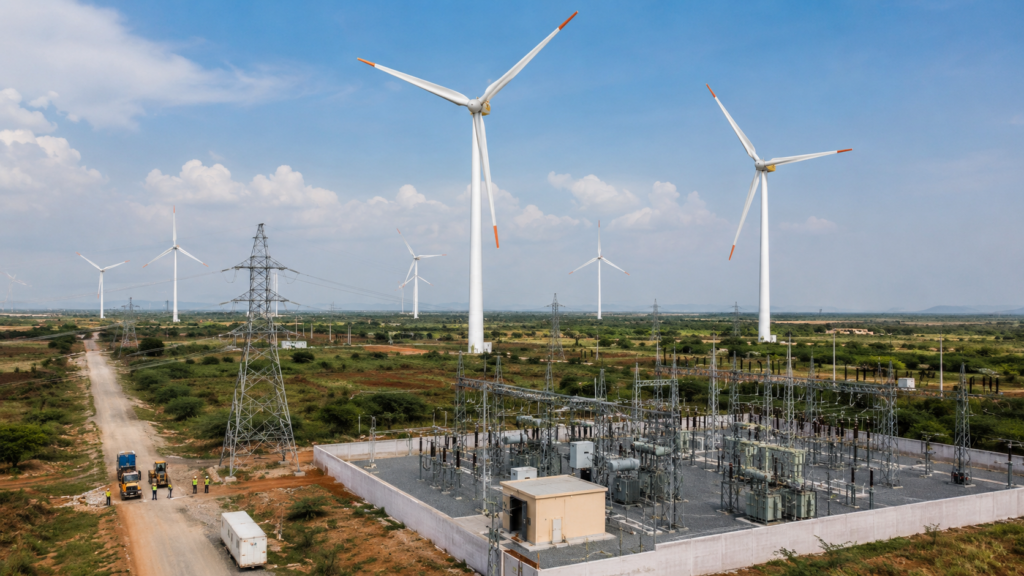
The 250 MW captive wind project also positions Prozeal Green Energy Limited closer to the industrial and public-sector decarbonisation market. Captive renewable power is becoming more relevant for large energy users because it can help reduce exposure to grid tariffs, emissions intensity and future compliance pressure. For a company heading toward an IPO, this kind of customer need can support a sharper growth story than generic renewable optimism.
The competitive implication is that Prozeal Green Energy Limited will now be compared with larger renewable engineering and project-development players that already operate across solar, wind, hybrid and storage formats. That is an opportunity, but it also means investors may apply tougher questions on execution track record, project pipeline quality, margins and whether the company can manage the transition from solar-led growth to a broader renewable infrastructure platform.
Why is Oil and Natural Gas Corporation using captive wind capacity in its energy transition plan?
Oil and Natural Gas Corporation Limited remains fundamentally an upstream oil and gas company, but the company has been building a deeper renewable energy transition pathway. Its renewable ambitions are linked to the need to reduce operational emissions, diversify energy exposure and respond to policy and investor pressure around decarbonisation. A captive wind project fits this direction because it can support internal power needs while adding clean-energy capacity under the company’s broader transition strategy.
The 250 MW wind project also shows how India’s state-owned hydrocarbon companies are becoming important buyers of renewable infrastructure. This is different from independent renewable developers selling power into distribution companies or merchant markets. Here, the buyer is an oil and gas major trying to reduce the carbon intensity of its own operations. That gives the project a strategic role beyond electricity procurement.
For Oil and Natural Gas Corporation Limited shareholders, the project is not large enough to change the near-term investment case by itself. The company’s stock closed around ₹252.60 on June 11, 2026, below its 52-week high of ₹307.50 and above its 52-week low of ₹228.61. The share-price context shows that investors are still valuing Oil and Natural Gas Corporation Limited mainly around crude prices, gas production, dividend expectations, royalty changes and upstream profitability. Renewable investments can improve long-term positioning, but they are still a secondary valuation driver for now.
What does the IPO structure reveal about Prozeal Green Energy’s capital needs?
Prozeal Green Energy Limited’s proposed Rs 700 crore IPO includes a Rs 350 crore fresh issue and a Rs 350 crore offer for sale by promoters and selling shareholders. This structure matters because only the fresh issue proceeds directly strengthen the company. The offer for sale gives existing shareholders liquidity, while the fresh capital supports the operating business.
The company plans to use a substantial portion of fresh proceeds for long-term working capital requirements. That detail is important. Renewable engineering and procurement businesses often need capital before revenue is fully realised because equipment procurement, project mobilisation, vendor payments and execution timelines can create funding gaps. A strong order book is useful only if the balance sheet can support delivery without expensive short-term borrowing or delayed project completion.
The proposed use of funds also suggests that Prozeal Green Energy Limited is preparing to scale rather than simply list. Working capital is not glamorous, but in infrastructure contracting it is oxygen. Investors may prefer a company that openly funds working capital instead of pretending that large projects magically build themselves. The risk is that working capital-heavy models can pressure return ratios if receivables stretch or if project cycles become longer than planned.
How could this deal influence India’s renewable energy IPO market?
The Prozeal Green Energy Limited transaction comes at a time when India’s IPO market has shown selective recovery after periods of volatility and global uncertainty. Renewable energy has strong thematic appeal, but public-market investors have become more discerning. They are not only buying the clean-energy slogan. They are looking for order visibility, credible customers, margin discipline, debt levels and a path to cash generation.
A large Oil and Natural Gas Corporation Limited contract gives Prozeal Green Energy Limited a stronger pre-listing signal. It helps demonstrate that public-sector customers are willing to award meaningful renewable infrastructure work to the company. That can support investor confidence, especially if the company can show how the order converts into revenue, operating profit and long-term maintenance income.
The broader IPO implication is that renewable companies entering the market may need to show segment depth rather than just sector exposure. Solar-only platforms, wind developers, storage companies, hybrid project specialists and renewable EPC firms will each need to prove where they sit in the value chain. Prozeal Green Energy Limited’s entry into utility-scale wind could help its positioning, but it also makes execution disclosure more important during the offer process.
What are the execution risks in Prozeal Green Energy’s move into utility-scale wind?
The first risk is project execution. Wind projects require land access, turbine supply coordination, logistics, grid connectivity, permissions and weather-sensitive installation schedules. A captive, ISTS-connected project can create additional complexity because grid integration and transmission alignment must be managed with precision. Any delay can affect revenue recognition, cost absorption and customer confidence.
The second risk is margin discipline. Renewable EPC contracts can appear attractive at order-win stage, but margins depend on procurement costs, commodity prices, subcontractor performance, currency exposure and project timing. If equipment or execution costs rise faster than contract assumptions, the headline value may not translate into attractive profitability. IPO investors will therefore look closely at historical margins and how the company prices risk in larger contracts.
The third risk is management bandwidth. Scaling from solar EPC into utility-scale wind while preparing for an IPO can strain systems, controls and leadership capacity. Public-market investors will want confidence that Prozeal Green Energy Limited has the governance structure, risk controls, project management discipline and reporting maturity required for listed-company scrutiny. Private companies can sometimes carry operational complexity quietly. Listed companies get their homework checked every quarter.
Why does the Prozeal and ONGC deal matter for India’s energy transition supply chain?
The deal matters because India’s energy transition is creating a deeper domestic supply chain around project design, engineering, procurement, construction, operations and maintenance. Large renewable targets cannot be met only by policy announcements or capital commitments. They require execution companies that can turn land, equipment, grid access and customer demand into functioning assets.
Prozeal Green Energy Limited’s contract with Oil and Natural Gas Corporation Limited reflects this execution layer. The order is not merely about adding wind capacity. It is about how India’s heavy energy users are beginning to procure clean power at scale and how domestic renewable companies are competing for larger, more complex mandates. That strengthens the industrial base supporting India’s clean-energy buildout.
The second-order consequence is increased competition among renewable EPC and infrastructure firms. As more state-owned enterprises, commercial and industrial customers and government-linked entities expand clean-energy procurement, companies with multi-technology capability may have an advantage. Solar, wind, storage and hybrid expertise could become a more valuable package than single-technology execution. Prozeal Green Energy Limited’s IPO story now rests partly on whether it can convince investors that it belongs in that broader category.
What should investors watch next as Prozeal Green Energy moves toward its IPO?
The first item to watch is the final IPO timeline. The company is targeting the second quarter of FY27, but market conditions, regulatory sequencing and investor appetite can influence launch timing. Renewable energy remains a popular theme, but primary-market windows can close quickly when volatility rises.
The second item is the contract execution schedule. Investors will need clarity on milestones, revenue recognition, margin expectations and how the 10-year operations and maintenance component contributes to recurring income. A long-term maintenance contract can improve earnings quality if priced well, but it can also lock in obligations that require consistent technical performance.
The third item is balance-sheet strength. The use of IPO proceeds for working capital suggests that growth will require funding support. That is normal for infrastructure execution businesses, but investors will want to assess receivables, debt, vendor concentration, customer concentration and operating cash flow. The ONGC order improves the story. The DRHP numbers and future disclosures will decide how much of that story investors are willing to pay for.
What are the key takeaways from Prozeal Green Energy’s ONGC contract and IPO plan for India’s renewable energy market?
- Prozeal Green Energy Limited’s Rs 2,000 crore-plus Oil and Natural Gas Corporation Limited contract gives the IPO-bound company a stronger institutional customer reference before its planned Rs 700 crore public issue.
- The 250 MW captive, ISTS-connected wind mandate marks Prozeal Green Energy Limited’s entry into utility-scale wind energy, expanding its renewable profile beyond solar engineering, procurement and construction.
- The 10-year operations and maintenance component can improve long-term revenue visibility, but it also requires reliable technical performance after project commissioning.
- The proposed IPO structure includes a Rs 350 crore fresh issue and Rs 350 crore offer for sale, meaning only part of the issue will directly strengthen Prozeal Green Energy Limited’s balance sheet.
- A large portion of fresh proceeds is planned for long-term working capital, underlining the capital intensity of renewable infrastructure execution and the importance of cash-flow discipline.
- Oil and Natural Gas Corporation Limited’s use of captive wind capacity signals how state-owned hydrocarbon companies are moving renewable energy from messaging into operational procurement.
- The ONGC stock context remains driven mainly by upstream oil and gas fundamentals, but renewable contracts support the company’s longer-term decarbonisation and diversification narrative.
- Prozeal Green Energy Limited’s IPO pitch is now stronger, but investors will still scrutinise margins, execution risk, receivables, customer concentration and governance readiness.
- The deal could intensify competition among Indian renewable EPC firms as large customers increasingly seek solar, wind, hybrid and storage-capable execution partners.
- The broader signal is that India’s energy transition is moving deeper into the infrastructure supply chain, where order wins are valuable but delivery discipline will decide valuation.
Discover more from Business-News-Today.com
Subscribe to get the latest posts sent to your email.