

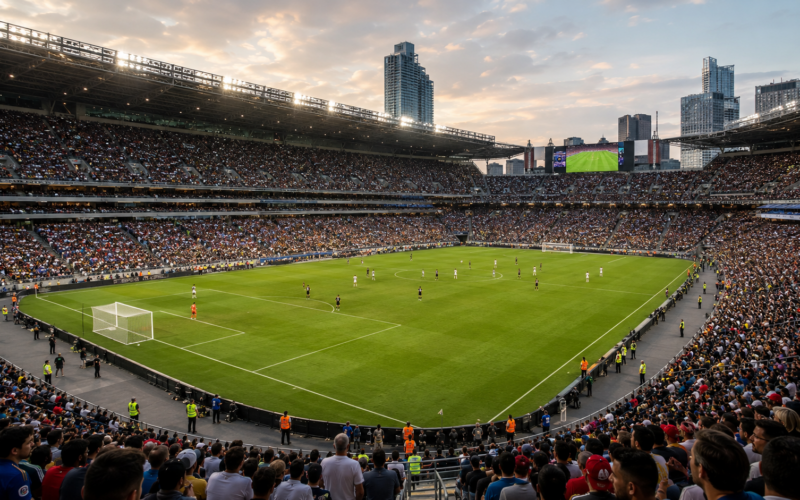
Egypt survived an extraordinary stoppage-time finish to draw 1-1 with Iran in their final FIFA World Cup 2026 Group G match at Seattle Stadium in Seattle, Washington, on Friday, June 26, 2026. The match concluded during the morning of June 27 in India and was watched by an official attendance of 66,925.
Mahmoud Saber gave Egypt the lead after four minutes and 26 seconds, converting from Trezeguet’s pass after goalkeeper Alireza Beiranvand failed to control the low finish. Iran were awarded a penalty shortly afterwards when Mohamed Abdelmonem fouled Mehdi Taremi, but Mostafa Shobeir saved the captain’s 11th-minute spot kick.
Iran required only three further minutes to equalise. Shobeir blocked Milad Mohammadi’s initial attempt, but Ramin Rezaeian collected the rebound from a tight angle and drove the ball into the net.
Shoja Khalilzadeh appeared to have scored Iran’s winning goal in the third minute of stoppage time, only for VAR to detect an offside position and overturn the goal. Saeid Ezatolahi then headed against the crossbar as Egypt held on to finish second in Group G and secure a Round of 32 meeting with Australia.
FIFA World Cup 2026 Egypt 1-1 Iran full match scorecard and key incidents
How did Mahmoud Saber punish Iran before the match had settled into a tactical pattern?
Both teams began at a high tempo because first place in Group G remained available. Egypt moved the ball forward immediately through Salah, Mostafa Zico and Trezeguet rather than attempting to establish prolonged possession.
The opening goal arrived after only four minutes and 26 seconds. Trezeguet moved possession towards Saber on the left side of the penalty area, and the midfielder directed a low shot towards the far corner.
Beiranvand reached the ball but failed to secure it, allowing the effort to continue into the net. The error gave Egypt a lead from one of their first meaningful attacking sequences.
Saber’s goal became Egypt’s fastest at a FIFA World Cup. It also strengthened the midfielder’s case for a continuing role after Hossam Hassan made four changes to the side that defeated New Zealand.
Why did Mehdi Taremi’s penalty miss not stop Iran from equalising three minutes later?
Iran immediately responded by pushing Taremi closer to Egypt’s centre-backs and advancing the midfield behind him. Abdelmonem followed the striker into the penalty area and made an unnecessary challenge when the immediate danger appeared limited.
Taremi directed the penalty towards Shobeir’s right, but the goalkeeper anticipated the shot and made a low save. It was only the second penalty saved by an Egyptian goalkeeper at a men’s FIFA World Cup.
The missed penalty could have damaged Iran’s confidence, yet Amir Ghalenoei’s team maintained its pressure. Mohebbi released Milad Mohammadi inside the area, and Shobeir saved the initial attempt without being able to direct the rebound away from danger.
Rezaeian reacted first and drove the loose ball into the net from a narrow angle. Both teams had therefore scored their fastest FIFA World Cup goals within the opening 14 minutes.
The goal was Rezaeian’s third at the competition, making him Iran’s leading scorer in men’s FIFA World Cup history. It also gave Iran renewed belief that they could secure automatic qualification.
How did Mohamed Abdelmonem’s injury force Egypt into an early defensive adjustment?
Abdelmonem remained on the ground after the penalty incident and could not continue. Yasser Ibrahim replaced him in the 14th minute, forcing Egypt to reorganise almost immediately after conceding.
The change disrupted the relationship between the centre-backs and Egypt’s midfield. Ibrahim had entered without a full warm-up and received a yellow card in the 42nd minute after stopping an Iran attack.
Egypt still controlled possession for much of the first half, but Iran carried the greater threat whenever the ball was moved directly towards Taremi. The striker’s movement forced Ibrahim and Rami Rabia to defend facing their own goal.
Iran also gained an aerial advantage during the closing stages. Khalilzadeh, Ezatolahi and Moghanloo repeatedly attacked free kicks and crosses as Egypt protected the penalty area.
Why did Egypt dominate possession without creating the better second-half chances?
Egypt completed 513 accurate passes and controlled more than 61% of possession. Much of that circulation, however, occurred between the defenders and midfielders rather than inside Iran’s penalty area.
Iran were prepared to concede possession in areas that did not threaten Beiranvand. Ghorbani and Ezatolahi protected the central zone, while the defenders blocked six Egyptian attempts.
Trezeguet remained Egypt’s most consistent attacking threat. He tested Beiranvand shortly after half-time and combined with Salah during a period when Egypt appeared capable of regaining the lead.
The match changed after Salah departed in the 57th minute. Egypt continued retaining possession but lost the forward movement that had forced Iran’s defenders to retreat.
Iran finished with fewer passes and less possession, yet attempted four major chances and produced a national-record expected-goals total of 1.94. The contrast showed that Iran’s attacks carried greater danger despite occurring less frequently.
What does Mohamed Salah’s substitution mean before Egypt face Australia?
Salah asked to leave the field after 57 minutes and was replaced by Zizo. He was later pictured on the bench with an ice pack on his left leg.
Hossam Hassan described the problem as involving Salah’s left knee but said the captain had indicated that he expected to recover. Egypt have almost a week before facing Australia, giving the medical team time to assess his condition.
Salah was not at his most influential against Iran, but his positioning still created space for Trezeguet, Zico and Saber. Iran’s defenders remained reluctant to advance aggressively while he was on the field.
Egypt’s attacking structure became more conservative after his withdrawal. Marmoush, introduced at half-time, carried the ball forward but struggled to combine regularly with the players around him.
Australia’s compact defence is likely to make Salah’s availability especially important. Without him, Egypt would lose their principal transition threat and the player most capable of producing a decisive action during a balanced knockout match.
How did Shoja Khalilzadeh move from apparent match-winner to offside frustration?
Iran increased the number of players attacking Egypt’s penalty area during the final 15 minutes. Taremi, Moghanloo, Mohebbi and the central defenders all moved forward whenever Ghalenoei’s side won a free kick.
Taremi headed against the woodwork in the 89th minute, giving Egypt an immediate warning. Iran then won another set-piece during stoppage time after Lasheen fouled Taremi.
Shobeir rushed from his goal but failed to control his attempted clearance. Ghorbani’s shot was blocked, and Khalilzadeh forced the loose ball into the net from close range.
Iran’s players and substitutes celebrated what appeared to be the goal that would carry them into second place. Khalilzadeh removed his shirt and received a yellow card for excessive celebration.
VAR subsequently identified part of the defender’s foot beyond the final Egyptian player during the build-up. Referee Szymon Marciniak overturned the goal and restored the score to 1-1.
Why did the match remain undecided even after Iran’s stoppage-time goal was disallowed?
The overturned goal did not end Iran’s pressure. Rezaeian received Taremi’s pass inside the area and struck towards goal, but Ibrahim produced a crucial block.
Iran then won a corner in the seventh minute of added time. Jahanbakhsh delivered towards the six-yard area, where Ezatolahi rose above the defenders and directed a header against the crossbar.
The ball rebounded away before Iran could produce another controlled attempt. The final whistle followed soon afterwards, leaving several players from both teams on the ground.
Egypt had survived despite conceding the clearer late opportunities. Iran had completed all three group matches unbeaten but remained outside the automatic qualification places.
How did Belgium’s five-goal victory determine the final Group G order?
Egypt began the final round in first place with four points. Belgium and Iran both had two, while New Zealand retained an outside chance with one point.
Belgium defeated New Zealand 5-1 in the simultaneous match. The result lifted the Red Devils to five points and increased their goal difference to plus four.
Egypt also finished with five points but placed second because their goal difference was plus two. The Pharaohs completed the group unbeaten after drawing with Belgium and Iran and defeating New Zealand.
Iran finished third with three points after drawing all three matches. New Zealand finished fourth with one point after conceding 10 goals.
FIFA World Cup 2026 Group G final points table
What does Egypt vs Australia mean for the FIFA World Cup 2026 Round of 32?
Egypt will face Australia at Dallas Stadium in Arlington on Friday, July 3, at 1pm local time. It will be the first FIFA World Cup meeting between the two countries.
Australia finished second in Group D after defeating Türkiye, losing to the United States and drawing with Paraguay. The Socceroos scored only twice but conceded two goals and recorded two clean sheets.
The match could therefore be decided by a small number of chances. Australia will defend compactly, rely on aerial strength and attempt to use Jordan Bos, Nestory Irankunda and Ajdin Hrustić during transitions.
Egypt’s attacking quality is greater when Salah, Marmoush and Trezeguet play together. Their availability and ability to break Australia’s defensive block will determine whether the Pharaohs can extend their historic run.
Egypt have reached the knockout phase after a group stage for the first time. Their 1934 appearance began directly with a knockout match, while their 1990 and 2018 campaigns ended in the opening round.
What must happen for Iran to qualify as a best third-placed team?
Iran completed Group G with three points, a neutral goal difference and three goals scored. That record placed them close to the qualification boundary for the eight best third-placed teams.
Their fate depended on the final results in Groups J, K and L. Results involving Algeria, DR Congo and Croatia were among the outcomes capable of moving additional third-placed teams above Iran.
Iran’s advantage was their neutral goal difference. Senegal had already qualified with three points and a positive goal difference, while several other third-placed teams had four points.
The frustration for Ghalenoei’s side was that one successful action against Egypt would have removed the uncertainty. Taremi’s penalty, two late headers against the woodwork and Khalilzadeh’s narrow offside all represented direct routes into second place.
Key takeaways from Egypt vs Iran at FIFA World Cup 2026
- Egypt and Iran drew 1-1 after an extraordinary finish at Seattle Stadium.
- Mahmoud Saber gave Egypt the lead after four minutes and 26 seconds from Trezeguet’s assist.
- Mostafa Shobeir saved Mehdi Taremi’s 11th-minute penalty.
- Ramin Rezaeian equalised three minutes later after reacting to Shobeir’s initial save.
- Mohamed Abdelmonem was injured during the penalty incident and replaced by Yasser Ibrahim.
- Mohamed Salah left the match in the 57th minute with apparent left-leg discomfort.
- Shoja Khalilzadeh’s 90+3-minute goal was disallowed by VAR for offside.
- Mehdi Taremi and Saeid Ezatolahi both struck the woodwork during Iran’s late pressure.
- Egypt finished second in Group G and will face Australia in the Round of 32.
- Iran completed the group unbeaten but had to await the final best-third-place ranking.
Discover more from Business-News-Today.com
Subscribe to get the latest posts sent to your email.