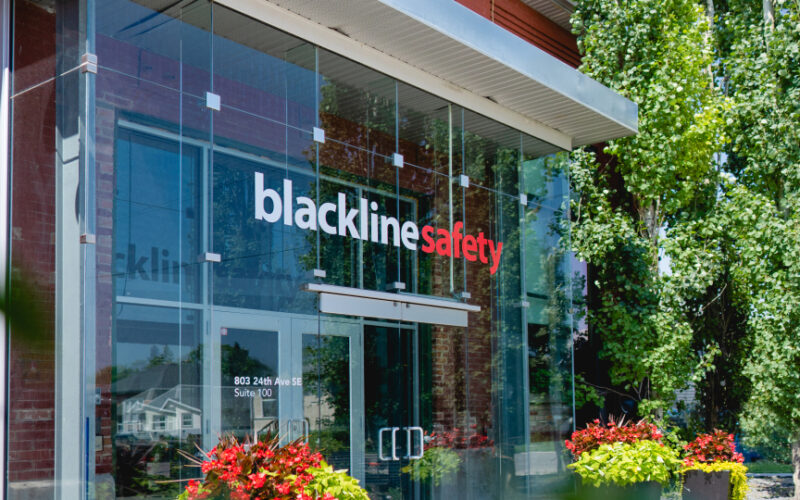
Blackline Safety Corp. (TSX: BLN) has received the final outstanding regulatory approval in France for its proposed take-private transaction with an affiliate of Francisco Partners Management, L.P. The approval removes the last identified regulatory barrier to a deal that values the Calgary-based connected safety technology company at up to C$850 million. Shareholders who are not rolling equity into the buyer are set to receive C$9.00 in cash per share at closing, plus a contingent value right worth up to C$0.50 if Blackline Safety reaches defined annual recurring revenue targets for fiscal 2027. The Court of King’s Bench of Alberta granted its final order and Blackline Safety shareholders approved the arrangement on June 15, 2026. Closing is expected on or about June 30, leaving customary completion conditions rather than strategic or regulatory uncertainty as the main remaining hurdle.
What does the final French regulatory approval change for Blackline Safety and Francisco Partners?
The French approval matters because it completes the external regulatory process identified by Blackline Safety and Francisco Partners, substantially reducing the probability that the transaction will be delayed by government review. Shareholder approval and the Alberta court order had already removed the principal corporate and judicial barriers, meaning the remaining steps are largely administrative and contractual. Unless an unexpected closing condition emerges, Blackline Safety is now approaching the end of its life as a publicly traded company on the Toronto Stock Exchange.
The approval also narrows the time available for any alternative bidder or disruptive event to alter the outcome. Blackline Safety’s strategic review began in January 2026 and involved contact with 17 financial and strategic counterparties, but no superior proposal emerged. That process strengthens the argument that the Francisco Partners offer represented the most executable combination of price, funding certainty and transaction structure available to the board.
For customers and employees, the regulatory clearance provides greater certainty about ownership continuity. Large industrial customers purchasing gas-detection devices, monitoring services and connected-worker platforms often make multiyear deployment decisions. Prolonged uncertainty around ownership could have affected procurement discussions, talent retention and product roadmaps, particularly during the commercial rollout of Blackline Safety’s G8 wearable platform.
The final approval does not eliminate every risk. Closing conditions can still be waived, satisfied late or, in rare circumstances, fail. However, the lack of a financing condition and the presence of a C$56.3 million reverse termination payment provide meaningful protection against a buyer funding failure. At this stage, the transaction has moved from a regulatory question to a closing mechanics exercise.
Why does the C$9.00 cash payment and contingent value right matter for Blackline Safety shareholders?
The transaction separates shareholder value into a highly certain component and a performance-dependent component. Non-rollover shareholders are expected to receive C$9.00 in cash when the arrangement closes, representing about 95% of the maximum potential C$9.50 consideration. The remaining C$0.50 comes through a contingent value right linked to Blackline Safety’s annualized recurring revenue for the month ending October 31, 2027.
No contingent payment will be made if calculated annualized recurring revenue is below C$145 million. A result between C$145 million and C$148.9 million would produce a payment ranging from C$0.375 to C$0.50 per right. The maximum payment requires annualized recurring revenue of at least C$148.9 million.
This structure allowed Francisco Partners to avoid paying the full growth valuation upfront while enabling shareholders to retain limited exposure to Blackline Safety’s execution after the company becomes private. It is effectively a bridge between the price supported by current financial performance and the higher valuation that could be justified if recurring revenue accelerates. Such structures are particularly useful when buyers and sellers agree on a company’s strategic quality but disagree on the speed at which growth will convert into measurable revenue.
Blackline Safety reported annual recurring revenue of C$93 million for the quarter ended April 30, 2026, up 24% from the previous year. Reaching C$145 million by October 31, 2027 would require annualized growth of roughly 34% over the intervening 18 months. Reaching C$148.9 million would require growth closer to 37% on an annualized basis.
That does not make the threshold impossible, particularly if the G8 rollout accelerates hardware deployments and associated service subscriptions. It does mean that maintaining the latest reported 24% annual recurring revenue growth rate may not be sufficient. The contingent value right therefore rewards an acceleration scenario, not merely continuation of the current trajectory.
What is Blackline Safety’s latest share price signalling about deal certainty and contingent upside?
Blackline Safety shares closed at C$9.04 on June 26, 2026, rising 0.22% during the session. The stock had gained approximately 0.11% over five trading days and 0.56% over one month, with a 52-week trading range of C$5.90 to C$9.25. The shares were up nearly 40% from the beginning of 2026, with most of that rerating linked to the announced Francisco Partners transaction.
The C$9.04 closing price is particularly revealing. It sits only C$0.04 above the guaranteed C$9.00 cash consideration and C$0.46 below the maximum potential value of C$9.50. In simple terms, the market is treating closing as highly probable while placing only modest present value on the contingent value right.
The implied value cannot be interpreted as a precise probability because investors must account for taxation, settlement timing, trading liquidity, contingent-right terms and the possibility that the transaction is delayed. Even so, the narrow premium above C$9.00 suggests considerable scepticism that Blackline Safety will reach the fiscal 2027 annual recurring revenue threshold required for a payment.

That scepticism contrasts with Blackline Safety’s latest operating momentum. Second-quarter revenue increased 23% to C$44.3 million, gross margin improved to 66% from 63%, and adjusted earnings before interest, taxes, depreciation and amortization rose to C$2.5 million from C$1 million. Annual recurring revenue increased 24% to C$93 million, showing that the company entered the transaction with improving scale and economics rather than a deteriorating business.
However, arbitrage investors are usually paid for certainty rather than optimism. With only days remaining before the expected closing, Blackline Safety’s share price is behaving like a completed cash transaction with a low-value optional instrument attached. The market is not rejecting the growth story, but it is demanding proof before assigning much value to the additional C$0.50.
Why is Francisco Partners taking Blackline Safety private during a period of accelerating recurring revenue?
Francisco Partners is acquiring a business positioned between industrial hardware, subscription software, emergency monitoring and operational data analytics. Blackline Safety sells connected gas-detection and lone-worker devices, but the more strategically valuable element is the recurring service relationship generated after those devices are deployed. This hardware-enabled subscription model can produce attractive customer retention, predictable service revenue and data advantages as the installed base expands.
Blackline Safety also operates in markets where purchasing decisions are influenced by safety regulation, insurance exposure, workforce protection and corporate risk management. These are generally more durable drivers than discretionary technology spending. Customers may delay upgrades during weak economic periods, but they cannot easily disregard gas detection, emergency communications or lone-worker protection requirements.
Private ownership may allow Francisco Partners to accelerate investment without exposing every quarter of product spending, hiring or international expansion to public-market scrutiny. Blackline Safety could invest more aggressively in sales coverage, product development, satellite and cellular connectivity, analytics or acquisitions while accepting near-term pressure on profitability. The trade-off is that private ownership often introduces greater expectations around operational efficiency, cash generation and eventual exit value.
The timing also gives Francisco Partners exposure to Blackline Safety before the full economic impact of the G8 product cycle is visible. If G8 drives device replacements, new customer wins and higher recurring service revenue, the buyer could capture much of the resulting valuation uplift. Public shareholders receive an immediate premium, but their participation in that upside is capped at C$0.50 per share.
This asymmetry is central to the transaction. Francisco Partners assumes execution risk and provides liquidity now, while retaining the larger long-term reward if Blackline Safety becomes a substantially bigger connected-safety platform. Shareholders receive certainty, but they surrender unlimited exposure to future growth.
How could private ownership reshape Blackline Safety’s product investment, international growth and competitive strategy?
Blackline Safety serves customers in more than 75 countries, giving Francisco Partners an existing international base rather than a purely domestic Canadian technology platform. The next phase may involve deepening sales capacity in underpenetrated regions, expanding distributor relationships and increasing adoption across industries such as oil and gas, utilities, water treatment, transportation, chemicals and manufacturing.
The company could also move further from individual devices toward integrated worksite safety platforms. Hardware, communications, monitoring, location data and analytics can be packaged into broader enterprise deployments, increasing contract value and making supplier replacement more difficult. This would position Blackline Safety less as a device manufacturer and more as a recurring industrial technology provider.
Product investment will remain critical. The G8 launch provides a near-term commercial catalyst, but the industrial safety market contains established manufacturers with large distribution networks, deep customer relationships and significant research budgets. Blackline Safety must continue differentiating through connectivity, usability, monitoring services and data integration rather than relying on hardware specifications alone.
Francisco Partners may also examine selective acquisitions that add sensor technologies, software capabilities, regional distribution or adjacent worker-safety products. A private owner with technology-sector experience can potentially execute such transactions faster than a smaller public company facing valuation volatility and shareholder dilution concerns. Acquisition discipline will matter because combining hardware manufacturing, cloud software and field-service operations can create integration complexity.
The wider opportunity is to make connected safety data part of everyday industrial decision-making. Data collected from devices can help identify exposure patterns, operational bottlenecks and recurring hazards before they become serious incidents. The commercial prize is therefore not merely selling more detectors. It is becoming embedded in the safety, compliance and workforce-management systems of large industrial customers.
What execution, governance and customer risks remain after Blackline Safety leaves the Toronto Stock Exchange?
The first execution risk is the annual recurring revenue target attached to the contingent value right. Blackline Safety must generate substantial incremental recurring revenue within a defined period, and the threshold contains a sharp economic boundary. A result slightly below C$145 million produces no payment, while reaching the threshold produces at least C$0.375 per right. That structure can create intense focus on subscription growth, contract timing and the precise calculation of qualifying revenue.
The second risk concerns capital allocation under private ownership. Francisco Partners can provide expertise and financial resources, but private equity ownership may also introduce debt, tighter performance targets or a stronger emphasis on eventual monetization. The long-term outcome will depend on whether investment in product development and customer support remains aligned with the financial objectives of the new owners.
Governance visibility will decline after delisting. Public investors currently receive quarterly financial statements, annual reports and detailed operating metrics. Once Blackline Safety becomes private, disclosure is likely to narrow substantially. Customers will therefore place greater weight on product reliability, service continuity and direct communication rather than public financial reporting.
Employee retention is another strategic issue. Blackline Safety’s growth depends on engineering, software, manufacturing, sales and industrial-safety expertise. Ownership transitions can create uncertainty around reporting lines, incentives and strategic priorities. Retaining technical and customer-facing employees will be important during the G8 rollout and the push toward the fiscal 2027 recurring-revenue target.
Customers may also seek reassurance around data governance and long-term support. Connected safety platforms collect location, exposure and operational information from industrial workforces. Any ownership change involving international operations must maintain clear controls around cybersecurity, privacy, data residency and service availability. The French regulatory approval may complete the legal review, but commercial trust will still need to be earned continuously.
What does the Blackline Safety transaction signal for industrial Internet of Things and connected worker safety markets?
The transaction demonstrates that industrial technology companies with recurring software and service revenue can attract strategic valuations even when they continue to carry elements of traditional manufacturing economics. Buyers are increasingly interested in businesses where physical equipment creates a durable connection to cloud platforms, monitoring services and proprietary operational data.
Connected worker safety is also becoming a broader enterprise technology category. Gas detection and lone-worker protection were historically treated as specialized equipment purchases. Cellular connectivity, satellite communications, analytics and centralized monitoring are turning those products into continuous operational systems.
That shift could encourage consolidation. Smaller safety technology companies may possess valuable sensors, software or niche customer relationships but lack the scale required for global distribution and product development. Financial sponsors and larger industrial technology groups may pursue acquisitions to assemble more complete platforms.
The Blackline Safety deal also exposes the valuation tension faced by Canadian growth companies. Public markets may discount smaller technology businesses because of limited liquidity, uneven profitability and execution risk. Private buyers can sometimes underwrite a longer investment horizon and capture value that public shareholders are unwilling to price fully.
For Blackline Safety, the test will be whether Francisco Partners can convert ownership flexibility into faster product adoption and stronger recurring economics. Going private is not itself a strategy. It merely changes the environment in which the strategy must be executed.
Is Francisco Partners acquiring Blackline Safety before its next major recurring-revenue inflection?
Francisco Partners appears to be acquiring Blackline Safety at a strategically attractive but operationally demanding point. Revenue, recurring revenue, margins and adjusted earnings are improving, while the G8 rollout offers a credible opportunity to expand the installed base. The buyer is therefore not purchasing a distressed asset. It is purchasing a growth platform before the outcome of its latest product cycle is fully reflected in financial results.
The C$9.00 cash price delivered a meaningful premium to Blackline Safety’s unaffected trading price, giving public shareholders immediate value and removing the risk that market volatility could reverse recent gains. The contingent value right provides additional participation, but its demanding threshold means shareholders should view the C$9.00 payment as the principal economic outcome rather than assume the full C$9.50 will be realized.
The rollover arrangements also indicate that key insiders and major shareholders believe continued exposure has value. Certain rollover shareholders accepted an implied value of approximately C$7.445 per share, relinquished portions of the potential contingent payment and committed C$45 million toward funding the cash consideration. Those concessions helped improve the price available to non-rollover shareholders while preserving their participation in the private company’s future.
For Francisco Partners, the central investment thesis is likely that recurring revenue can grow faster under private ownership than the market currently expects. The June 26 share price indicates that public investors are assigning little value to that acceleration scenario. If Blackline Safety crosses the fiscal 2027 threshold and continues scaling beyond it, Francisco Partners may have acquired the company before a major valuation inflection. If growth slows, the buyer will have paid a substantial premium for a business that still requires significant product and commercial execution.
Key takeaways from Blackline Safety’s final approval for the Francisco Partners going-private transaction
- Final French regulatory approval removes the last identified external regulatory barrier to the Francisco Partners acquisition.
- Blackline Safety expects the transaction to close on or about June 30, 2026, subject to customary conditions.
- Non-rollover shareholders are expected to receive C$9.00 per share in cash plus a contingent value right worth up to C$0.50.
- The contingent payment requires annualized recurring revenue of at least C$145 million for October 2027, with the full payment requiring C$148.9 million.
- Blackline Safety’s latest C$93 million annual recurring revenue level suggests the company must accelerate beyond its recent 24% growth rate to reach the target.
- The June 26 closing price of C$9.04 indicates high confidence in deal completion but limited market confidence in the contingent payout.
- Francisco Partners is gaining exposure to a hardware-enabled subscription platform serving industrial safety customers in more than 75 countries.
- Private ownership could support faster product investment, international expansion and acquisitions, but it will reduce public financial visibility.
- Blackline Safety’s improving margins and recurring revenue suggest Francisco Partners is buying before the full impact of the G8 product cycle is known.
- The acquisition could encourage further consolidation across connected worker safety, industrial Internet of Things and gas-detection technology markets.
Share this:
Discover more from Business-News-Today.com
Subscribe to get the latest posts sent to your email.