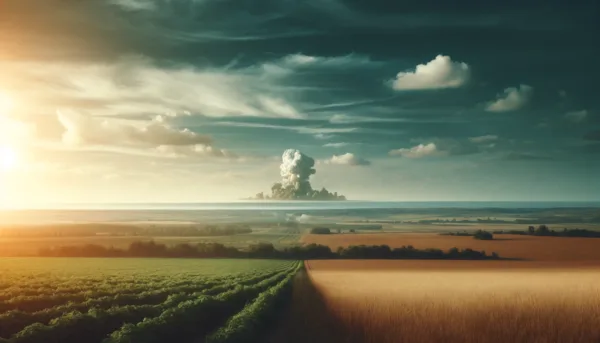
Utah is confronting one of its most dangerous wildfire periods in recent history after the Cottonwood Fire expanded to approximately 71,800 acres, making it the largest active wildfire in the United States. The blaze remained at zero percent containment on June 27, 2026, after powerful winds grounded firefighting aircraft and drove flames through dry forest near Beaver in southern Utah.
The Cottonwood Fire started on June 22 near Beaver Canyon and rapidly expanded across Fishlake National Forest and surrounding land. It has forced evacuations, severely damaged Eagle Point Resort and filled communities including Marysvale with thick smoke and falling ash. No human fatalities had been confirmed, but resort officials reported significant losses to buildings and privately owned properties.
Utah Governor Spencer Cox declared a state of emergency and authorised temporary statewide restrictions on fireworks through July 5. The order allows municipalities to identify limited areas where fireworks may be used safely after consultation with local fire officials, but the broader objective is to prevent additional human-caused ignitions while emergency crews and equipment are already stretched.
The emergency extends beyond the Cottonwood Fire. Strong winds, single-digit humidity and critically dry vegetation have created dangerous conditions across Utah and much of the western United States. Red flag warnings stretch from Idaho to Arizona and New Mexico, while utilities are considering precautionary power shutoffs to reduce the risk of electrical equipment starting new fires.
How did the Cottonwood Fire grow into the largest active wildfire in the United States?
The Cottonwood Fire was reported on the afternoon of June 22 east of Beaver, near State Route 153 and the entrance to Beaver Canyon. The fire expanded rapidly through exceptionally dry vegetation, timber and mountainous terrain, reaching nearly 71,000 acres within several days and continuing to grow despite a large multi-agency response.
By June 27, mapping services placed the burned area at approximately 71,848 acres, equivalent to more than 112 square miles. The fire remained zero percent contained, meaning crews had not completed secure control lines around any formally declared portion of its perimeter. Zero containment does not mean firefighters are absent or making no progress, but it indicates that officials cannot yet rely on established barriers to stop further spread.
Sustained winds of about 35 miles per hour and gusts reaching 45 miles per hour prevented air tankers and helicopters from operating safely on June 26. With humidity falling into single digits, the fire raced through treetops, produced spot fires beyond the main perimeter and sent burning material across potential control lines.
Fire managers described crown runs, in which flames spread rapidly through the upper branches of trees, and spotting, in which embers are carried ahead of the main blaze. These behaviours can allow a wildfire to advance far faster than ground crews can construct containment lines, particularly when steep canyons channel winds towards unburned vegetation.
The official cause remained under investigation. Although more than 75 percent of Utah’s wildfires during the 2026 season have been linked to human activity, authorities had not publicly established what started the Cottonwood Fire.
What damage has been reported at Eagle Point Resort and nearby Utah communities?
Eagle Point Resort, located in Beaver County, sustained serious property damage after the fire moved through the mountain area. Resort owner and general manager Shane Gadbaw said there had been significant losses for the resort and local property owners and warned that Eagle Point would remain closed for a considerable period while damage was assessed and recovery work began.
The resort had complied with evacuation orders before the most destructive fire activity reached the area. Rocky Mountain Power also de-energised power lines around the resort to reduce electrical hazards and limit the possibility that damaged infrastructure could create additional ignitions. Resort management said it was not aware of any human casualties.
Governor Spencer Cox said there was a strong possibility that the Cottonwood Fire had already become the most destructive wildfire in Utah history when measured by property losses. A complete assessment was not yet possible because hazardous conditions prevented residents, resort staff and inspectors from safely entering some burned areas.
The consequences also reached communities outside the immediate fire perimeter. Smoke darkened the sky over Marysvale and ash fell across the town as winds carried the plume east. The smoke was visible hundreds of kilometres away, including from parts of Colorado, although Zion National Park and Bryce Canyon National Park had initially experienced mostly haze rather than severe air-quality deterioration.
Evacuations and warnings remained important because the fire could change direction quickly. A cold front expected to move through the region was forecast to produce new winds capable of pushing the blaze towards different communities before more stable weather arrived.
Why did Utah restrict fireworks before the United States Independence Day holiday?
Spencer Cox issued the emergency order ahead of Independence Day celebrations because officials believed ordinary fireworks use would create an unacceptable risk of new fires. The restrictions continue through July 5 and temporarily give the Utah state forester broader authority to prohibit fireworks inside incorporated cities and towns.
Local governments may designate specific areas where fireworks can still be used after consulting fire officials. This approach allows authorities to consider local terrain, vegetation, water availability and firefighting capacity rather than applying identical conditions to every community. Where no safe area is designated, the restriction remains in force.
Utah officials said hundreds of wildfires had already exhausted personnel and equipment before the peak summer fire period. State Forester Jamie Barnes warned that fires were spreading farther and faster than veteran firefighters had experienced, while critically dry vegetation allowed even small sparks to become major incidents.
The Utah Department of Public Safety is increasing patrols in high-risk locations. Officials have warned that people whose unlawful actions cause wildfires may face criminal prosecution and civil liability for suppression costs, property destruction and other losses.
The timing is politically and culturally significant because the United States is preparing to celebrate its 250th anniversary. However, Spencer Cox said the conditions were sufficiently extraordinary to justify limiting a popular holiday activity in order to protect lives, homes and already strained firefighting resources.
Why are weather officials describing Utah’s fire conditions as particularly dangerous?
The National Weather Service issued an unusually severe fire-weather warning as powerful winds combined with very low humidity and dry fuels. Parts of Utah were placed under a “particularly dangerous situation” designation, a level reserved for conditions capable of producing rapid and potentially life-threatening wildfire spread.
Firefighters recorded gusts of approximately 45 miles per hour around the Cottonwood Fire, while forecasts warned that winds could strengthen again as weather systems crossed the region. The National Weather Service also expected additional periods of critical conditions across eastern Utah and western Colorado, including possible gusts between 50 and 60 miles per hour during later high-risk periods.
Utah entered the summer after an unusually weak snow season. Snowpack and streamflow peaked early, leaving soils, grasses and forest vegetation dry much sooner than normal. When strong winds arrived, those fuels were capable of supporting rapid fire growth across elevations and landscapes that might otherwise retain more moisture.
A cold front can provide lower temperatures, but it can also produce abrupt changes in wind direction. That creates risks for firefighters because a flank of the blaze that appeared relatively stable can become the new leading edge, threatening crews, evacuation routes and communities that were previously outside the most immediate danger zone.
How are the Utah fires affecting national parks, power supplies and western states?
The extreme conditions cover a much wider area than Beaver County. Red flag warnings were active across parts of Idaho, Utah, Colorado, Arizona and New Mexico, with millions of residents and visitors exposed to an environment where new ignitions could spread rapidly.
More than a dozen national parks were within areas experiencing elevated or critical fire danger, including Zion, Bryce Canyon, Arches, Capitol Reef, Canyonlands and Grand Canyon national parks. The Cottonwood Fire had not directly reached those parks, but dry vegetation, wind and holiday traffic increased the possibility of separate fires beginning elsewhere.
At Grand Canyon National Park, officials prepared visitors for a possible precautionary power outage. Utilities increasingly use public-safety power shutoffs during extreme fire weather because damaged or wind-blown electrical equipment can ignite dry vegetation. Similar shutoff watches were issued for parts of central, southern and eastern Utah.
Visitors were advised to download maps, charge electronic devices and prepare for reduced services if electricity was suspended. Power shutoffs can lower ignition risks, but they also affect communications, businesses, medical equipment, water systems and emergency information during an already dangerous period.
Nationally, almost three million acres had burned since the beginning of 2026, placing the United States above its ten-year average for the same point in the year. Fires were active from Alaska to Florida, although the Cottonwood Fire had become the largest individual blaze burning in the country.
What does zero containment mean for residents living near the Cottonwood Fire?
Containment measures how much of a wildfire’s perimeter is bordered by control lines that officials expect will prevent further spread. These lines may include cleared vegetation, roads, natural barriers or previously burned land, but they must be tested and considered secure before they are counted in the official containment percentage.
A fire can remain at zero percent containment even when crews have protected buildings, constructed preliminary lines and slowed sections of its advance. In the Cottonwood Fire, the combination of shifting winds, spotting and difficult terrain prevented managers from declaring sections of the perimeter reliably controlled.
Residents should therefore treat evacuation orders and warnings as immediate safety instructions rather than waiting for visible flames. Smoke can reduce visibility, roads may close quickly and fire behaviour can intensify after an evacuation route has already become unsafe.
Authorities have also asked Utah residents to register for local emergency alerts, check current restrictions and report smoke or suspicious activity immediately. People returning to evacuated areas should wait for formal clearance because damaged power lines, unstable trees, hidden hot spots and falling debris can remain dangerous after flames have moved through.
What will determine whether firefighters can slow the Cottonwood Fire?
Weather will remain the most important short-term factor. Reduced winds and higher humidity could allow aircraft to resume operations and give ground crews time to construct and reinforce containment lines. Continued strong winds would allow the fire to produce new spot fires and move into areas that have not yet burned.
The expected cold front presents both an opportunity and a danger. Cooler conditions could eventually reduce fire intensity, but the associated wind shift may redirect the blaze before meaningful relief arrives. Fire officials said conditions might begin stabilising during the following week, but they did not suggest that the emergency was close to ending.
Officials will also watch for new fires elsewhere in Utah. Suppression resources are finite, and every additional ignition may require aircraft, engines and crews that would otherwise support the Cottonwood operation. Preventing avoidable fires during the holiday period is therefore part of the strategy for containing the existing blaze.
The next significant updates will include revised acreage, changes in containment, confirmation of structural losses and decisions on evacuation zones. Aerial surveys and property assessments will become more reliable only when smoke, wind and active fire conditions permit safer access.
What are the key takeaways from Utah’s Cottonwood Fire emergency?
- The Cottonwood Fire began east of Beaver on June 22, 2026, and expanded to approximately 71,800 acres, making it the largest active wildfire in the United States while remaining at zero percent containment.
- Strong winds reaching about 45 miles per hour and single-digit humidity grounded firefighting aircraft and produced extreme behaviour, including crown runs and spot fires forming beyond the main perimeter.
- Eagle Point Resort reported significant damage to resort facilities and privately owned properties, while management said it was unaware of any human fatalities and expected a lengthy closure and recovery process.
- Governor Spencer Cox declared an emergency and authorised statewide fireworks restrictions through July 5, although municipalities may designate limited safe-use areas after consulting their local fire departments.
- More than 75 percent of Utah’s wildfires during the 2026 season have been human-caused, but investigators had not publicly established the specific cause of the Cottonwood Fire.
- The National Weather Service issued a rare particularly dangerous situation warning because critically dry vegetation, strong winds and low humidity could produce rapid fire growth and threaten lives and property.
- Utilities considered precautionary power shutoffs across parts of Utah and around Grand Canyon National Park as authorities attempted to prevent electrical equipment from starting additional fires.
- Fire officials warned that an approaching cold front could change the fire’s direction before conditions improve, meaning evacuation zones and threatened communities could shift with limited warning.
Discover more from Business-News-Today.com
Subscribe to get the latest posts sent to your email.