




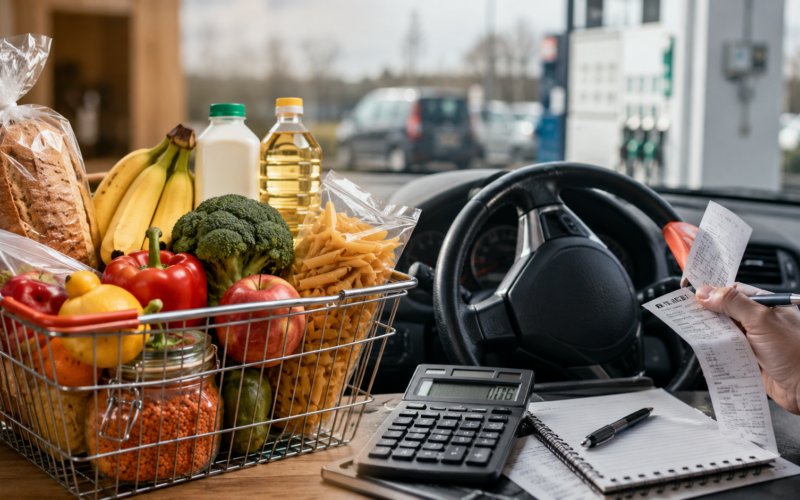
The United Kingdom Government has published a list of 125 everyday essentials targeted for tariff reductions, while also uprating tax-free mileage rates for workers who use their own vehicles for work. The package, announced by HM Treasury and the Department for Transport, is designed to ease cost-of-living pressure on households, motorists, frontline workers, farmers, hauliers and businesses exposed to rising input costs. The government said the mileage rate increase could benefit up to two million employees and one million self-employed people, while the proposed tariff suspensions cover items including fruit, oils, baked goods, sauces, soft drinks and pantry staples. The measures show how global instability, including conflict-linked price pressure, is now being translated into domestic policy tools focused on food prices, travel costs and supply-chain relief.
The government has launched a consultation on suspending tariffs on more than 100 everyday essentials, with the full list now available for businesses and stakeholders to review. The list includes garlic, avocados, mangoes, nectarines, vegetable oil, olive oil and baked beans. The government is also seeking views on whether tariff suspensions on certain fertilisers could help farmers manage price pressure linked to conflict in the Middle East. In parallel, the Chancellor has increased the tax-free mileage rate from 45p to 55p per mile for the first 10,000 miles, backdated to April 2026, which the government says could save about £120 for a worker doing 6,000 business miles.
Why is the United Kingdom using tariff reductions to target everyday food costs in 2026?
The United Kingdom’s proposed tariff reductions are aimed at a highly visible part of household inflation: everyday food and grocery essentials. By targeting 125 items, the government is trying to reduce pressure across products that appear regularly in household baskets, rather than relying only on broader macroeconomic measures that may take longer to reach consumers. The list covers fresh fruit and vegetables, oils, baked goods, chocolate, sauces and soft drinks, which gives the policy a direct consumer-facing character.
The use of tariff suspensions also reflects the government’s attempt to respond to external shocks through trade policy. Tariffs are not the only factor shaping food prices, but they are one policy lever available to government when import costs, currency movements, transport costs, energy prices and global commodity volatility are all feeding into retail pricing. By removing or reducing tariffs on specific essentials, the government is trying to create room for lower input costs that could flow through importers, wholesalers, retailers and consumers.
The key test will be pass-through. Tariff reductions only matter for households if savings reach shelf prices or help prevent further increases. Retailers and suppliers may face other cost pressures at the same time, including labour, energy, logistics and financing costs. That means the policy could soften price pressure without necessarily producing dramatic price drops at the checkout. Still, in a cost-of-living environment, even modest relief on recurring household goods has political and economic value.
How could the mileage rate increase affect workers who use their own vehicles for work?
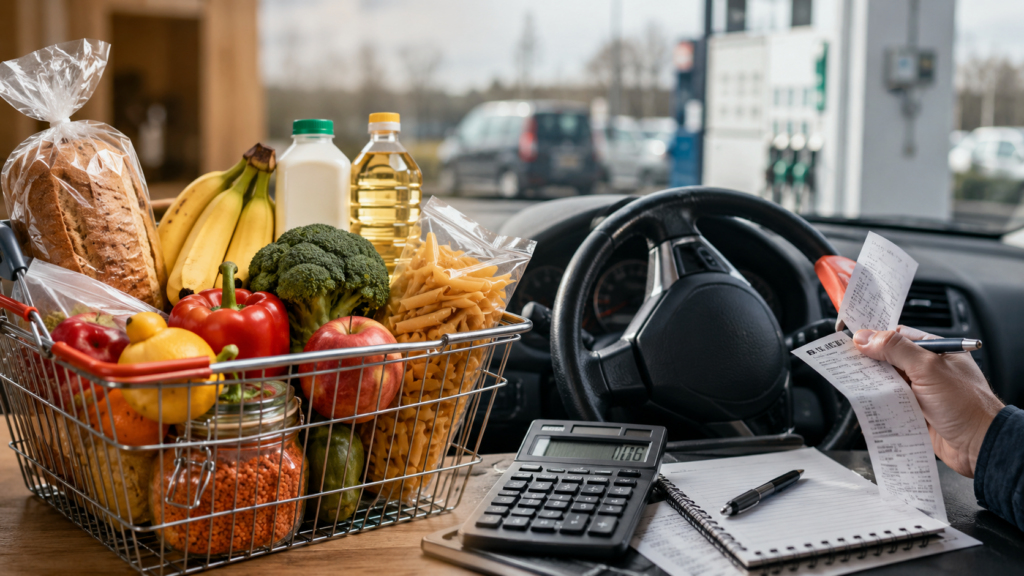
The mileage rate increase is one of the more direct elements of the package because it affects workers who use their own vehicles for employment or self-employment. The government has increased the tax-free mileage rate from 45p to 55p per mile for the first 10,000 miles, backdated to April 2026. For a worker doing 6,000 business miles, the government estimates the increase could save around £120.
The measure is particularly relevant for carers, tradespeople, builders, public sector workers and self-employed workers who absorb fuel, maintenance, insurance and vehicle wear costs as part of their work. Mileage rates had not been uprated for 15 years, which meant reimbursement levels had become increasingly disconnected from the actual cost of running a vehicle. The increase therefore addresses a long-running mismatch between work-related travel costs and tax-free reimbursement limits.
There is also a labour market angle. When workers are expected to use their own vehicles, under-compensation can function like a hidden wage squeeze. That is especially sensitive for lower-paid or frontline roles where travel is essential and remote work is not an option. The policy will not remove all pressure from fuel and maintenance costs, but it does reduce the gap between official reimbursement rules and the cost realities facing millions of mobile workers.
Why are farmers and hauliers central to the United Kingdom cost-of-living package?
Farmers and hauliers are central because they sit close to the base of the United Kingdom’s supply-chain cost structure. If farmers face higher fertiliser, diesel and input costs, those pressures can affect food production economics. If hauliers face higher road costs, those pressures can move through distribution networks and eventually reach businesses and consumers. The government’s decision to include red diesel relief, fertiliser tariff consultation and a haulier road tax holiday shows that the package is not only about households but also about the cost chain behind households.
For farmers and other users of red diesel and rebated biodiesel, the government has cut the rate for those fuels by more than a third, describing the rate as the lowest in over two decades. For hauliers, a road tax holiday will apply for a year from 1 July. These measures are designed to reduce operational pressure on sectors that are highly exposed to fuel costs and essential to the movement of goods.
The fertiliser consultation is particularly important because fertiliser prices can affect planting decisions, farm margins and food supply costs. If fertiliser remains expensive, farmers may face difficult choices around crop economics, output quality and profitability. By examining tariff suspensions on certain fertilisers, the government is trying to identify whether trade policy can reduce one of the more sensitive input costs in agriculture.
How does the government’s wider summer savings package fit into the cost-of-living strategy?
The tariff and mileage measures sit within a wider cost-of-living package branded around summer savings. The government has pointed to free bus travel for 5 to 15-year-olds in England, temporary VAT reductions on children’s meals in restaurants, and VAT cuts for admissions to theatres, theme parks and other attractions. These measures are being framed as support for families during the summer period while also helping businesses that depend on seasonal footfall.
This matters because the government is trying to support both consumption and affordability. Cost-of-living pressure can cause households to reduce discretionary spending, which affects restaurants, attractions, local transport, tourism, hospitality and retail. By cutting costs around days out and family activity, the government is attempting to cushion households while supporting businesses that rely on summer demand.
There is a political calculation here too. Food prices, fuel costs and family leisure spending are highly visible to voters. A household may not track every fiscal measure in the Budget, but it will notice grocery bills, travel costs, school holiday expenses and commuting pressure. The government is therefore focusing on measures that can be easily understood, even if the overall impact depends on how businesses pass through savings.
What are the risks if tariff cuts and travel relief do not reach households clearly?
The biggest risk is that the measures create policy activity without clearly felt household relief. Tariff suspensions may reduce import costs, but the final retail price depends on supplier contracts, retailer pricing strategies, currency movements, logistics costs and competitive pressure. If households do not see meaningful price relief, the policy may be criticised as too indirect or too slow.
The mileage rate increase is more straightforward, but even there the benefit depends on employer reimbursement practices and worker mileage patterns. Some workers may benefit clearly, while others may still find that vehicle costs exceed compensation. Self-employed workers may gain from the tax treatment, but the practical effect will vary by income, vehicle usage and business structure.
There is also a fiscal and policy coherence question. Cutting tariffs, freezing fuel duty, reducing VAT temporarily, lowering red diesel costs and pausing road tax for hauliers all provide relief, but they also create trade-offs for revenue and long-term policy direction. The government is trying to balance immediate affordability with budget discipline and environmental goals. That balance is rarely tidy. Cost-of-living politics tends to arrive wearing muddy boots and asking awkward questions.
What does this package signal about the United Kingdom’s economic policy direction?
The package signals that the United Kingdom Government is willing to use targeted trade, tax and transport measures to manage household cost pressure. Rather than relying solely on headline inflation trends, the government is intervening in specific cost channels: imported everyday essentials, work-related vehicle use, fuel duty, red diesel, haulier road tax and family leisure spending. That suggests a more tactical approach to cost-of-living support.
The policy also shows how international conflict is shaping domestic economic management. The government has linked elements of the package to global instability and conflict-linked price pressure, including the impact of the war in the Middle East. That framing is important because it treats household affordability as partly exposed to external geopolitical shocks, not only domestic economic choices.
For businesses, the message is mixed but important. Importers, retailers, farmers, hauliers and employers will need to assess how the measures affect pricing, reimbursement, margins and demand. The government is inviting business feedback through consultation, which means the final design could still shift depending on industry evidence. For households, the practical question is simpler: whether these measures can make everyday costs feel less punishing in the months ahead.
What are the key takeaways from the United Kingdom food tariff and mileage relief package?
- The United Kingdom Government has published a list of 125 everyday essentials targeted for tariff reductions. The list includes products such as garlic, avocados, mangoes, nectarines, vegetable oil, olive oil and baked beans.
- The government has launched a consultation seeking views from businesses and stakeholders on the tariff suspension plan. The consultation also examines whether suspending tariffs on certain fertilisers could help farmers manage price pressure.
- The Chancellor has increased the tax-free mileage rate from 45p to 55p per mile for the first 10,000 miles. The change is backdated to April 2026 and is the first uprating of the mileage rate in 15 years.
- The government says the mileage change could benefit up to two million employees and one million self-employed people. A worker doing 6,000 business miles could save around £120 under the revised rate.
- Farmers and hauliers are included in the wider relief package through red diesel support and a road tax holiday. The government has cut the rate for red diesel and rebated biodiesel by more than a third and introduced a one-year road tax holiday for hauliers from 1 July.
- The measures form part of a wider cost-of-living package that includes support for travel, family activities and household bills. The government has also highlighted fuel duty freezes, temporary VAT cuts, prescription charge freezes, rail fare freezes and wage increases.
Discover more from Business-News-Today.com
Subscribe to get the latest posts sent to your email.