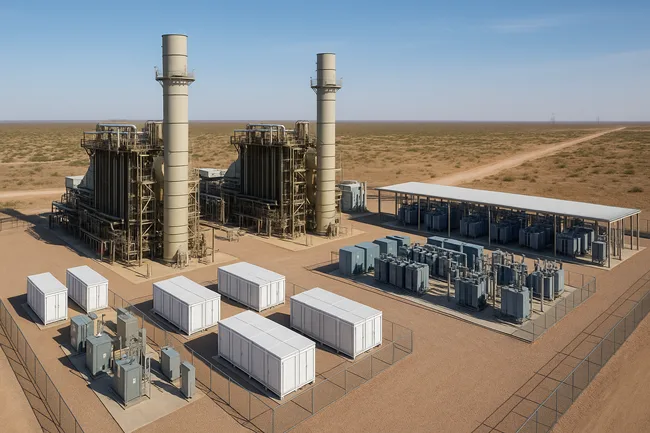



ACME Solar Holdings Limited (NSE: ACMESOLAR) has completed a ₹2,800 crore qualified institutional placement, giving the renewable energy producer a significantly stronger equity base as it expands across solar, wind, hybrid and firm dispatchable renewable energy projects. The company issued 10,01,78,890 equity shares to qualified institutional buyers at ₹279.50 per share, below the floor price of ₹294.13 per share. The capital raise comes as ACME Solar Holdings Limited continues to build one of India’s larger renewable energy portfolios, with contracted capacity spanning solar, wind, hybrid and storage-linked projects. #ACMESOLAR shares closed around ₹356.65 on June 5, 2026, near the top of their 52-week range, suggesting investors are treating the institutional fundraise as a growth-enabling event rather than merely a dilution headline.
Why does ACME Solar’s ₹2,800 crore QIP matter for #ACMESOLAR investors?
ACME Solar Holdings Limited’s ₹2,800 crore qualified institutional placement matters because it gives the company growth capital at a time when renewable energy developers in India are competing aggressively for project capacity, grid access, storage integration and lower-cost funding. For a renewable independent power producer, capital availability is not a side issue. It determines how quickly projects can move from awarded capacity to construction, commissioning and cash-generating operations.
The QIP also signals institutional interest in ACME Solar Holdings Limited’s portfolio story. Raising ₹2,800 crore through qualified institutional buyers suggests the company was able to attract large capital pools despite recent volatility in renewable energy valuations. That matters because renewable developers often need repeated access to equity and debt markets, especially when they operate across long-gestation power assets with upfront capital intensity.
For #ACMESOLAR investors, the key question is whether the fundraise improves the company’s execution capacity enough to justify the dilution. A QIP can strengthen the balance sheet, reduce leverage pressure and support growth, but it also increases the share count. The transaction is therefore best judged not by the headline amount raised, but by whether ACME Solar Holdings Limited can convert the capital into commissioned capacity, stronger cash flows and better return on equity.
How does the QIP pricing affect the dilution debate for ACME Solar shareholders?
The issue price of ₹279.50 per share creates an important valuation reference for investors because it sits below the regulatory floor price of ₹294.13 per share and below the recent market price. That discount helped make the placement attractive for institutional buyers, but it also creates a dilution discussion for existing shareholders. Equity capital is useful, but it is never free. It arrives with a chair at the ownership table.
The dilution question is not automatically negative. If the fresh capital allows ACME Solar Holdings Limited to fund high-return projects, reduce financing constraints or accelerate capacity commissioning, the long-term value creation can outweigh the near-term dilution. This is especially relevant in renewable energy, where the cost of capital directly influences project competitiveness and equity returns.
However, shareholders will want transparency on deployment. If the funds are used for general growth without clear project-level returns, dilution concerns may linger. The best outcome would be for ACME Solar Holdings Limited to link the QIP proceeds to identifiable growth priorities such as project equity contribution, debt reduction, storage-linked renewable assets, hybrid capacity or balance-sheet strengthening. Investors reward dilution when it buys visible growth. They are less generous when it buys corporate fog.
Why is institutional capital important for India’s renewable energy companies now?
Institutional capital is becoming increasingly important because India’s renewable energy sector is moving from simple solar capacity addition toward more complex power solutions. Solar generation alone is no longer enough for many buyers and utilities. The market is shifting toward hybrid renewable energy, firm and dispatchable renewable energy, battery storage, round-the-clock supply and grid-stabilising structures. These projects are larger, more capital-intensive and technically more demanding than earlier utility-scale solar bids.
ACME Solar Holdings Limited’s portfolio sits directly inside that transition. The company has exposure to solar, wind, hybrid and firm dispatchable renewable energy projects, with storage-linked capacity becoming a more important part of the growth story. That positioning can create stronger long-term relevance, but it also increases funding requirements. Storage, hybridisation and transmission-linked development all require substantial capital before revenue starts flowing.
This is why the QIP has strategic value beyond balance-sheet optics. It strengthens the company’s ability to compete for projects that require larger equity commitments and stronger financial credibility. In renewable energy bidding, capital strength can influence lender confidence, execution timelines and counterparty comfort. For ACME Solar Holdings Limited, institutional backing may therefore improve both financial capacity and market credibility.
How should investors read #ACMESOLAR stock performance after the QIP?
ACME Solar Holdings Limited shares closed around ₹356.65 on June 5, 2026, up 3.12 percent, with available market data placing the stock near its 52-week high of ₹360.00. That positioning suggests the market has reacted positively to the QIP and is willing to look beyond dilution concerns for now. A stock trading near its annual high after a large equity raise usually indicates that investors view the capital as growth-enabling.
The share-price reaction also reflects the strength of the broader renewable energy theme in India. Investors continue to seek exposure to companies that can scale clean energy capacity, participate in storage-linked projects and benefit from national decarbonisation targets. ACME Solar Holdings Limited’s QIP adds to that story by giving the company more financial room to execute.
Still, the current valuation context raises the proof burden. When a stock trades close to its 52-week high, investors are already pricing in meaningful optimism. The company must now show that the QIP proceeds are being deployed efficiently. If execution accelerates, the raise could support a stronger rerating. If project timelines slip or returns disappoint, the market may revisit dilution concerns quickly.
What does ACME Solar’s portfolio say about its growth runway?
ACME Solar Holdings Limited’s portfolio gives the company a visible growth runway across solar, wind, hybrid and firm dispatchable renewable energy assets. The company describes itself as a renewable energy independent power producer with a multi-gigawatt portfolio, including operational and under-construction capacity across multiple clean energy formats. That mix matters because India’s renewable procurement market is increasingly rewarding developers that can offer more stable and predictable supply.
The growth opportunity is clear. India needs large-scale renewable capacity to meet power demand growth, reduce fossil fuel dependence and support industrial decarbonisation. Developers with a strong pipeline, execution capability and access to capital are likely to remain relevant as utilities and government agencies move toward more sophisticated renewable procurement structures.
The risk is that scale alone does not guarantee returns. Renewable energy projects are highly sensitive to tariff levels, interest rates, land acquisition, transmission availability, equipment costs, commissioning schedules and counterparty payment cycles. ACME Solar Holdings Limited must therefore show that its portfolio growth is not only large, but financially disciplined. In renewable energy, megawatts impress headlines. Margins impress investors.
Could the QIP help ACME Solar compete in hybrid and storage-linked renewable projects?
The QIP could help ACME Solar Holdings Limited compete more effectively in hybrid and storage-linked projects because these categories generally require stronger balance sheets than plain solar assets. Battery energy storage, firm dispatchable renewable energy and hybrid projects involve more complex design, higher capital requirements and greater operational coordination. Developers need both technical capability and financial depth to execute them well.
Fresh equity capital can support project equity contributions, reduce funding stress and improve lender confidence. It may also give ACME Solar Holdings Limited more flexibility in bidding for future projects where financial qualification and execution track record matter. This can be strategically important as India’s renewable market becomes more competitive and more sophisticated.
The challenge is that storage-linked renewables can carry technology, cost and operating risks. Battery prices, degradation assumptions, energy management systems, power purchase agreement structures and grid dispatch requirements all influence project economics. ACME Solar Holdings Limited’s capital raise gives it more room to participate, but the company still needs disciplined project selection. Not every growth opportunity deserves capital, even in a hot sector.
What risks should #ACMESOLAR investors watch after the QIP completion?
The first risk is dilution without sufficient return. The QIP increases the equity base, so ACME Solar Holdings Limited must deliver growth that justifies the larger share count. Investors will look for visible capacity commissioning, improving operating cash flow and better balance-sheet metrics. If returns lag, the QIP may be viewed as necessary funding rather than value-accretive capital.
The second risk is execution delay. Renewable energy projects can be delayed by land issues, transmission constraints, module supply, weather, regulatory approvals and contractor coordination. Fresh capital helps, but it does not eliminate project risk. The market will want to see whether ACME Solar Holdings Limited converts its portfolio pipeline into commissioned assets on schedule.
The third risk is capital intensity. Renewable developers often need recurring capital because growth requires upfront investment. A successful QIP may not be the last funding event if the company continues expanding aggressively. Investors should therefore watch leverage, debt refinancing, working capital and future equity needs. Growth is good. Growth that keeps asking for money at every milestone can become less charming.
What should investors watch next after ACME Solar’s institutional fundraise?
Investors should first watch management commentary on use of proceeds. Clear allocation toward project equity, debt reduction, commissioning acceleration or storage-linked expansion would strengthen confidence. Vague deployment language would leave more room for dilution concerns.
Second, investors should monitor capacity commissioning and operational metrics. The QIP will be judged by whether ACME Solar Holdings Limited can increase operational megawatts, improve revenue visibility and convert contracted projects into cash-generating assets. Updates on solar, wind, hybrid and storage-linked capacity will be central to the investment case.
Third, investors should track cost of capital and balance-sheet leverage. If the QIP lowers financing risk and improves debt terms, it could enhance project economics. If leverage remains high or future capital needs stay heavy, investors may treat the raise as only one step in a longer funding cycle. The next phase is no longer about whether ACME Solar Holdings Limited can raise money. It is about whether it can make that money work.
Key takeaways on what ACME Solar’s ₹2,800 crore QIP means for #ACMESOLAR and India’s renewable energy market
- ACME Solar Holdings Limited has completed a ₹2,800 crore qualified institutional placement to strengthen its renewable energy growth capital base.
- The company allotted 10,01,78,890 equity shares to qualified institutional buyers at ₹279.50 per share.
- The QIP price was below the regulatory floor price of ₹294.13 per share, creating a dilution debate for existing shareholders.
- #ACMESOLAR shares closed around ₹356.65 on June 5, 2026, near their 52-week high, suggesting positive market sentiment after the fundraise.
- The capital raise could support solar, wind, hybrid and firm dispatchable renewable energy project execution.
- Institutional participation strengthens ACME Solar Holdings Limited’s credibility in a capital-intensive renewable energy market.
- The main upside is faster project execution, improved balance-sheet flexibility and stronger ability to compete for storage-linked renewable opportunities.
- The main risks are dilution, delayed commissioning, tariff pressure, transmission constraints and future funding requirements.
- Investors should watch use of proceeds, operational capacity additions, leverage trends and cash flow conversion over the next few quarters.
- For now, ACME Solar Holdings Limited looks like a renewable energy growth stock with stronger institutional backing, but a higher execution bar after the QIP.
Share this:
Discover more from Business-News-Today.com
Subscribe to get the latest posts sent to your email.