
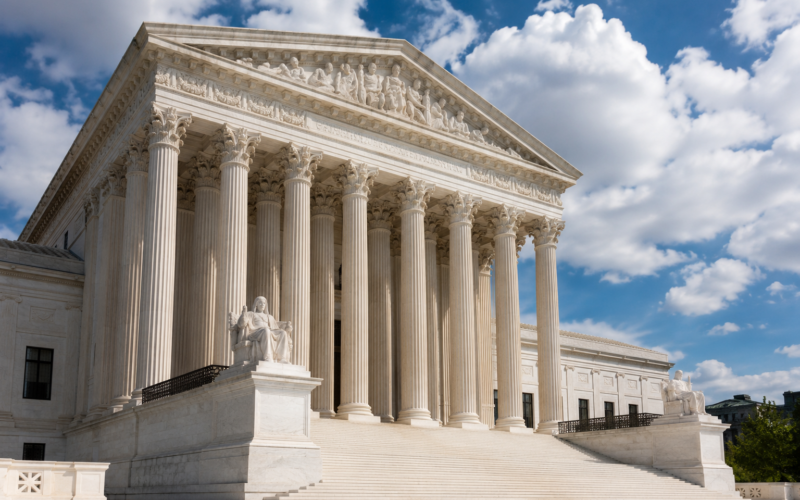
The United States Supreme Court ruled 6-3 on June 30, 2026, to strike down federal limits on how much political parties can spend in coordination with candidates, handing Republicans a major campaign finance victory months before the 2026 midterm elections. The decision in National Republican Senatorial Committee v. Federal Election Commission removes Watergate-era restrictions that had capped coordinated party spending for more than five decades.
The ruling matters because it changes how campaigns, parties and donors can operate in federal elections. Until now, political parties could spend only limited amounts in coordination with candidates, while super PACs and outside groups could spend unlimited sums independently. The court’s conservative majority concluded that those limits violated the First Amendment, while the liberal dissent warned that the decision further weakens safeguards against political corruption.
The immediate political impact could be significant. Republican committees entered the midterm cycle with a stronger cash position than their Democratic counterparts, giving the GOP a possible early advantage in using the new rules. But the longer-term effect will reach both parties. Campaigns may become more centralized around party committees, political ads may become more coordinated with candidates, and big donors may gain new pathways to influence elections through party spending.
Why the Supreme Court’s campaign finance ruling matters before the midterms
The Supreme Court’s ruling matters because it arrives just as both parties are preparing for a high-stakes midterm election. Control of Congress will shape President Donald Trump’s second-term agenda, judicial confirmations, investigations, spending fights and the future of federal policy. Any change in campaign finance rules this close to November can affect strategy immediately.
The old system pushed much of the biggest political spending into super PACs and outside groups. These groups could raise and spend unlimited money, but they were supposed to operate independently from candidates and campaigns. Party committees, by contrast, were subject to coordinated spending caps when they worked directly with candidates on advertising, messaging and voter outreach.
The court’s decision removes that barrier. Parties can now spend unlimited sums in coordination with candidates, making party committees more powerful and potentially reducing the relative importance of super PACs. Candidates may prefer party spending because it can be coordinated directly with campaign strategy rather than left to outside groups that cannot legally take instructions from campaigns.
That could change what voters see before Election Day. More money may flow into ads that are tightly aligned with candidate messaging, campaign schedules and targeted races. The ruling does not create money in politics by itself, but it changes the channels through which money can move.
How the ruling changes the balance between parties and super PACs
For years, campaign finance law created a strange imbalance. Political parties were subject to limits when coordinating with their own candidates, while super PACs could spend unlimited amounts as long as they remained formally independent. That made outside groups increasingly powerful, even though parties are more directly accountable to voters and candidates.
The Supreme Court majority treated that imbalance as a constitutional problem. The ruling reflects the view that political parties exist to support candidates and communicate political ideas, so restricting coordinated party spending burdens core political speech. From that perspective, the old limits weakened parties while empowering less accountable outside groups.
The decision may bring money back toward formal party committees. That shift could strengthen the Republican National Committee, Democratic National Committee, National Republican Senatorial Committee, Democratic Senatorial Campaign Committee, National Republican Congressional Committee and Democratic Congressional Campaign Committee. These committees can now become larger engines of coordinated messaging in competitive races.
But this does not mean super PACs will disappear. Outside groups can still raise unlimited money, including from donors who may prefer less direct party involvement. The likely outcome is a more complex spending ecosystem, where parties, campaigns and super PACs all remain powerful, but party committees gain new strategic importance.
Why Republicans could gain an immediate advantage from the decision
The ruling is likely to help Republicans first because Republican committees have entered the 2026 cycle with stronger fundraising and cash reserves than Democrats. That matters because legal changes favor the side that is ready to act quickly. A party with money already available can move faster to coordinate advertising, voter contact, digital outreach and field operations with candidates.
The case itself came from Republican challengers, including the National Republican Senatorial Committee, the National Republican Congressional Committee and JD Vance, who filed the challenge while running for Senate in Ohio in 2022. That origin gives the decision an obvious partisan context, even though the legal rule now applies to both major parties.
Republicans will likely use the ruling to sharpen spending in battleground Senate and House races. Party committees can now coordinate directly with candidates on advertising strategy and message discipline without worrying about the old caps. That could be especially valuable in states where local candidate campaigns have limited resources but national committees have strong cash positions.
Democrats will also adapt, but they may face a timing disadvantage if their committees are carrying weaker cash positions or debt. Over time, both parties will reorganize around the new rules. In the short term, the ruling could give Republicans a clearer operational benefit heading into November.
How the decision could increase the influence of major donors
The ruling could increase donor influence because party committees can now serve as more powerful vehicles for campaign support. Wealthy donors who want to help specific candidates may see party committees as more attractive if those committees can coordinate directly with campaigns and spend without the old limits.
Federal contribution limits to candidates still exist. A donor cannot simply give unlimited money directly to a candidate campaign. But donors can give large amounts through party structures, joint fundraising committees and other legal channels. If party committees can then coordinate unlimited spending with candidates, critics will argue that donor money can move closer to candidate strategy even if formal contribution limits remain in place.
That is the corruption concern at the center of the dissent. The old coordinated spending caps were designed to prevent donors from using parties as pass-through vehicles to benefit particular candidates. If a donor gives heavily to a party knowing the party can spend unlimited amounts in coordination with a favored candidate, the practical line between party support and candidate support may blur.
Supporters of the ruling will argue that political speech should not be restricted simply because it is effective. Critics will argue that the decision makes it easier for large donors to gain access, influence and gratitude through party spending that directly helps candidates win.
Why the decision continues the Supreme Court’s campaign finance shift
The ruling continues a long Supreme Court trend toward limiting campaign finance restrictions on First Amendment grounds. The most famous modern example is Citizens United v. Federal Election Commission, which allowed corporations, unions and outside groups to spend unlimited money independently in elections. Other decisions have also struck down limits on political contributions and spending.
National Republican Senatorial Committee v. Federal Election Commission fits into that broader pattern. The court is again treating campaign spending as protected political expression and viewing restrictions with deep skepticism. The majority’s reasoning suggests that campaign finance limits must be closely tied to preventing direct corruption, not simply reducing political inequality or limiting the influence of money.
The decision also overturns the court’s 2001 ruling in Federal Election Commission v. Colorado Republican Federal Campaign Committee, often called Colorado II. That earlier case upheld coordinated party spending limits. By reversing course, the court is signaling that older campaign finance precedents are vulnerable when they conflict with the current majority’s First Amendment approach.
That legal direction could invite more challenges. If coordinated party spending limits can fall, litigants may test other remaining restrictions on party activity, donor structures or campaign finance enforcement. The decision may not be the final word in campaign finance deregulation.
Why Democrats and reform groups will frame the ruling as a corruption risk
Democrats and campaign finance reform groups are likely to frame the ruling as another blow to anti-corruption law. Their argument will be that the decision weakens a structure Congress built after Watergate to prevent wealthy donors from buying influence through political parties and candidate campaigns.
The concern is not only about visible bribery. Modern corruption debates often focus on access and dependency. A candidate who benefits from massive party spending funded by major donors may feel pressure to listen closely to those donors after winning office. Even without explicit deals, the flow of money can shape priorities, relationships and public trust.
Reform groups will also argue that the ruling makes elections more expensive. If parties can spend without coordinated caps, competitive races may see another surge in advertising, consulting, digital targeting and voter operations. That could increase pressure on candidates to raise money constantly and make politics even more dependent on donor networks.
Republicans will counter that the ruling strengthens parties, which are more accountable and transparent than outside groups. They will argue that if super PACs can spend unlimited money independently, parties should not be treated worse when they support their own nominees. That argument may appeal to voters who dislike shadowy outside groups but still accept party competition as a normal part of democracy.
How voters may experience the ruling before Election Day
Most voters will not experience the ruling as a legal doctrine. They will experience it through more political advertising, more coordinated messaging and more aggressive party involvement in competitive races. Television, streaming, digital and mail advertising could become more tightly aligned with candidate campaigns.
The ruling may also affect ad pricing. Candidate campaigns often receive lower broadcast advertising rates close to Election Day. If party committees can coordinate more closely with candidates, campaigns and parties may look for ways to maximize those advantages. That could reshape how late-cycle money is spent in House and Senate races.
Voters in battleground states and swing districts may see the biggest change. National committees will focus resources where control of Congress is at stake. Senate races, suburban House districts, Latino-majority districts, rural battlegrounds and expensive media markets could become testing grounds for the new spending environment.
The practical effect may be a noisier, more nationalized midterm campaign. Local issues will still matter, but national party committees may now have more ability to shape candidate messaging directly. That could make congressional races feel even more like referendums on Trump, inflation, immigration, crime, courts and party control.
What should readers watch after the Supreme Court’s campaign finance ruling?
One of the key things to watch is how quickly party committees announce new spending plans. If Republicans immediately expand coordinated programs in Senate and House battlegrounds, it will confirm that the ruling has practical value before November. Democratic committees may respond with their own restructuring, fundraising appeals and legal guidance.
Donor behavior will be another signal. If major donors shift more money into party committees or joint fundraising vehicles, the ruling could change the fundraising map. If donors continue preferring super PACs, the decision may strengthen parties without replacing outside groups.
Campaign messaging will show how coordination changes politics on the ground. Ads may become more consistent across candidate campaigns and national party committees. Candidates may rely more heavily on party infrastructure for message testing, voter targeting and media placement.
Legal challenges could also continue. Reform groups and state-level regulators may look for new ways to limit circumvention of contribution caps, while conservative legal groups may push to strike down more remaining restrictions. The Federal Election Commission’s enforcement posture will also matter, especially because a weak or divided FEC can leave major legal questions unresolved.
The ruling gives political parties new power at a decisive moment in the 2026 campaign. Republicans may benefit first, but both parties will eventually adapt. The deeper change is structural: more money can now move through party committees in direct coordination with candidates, making elections more expensive, more centralized and more closely tied to national political machinery.
Key takeaways from the Supreme Court’s campaign finance ruling
- The Supreme Court ruled 6-3 on June 30, 2026, to strike down federal limits on how much political parties can spend in coordination with candidates.
- The decision in National Republican Senatorial Committee v. Federal Election Commission removes Watergate-era spending caps that had shaped federal campaign finance law for more than five decades.
- Justice Brett Kavanaugh wrote the majority opinion, while the court’s liberal justices dissented and warned that the ruling weakens anti-corruption safeguards.
- The ruling overturns the Supreme Court’s 2001 Colorado II precedent, which had previously upheld limits on coordinated party expenditures.
- Political parties can now spend unlimited sums in direct coordination with candidates, making party committees more powerful in campaign strategy, advertising and voter outreach.
- Republicans may gain an immediate advantage because GOP committees entered the midterm cycle with stronger cash positions than their Democratic counterparts.
- The ruling could reduce the relative importance of super PACs by allowing parties to play a larger role in coordinated campaign spending, though outside groups will remain influential.
- Critics say the decision may let wealthy donors use party committees to direct more money toward favored candidates while weakening public confidence in anti-corruption rules.
- Supporters say the ruling restores political parties’ First Amendment rights and corrects a system that had empowered outside groups while limiting formal party organizations.
- The decision could make the 2026 midterms more expensive, more nationalized and more dependent on coordinated party spending in competitive House and Senate races.
Discover more from Business-News-Today.com
Subscribe to get the latest posts sent to your email.