





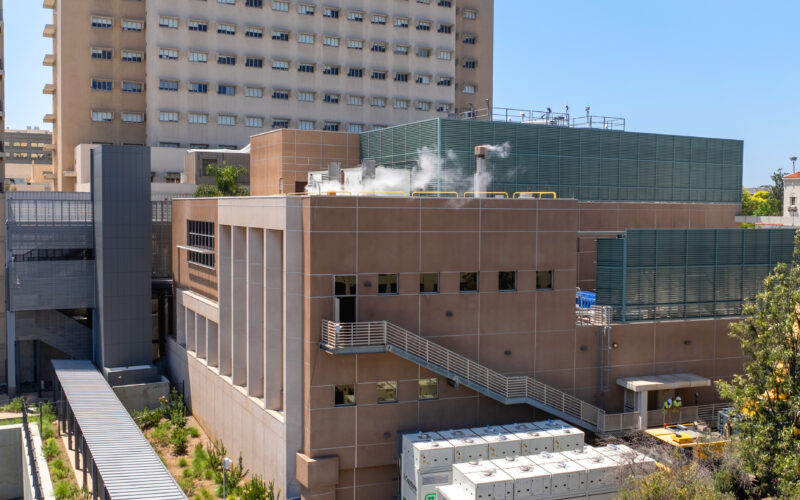
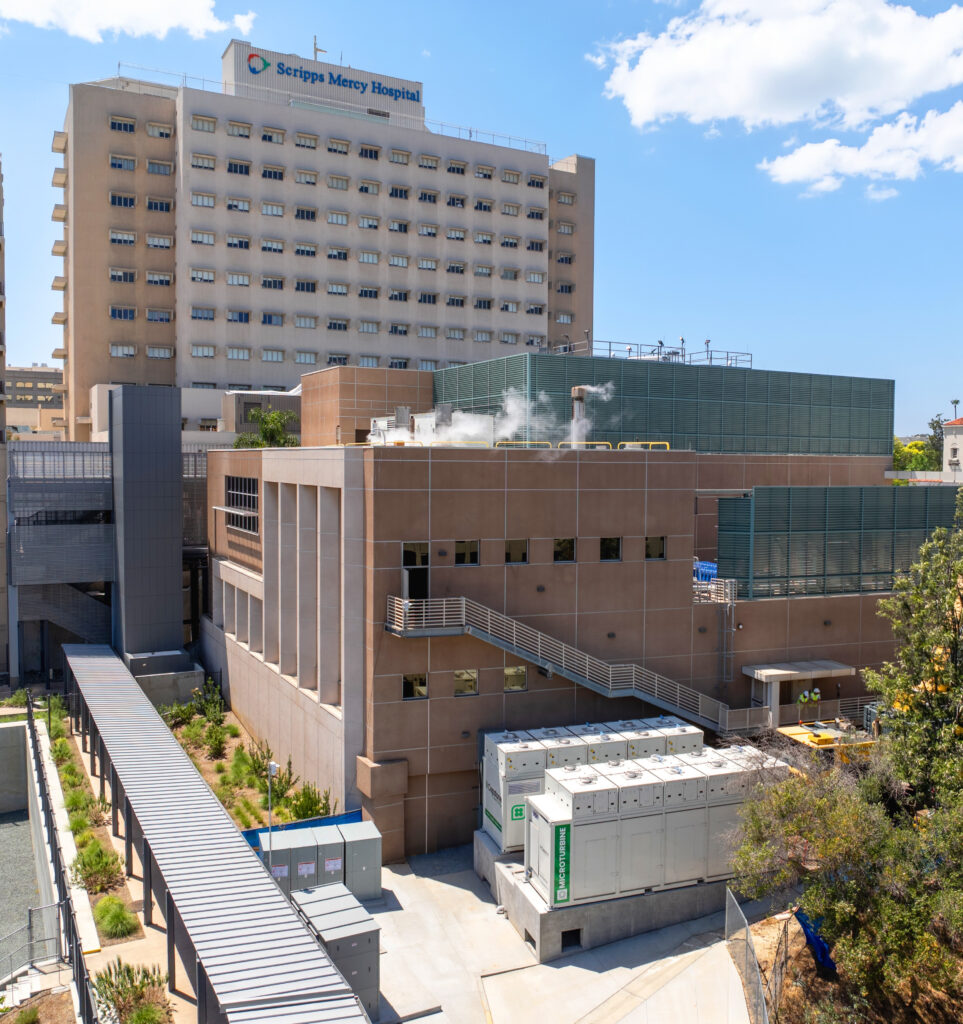
Capstone Energy+, Inc. (NASDAQ: CEPL) has installed two C1000 Signature Series microturbines at Scripps Mercy Hospital San Diego as part of a 2 megawatt combined heat and power system designed to strengthen the hospital’s energy resilience. The system is expected to generate electricity on site while capturing otherwise wasted thermal energy to provide most of the hospital’s heating and domestic hot water requirements. Capstone Energy+ is targeting total system efficiency of 75%, with island-mode capability intended to keep generation operating when utility electricity is unavailable. Commissioning is expected in October 2026, followed by final startup activities through the end of the year. The strategic opportunity is clear, but the project’s value to Capstone Energy+ will ultimately depend on successful commissioning, measurable customer savings and whether the installation leads to further healthcare-sector orders.
How will the 2 MW CHP system strengthen resilience at Scripps Mercy Hospital San Diego?
Hospitals cannot treat electricity as an ordinary operating input. Clinical equipment, ventilation, communications, refrigeration, medical gases, information systems and emergency departments must continue functioning even when the surrounding power network is disrupted. A loss of power that might inconvenience a commercial office could become an immediate patient-care risk inside an acute-care facility.
The Capstone Energy+ installation is intended to provide another layer of local generation within the hospital’s wider resilience infrastructure. When operating in island mode, the two microturbines are expected to separate from the utility network and continue generating electricity for designated hospital operations during an outage. That capability could become particularly important during earthquakes, wildfires, heat events or utility failures that affect Southern California’s electricity system.
Scripps Mercy Hospital already has a history of investing in redundant energy infrastructure. Scripps Health said in 2011 that the hospital’s central energy plant contained a 4,000 kilowatt power plant alongside steam, cooling, water and medical gas systems, with backup capacity built into critical functions. The new Capstone Energy+ system should therefore be understood as part of an established resilience strategy rather than the hospital’s only source of emergency protection.
The most important operating test will not simply be whether the microturbines produce 2 megawatts under normal conditions. The more meaningful evidence will be whether controls, switching equipment, thermal recovery systems and hospital load priorities work together reliably when the campus must operate independently from the grid.
Why does combined heat and power suit the operating profile of a large hospital?
Combined heat and power systems can be especially relevant for hospitals because these facilities require both electricity and thermal energy throughout the day. Instead of producing electricity while releasing usable heat into the atmosphere, a CHP system captures that heat and redirects it toward requirements such as hot water and space heating.
Capstone Energy+ expects the Scripps Mercy system to provide most of the facility’s heating and domestic hot water needs while achieving overall efficiency of approximately 75%. The potential economic advantage comes from obtaining two useful energy outputs from the same generation process, provided the hospital maintains sufficient and relatively consistent thermal demand.
That distinction matters because the commercial case for CHP is broader than backup power. A conventional standby generator may operate only during outages or testing periods. A well-utilised CHP installation can potentially operate more regularly, reducing purchased electricity while simultaneously displacing energy previously used to produce heat.
However, Capstone Energy+ did not disclose the project’s capital cost, contractual revenue, estimated annual energy savings, fuel arrangement or expected payback period. It also did not provide project-specific emissions calculations. The sustainability benefits therefore remain dependent on the fuel used, operating hours, displaced grid electricity and the efficiency of the hospital’s previous heating infrastructure.
The 75% efficiency figure is also an expected operating outcome rather than a completed performance result. Confirmed efficiency, availability and cost savings after commissioning would make the Scripps Mercy project a much stronger commercial reference for other hospitals evaluating distributed generation.
Why is the Scripps Mercy project strategically important for Capstone Energy+?
The installation arrives during a significant repositioning of the company. Capstone Green Energy Holdings changed its legal name to Capstone Energy+, Inc. on April 30, 2026, reflecting management’s effort to present the business as a wider behind-the-meter energy platform rather than solely a microturbine manufacturer. The company subsequently moved from the OTCQX market to the Nasdaq Global Market under the CEPL ticker on July 8, 2026.
That repositioning requires credible examples across sectors where power reliability has direct economic consequences. Data centres may provide the largest headline opportunity because of their rapidly expanding electricity requirements, but hospitals offer a different form of validation. They are highly regulated, operationally sensitive environments where equipment reliability and continuity are more important than marketing claims.
A successful hospital installation could therefore demonstrate several elements of the Capstone Energy+ strategy simultaneously. It could show that the company’s modular systems can support critical infrastructure, integrate electricity and heat production, operate independently during grid interruptions and fit within an existing institutional energy network.
The involvement of BSD Builders, Inc. is also commercially relevant. Distributed energy projects typically require more than the delivery of generation equipment. Site design, construction, electrical integration, thermal connections, controls, permitting and commissioning must all be coordinated. Relationships with experienced engineering and construction partners can help Capstone Energy+ reach customers without carrying the entire project-delivery burden itself.
The central tension is scalability. One hospital reference can improve credibility, but it will not establish a healthcare growth platform unless Capstone Energy+ converts the installation into additional projects with hospitals, health systems, laboratories or other mission-critical facilities.
Can Capstone Energy+ turn equipment installations into recurring higher-margin revenue?
The financial value of the Scripps Mercy project may extend beyond the initial turbine sale if it generates aftermarket parts, maintenance, monitoring or long-term service revenue. Capstone Energy+ did not disclose whether the hospital arrangement includes a Factory Protection Plan, long-term maintenance agreement or another recurring service contract, so such revenue should not be assumed.
Nevertheless, the company’s fiscal 2026 results show why the service layer matters. Parts and service revenue increased to $33.2 million, while the segment’s gross margin reached 64%. Rental revenue rose to $15.9 million with a gross margin of 44%. By contrast, product and accessories revenue generated a gross margin of 10%, although that represented a substantial improvement from 3% in the previous year.
This margin difference means an installed turbine can be more valuable over its operating life than the original equipment sale alone. A larger installed base can create demand for replacement parts, scheduled servicing, remote monitoring and performance support. Hospitals may also place a premium on service reliability because delayed maintenance or equipment downtime can undermine the resilience purpose of the installation.
The commercial quality of the Scripps Mercy project will therefore depend partly on how much continuing customer engagement follows commissioning. Equipment revenue can support near-term growth, but service agreements and repeat orders would provide stronger evidence that Capstone Energy+ is building a durable critical-infrastructure business.
How do Capstone Energy+’s latest financial results affect the project’s investor significance?
Capstone Energy+ entered the hospital project with stronger reported operating results than it had produced in the previous fiscal year. Revenue increased 24% to $106 million in fiscal 2026, while gross profit rose 45% to $33.9 million. The company reported net income of $2.8 million, compared with a $7.2 million loss in fiscal 2025, and adjusted EBITDA increased to $15.9 million from $7.9 million. Cash and restricted cash stood at $28.9 million at March 31, 2026.
The improvement suggests that stronger product demand, pricing and service margins are beginning to produce operating leverage. However, cash conversion still requires attention. Capstone Energy+ used $2.5 million of cash in operating activities during fiscal 2026 as growth in accounts receivable, inventory and other working-capital requirements offset reported net income.
The company also reported $25.3 million of outstanding Exit Notes at March 31, 2026, with maturity scheduled for December 7, 2026. Although Capstone Energy+ was compliant with its financial covenants at the fiscal year-end, its annual report acknowledged risks associated with substantial indebtedness, covenant requirements and longer-term liquidity.
Against that financial backdrop, the Scripps Mercy installation is strategically encouraging but not independently material enough to resolve the company’s broader capital and cash-flow questions. No contract value was disclosed, and revenue recognition may depend on delivery, commissioning and contractual terms that are not publicly available.
Investors will need to see whether critical-infrastructure projects contribute to continued revenue growth without requiring disproportionate inventory, installation expenditure or working capital. A project pipeline is valuable only when it converts into acceptable margins and cash.
Why did CEPL shares remain volatile despite the hospital infrastructure announcement?
Capstone Energy+ shares closed at $8.18 on July 27, according to ADVFN, after a sharp decline during the session. The closing price was approximately 21% below the $10.30 recorded on July 22 and roughly 31% below the $11.88 closing price on the company’s first Nasdaq trading day on July 8. Data providers have placed the wider 52-week range at approximately $0.95 to $14.20, although much of that period relates to trading under the company’s former OTCQX identity.
The weak session should not automatically be attributed to the Scripps Mercy announcement. Small-cap shares can move sharply because of trading liquidity, valuation changes, financing expectations or short-term positioning. The hospital project offered strategic validation, but it did not disclose revenue, profit contribution or a large order backlog that would allow investors to revise near-term financial estimates confidently.
Market participants are also assessing Capstone Energy+’s capital structure. The company filed a universal shelf registration covering up to $500 million of potential securities and amended the filing on July 24 to reflect its Nasdaq listing and updated incorporated disclosures. A shelf registration creates financing flexibility but does not mean that securities have been issued or that dilution is immediate. Its size relative to Capstone Energy+’s market value may nevertheless contribute to cautious sentiment until the company clarifies how, when or whether that capacity could be used.
The current share-price behaviour therefore reflects a gap between strategic potential and financial visibility. The healthcare installation strengthens Capstone Energy+’s operating narrative, but investors still lack the project economics needed to determine whether it materially changes earnings or cash-flow expectations.
What evidence will show whether the hospital CHP strategy is succeeding?
The first measurable milestone is commissioning, which Capstone Energy+ expects in October 2026. Final startup activities are scheduled to continue through the end of the year, making the fourth quarter an important operational test for the integration of electrical generation, heat recovery and island-mode controls.
After startup, the most useful evidence would include demonstrated system availability, verified total efficiency, the proportion of heating and hot water demand actually served, outage performance and quantifiable reductions in energy expenditure. Project-specific emissions data would also help establish whether the system delivers the sustainability benefits expected from its CHP design.
For Capstone Energy+, the larger commercial proof point will be replication. Additional healthcare orders, system expansions, long-term service agreements or adoption by other Scripps Health facilities would suggest that the San Diego installation is functioning as a reference platform rather than an isolated project.
The company has improved revenue, margins and reported profitability, and the Scripps Mercy system gives it a credible application in an industry where reliable energy is inseparable from service continuity. What remains unresolved is whether Capstone Energy+ can translate that credibility into repeatable, cash-generating growth. Successful commissioning will establish technical capability, but further healthcare contracts and stronger cash conversion will determine whether the project materially strengthens the CEPL investment case.
What are the key takeaways from Capstone Energy+’s 2 MW Scripps Mercy Hospital project?
- Capstone Energy+ has installed two C1000 Signature Series microturbines capable of producing 2 megawatts at Scripps Mercy Hospital San Diego.
- The combined heat and power system is expected to provide electricity while supplying most of the hospital’s heating and domestic hot water requirements.
- Capstone Energy+ is targeting overall system efficiency of 75%, although actual performance has not yet been demonstrated.
- Island-mode capability is intended to allow continued generation when utility electricity is interrupted.
- Commissioning is expected in October 2026, with final startup activities continuing through year-end.
- The project provides Capstone Energy+ with a potentially valuable reference in healthcare and other mission-critical infrastructure markets.
- No contract value, estimated savings, fuel arrangement, emissions reduction or long-term service agreement was disclosed.
- Capstone Energy+ reported stronger fiscal 2026 revenue, gross profit, net income and adjusted EBITDA, but operating cash flow remained negative.
- CEPL shares have been volatile since the company’s July 8 Nasdaq listing and closed at $8.18 on July 27.
- Verified operating performance and additional healthcare orders will determine whether the installation becomes a repeatable commercial platform.
Discover more from Business-News-Today.com
Subscribe to get the latest posts sent to your email.



