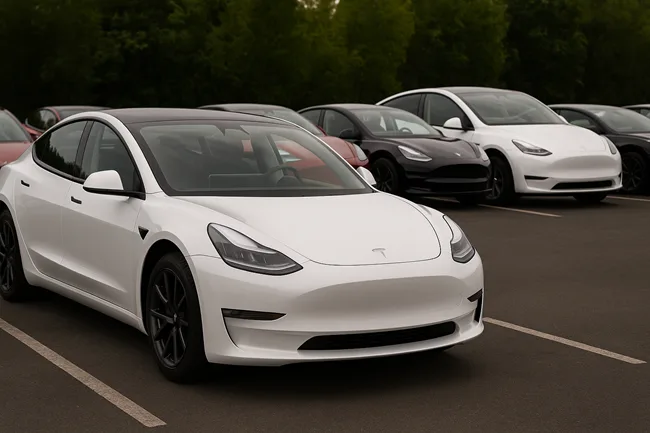


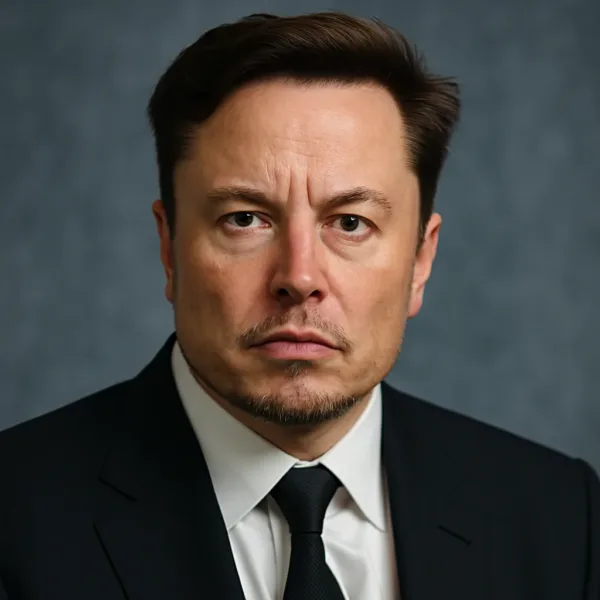
Tesla Inc. (NASDAQ: TSLA) is reportedly evaluating internal chief executive officer succession candidates amid rising uncertainty over the future involvement of Elon Musk, whose proposed $1 trillion performance-based compensation package is under mounting shareholder scrutiny. According to a Bloomberg News report cited across multiple media outlets, the electric vehicle manufacturer has been exploring contingency plans to manage the risk of Musk stepping back from his role if the vote fails to secure approval.
The development comes ahead of a critical shareholder vote on Musk’s revised 2018 pay package, which has become one of the most closely watched executive compensation proposals in public company history. Tesla’s board, led by Chair Robyn Denholm, has argued that the multibillion-dollar deal is essential to retaining Musk’s leadership and vision, particularly as the company doubles down on autonomous driving, artificial intelligence, robotics, and energy infrastructure.
Denholm recently warned shareholders in a letter that failure to approve the package could result in the loss of Musk’s time, talent, and strategic focus. She described Musk as “one of the most exceptional leaders of our time” and emphasized that the proposal aims to reassert his long-term alignment with Tesla’s business trajectory.
Who are the leading internal candidates for the Tesla CEO role?
Although no names have been officially confirmed by Tesla, media reports have pointed to several key executives believed to be under consideration in case of a leadership transition. Chief Financial Officer Vaibhav Taneja, who assumed the role in 2023, is widely seen as a steady hand with experience in Tesla’s global operations and compliance frameworks.
Another leading internal candidate is Tom Zhu, Senior Vice President of Automotive and former China chief, who was given expanded responsibilities for Tesla’s global manufacturing and sales functions. Zhu’s operational track record, particularly his role in scaling Gigafactory Shanghai and streamlining production logistics, has positioned him as a credible successor if a more execution-focused CEO is required.
Tesla’s succession planning comes in the wake of significant leadership turnover over the past three years, with senior executives such as Andrew Baglino, the company’s former Senior Vice President of Powertrain and Energy Engineering, and long-time legal counsel departing. The board is therefore seen as prioritizing stability and operational continuity through internal candidates, although some investors believe an external appointment may eventually be necessary depending on the strategic direction Tesla wishes to pursue without Musk at the helm.
What makes Elon Musk’s $1 trillion pay package so controversial?
At the center of the unfolding leadership debate is Musk’s monumental compensation package. Originally structured in 2018 as a performance-based equity award tied to aggressive operational and market capitalization targets, the package was nullified by a Delaware court in January 2024, citing board conflicts and insufficient shareholder safeguards.
Tesla’s board reintroduced the proposal with slight modifications and has been campaigning actively to secure shareholder approval at the company’s upcoming annual meeting scheduled for November 6, 2025. The updated proposal seeks to reinstate Musk’s eligibility for stock options based on future milestones, with a potential payout valued at more than $1 trillion if Tesla’s market capitalization reaches $8.5 trillion and other performance criteria are met.
Proxy advisory firms including Institutional Shareholder Services and Glass Lewis have recommended that shareholders vote against the deal, citing concerns over excessive dilution, lack of meaningful oversight, and the concentration of control in Musk’s hands. While the firms acknowledged Musk’s past achievements in growing Tesla’s valuation and product portfolio, they also flagged risks associated with overcompensating an executive already managing multiple high-profile companies including SpaceX, xAI, and X (formerly Twitter).
How are investors reacting to Tesla’s succession planning and executive risk?
Tesla Inc. shares have remained volatile in the lead-up to the shareholder vote, reflecting investor uncertainty over Musk’s future involvement and the board’s contingency approach. As of the latest session, Tesla stock was trading at approximately USD 460.55, posting a modest uptick of 0.018 percent on the day. Trading volumes remained high, and analysts noted increased options activity around the vote date, indicating market anticipation of a potential leadership announcement or public reaction from Musk.
While some institutional investors view the internal CEO succession strategy as a prudent move, others question whether any successor—internal or external—can replicate Musk’s vision, charisma, and brand equity. Several funds have already voiced concerns over Tesla’s governance structure, with some advocating for greater independence on the board and clearer succession planning mechanisms beyond Musk.
Despite this, there is also a segment of Tesla’s investor base, particularly among retail shareholders, that continues to support Musk unreservedly. Online forums, including Tesla-focused retail investment groups and X (formerly Twitter), remain vocal in their belief that Musk’s leadership is irreplaceable and should be incentivized to the fullest extent possible. This polarization has added further complexity to the shareholder vote and the potential implications of either outcome.
What happens next if shareholders reject Elon Musk’s pay deal?
If shareholders vote against the pay package, Tesla’s board is expected to formally enact its internal CEO succession plan, although the specific details remain confidential. Elon Musk has not publicly confirmed whether he would exit or reduce his role at Tesla, but past comments suggest he views Tesla as only one component of a broader portfolio of innovation-focused ventures.
In such a scenario, analysts expect Tesla to emphasize operational stability, scale manufacturing across new geographies including Mexico and India, and push forward on AI and energy business initiatives without relying solely on Musk’s public-facing leadership. However, investor confidence in this transition would hinge on how quickly Tesla communicates its leadership roadmap and whether the selected successor is viewed as capable of maintaining strategic momentum.
If the pay deal is approved, the leadership question may recede temporarily, but critics argue the governance concerns will remain unresolved. It could also reignite broader debate about compensation norms in the technology and automotive sectors, especially in the context of public companies driven by high-profile founders.
What deeper risks does Tesla face beyond just losing Elon Musk as CEO?
Tesla’s current moment is not just about pay structure or leadership logistics. It is a test of how much Tesla’s identity and market valuation are bound to Elon Musk as an individual. While internal successors such as Vaibhav Taneja or Tom Zhu may provide operational continuity, it is unclear if either can match the strategic narrative or fundraising magnetism that Musk brings to Tesla’s brand.
For long-term shareholders, the vote also signals whether Tesla is evolving into a more mature, institutionalized company with diversified leadership or continuing to operate as a founder-led startup at scale. Musk’s departure or reduced involvement would be seen by some as the end of Tesla’s hypergrowth chapter and the beginning of a more measured, platform-driven industrial expansion.
That shift is not inherently negative, but it does require a new playbook. And that’s exactly what the board seems to be preparing, albeit quietly.
What are the key developments and strategic signals from Tesla’s CEO succession contingency?
Tesla’s board appears to be preparing for potential leadership transition as it braces for a shareholder vote on Elon Musk’s controversial $1 trillion compensation plan. Below are the main highlights from this unfolding corporate governance story:
- Tesla Inc. is actively reviewing internal CEO candidates in case Elon Musk departs following the upcoming shareholder vote on his reinstated 2018 pay package.
- The board’s contingency planning is driven by concerns that a failed vote could lead Musk to reduce his involvement in Tesla or shift focus toward ventures like SpaceX or xAI.
- Internal succession options reportedly include Chief Financial Officer Vaibhav Taneja and Senior Vice President of Automotive Tom Zhu, both known for operational expertise.
- Musk’s pay package, valued at over $1 trillion, has drawn sharp opposition from proxy advisory firms such as Glass Lewis and Institutional Shareholder Services.
- Tesla stock remains volatile as institutional and retail investors await clarity on the leadership structure and broader strategic direction post-vote.
- Proxy voting outcomes are expected to be revealed at Tesla’s annual general meeting scheduled for November 6, 2025.
- The succession scenario is raising deeper questions about Tesla’s identity, governance maturity, and its dependence on Musk’s personal brand to sustain its innovation narrative.
Discover more from Business-News-Today.com
Subscribe to get the latest posts sent to your email.