Western Resources Corp. (TSX: WRX) is approaching a critical September 8 Toronto Stock Exchange hearing while the subsidiaries controlling its Milestone Potash Project remain under Canadian creditor protection, backed by up to US$6 million of court-approved interim financing and facing a court-supervised process that could result in a sale, recapitalisation, refinancing or new strategic investment. The restructuring places one of Saskatchewan’s more advanced undeveloped potash projects at a financial crossroads after years of construction spending failed to translate into sustained commercial production.
The Supreme Court of British Columbia extended the Companies’ Creditors Arrangement Act stay protecting Western Potash Corp., Western Potash Holdings Corp. and 0907414 B.C. Ltd. until December 18, 2026. The court also increased authorised interim financing from US$1 million to as much as US$6 million and approved a Sale and Investment Solicitation Process overseen by FTI Consulting Canada Inc. That gives the debtor companies enough liquidity to preserve operations and run a restructuring process, but it does not resolve the much larger secured debt burden sitting ahead of them.
The financial pressure is substantial. Senior secured lender WPC (Jersey) Limited, an Appian Capital affiliate, says at least US$108.2 million became immediately due after project delays and payment defaults. Appian had originally provided financing under a 2022 facility carrying 12.5% annual interest, with the lender also receiving a royalty over project revenue.
Western Resources itself is not one of the named CCAA debtors, but its principal operating asset sits inside the subsidiaries that are. The listed parent’s shares are suspended, and the TSX Continued Listing Committee is scheduled to consider a potential delisting on September 8. The combination of creditor protection, suspended trading and a formal sale process means shareholder value now depends far more on restructuring recoveries than on the physical percentage completion of Milestone.
How serious is US$108.2 million of debt compared with the US$6 million CCAA financing?
The US$6 million interim facility is designed to keep the debtor companies functioning through the restructuring process rather than repay their historic secured debt. Compared with the at least US$108.2 million amount said to have become due to the senior lender, the full US$6 million facility is equivalent to only about 5.5%. It should therefore be viewed as a liquidity bridge that buys time to preserve asset value, not as a refinancing solution capable of repairing the balance sheet.
The original Appian financing was announced in 2022 as a C$85 million-equivalent six-year term facility carrying interest at 12.5% annually. The lender also received a 1.5% gross-revenue royalty over Milestone and warrants in Western Resources, giving Appian exposure to both debt economics and potential upside if the project reached production. Court-related reporting indicates Appian ultimately advanced at least US$85 million and that approximately US$16.8 million of interest remained unpaid by the time enforcement proceedings began.
That structure helps explain how the outstanding claim expanded so dramatically while Milestone remained unable to generate sustained operating cash flow. High-cost development debt can be manageable when a project reaches production on schedule, but delays allow interest and other obligations to accumulate while no corresponding revenue is available to service them. Western Potash now needs a transaction capable of addressing both the secured creditor claim and the remaining capital required to move Milestone into reliable production.
The restructuring challenge therefore extends well beyond securing another few million dollars. A credible solution must persuade either existing lenders, new investors or a buyer that the residual value of Milestone justifies substantial additional capital. Without that, interim financing merely postpones rather than resolves the underlying insolvency pressure.
Why is it striking that Milestone entered CCAA after being described as 93% complete?
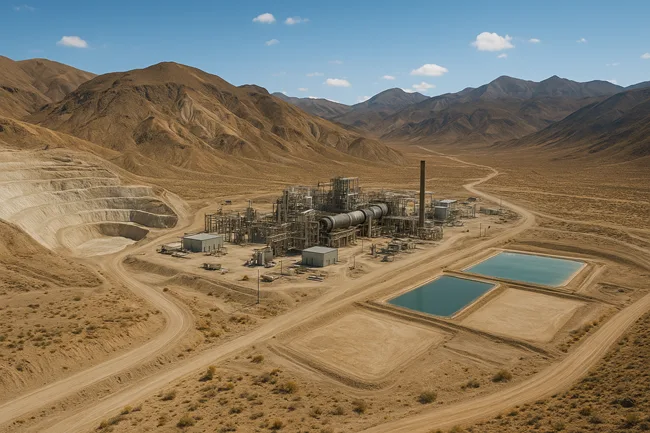
Western Resources suspended site operations at Milestone in May 2024 so management could focus on securing additional financing. At the time, the company said the Phase I project was approximately 93% complete under the existing plan and about 83% complete on an overall-status basis. Construction of the processing plant had been completed and most equipment had undergone dry commissioning, creating the impression that commercial production was relatively close.
The planned Phase I operation has a targeted capacity of approximately 146,000 tonnes of potash per year and an indicated operating life of around 40 years. It was designed partly to demonstrate Western Potash’s horizontal solution-mining method before a possible much larger future operation. Those characteristics gave Milestone the appearance of a substantially de-risked development project compared with an early-stage greenfield mine.
The gap between being described as 93% complete and entering creditor protection shows why construction percentages can be misleading when financing is tight. The final stages of a mining project can still require significant spending on wells, commissioning, working capital, ramp-up and operating systems. Physical infrastructure can be largely in place while the project remains incapable of generating enough cash to support its debt burden.
Western Resources acknowledged in 2024 that additional financing was required before development could continue. More than two years later, Milestone is instead being marketed through a court-supervised process, suggesting that the remaining funding gap proved harder to bridge than the construction percentage implied. Potential investors are therefore evaluating a largely built asset whose previous capital structure failed before sustainable production was established.
What could happen to Milestone under the court-approved sale process?
The Sale and Investment Solicitation Process allows several possible outcomes rather than forcing Western Potash into an immediate asset liquidation. Potential parties can submit proposals involving an outright sale of the debtor companies or project assets, a strategic investment, recapitalisation, restructuring or refinancing. FTI Consulting will oversee an initial non-binding proposal stage before qualified parties progress toward binding bids.
That flexibility matters because the best recovery for creditors may not necessarily come from selling Milestone outright. A strategic potash producer or mining investor could inject capital while preserving some existing ownership, while a lender could restructure secured claims in exchange for equity or revised repayment terms. Another party could purchase Milestone and restart development under a cleaner capital structure with substantially less legacy debt.
For Western Resources shareholders, the central question is how much value remains after secured creditors, restructuring costs and any new-money investors are satisfied. CCAA proceedings are intended to preserve enterprise value where possible, but preserving the project does not automatically preserve the existing equity structure. If creditor claims absorb most of the recoverable value, common shareholders can retain little even if Milestone itself ultimately survives.
The eventual transaction therefore needs to be assessed not only by whether Milestone restarts but by who owns the restarted project and on what terms. A successful recapitalisation could be economically positive for the asset while still producing significant dilution or loss of control for Western Resources.
Why did Western Potash’s financing become so expensive before the project reached production?
Appian’s original facility already carried a relatively high cost of capital, reflecting the risks associated with funding a development-stage mine without established operating cash flow. The six-year financing carried 12.5% annual interest and included an original issue discount in the detailed loan structure, while Appian also received the 1.5% project revenue royalty and Western Resources warrants.
Those economics can work when construction remains on schedule and the mine begins generating cash before interest and repayment obligations become overwhelming. The problem emerges when completion and commissioning take materially longer than expected. Interest continues accumulating, principal remains outstanding and refinancing can become progressively more difficult as lenders gain stronger security positions over the underlying assets.
Milestone was originally expected to move through commissioning and production considerably earlier. Instead, operations were suspended in May 2024 while management sought more financing, leaving the project unable to generate the cash flows needed to offset debt service. The longer that financing gap persisted, the more difficult the capital structure became to repair.
The current CCAA filing is therefore better understood as the culmination of a prolonged mismatch between project timing and financing terms rather than the result of one isolated missed payment. Western Potash now needs to reset that structure before Milestone can realistically become a sustainable operating asset.
Why does the September 8 TSX meeting matter when Western Resources shares are already suspended?
The Toronto Stock Exchange suspended Western Resources shares on August 25 and placed the company under an expedited continued-listing review. Western Resources has asked the exchange to reconsider potential delisting while the CCAA process progresses, with the Continued Listing Committee scheduled to meet September 8.
A delisting would not determine ownership of Milestone or terminate the restructuring process, but it would further weaken the listed parent’s access to public equity markets. It would also reduce liquidity and visibility for shareholders if trading eventually resumed through another venue or after the restructuring. For a company already facing severe financing pressure, loss of the TSX listing would remove one of the few remaining conventional capital-raising channels.
There is an additional complication because Western Resources says its shares have been subject to a cease-trade order issued by the British Columbia Securities Commission since March 4, 2025. Recent market-data prices around C$0.04 therefore do not represent genuine current price discovery because normal trading has not been taking place.
Western Resources had approximately 408.9 million shares issued according to market records associated with the CCAA announcement. Multiplying that share count by a stale C$0.04 reference price would imply roughly C$16.4 million, but that should not be treated as a reliable current market capitalisation. There is consequently no meaningful post-announcement share-price reaction available to interpret.
Could Milestone still attract buyers despite the insolvency process?
Milestone could still attract strategic interest because the project retains substantial physical infrastructure, mineral tenure and a long-duration potash development concept in Saskatchewan, one of the world’s most important potash-producing regions. Its Phase I design targets approximately 146,000 tonnes per year and was created to demonstrate selective horizontal solution mining on a commercial scale. The company has also historically examined a much larger conventional solution-mining development concept of up to approximately 2.8 million tonnes annually.
That means a buyer would not be starting from an undeveloped land package with only geological data and conceptual engineering. Much of the plant infrastructure has already been built, substantial capital has already been spent and the project is significantly further advanced than most undeveloped potash assets. Those factors can have strategic value if a buyer believes the remaining commissioning and financing requirements are manageable.
The insolvency process may even improve the economics for a new owner if it allows Milestone to emerge with a cleaner balance sheet. A strategic buyer could acquire the project without inheriting every feature of the previous capital structure, potentially improving the return profile relative to Western Potash’s original financing arrangement.
That opportunity still comes with substantial technical and financial due diligence. Any buyer would need to assess how much additional capital is required, the condition of infrastructure after the prolonged suspension, the readiness of solution-mining wells, the commissioning programme and the realistic timeline to commercial production. Historical completion percentages cannot substitute for a fresh assessment of what remains to be spent.
What should Western Resources shareholders watch next?
The immediate milestone is the September 8 TSX listing decision, but that is only one part of a much larger restructuring sequence. After the exchange ruling, attention moves to the Sale and Investment Solicitation Process and whether credible strategic or financial parties submit proposals capable of satisfying secured creditors while preserving some value elsewhere in the capital structure.
The December 18 expiry of the current CCAA stay provides another important deadline, although the court can extend creditor protection if progress justifies doing so. Investors should also monitor how much of the US$6 million interim facility is ultimately drawn because every dollar of priority restructuring financing helps preserve the asset but also adds claims that rank ahead of common shareholders.
The most important signal will be the value attributed to Milestone by outside bidders. If credible parties believe the largely built project can still justify substantial new capital, a restructuring could preserve more enterprise value than a distressed liquidation. If bids are weak relative to secured claims, the recovery available to existing shareholders could be minimal even if the mine eventually changes hands.
Milestone’s physical completion percentage is therefore no longer the central issue. A project once described as approximately 93% complete now sits behind at least US$108.2 million of creditor claims, court-approved interim financing and a formal sale process. The question facing Western Resources shareholders is whether the strategic value of the asset is high enough to support a restructuring that preserves any meaningful part of their economic interest.
Discover more from Business-News-Today.com
Subscribe to get the latest posts sent to your email.