

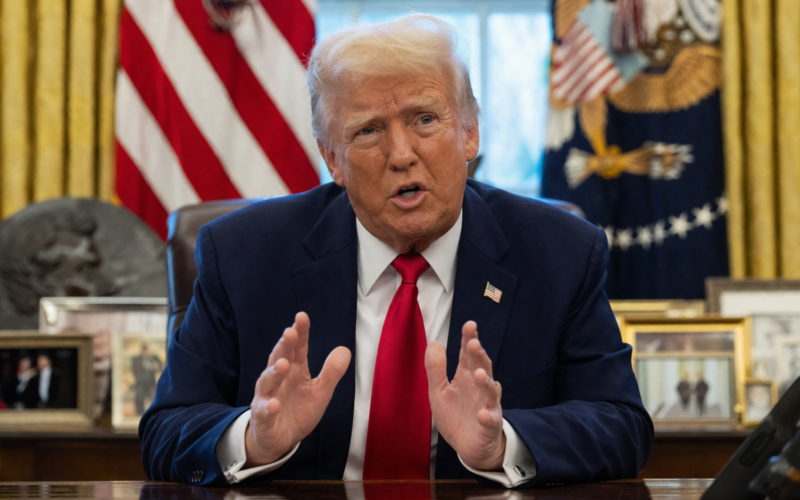
United States President Donald Trump has ordered the Pentagon to substantially reduce military exercises with South Korea, injecting fresh uncertainty into one of Washington’s most important Asian security alliances just as the annual Ulchi Freedom Shield drills began on Monday, August 17. Trump linked the decision to the cost of the exercises, South Korea’s reluctance to participate in United States actions involving Iran and his desire to maintain a less confrontational relationship with North Korean leader Kim Jong Un.
The order landed only hours before the 11-day Ulchi Freedom Shield exercise was due to begin and surprised officials in Seoul, where approximately 18,000 South Korean personnel had been scheduled to participate alongside United States forces. South Korea’s Joint Chiefs of Staff confirmed that the exercise nevertheless started as planned on August 17 and is scheduled to continue until August 27, while the exact activities that could ultimately be reduced remain unclear.
The timing is especially sensitive because North Korea has recently stepped up military signaling around the exercise. Pyongyang condemned this year’s drills as more provocative than the 2025 edition and warned that it would answer what it described as a heightened threat with stronger deterrence. North Korea has also conducted two ballistic missile launches since August 6, adding to longstanding concerns over its expanding nuclear and missile capabilities.
South Korea, however, is attempting to turn Trump’s intervention into a possible diplomatic opening rather than treating it solely as an alliance crisis. President Lee Jae Myung’s government said it hoped the relationship between Trump and Kim could lead to meaningful United States-North Korea dialogue and ultimately create a path toward improved stability on the Korean Peninsula. That response reflects Lee’s broader attempt to lower tensions with Pyongyang even as security officials must consider whether reduced exercises could weaken combined military readiness.
Why did Donald Trump suddenly order the Pentagon to reduce US-South Korea military exercises?
Trump’s explanation combined several issues that have traditionally been treated separately within the United States-South Korea relationship. He argued that the exercises were expensive and sent an unnecessarily hostile signal toward North Korea, while stressing that Kim Jong Un had behaved respectfully toward his administration. He also pointed to Seoul’s position on the Iran conflict, saying South Korea had declined an invitation to participate in United States efforts connected with Iran’s denuclearization.
The Iran reference introduces an unusually transactional element into a security arrangement traditionally centred on deterring North Korea. South Korea’s presidential office responded that discussions with Washington were continuing over possible practical and military contributions related to restoring freedom of navigation around the Strait of Hormuz, but said Seoul had to consider its own defence requirements and domestic legal procedures. It therefore did not accept the suggestion that South Korea had simply disengaged from broader United States security concerns.
Trump has also repeatedly criticised the financial burden associated with maintaining United States forces in South Korea. About 28,500 American military personnel are stationed in the country, and burden-sharing has been a recurring source of friction during both of Trump’s presidencies. His latest intervention therefore fits a longer pattern in which military readiness, diplomatic bargaining and the financial cost of alliances are treated as closely connected policy questions.
The Pentagon had not immediately provided details on how the instruction would alter Ulchi Freedom Shield, referring questions about the president’s order to the White House. That uncertainty is important because a reduction could range from cancelling selected field-training events to making much deeper changes to command exercises, live-fire activities or future training cycles.
What is Ulchi Freedom Shield and why does the exercise matter for South Korea’s defence?
Ulchi Freedom Shield is one of the principal annual combined exercises through which United States and South Korean forces practice defending the Korean Peninsula. The 2026 exercise began on August 17 with approximately 18,000 South Korean troops participating, broadly comparable with previous years, and had been scheduled to incorporate increasingly modern threats including drones, cyberattacks and disruption of Global Positioning System signals.
Military planners have also been incorporating lessons from recent conflicts, particularly the Russia-Ukraine war. United States officials have highlighted how unmanned systems, electronic warfare, cyber operations and precision targeting have changed modern battlefields, while North Korean soldiers deployed alongside Russian forces have gained direct combat experience. Training plans therefore included joint precision-targeting exercises, manoeuvre operations, river crossings and use of prepositioned military equipment.
The drills have evolved significantly since combined United States-South Korean training began after the Korean War armistice in 1953. Over decades, exercises developed into sophisticated tests of interoperability and command relationships before increasingly shifting toward computer-assisted simulations and scenarios involving missile attacks and cyberwarfare. Their purpose is not merely to move troops around training grounds but to test whether two militaries can operate under a unified command structure during a fast-moving conflict.
That makes reductions potentially consequential even if no American troops leave South Korea. Repeated exercises allow commanders, communications systems and units to rehearse responses before an actual crisis. A substantial and prolonged decrease in training could gradually affect coordination, especially as North Korea introduces new weapons and gains operational experience through its relationship with Russia.
Why is South Korea welcoming the possibility of new Donald Trump-Kim Jong Un diplomacy?
President Lee Jae Myung has pursued a markedly more conciliatory policy toward North Korea since taking office. His government has already taken steps intended to reduce frontline tensions, including shutting down loudspeakers that broadcast music and news across the border, while Lee recently proposed talks aimed at formally ending the Korean War and addressing Pyongyang’s nuclear programme.
The 1950-1953 Korean War ended with an armistice rather than a peace treaty, meaning North and South Korea technically remain at war. Lee sees renewed diplomacy as a potential way to reduce the risk of accidental escalation and gradually restore political contacts that have largely disappeared as North Korea accelerated missile testing and rejected engagement with Seoul.
Trump’s personal history with Kim therefore gives Seoul a possible diplomatic route that conventional negotiations have struggled to create. Trump met Kim three times during his first presidency, including landmark meetings in Singapore and Hanoi and an encounter at the inter-Korean border. Those summits failed to produce lasting restrictions on North Korea’s nuclear weapons or ballistic missile programmes, but they demonstrated that Kim was willing to negotiate directly with Trump at the highest political level.
South Korea’s presidential office said on August 17 that it hoped the relationship between the two leaders could produce meaningful dialogue and open discussions supporting peace and stability. Seoul’s calculation appears to be that even an imperfect diplomatic channel could be preferable to the current environment of missile launches, nuclear threats and almost nonexistent inter-Korean communication.
Could reducing the US-South Korea drills weaken deterrence against an increasingly capable North Korea?
The principal concern is that North Korea in 2026 is substantially more militarily capable than it was when Trump first scaled back exercises after his 2018 summit with Kim. Pyongyang has expanded its nuclear arsenal, continued developing ballistic missiles and deepened strategic cooperation with Russia, while North Korean troops have gained battlefield experience from fighting alongside Russian forces in Ukraine.
A senior United States military official recently warned that North Korea had successfully tested intercontinental ballistic missile technology capable of generating enough thrust to potentially deliver a nuclear payload anywhere in North America. Ukraine has also reported the use of North Korean-manufactured missiles by Russian forces, demonstrating that Pyongyang’s defence relationship with Moscow has moved well beyond political support.
North Korea’s battlefield exposure is particularly relevant to the design of Ulchi Freedom Shield. United States and South Korean planners had deliberately updated the exercise to address drone warfare, cyber operations, electronic disruption and other capabilities demonstrated in Ukraine. Scaling down training precisely when those threats are becoming more complex could therefore create tension between Trump’s diplomatic strategy and military planners’ readiness requirements.
Supporters of engagement may counter that reducing exercises can lower the political temperature and remove one of Pyongyang’s most frequently cited reasons for military escalation. The strategic challenge is finding a level of restraint that creates diplomatic space without allowing combined readiness to deteriorate. That balance has proven difficult before, particularly after the initial Trump-Kim diplomatic opening failed to produce a durable nuclear agreement.
Why is Trump linking the South Korea alliance to Washington’s increasingly costly Iran war?
The decision cannot be separated completely from the wider pressure being placed on United States military resources by the conflict with Iran. Trump explicitly brought Seoul’s reluctance to join actions connected with Iran into his explanation for reducing the Korean exercises, despite acknowledging that the issue was not directly related to North Korea.
The linkage raises broader questions about how Washington expects Asian allies to contribute to security challenges outside their immediate region. South Korea’s primary defence concern remains nuclear-armed North Korea, and reducing Korean Peninsula exercises because Seoul hesitates to become directly involved in another conflict could be interpreted as making alliance benefits conditional on participation in unrelated United States operations.
Seoul has nevertheless indicated that it is discussing possible contributions related to freedom of navigation through the Strait of Hormuz. South Korea is highly dependent on imported energy and therefore has a direct economic interest in keeping the maritime route open, but any military involvement would need to be weighed against domestic legal constraints and the persistent requirement to maintain readiness against North Korea.
The dispute therefore exposes a larger strategic dilemma for the alliance. Washington increasingly wants partners to contribute to broader global security missions, while Seoul sees its military posture primarily through the lens of a heavily armed adversary immediately across the border. Trump’s decision brings that difference into unusually sharp focus.
Has Donald Trump reduced military exercises with South Korea before to encourage Kim Jong Un?
The current move closely echoes Trump’s approach following his historic June 2018 summit with Kim in Singapore. After that meeting, Trump unexpectedly announced that major summertime exercises with South Korea would be suspended, arguing that they were provocative and expensive. The announcement surprised Seoul and parts of the United States defence establishment because the drills had long been treated as a core component of alliance preparedness.
Diplomacy subsequently stalled over disagreements surrounding North Korea’s nuclear programme and sanctions relief, and major combined training gradually resumed. North Korea continued developing nuclear weapons and missiles despite the unprecedented leader-level contacts, showing that reducing exercises did not itself produce denuclearization.
The strategic environment is now different. Kim has strengthened relations with Russia and China, North Korean troops have gained combat experience, and Pyongyang possesses a more advanced nuclear and missile programme. In September 2025, Kim indicated that talks with Trump could resume if Washington abandoned what he characterised as its fixation on forcing North Korea to denuclearize.
That potentially creates a major negotiating obstacle. Trump may hope that reducing exercises demonstrates goodwill, but Kim could seek recognition of North Korea as a permanent nuclear weapons state rather than return to negotiations based on eventual denuclearization. If that becomes Pyongyang’s price for talks, the diplomatic gap between the two sides would remain substantial even after training reductions.
What are the key takeaways from Trump’s order to reduce US-South Korea exercises as Ulchi Freedom Shield begins?
- Donald Trump has instructed the Pentagon to substantially reduce joint military exercises with South Korea, citing their cost, his preference for a less hostile signal toward North Korea and Seoul’s reluctance to participate in United States actions involving Iran.
- The order came immediately before the annual Ulchi Freedom Shield exercise, which began as scheduled on August 17 and is due to continue through August 27 with roughly 18,000 South Korean troops participating.
- The Pentagon had not publicly explained exactly which exercises would be cut, creating uncertainty over whether Trump’s instruction will affect the current drill, individual field-training components or future United States-South Korea exercises.
- South Korea has responded cautiously rather than confronting Washington, saying it hopes Trump’s relationship with Kim Jong Un could generate meaningful United States-North Korea dialogue and contribute to peace on the Korean Peninsula.
- North Korea has condemned Ulchi Freedom Shield and conducted two ballistic missile launches since August 6, while its expanding nuclear arsenal and military cooperation with Russia are increasing concerns about the consequences of reducing combined readiness.
- The 2026 exercise was designed to reflect lessons from recent wars, including greater use of drones, cyberattacks, electronic warfare and precision operations, capabilities that North Korean forces have increasingly encountered through involvement alongside Russia in Ukraine.
- Trump previously curtailed exercises after his 2018 Singapore summit with Kim, but that diplomatic opening ultimately failed to stop North Korea’s nuclear weapons and ballistic missile development.
- The explicit connection Trump drew between Korean military drills and South Korea’s stance on Iran could deepen debate in Seoul over whether the United States alliance is becoming more transactional and whether South Korea needs greater defence autonomy.
Why could the August 17 military drill decision reshape the US-South Korea alliance beyond North Korea?
The immediate question is how much of Ulchi Freedom Shield will actually change. The drills began on schedule, and neither Washington nor Seoul had announced specific cancellations by August 17. If the reduction ultimately affects only selected activities, the operational consequences may be manageable even while Trump gains a diplomatic signal he can present to Kim Jong Un.
A deeper or prolonged reduction would create a more difficult calculation. The United States-South Korea alliance is attempting to prepare for a North Korean military whose capabilities are expanding rather than contracting, including nuclear weapons, increasingly capable missiles, drones and lessons acquired through cooperation with Russia. Combined training becomes more important as warfare grows technically complicated because interoperability cannot be recreated instantly once a crisis begins.
At the same time, Seoul cannot ignore the diplomatic opportunity. President Lee’s government has been actively searching for ways to reopen communication with the North, and Trump remains one of the few foreign leaders with whom Kim has previously engaged personally. A carefully calibrated reduction in exercises could contribute to diplomacy if it produces reciprocal restraint from Pyongyang rather than simply becoming an uncompensated concession.
The Iran dimension makes the episode more consequential than Trump’s 2018 decision. This time, the president is not only questioning whether Korean exercises undermine diplomacy with Pyongyang; he is also tying alliance treatment to whether South Korea supports United States objectives in another war thousands of kilometres away. How Seoul responds could influence a much broader debate about the future of American alliances in Asia, burden sharing and whether security guarantees are becoming increasingly conditional on partners aligning with Washington beyond their own regions.
Discover more from Business-News-Today.com
Subscribe to get the latest posts sent to your email.