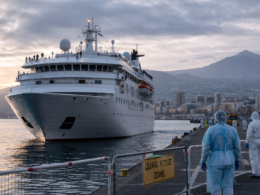
French Prime Minister Sébastien Lecornu has said that one of five French passengers repatriated from the MV Hondius cruise ship showed symptoms during a return flight from Tenerife, bringing France directly into the international health response to a rare hantavirus outbreak linked to the Dutch-flagged expedition vessel.
The development came as Spanish, French, European and World Health Organization officials coordinated the evacuation, quarantine and monitoring of passengers and crew from the MV Hondius after a cluster of Andes virus infections was identified among people connected to the ship. The outbreak has been linked to eight reported cases, including three deaths, with six laboratory-confirmed hantavirus infections identified as Andes virus.
French Prime Minister Sébastien Lecornu said that France would move to impose appropriate isolation measures for close contacts and protect the wider population. The French response places the case within a broader European public health operation centered on Tenerife, where the ship arrived after earlier medical evacuations and international contact tracing involving multiple countries.
The World Health Organization has assessed the risk to the global population as low, while considering the risk for passengers and crew on the ship to be moderate. That distinction is central to how governments are handling the case: the general public is not being treated as broadly exposed, but passengers and crew are subject to a higher level of monitoring because of possible close or prolonged exposure during the voyage.
Why did the French passenger’s symptoms matter in the MV Hondius hantavirus response?
The symptomatic French passenger matters because the case emerged not on the vessel itself, but during repatriation from Tenerife to France. That timing sharpened the operational challenge for French health authorities, who had to respond while passengers were already being moved under controlled transport arrangements from the Canary Islands.
French Prime Minister Sébastien Lecornu said one of the five French passengers from the MV Hondius showed symptoms during the repatriation flight. The statement did not by itself confirm a hantavirus infection in the passenger, but it immediately shifted the French response from routine monitored repatriation to a more cautious isolation and evaluation posture.
The World Health Organization’s guidance for the MV Hondius response calls for symptomatic passengers or crew members to be isolated, medically evaluated and tested. The guidance also calls for personal protective equipment, designated health facilities and strict infection prevention protocols during transfer when symptoms compatible with Andes virus infection are detected.
The broader significance is that public health authorities are managing a narrow but serious exposure event rather than a mass-community outbreak. Andes virus is a form of hantavirus associated with severe illness, and unlike most hantaviruses, it has been linked in previous outbreaks to limited human-to-human transmission after close and prolonged contact. That is why authorities are treating passengers and crew with caution even while stressing that the general public risk remains low.
How are France, Spain and European health authorities managing the MV Hondius passengers?
France, Spain and European health authorities are managing the MV Hondius evacuation through controlled disembarkation, dedicated transport, quarantine measures, medical screening and contact tracing. Spain became the immediate operational hub because the vessel arrived at Tenerife in the Canary Islands, where passengers were processed before onward travel.
Passengers from the MV Hondius have been handled under national repatriation plans rather than ordinary travel procedures. Spanish and French nationals were among those moved to designated medical or quarantine settings, while other countries arranged flights or onward transfers for their citizens. The European Centre for Disease Prevention and Control treated all passengers as high-risk contacts at the point of disembarkation as a precautionary measure.
French Prime Minister Sébastien Lecornu’s planned decree on isolation measures fits within that wider European playbook. The French government response is designed to separate the management of close contacts from the wider population, limiting unnecessary alarm while ensuring that anyone with possible exposure remains under public health supervision.
The operational pressure for European authorities is significant because the outbreak involves a cruise ship, multiple nationalities, maritime travel, prior disembarkations, air transfers and medical evacuations across jurisdictions. The MV Hondius case therefore tests how International Health Regulations channels, national health agencies and port authorities coordinate when a rare infection appears in a mobile international travel setting.
What has the World Health Organization said about Andes virus on the MV Hondius?
The World Health Organization has identified the virus involved in the MV Hondius cluster as Andes virus, a hantavirus species found in Latin America. The World Health Organization has said that Andes virus is the only hantavirus species known to be capable of limited human-to-human transmission, although such transmission is uncommon and associated with close and prolonged contact.
As of 8 May 2026, the World Health Organization reported eight cases linked to the MV Hondius cluster, including three deaths. Six cases were laboratory-confirmed as hantavirus infections and identified as Andes virus. The World Health Organization said the outbreak was being managed through epidemiological investigation, case isolation and clinical management, medical evacuation, laboratory testing, international contact tracing and monitoring.
The World Health Organization has assessed the risk to the global population from the event as low, while the risk to passengers and crew on the ship has been assessed as moderate. This distinction is important because it explains why passengers and crew face strict monitoring, while residents of Tenerife, France and other receiving countries are not being treated as facing a broad population-level threat.
The World Health Organization’s message to Tenerife also sought to separate this incident from the public memory of COVID-19. The agency has described the MV Hondius outbreak as serious but not comparable to COVID-19, emphasizing that Andes virus does not spread in the same way and that the current public health risk remains low outside the exposed group.
Why is the MV Hondius outbreak unusual for international public health agencies?
The MV Hondius outbreak is unusual because hantavirus infections are usually linked to exposure to infected rodents, not to cruise ship clusters involving multiple countries. Human infection is generally associated with contact with rodent urine, droppings or saliva, especially in contaminated environments. The MV Hondius cluster has drawn more attention because Andes virus can, in rare circumstances, spread between humans after close and prolonged contact.
The cruise ship setting also complicates standard public health response. The MV Hondius carried passengers and crew through remote maritime routes, with some people disembarking before the outbreak was fully identified. That required contact tracing across countries and through travel pathways that included Saint Helena, South Africa, Switzerland, the Netherlands, Germany, Spain, France and other jurisdictions.
For public health agencies, the issue is not only the virus, but the mobility of the exposed population. Cruise ships concentrate people in shared environments, move across borders and involve passengers from many countries. Once a rare but severe infection is identified, authorities must reconstruct who was exposed, where they travelled, who they sat near on flights, and which medical systems are responsible for monitoring them.
The MV Hondius case also highlights the role of the International Health Regulations framework, which allows countries to exchange information through national focal points when public health events cross borders. That system is designed for exactly this kind of event: a contained but complex health incident requiring coordination without unnecessary disruption to the wider public.
How does the 42-day monitoring period shape the response for MV Hondius passengers?
The 42-day monitoring period is central to the public health response because hantavirus symptoms can develop after a delay, and exposed passengers may remain well for days or weeks before showing signs of illness. The World Health Organization’s interim guidance for the MV Hondius response recommends daily follow-up for passengers and crew after disembarkation, with national authorities managing quarantine or home isolation depending on local capacity and rules.
The monitoring process includes watching for fever, fatigue, malaise, muscle aches, headache, gastrointestinal symptoms and respiratory symptoms. Anyone developing symptoms compatible with hantavirus infection is expected to be isolated, clinically evaluated and tested. The aim is to identify potential cases early and prevent avoidable exposure to household members, healthcare workers and other contacts.
For France, the symptomatic passenger from the repatriation flight increases the practical importance of that monitoring framework. Even if the person is not confirmed as infected, the appearance of symptoms during travel demonstrates why authorities are using controlled repatriation rather than routine commercial movement.
The wider consequence is that the MV Hondius passengers may face weeks of restricted movement and daily health checks, even if they remain asymptomatic. That approach is restrictive, but it is also targeted. It allows governments to keep measures focused on the exposed cohort instead of imposing broad restrictions on communities with no direct exposure to the cruise ship.
What does the MV Hondius case reveal about Europe’s public health coordination after COVID-19?
The MV Hondius case shows that Europe’s public health response capacity is now being tested by smaller, more specialized outbreaks rather than only by pandemic-scale events. Spain’s handling of the Tenerife disembarkation, France’s isolation response, the European Centre for Disease Prevention and Control’s classification of passengers, and the World Health Organization’s technical guidance all point to a coordinated system built around containment, transport control and risk communication.
The response also shows how governments are trying to avoid two opposite errors: underreacting to a severe infection and overreacting in a way that creates unnecessary public fear. Authorities have emphasized that the general public risk remains low, while also using strict measures for passengers and crew because the exposed group carries a different risk profile.
The public communication challenge is delicate. Hantavirus is rare, potentially severe and unfamiliar to many people. At the same time, the outbreak does not behave like a respiratory pandemic. Clear communication from France, Spain and the World Health Organization is therefore essential to maintain confidence while ensuring exposed individuals comply with quarantine and monitoring.
For Europe, the MV Hondius outbreak is likely to be remembered as a maritime health coordination case rather than a continent-wide public health crisis. Its importance lies in how quickly governments can track passengers, isolate symptomatic individuals, exchange information and prevent a rare infection from becoming a broader travel-related problem.
What are the key takeaways from the MV Hondius hantavirus outbreak and French repatriation case?
- One of five French passengers repatriated from the MV Hondius showed symptoms during a return flight from Tenerife to France.
- French Prime Minister Sébastien Lecornu said France would implement isolation measures for close contacts to protect the general population.
- The World Health Organization reported eight cases linked to the MV Hondius cluster as of 8 May 2026, including three deaths.
- Six laboratory-confirmed cases linked to the MV Hondius outbreak were identified as Andes virus infections.
- The World Health Organization has assessed the global public health risk as low, while treating passengers and crew as a higher-risk exposed group.
Share this:
Discover more from Business-News-Today.com
Subscribe to get the latest posts sent to your email.