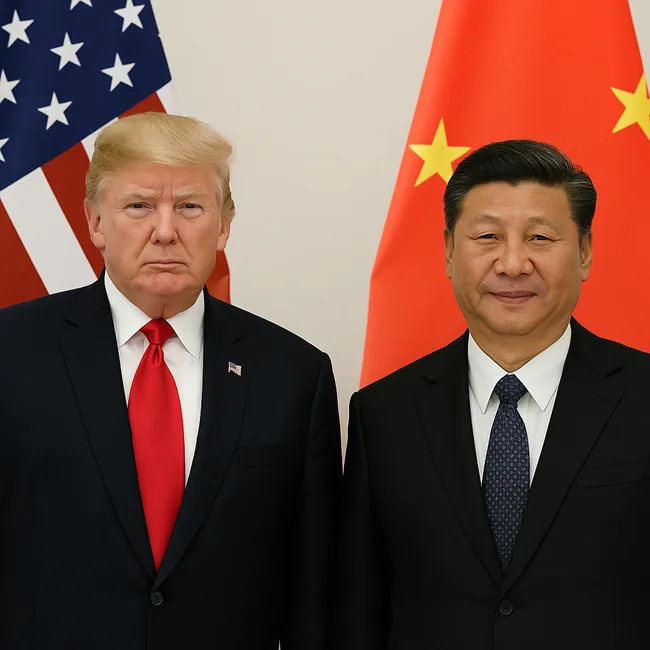


United States President Donald Trump said a proposed peace framework with Iran had been largely negotiated, presenting the possible agreement as a pathway to end the conflict and reopen the Strait of Hormuz, even as Iranian-linked reporting challenged the claim that the vital shipping route could return to normal under the emerging terms.
The announcement placed the Strait of Hormuz at the centre of a high-stakes diplomatic push involving the United States, Iran, Pakistan, Qatar, Saudi Arabia, Turkey and Israel. The waterway remains one of the world’s most important energy corridors, and any durable settlement involving the Strait of Hormuz would carry consequences well beyond the Middle East.
The proposed framework has been described as a memorandum of understanding linked to peace, the reopening of the Strait of Hormuz, and broader follow-on negotiations. The immediate dispute is not only whether the United States and Iran are close to a formal understanding, but whether both sides attach the same meaning to the reopening of the Strait of Hormuz.
Iranian media pushed back against the United States framing, indicating that Iran would not accept a version of reopening that removed Tehran’s authority over the waterway. That difference matters because the Strait of Hormuz is not just a shipping passage. In the current conflict, the Strait of Hormuz has become a bargaining instrument, an energy-market pressure point, and a test of whether a limited diplomatic framework can survive conflicting interpretations before any formal agreement is signed.
Why is the Strait of Hormuz central to the United States and Iran peace framework?
The Strait of Hormuz has become the operational and symbolic core of the emerging United States and Iran peace framework because the waterway links military escalation, energy security and diplomatic leverage in one geographic chokepoint.
The United States position, as outlined by Donald Trump, is that a largely negotiated memorandum of understanding would reopen the Strait of Hormuz as part of a wider peace arrangement with Iran. That framing suggests Washington is seeking a visible, market-facing outcome that can be measured immediately through shipping movement, energy flows and reduced regional risk.
Iran’s position appears more guarded. Iranian-linked reporting disputed the idea that the Strait of Hormuz could simply reopen under the terms suggested by Washington, especially if reopening is interpreted as a loss of Iranian control or supervision. This distinction is crucial because Iran has long treated the Strait of Hormuz as both a security perimeter and a strategic pressure point in confrontation with the United States and its regional partners.
For global energy markets, the difference between a reopened Strait of Hormuz and a contested reopening is enormous. A clear reopening would signal reduced risk for crude oil, liquefied natural gas and maritime insurance markets. A disputed reopening would leave traders, shipping firms and governments exposed to renewed disruption, even if headline diplomacy appears to be progressing.

How does the proposed United States and Iran memorandum fit into the wider Middle East conflict?
The proposed memorandum appears to be structured around immediate de-escalation first, with more complex issues reserved for later stages. That sequencing is important because it suggests the United States and Iran may be trying to separate urgent battlefield and shipping questions from deeper disputes over nuclear policy, sanctions and regional security.
The reported framework would focus first on ending the war, addressing the Strait of Hormuz crisis, and creating room for broader negotiations. This structure gives both sides a way to reduce immediate pressure without claiming that the larger United States and Iran conflict has been fully resolved.
For the United States, the diplomatic logic is clear. A first-stage memorandum could lower energy-price pressure, calm regional allies, reduce the risk of direct United States military escalation, and give Washington a political argument that it is managing a crisis through negotiation. For Iran, a staged framework could preserve leverage while keeping sanctions, port access and regional security questions on the table.
The regional consequence is significant because Middle East diplomacy rarely moves in a straight line. Israel, Saudi Arabia, Qatar, Turkey and Pakistan each have distinct stakes in whether the conflict de-escalates. Israel’s security concerns remain central to any United States calculation. Saudi Arabia and Qatar have direct exposure to Gulf shipping stability. Pakistan’s diplomatic role gives Islamabad unusual relevance in a crisis that links South Asia, the Gulf and United States foreign policy.
Why are Pakistan and Qatar important in the latest United States and Iran diplomacy?
Pakistan and Qatar appear to be playing important mediation roles in the latest diplomatic push, giving the United States and Iran channels that are politically useful and regionally credible.
Pakistan’s involvement is particularly notable because Pakistan has relationships across competing power centres. Pakistan can speak to Iran, maintain engagement with the United States, and frame de-escalation as a regional stability issue rather than only a bilateral United States and Iran question. The involvement of Pakistan’s military leadership also underscores the security-heavy nature of the talks.
Qatar’s role fits a longer pattern of Gulf mediation. Qatar has repeatedly positioned itself as a diplomatic bridge in regional crises, especially where direct engagement between adversaries is politically difficult. In the current context, Qatar’s relevance lies in its ability to support back-channel communication, reduce miscalculation and help shape language that both sides can tolerate.
The broader implication is that the United States and Iran may be relying on mediators not only to carry messages, but to manage ambiguity. Ambiguity can be useful in early-stage diplomacy because it allows each side to present progress domestically. But ambiguity can also become dangerous when the issue involves a live conflict and a strategic waterway such as the Strait of Hormuz.
What does Iran’s response reveal about the limits of the proposed peace framework?
Iran’s response suggests that the proposed framework may be closer to a negotiated outline than a fully settled agreement. The distinction matters because the United States and Iran may agree that a memorandum is under discussion while still disagreeing on the most politically sensitive parts of that memorandum.
The clearest dispute concerns the Strait of Hormuz. Donald Trump presented the emerging agreement as a mechanism that would reopen the waterway. Iranian-linked reporting challenged that claim, indicating that Tehran does not view reopening as a concession that removes Iranian control or security oversight.
That gap exposes the fragile nature of the current talks. A memorandum of understanding can create diplomatic momentum, but it cannot automatically resolve conflicting interpretations. If Washington frames the deal as reopening the Strait of Hormuz and Tehran frames the deal as preserving Iranian authority over the Strait of Hormuz, both sides may face pressure from domestic audiences before implementation begins.
The institutional consequence is also important. Governments, shipping companies, insurers and energy buyers will need clarity on operational terms, not only political statements. The core question is whether vessels can transit the Strait of Hormuz safely, predictably and without new conditions that create practical uncertainty.
How could the Iran peace framework affect global oil markets and energy security?
The Iran peace framework could affect global oil markets by reducing one of the most acute geopolitical risk premiums attached to the Middle East, but only if the Strait of Hormuz issue is resolved in operational terms.
The Strait of Hormuz is central to global energy security because it connects Gulf producers to global markets. Any prolonged restriction, blockade or military threat near the Strait of Hormuz can affect oil prices, liquefied natural gas flows, shipping insurance costs and government inflation calculations. That is why Donald Trump’s statement immediately carried market relevance, even before a signed agreement emerged.
A credible reopening would likely be interpreted as a de-escalation signal. It would reduce immediate fears around supply interruption and could lower pressure on countries dependent on imported crude oil and liquefied natural gas. India, China, Japan, South Korea and European economies all have varying degrees of exposure to Gulf-linked energy flows.
A disputed reopening would have the opposite effect. Markets may initially react to optimistic headlines, but if Iran and the United States continue to differ over supervision, sanctions, port access and military positioning, the risk premium could remain. In that scenario, the proposed memorandum would become a diplomatic pause rather than a durable energy-security settlement.
What are the political stakes for Donald Trump as the Iran talks continue?
The political stakes for Donald Trump are high because the Iran crisis sits at the intersection of foreign policy, energy prices, national security and domestic confidence in presidential crisis management.
Donald Trump has presented the emerging framework as evidence that his administration can negotiate an end to a dangerous conflict while reopening a strategic shipping route. That message is politically valuable because it connects diplomacy with tangible outcomes that voters and markets can understand, especially energy prices and regional stability.
However, the disagreement over the Strait of Hormuz also creates political risk. If the United States claims major progress and Iran later rejects the core interpretation, the administration could face questions over whether it overstated the state of negotiations. In diplomacy, premature certainty can be costly when adversaries still disagree on implementation.
The wider institutional stakes involve the credibility of United States diplomacy. Allies in the Middle East, energy-importing countries in Asia and European partners will judge the framework not only by public statements, but by whether the conflict actually de-escalates and whether maritime security improves. A signed memorandum would matter. A functioning settlement would matter more.
What are the key risks if the United States and Iran fail to convert the framework into a deal?
The main risk is that the current diplomatic opening could raise expectations without producing enforceable commitments. That would leave the Strait of Hormuz crisis unresolved and could deepen mistrust between the United States and Iran.
If the framework fails, the immediate consequences could include renewed pressure on shipping, higher energy-market volatility and increased military alert levels across the Gulf. The political cost would also rise for mediators such as Pakistan and Qatar, which have invested diplomatic capital in moving the process forward.
Another risk is that regional actors interpret a failed framework as evidence that diplomacy has run out of room. That could increase the chance of unilateral moves by the United States, Iran, Israel or aligned groups across the region. The Middle East conflict environment is already layered, with state actors, non-state armed groups and maritime security concerns overlapping.
The most important unresolved issue remains implementation. A peace framework can set direction, but a functioning settlement needs language on the Strait of Hormuz, sanctions, port access, monitoring, timelines and enforcement. Without those details, the diplomatic announcement may reduce tension briefly without resolving the underlying crisis.
What are the key takeaways from the United States and Iran peace framework dispute?
- Donald Trump said a proposed memorandum of understanding with Iran had been largely negotiated and would reopen the Strait of Hormuz. The claim placed the strategic waterway at the centre of the latest United States and Iran diplomatic push.
- Iranian-linked reporting disputed the United States framing of the Strait of Hormuz issue. The disagreement suggests that Washington and Tehran may still differ over control, supervision and operational reopening of the waterway.
- Pakistan and Qatar have emerged as important diplomatic intermediaries in the United States and Iran talks. Their involvement reflects the regional complexity of a crisis that affects the Gulf, South Asia and global energy markets.
- The proposed framework appears to focus first on ending the war and addressing the Strait of Hormuz crisis. Broader issues such as sanctions, nuclear negotiations and regional security may require follow-on talks.
- Global energy markets remain highly sensitive to whether the Strait of Hormuz can reopen safely and predictably. A disputed reopening could leave shipping firms, insurers and governments exposed to continued uncertainty.
- The political stakes for Donald Trump are tied to whether the framework becomes an enforceable agreement. A signed memorandum could support de-escalation, while a failed framework could increase pressure on United States diplomacy.
Discover more from Business-News-Today.com
Subscribe to get the latest posts sent to your email.