
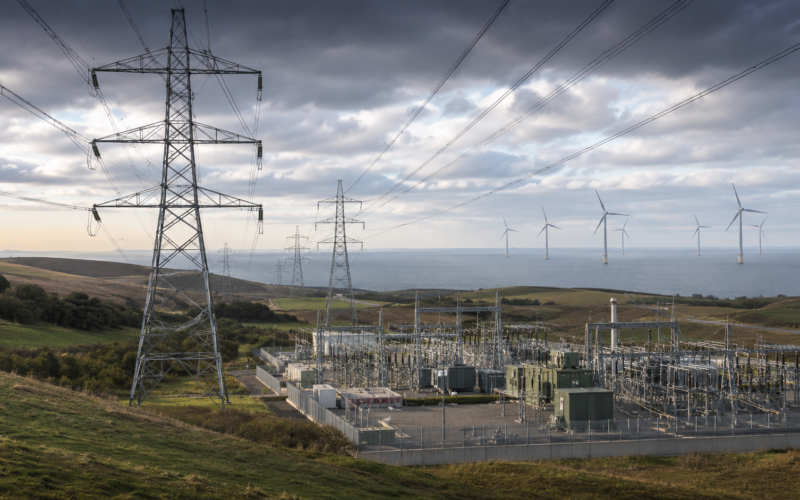
TenneT Germany has secured European Investment Bank backing for its inaugural €3.5 billion multi-tranche European green bond, strengthening the financing base behind one of Europe’s largest electricity transmission investment programmes. The European Investment Bank committed €74 million across three of the four bond tranches on July 14, one week after TenneT Germany completed its first public debt-market issuance with maturities ranging from four to 20 years. Investor orders reached approximately 6.3 times the amount offered, signalling strong demand for regulated grid infrastructure shortly after TenneT Germany completed a new ownership structure involving APG, GIC, Norges Bank Investment Management, KfW and TenneT Holding. The proceeds will support onshore and offshore transmission investment, including infrastructure needed to connect North Sea wind generation and move electricity between northern production regions and southern demand centres. The financing matters because TenneT Germany plans to invest approximately €67 billion between 2026 and 2030, turning capital-market access, construction execution and electricity affordability into inseparable parts of Germany’s energy transition.
Why does EIB backing make TenneT Germany’s €3.5 billion green bond more important now?
The European Investment Bank’s participation gives TenneT Germany’s inaugural bond more strategic significance than an ordinary corporate debt placement. The €74 million commitment is small relative to the total €3.5 billion issuance, but its value lies in institutional validation. The European Union’s financing arm is effectively supporting TenneT Germany’s use of public capital markets to build critical electricity infrastructure rather than relying entirely on government equity, bank loans or parent-company funding.
That matters because Germany’s grid expansion requirement is too large for one financing source. TenneT Germany expects to invest an average of roughly €13 billion annually through 2030, covering new transmission lines, offshore wind connections, substations, converter systems and modernisation of existing infrastructure. Even a well-capitalised transmission operator cannot fund that programme through retained earnings or occasional bilateral loans alone.
The European Investment Bank’s participation may also help broaden future demand. Institutional investors often use multilateral participation as an additional signal that environmental eligibility, project governance and financing documentation have been scrutinised. It does not remove credit risk, construction risk or regulatory uncertainty, but it can make a new issuer easier to evaluate.
For the European Investment Bank, the transaction supports another policy objective: deepening European capital markets. Europe frequently discusses mobilising private savings for infrastructure, but the discussion becomes credible only when large, investable securities reach the market. TenneT Germany’s bond provides exactly that kind of asset, long-dated regulated infrastructure debt with identifiable green uses and substantial capital requirements behind it.
How does the four-tranche structure support TenneT Germany’s €67 billion grid investment plan?
TenneT Germany divided the €3.5 billion issuance across four maturities of four, eight, 12 and 20 years. The respective annual coupons are 3.25%, 3.625%, 4.125% and 4.625%. This structure allows the company to spread refinancing obligations over time rather than concentrating debt repayment in one period.
The maturity ladder also aligns better with the nature of transmission investment. Electricity grids are long-life assets that can operate for several decades, while large projects require capital over extended construction periods. Funding them entirely with short-term debt would create refinancing risk before the assets had fully entered the regulatory asset base or begun generating allowed returns.
Longer maturities give TenneT Germany more time to match financing costs with regulated revenue. Shorter tranches provide flexibility and may attract investors that do not want 20-year exposure. The four-part structure therefore broadens the potential buyer base while avoiding a one-size-fits-all financing approach.
TenneT Germany issued the bonds under a €35 billion debt issuance programme, indicating that the July transaction is intended to be the beginning of a recurring market presence rather than a one-off exercise. The company has described itself as a future frequent issuer, which is consistent with the scale of its investment programme.
That recurring requirement creates both opportunity and discipline. Successful execution of the first bond can lower barriers to later transactions, but future pricing will depend on credit performance, regulatory stability and project delivery. Debt investors may like green grids, but they still expect interest payments with decidedly non-theoretical punctuality.
Why did investors oversubscribe TenneT Germany’s inaugural bond by about 6.3 times?
The approximately 6.3-times order book reflects several attractive features in TenneT Germany’s credit profile. The company operates regulated critical infrastructure with relatively visible long-term investment needs, giving investors exposure to electricity demand growth and renewable integration without direct exposure to wholesale power prices.
Transmission operators can benefit from regulated frameworks that allow approved investment to enter the regulatory asset base and earn returns over time. This creates greater cash-flow visibility than merchant generation projects, where revenue can fluctuate with electricity prices, weather and market competition. TenneT Germany’s regulatory asset base stood at approximately €36.8 billion at the end of 2025 and is forecast to reach roughly €96 billion by 2030.
The new ownership structure also matters. Investors now see a shareholder base that includes European pension capital, sovereign wealth capital, the German government through KfW and continued ownership by TenneT Holding. That combination reduces uncertainty over where the equity needed to support rapid balance-sheet growth will come from.
The bonds’ compliance with the European Green Bond Standard and International Capital Market Association Green Bond Principles expanded their relevance to investors with sustainable investment mandates. The €1,000 denomination also allows broader participation than a structure designed exclusively around very large institutional ticket sizes.
Oversubscription should not be confused with investors believing the programme is risk-free. Strong demand can also reflect the scarcity of large green corporate bond issues with infrastructure characteristics. The order book shows appetite for the credit, but later issuances will be judged on actual capital deployment, leverage and regulatory performance.
How does TenneT Germany’s new ownership structure reduce its grid financing risk?
TenneT Germany completed its new ownership structure shortly before entering the debt market. APG, acting for Dutch pension fund ABP, GIC and Norges Bank Investment Management have committed up to €9.5 billion in equity collectively. KfW acquired a 25.1% stake on behalf of the German government and committed additional equity of up to approximately €2.3 billion to preserve that holding.
TenneT Holding retains a 28.9% stake, while APG, GIC and Norges Bank Investment Management are expected to hold up to 46% in aggregate under the target structure. The result is a diversified shareholder base rather than dependence on a single government owner to meet every future capital requirement.
That diversification reduces one of the largest historical constraints around the German grid business. The Dutch government had faced the difficult prospect of funding massive German infrastructure requirements through TenneT Holding. Bringing in long-term institutional investors and the German state aligns the company’s capital base more closely with the geography of its investment programme.
Equity commitments also support debt capacity. Bondholders are more comfortable financing rapid asset growth when shareholders are contributing capital alongside them. Without sufficient equity, additional borrowing could weaken credit metrics and increase funding costs.
The structure does not eliminate disagreements among owners. Pension investors, sovereign wealth funds, KfW and TenneT Holding may have different priorities around returns, dividends, investment pacing and governance. The real test will be whether the consortium can support fast decision-making while maintaining financial discipline. Large shareholder groups are excellent for capital depth, although rarely famous for brief meetings.
What will the green bond proceeds finance across Germany’s onshore and offshore grid?
The proceeds are intended for eligible investment in Germany’s electricity transmission network, including onshore and offshore high-voltage infrastructure. This covers assets needed to connect renewable generation, move electricity across regions and strengthen the wider European power system.
Offshore infrastructure is particularly important because TenneT Germany connects 26 offshore wind farms and operates more than 3,200 kilometres of offshore grid connections. The company links more than one-third of the European Union’s connected offshore wind capacity, giving it a central role in turning North Sea generation into usable electricity.
The challenge does not end when wind turbines begin producing. Offshore electricity must be collected, converted, transported to shore and integrated into the onshore network. New power then needs sufficient transmission capacity to reach industrial and population centres, many of which are located far from northern coastal generation zones.
TenneT Germany’s onshore grid spans approximately 11,400 kilometres, forming part of a total transmission network exceeding 14,700 kilometres. Investment must therefore address both new corridors and existing infrastructure that needs reinforcement, replacement or digital modernisation.
Green bond proceeds will not be allocated to one single named project. They support a wider programme under TenneT Germany’s green finance framework and European Green Bond documentation. That portfolio approach provides financing flexibility, but it also increases the importance of transparent allocation and impact reporting so investors can see how the capital has been used.
Why is Germany’s transmission bottleneck now an industrial competitiveness problem?
Germany’s grid challenge is no longer only an environmental issue. It is becoming an industrial competitiveness problem because manufacturing, data centres, electric transport, heat electrification and hydrogen production all depend on reliable access to power.
Renewable generation capacity can expand rapidly, but economic value is lost when electricity cannot move from where it is produced to where it is needed. Congestion leads to curtailment, redispatch costs and pressure on electricity prices. Consumers can effectively pay once for renewable generation and again for managing the grid limitations around it.
Southern Germany is home to major manufacturing and industrial demand, while significant wind generation is concentrated in the north and offshore. This creates a structural north-south transmission requirement that becomes more important as coal and nuclear generation patterns change.
Industrial companies considering new factories or power-intensive facilities increasingly examine grid capacity and connection timing alongside labour, tax and logistics. A region can offer excellent incentives, but the investment case weakens quickly when a company cannot obtain dependable electricity within its project schedule.
TenneT Germany’s €67 billion programme is therefore connected to economic development as much as climate policy. Grid delivery influences where industries invest, whether renewable electricity displaces fossil generation and how competitive German power costs remain.
The risk is that consumers see only higher network charges before they see the eventual benefits. TenneT Germany and regulators must demonstrate that capital spending reduces congestion, improves reliability and supports economic growth. Infrastructure may be essential, but affordability remains the political language through which most households experience it.
Could the European Green Bond Standard change how large grid projects are financed?
TenneT Germany’s issuance is the largest corporate bond completed in alignment with the European Green Bond Standard Regulation. That gives the transaction significance beyond its own funding requirement because the standard is still developing as a market framework.
The European Green Bond Standard is intended to improve credibility by linking proceeds to activities aligned with European Union sustainability criteria and requiring defined reporting and external review. This can reduce uncertainty for investors concerned about inconsistent green labels or financing that carries environmental branding without clearly eligible assets behind it.
Electricity transmission is well suited to green financing because grid investment enables renewable integration, electrification and cross-border energy flows. The relationship is easier to demonstrate than in sectors where green eligibility depends on complex transition assumptions or partial emissions reductions.
However, compliance adds documentation, verification and reporting requirements. Issuers must decide whether the potential investor demand and reputational benefit justify the additional work. TenneT Germany’s oversubscribed issuance provides evidence that the market may reward high-quality alignment when the underlying use of proceeds is credible.
Other European grid operators may study the transaction when designing future debt programmes. Utilities and infrastructure companies with large regulated investment pipelines could also follow if the standard helps attract broader capital or improve execution certainty.
The standard will not solve Europe’s infrastructure financing gap on its own. A label cannot compensate for weak regulation, poor project economics or unreliable governance. It can, however, make credible infrastructure easier for investors to identify, which is a useful start in a continent where the grid needs capital far faster than planning documents need adjectives.
What execution and affordability risks remain after TenneT Germany’s successful debt debut?
Construction delivery is the largest operational risk. TenneT Germany must manage numerous onshore and offshore projects involving cables, substations, converter platforms, transformers, civil works and complex environmental approvals. Delays in one major corridor or offshore connection can affect generation projects, industrial customers and wider system planning.
Supply chains remain another constraint. High-voltage direct-current cables, transformers and offshore converter systems are specialised products with limited manufacturing capacity. European grid operators are competing for many of the same suppliers while renewable developers, utilities and data-centre projects also increase demand for electrical equipment.
Cost inflation could place pressure on financing requirements. The €67 billion investment estimate is based on current forecasts, but labour, materials, interest rates and project specifications can change. If costs rise faster than expected, TenneT Germany may need more debt, additional equity or regulatory adjustments.
Affordability is equally important. Regulated grid investment is ultimately recovered through network revenues, which means consumers and businesses carry part of the cost. Germany needs more transmission infrastructure, but regulators must ensure that projects are prioritised efficiently and that financing costs remain controlled.
Interest-rate risk also remains. The inaugural transaction locked in funding across several maturities, but TenneT Germany intends to return repeatedly to capital markets. Future debt pricing will depend on inflation, European monetary conditions, credit ratings and investor confidence.
The successful bond debut solves an access problem. It does not solve the delivery problem. TenneT Germany now has proof that investors will provide capital. The company must prove that it can convert that capital into operating grid assets before schedules, costs and public patience begin competing with one another.
How could TenneT Germany’s capital-market entry reshape European grid financing?
TenneT Germany’s debt-market entry creates a model in which institutional equity, government participation, regulated earnings and recurring green-bond issuance support one integrated financing platform. That may become increasingly relevant as Europe’s grid operators face investment needs that exceed the capacity of traditional government funding.
The transaction also places more financing responsibility directly on the German business. TenneT Germany now operates as an independent company with its own capital-market access rather than relying primarily on TenneT Holding to fund German expansion. This creates clearer accountability for investment, leverage and financial performance.
Other transmission operators will not replicate the model exactly because ownership structures and regulatory frameworks differ. Some remain state-owned, some are listed and others operate inside diversified utility groups. The broader lesson is that grid companies need financing structures proportional to the scale of the infrastructure challenge.
Competition for capital may also improve disclosure. Investors funding frequent issuers will expect clearer information on regulatory asset growth, project execution, debt maturity, capital expenditure and sustainability impact. That scrutiny can strengthen governance if companies respond with useful data rather than industrial quantities of polished optimism.
TenneT Germany’s bond debut is strategically more important on July 19 than it appeared on July 7. The European Investment Bank’s subsequent participation, combined with the completed ownership restructuring, shows that the company has assembled both the equity and debt pillars needed for rapid expansion. The unanswered question is no longer whether TenneT Germany can raise capital. It is whether Europe’s fastest-growing transmission operator can deploy approximately €67 billion without allowing construction delays and customer affordability to weaken the case for the grid it is trying to build.
What are the key takeaways from TenneT Germany’s €3.5 billion European green bond?
- TenneT Germany’s €3.5 billion bond is a completed financing transaction, not a proposed issuance or early-stage funding plan.
- The European Investment Bank committed €74 million across three tranches, adding institutional backing after the original July 7 pricing.
- Investor demand reached approximately 6.3 times the offered amount, signalling strong appetite for regulated European grid infrastructure.
- Four-, eight-, 12- and 20-year maturities help TenneT Germany align its funding profile with long-life transmission assets.
- The transaction sits under a €35 billion debt issuance programme, meaning TenneT Germany expects to become a recurring capital-market borrower.
- TenneT Germany plans to invest approximately €67 billion between 2026 and 2030, with regulatory asset value forecast to rise from €36.8 billion to roughly €96 billion.
- APG, GIC, Norges Bank Investment Management, KfW and TenneT Holding provide a diversified ownership and equity-support structure.
- Bond proceeds will support onshore and offshore transmission, including North Sea wind connections and renewable integration.
- The main risks are project delays, limited equipment supply, construction inflation, rising debt requirements and customer affordability.
- The central strategic test is whether TenneT Germany can convert exceptional financing demand into completed grid capacity quickly enough to support Germany’s industrial and energy goals.
Discover more from Business-News-Today.com
Subscribe to get the latest posts sent to your email.