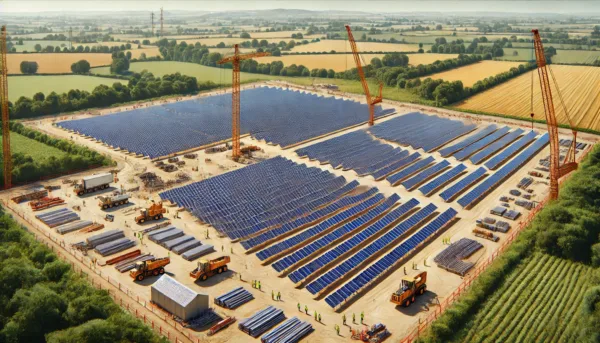
TC Energy Corporation (TSX: TRP, NYSE: TRP) has announced approximately C$3 billion in new natural gas infrastructure projects, including major United States Midwest pipeline expansions designed to serve growing electricity demand from power generators and data centres. The Canadian energy infrastructure company disclosed the investments alongside its third-quarter 2026 results on 5 November, raising its full-year comparable EBITDA outlook to C$11.8 billion to C$12 billion after reporting a 13% increase in quarterly comparable EBITDA. TC Energy also confirmed that the C$4.9 billion Coastal GasLink Phase 2 expansion has received a positive investment decision, supporting additional natural gas transportation capacity to Canada’s Pacific Coast. However, the combined announcements involve different financing structures, contractual arrangements and construction responsibilities, making the allocation of capital and project risk central to understanding how the company’s expanding infrastructure portfolio will generate future earnings.
What new natural gas pipeline projects has TC Energy approved?
TC Energy announced approximately C$3 billion of new low-risk, in-corridor growth projects during its third-quarter results presentation. The investments include the Crossroads Expansion, the American Midwest project and the ANR Optimization project, each designed to increase natural gas transportation capacity through existing pipeline systems.
The largest project is Crossroads Expansion, which is expected to cost approximately US$1.8 billion. It will add 1.4 billion cubic feet per day of transportation capacity through the Crossroads pipeline system, supporting electricity generation demand in the United States Midwest.
The American Midwest project will expand the Northern Border pipeline system, adding approximately 1 billion cubic feet per day of capacity. Its total estimated project cost is approximately US$400 million, although TC Energy’s proportionate equity contribution is expected to be approximately US$100 million.
The ANR Optimization project represents a smaller investment, with an estimated cost of approximately US$100 million. It is designed to add around 300 million cubic feet per day of firm transportation capacity, supporting customers converting electricity generation from coal to natural gas.
The projects have different expected completion dates. Crossroads and American Midwest are targeting service commencement during 2030, while ANR Optimization is expected to enter service in 2029.
These investments represent approved projects rather than completed infrastructure. Their financial contributions will depend on successful construction, regulatory processes and the commencement of contracted transportation services.
TC Energy has also approved the separate Coastal GasLink Phase 2 expansion in western Canada, with an estimated total project cost of C$4.9 billion. That project should not be added mechanically to the company’s approximately C$3 billion announcement as though all expenditure represented equivalent capital commitments directly borne by TC Energy.
Why are AI data centres driving demand for new US natural gas pipelines?
TC Energy expects natural gas demand from the United States power sector to expand as electricity consumption rises, including demand associated with large data centres. The company estimates that natural gas demand in the Midwest could increase by more than 5 billion cubic feet per day by 2035.
That projection reflects management’s assessment of future market conditions rather than confirmed gas consumption or contracted demand at every proposed facility.
Large computing facilities require substantial and reliable electricity supplies. Their development can create additional demand for gas-fired generation where utilities and power producers use natural gas to meet rising consumption or maintain system reliability.
However, increased electricity demand does not automatically translate into identical increases in natural gas pipeline throughput. The outcome depends on the generation technologies selected, the availability of transmission infrastructure and decisions made by electricity providers.
Crossroads Expansion and American Midwest are designed to support existing and prospective power-generation customers through the expansion of established natural gas transportation networks. Their combined incremental capacity of 2.4 billion cubic feet per day provides a measurable scale for the planned investments.
The companies involved are not announcing that the entire 2.4 billion cubic feet per day will be consumed directly by data centres. Pipeline customers may include power generators and other users whose activities are influenced by broader electricity demand.
The commercial opportunity lies in connecting available natural gas supplies to regions requiring additional energy infrastructure. Long-term utilisation will depend on customers continuing to need contracted transportation capacity after the projects enter service.
How do 20-year take-or-pay agreements support TC Energy’s investment returns?
TC Energy has indicated that the Crossroads Expansion and American Midwest projects are supported by 20-year take-or-pay transportation contracts. These arrangements provide a contractual mechanism through which customers commit to paying for reserved capacity under agreed terms.
The contractual structure can improve revenue visibility because payment obligations are not entirely dependent on the volume of gas physically transported during a particular period. However, the economic protection depends on the details of the agreements and the creditworthiness of customers.
Management expects the two projects to require approximately US$1.9 billion of net capital from TC Energy and to be developed at an estimated build multiple of approximately six times.
The build multiple is a company-defined financial measure relating capital expenditure to the expected annual comparable EBITDA contribution from the investment. A lower multiple generally indicates that less capital is required for each dollar of projected annual EBITDA, although it does not independently establish the project’s full economic return.
The calculation is also based on management expectations. Actual financial performance will depend on construction costs, the timing of service commencement and the application of the relevant contracts.
The company’s latest investments are concentrated in corridors where it already operates infrastructure. Expanding existing systems may reduce some of the development requirements associated with entirely new pipeline routes, although each project will retain its own permitting, engineering and construction obligations.
TC Energy’s approach therefore combines contracted demand with selective infrastructure expansion. The financial test will be whether the projects enter service within their expected budgets and generate the annual EBITDA contributions underlying management’s investment assumptions.
Why is Coastal GasLink Phase 2 commercially different from the US pipeline projects?
TC Energy has confirmed approval of the Coastal GasLink Phase 2 expansion following a positive final investment decision by LNG Canada and its joint venture participants. The project has an estimated total cost of C$4.9 billion and is intended to increase firm natural gas transportation capacity by approximately 2 billion cubic feet per day.
The expansion will increase the pipeline’s total firm transportation capacity to approximately 4.5 billion cubic feet per day. It will involve the addition of five compressor stations and related facility modifications along the existing route rather than construction of an entirely new main pipeline.
Construction is expected to begin in early 2027, with the expanded infrastructure targeted for service in the early 2030s. The project will support additional natural gas movement towards LNG Canada’s export facilities on the British Columbia coast.
The ownership and construction structure is materially different from a project financed and executed solely by TC Energy. LNG Canada will lead the construction programme as execution manager, while Coastal GasLink will remain the owner and operator of the pipeline infrastructure.
TC Energy has indicated that the commercial structure places defined limits on Coastal GasLink’s capital commitments and exposure to construction cost and schedule risk. Project-level financing of up to C$3.3 billion has been secured, while TC Energy’s proportionate committed equity contribution is up to approximately C$250 million.
This distinction prevents a misleading interpretation of the C$4.9 billion headline project cost as an immediate direct equity spending commitment by TC Energy. The total development budget, project financing and TC Energy’s own capital exposure are different financial measures.
Nevertheless, the structure does not eliminate every potential operating or commercial consideration. Completion timing, contracted capacity and the performance of the expanded pipeline will remain relevant to the project as it approaches service.
The expansion creates an opportunity to increase throughput through existing Canadian natural gas infrastructure. Its longer-term value will depend on successful delivery, the performance of the associated LNG export development and the contractual earnings generated by the additional transportation capacity.
How does Indigenous participation affect the Coastal GasLink ownership structure?
TC Energy also confirmed completion of a transaction involving FN CGL Pipeline Limited Partnership, an Indigenous-led investment entity representing five First Nations. The transaction provides the participating communities with an economic interest in the entity holding TC Energy’s limited partnership interest in Coastal GasLink.
The company expects a second transaction involving additional First Nations to close during the fourth quarter of 2026. That second transaction remains prospective until completion is confirmed.
The arrangements form part of the ownership and financial structure surrounding Coastal GasLink. They should not be confused with construction contracts or assumed to represent changes in operational control beyond those disclosed.
Indigenous ownership participation may provide an avenue for communities to receive financial benefits linked to infrastructure performance. The specific economics will depend on the terms of the ownership arrangements and the project’s financial results.
For TC Energy, the transactions are relevant because large infrastructure developments involve long-term relationships with communities, governments, customers and financial partners. The precise legal and commercial arrangements matter more than broad descriptions of community participation.
The completed transaction establishes an ownership interest for the participating First Nations, while further anticipated participation remains subject to closing. The distinction is important when assessing the current state of the project and its capital structure.
What do TC Energy’s latest quarterly financial results show?
TC Energy reported third-quarter 2026 comparable EBITDA of approximately C$3 billion, compared with C$2.7 billion in the corresponding previous-year period. The increase of approximately 13% was supported by higher earnings across several operating activities.
Comparable earnings reached approximately C$1 billion, equivalent to C$0.94 per common share, compared with C$0.77 per share a year earlier. Net income attributable to common shareholders from continuing operations stood at approximately C$1.03 billion, or C$0.98 per share.
The distinction between reported and comparable measures is relevant because comparable EBITDA and comparable earnings exclude specified items under the company’s non-GAAP reporting framework. The adjusted figures help illustrate operating performance but should not replace the statutory results.
Canadian Natural Gas Pipelines deliveries averaged 24.3 billion cubic feet per day during the quarter, an increase of approximately 6% year on year. United States pipeline flows averaged 27 billion cubic feet per day, up approximately 3%, while Mexico flows increased 8% to 3.7 billion cubic feet per day.
These increases demonstrate that TC Energy’s existing infrastructure was supporting higher transportation activity before the latest expansion projects entered construction.
The company also reported strong operating performance at Bruce Power, where availability reached 96.6% during the quarter. Its power and energy operations provide additional exposure to electricity infrastructure beyond natural gas transportation.
The results indicate that TC Energy’s financial growth was supported by existing operations and assets placed into service, rather than depending entirely on the new projects announced in November.
Why did TC Energy raise its 2026 and 2027 earnings outlook?
TC Energy increased its expected 2026 comparable EBITDA range to C$11.8 billion to C$12 billion, compared with previous guidance of C$11.6 billion to C$11.8 billion. The midpoint rose by C$200 million, indicating an improvement in the company’s operating earnings expectations for the year.
For 2027, management expects comparable EBITDA of C$12.3 billion to C$12.5 billion. This represents another step in its projected earnings trajectory as additional infrastructure contributes to operations.
The company also extended its financial outlook through 2031, forecasting comparable EBITDA compound annual growth of 5% to 7% from 2026 to 2031. That guidance is based partly on its portfolio of approved projects and anticipated operating performance.
TC Energy reported approximately C$6 billion of projects sanctioned during 2026, with a weighted average build multiple of approximately 6.5 times. The company estimates that around 98% of its comparable EBITDA is supported by rate-regulated operations or long-term take-or-pay contracts.
Such revenue characteristics may reduce exposure to short-term commodity price changes, although they do not eliminate regulatory, financing or operational risks.
The company expects approximately C$3.4 billion of capital projects to enter service during 2026 and C$4.5 billion to C$5 billion during 2027. These projects provide a more immediate potential source of earnings than developments such as Crossroads, whose service commencement is scheduled for 2030.
Management has also identified a wider set of possible investments beyond the currently sanctioned portfolio. These prospective opportunities should remain separate from approved capital expenditure until formal investment decisions are taken.
Can TC Energy maintain balance-sheet discipline while expanding its project portfolio?
TC Energy operates a capital-intensive infrastructure business in which pipeline construction can require substantial spending several years before additional earnings are realised. Its financial strategy therefore depends on matching investment commitments with contracted revenues and maintaining access to suitable financing.
Management indicated that its debt-to-EBITDA measure remained below the long-term target of 4.75 times during the reporting period. The company continues to use this leverage measure as part of its capital-allocation framework.
The latest investment announcements involve different forms of financial exposure. TC Energy is committing substantial net capital to its United States pipeline projects, while its direct committed equity share of Coastal GasLink Phase 2 is considerably smaller than the project’s total development cost.
This variation in project structure is central to evaluating future leverage. A large total infrastructure investment does not necessarily produce an equivalent increase in the parent company’s direct debt or equity contribution.
The company expects 2026 net capital expenditure of approximately C$5.5 billion to C$6 billion, with 2027 net expenditure forecast at C$6 billion to C$6.5 billion. These amounts remain significant relative to annual cash generation and underline the importance of disciplined project selection.
Project-level financing and partnership structures may distribute the funding burden, but they also introduce contractual obligations and dependencies involving other participants.
TC Energy’s capital programme will be more financially resilient if approved projects enter service on schedule and begin generating contracted earnings without substantial cost overruns.
How did TC Energy shares perform following the November earnings and expansion announcements?
TC Energy shares closed at C$87.72 on the Toronto Stock Exchange on 5 November 2026, an increase of approximately 0.23% from the previous closing price of C$87.52.
The stock traded between C$87.61 and C$90.87 during the session, with approximately 5.19 million shares changing hands. Its 52-week trading range was approximately C$70.08 to C$100.18.
The relatively modest closing gain followed a substantial intraday trading range, indicating that the share price moved considerably during the session before finishing slightly higher.
The earnings announcement combined improved financial guidance with several large infrastructure investment decisions. However, the closing price does not establish how investors separately valued higher expected earnings, new project commitments or changes in the broader energy market.
TC Energy’s market capitalisation was approximately C$91 billion at the latest close, reflecting the scale of its established infrastructure portfolio.
For investors, the key consideration is whether additional projects can generate dependable earnings growth while preserving the company’s leverage and dividend-paying capacity.
The company declared a quarterly dividend of C$0.8775 per common share for the quarter ending 31 December 2026. Sustaining future distributions alongside capital investment will depend on continued operating cash generation and financial flexibility.
What will determine whether TC Energy’s gas expansion creates lasting value?
The latest investment approvals strengthen TC Energy’s exposure to electricity generation and LNG-linked natural gas transportation demand. The Crossroads and American Midwest projects are supported by long-term contracts, while Coastal GasLink Phase 2 benefits from a financing and execution structure designed to limit the pipeline partnership’s direct construction exposure.
The company’s existing operations also provide financial support, as demonstrated by higher quarterly transportation volumes and improved comparable earnings. This reduces the degree to which the investment case depends solely on projects scheduled to enter service several years from now.
The principal challenge is maintaining a disciplined relationship between future capital spending and contracted financial returns. Construction delays, cost escalation or changes in customer requirements could affect project economics even where substantial capacity has already been contracted.
TC Energy’s raised earnings guidance offers a near-term benchmark, while the 2029 and 2030 project service dates provide longer-term milestones. The strongest evidence of value creation will be delivery within budget, successful commissioning and the conversion of new contracted capacity into annual EBITDA without weakening leverage or cash generation.
What should investors know about TC Energy’s C$3 billion pipeline growth programme?
- TC Energy announced approximately C$3 billion in new natural gas growth projects on 5 November 2026.
- The US$1.8 billion Crossroads Expansion will add approximately 1.4 billion cubic feet per day of capacity.
- The US$400 million American Midwest project will add another 1 billion cubic feet per day, although TC Energy’s proportionate equity contribution is smaller.
- Both projects target service commencement in 2030 and are supported by long-term take-or-pay contracts.
- The separate C$4.9 billion Coastal GasLink Phase 2 project will increase firm capacity to approximately 4.5 billion cubic feet per day.
- TC Energy’s committed equity contribution to Coastal GasLink Phase 2 is up to approximately C$250 million.
- Third-quarter comparable EBITDA increased 13% to approximately C$3 billion.
- Management raised 2026 comparable EBITDA guidance to C$11.8 billion to C$12 billion.
- TC Energy shares closed at C$87.72 on 5 November, gaining approximately 0.23%.
- Construction costs, financing structures and actual contracted earnings will determine the projects’ financial returns.
Discover more from Business-News-Today.com
Subscribe to get the latest posts sent to your email.