

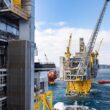




Synthomer plc (LSE: SYNT) has agreed to divest its Czech Republic-based Acrylate Monomers business to Mutares SE & Co. KGaA (Frankfurt: MUX), removing the London-listed chemicals group’s final upstream operation from its portfolio. The transaction covers a business employing approximately 300 people in Sokolov and producing acrylic acid, acrylic esters and related monomers for European industrial customers. Synthomer will receive no initial consideration at completion, although it could collect up to €12 million through a three-year cash-generation sharing arrangement. The strategic benefit therefore rests less on immediate proceeds and more on eliminating a historically loss-making, capital-intensive operation as Synthomer concentrates on higher-margin specialty chemicals and works to reduce financial risk.
Why is Synthomer selling its Czech acrylates business without receiving an upfront payment?
The absence of an upfront payment is the most striking feature of the Synthomer transaction, but it also explains the underlying strategic logic. Acrylate Monomers generated €68 million of external sales in 2025 while recording a standalone adjusted EBITDA loss of approximately €10 million. The business also required an average of about €5 million in annual capital expenditure, meaning it absorbed both operating cash and investment that Synthomer could otherwise direct toward its specialty chemicals portfolio or balance sheet.
Synthomer is consequently treating the divestment as a liability and capital-allocation decision rather than a conventional asset monetisation. The company is expected to transfer the operating business with approximately €5 million of cash to support normalised working-capital requirements. In practical terms, Synthomer is accepting limited immediate financial consideration in return for removing future losses, capital requirements and exposure to a deeply cyclical upstream chemicals market.
The deferred economics comprise a cash-generation sharing arrangement worth up to €12 million over three years. This structure allows Synthomer to retain some participation if Mutares improves profitability, but there is no guarantee that the maximum amount will be achieved. The value received by Synthomer will depend on the acquired business generating sufficient cash after completion and restructuring.
For investors, this means the transaction should not be evaluated primarily through disposal proceeds. It should be evaluated through avoided losses, reduced capital expenditure and the potential improvement in Synthomer’s consolidated earnings quality. A business that produces revenue but consistently consumes cash can make a company appear larger without making shareholders wealthier.
The deal also demonstrates that management is willing to accept an unglamorous transaction structure to accelerate portfolio simplification. Holding the operation for a potentially better headline price could have required further cash support and prolonged exposure to volatile margins. The decision suggests that strategic urgency has outweighed the desire to announce an immediately accretive sale price.
How does the Mutares transaction advance Synthomer’s shift toward specialty chemicals?
Acrylate Monomers was designated non-core during Synthomer’s strategic review in October 2022. Its divestment removes the company’s only remaining upstream business and moves the portfolio further toward specialised polymers and ingredients used in coatings, construction, adhesives, health, protection and other differentiated applications.
Upstream chemicals businesses are generally more exposed to commodity pricing, energy costs, feedstock volatility and capacity utilisation. Specialty products can offer greater pricing power when they are formulated around customer specifications, technical performance or regulated applications. The divestment therefore reduces the portion of Synthomer’s portfolio whose profitability depends heavily on European commodity chemical cycles.
The transaction could also make Synthomer’s financial performance easier for investors to interpret. When a specialty chemicals group owns an upstream operation with materially different economics, consolidated results can obscure whether improvements in differentiated products are being offset by losses elsewhere. Removing the Czech business should create a cleaner relationship between reported revenue, margins and cash generation.
Synthomer’s continuing operations generated £1.74 billion of revenue in 2025, down approximately 10%, while EBITDA declined to £136.5 million. EBITDA margin nevertheless improved to 7.8% from 7.4%, reflecting cost actions and portfolio changes. Free cash flow improved to £56.6 million from an outflow in the previous year, indicating that the company’s self-help programme had begun to influence cash conversion despite difficult demand conditions.
Acrylate Monomers diluted that progress. Its €10 million EBITDA loss represented a meaningful drag relative to the group’s earnings base, while its annual capital needs added further pressure. Removing the business should improve the quality of future earnings even if the transaction does not create an immediate accounting gain.
The strategic test will be whether Synthomer can redeploy the released management attention and capital into areas capable of producing structurally higher returns. Portfolio simplification is valuable only when the remaining businesses perform better. Selling the least attractive asset is the easier half of a transformation. Improving the assets that remain is where management earns its keep.
Why does Mutares see a turnaround opportunity where Synthomer sees a non-core burden?
Mutares operates a fundamentally different business model from Synthomer. The German listed investment company acquires businesses in transition, frequently through corporate carve-outs, and attempts to improve their operations before pursuing a strategic exit or another form of value realisation.
The Czech acrylates operation fits that model because it combines an established industrial site, technical capabilities, an existing customer base and weak financial performance. Mutares describes the operation as having approximately €110 million of carve-out revenue in 2025, compared with the €68 million of external sales disclosed by Synthomer. The difference reflects intercompany sales that would be included when presenting the operation as a standalone business.
Those internal sales are strategically important. The Sokolov facility supplies acrylic monomers to other Synthomer companies and produces acrylic dispersions on Synthomer’s behalf. These arrangements are expected to continue after completion, giving the acquired business an immediate base of contracted or recurring commercial activity while it develops external sales.
Mutares also believes the facility’s integrated product portfolio and flexible production set-up can support improvements in product mix and margins. The investment case may involve procurement savings, better capacity utilisation, revised commercial discipline, reduced overheads and stronger positioning in selected European applications. None of those measures is guaranteed, but a specialist turnaround owner may be able to pursue them more aggressively than a parent company focused on reducing exposure to the sector.
The acquisition will become a platform investment within Mutares’ relatively new Chemicals & Materials segment. That designation signals that Mutares may seek complementary acquisitions rather than manage the Czech business as an isolated asset. Additional products, customers or geographic capabilities could improve scale and reduce the unit’s dependence on individual market cycles.
The risk is that the business may require more cash and restructuring effort than expected. Acrylic acid and ester markets remain exposed to European industrial demand, energy economics and global capacity. Mutares is receiving an asset with operational potential, but it is also accepting the volatility that Synthomer has decided it no longer wants.
What does the deal mean for Synthomer’s debt reduction and refinancing strategy?
Synthomer ended 2025 with net debt of approximately £575 million and covenant net debt to EBITDA of 4.7 times. Although the leverage ratio remained inside the required covenant, it left the company with limited tolerance for sustained earnings weakness or renewed cash outflows.
The company completed a refinancing in April 2026 that extended major revolving credit and export finance facilities to February 2029. This reduced near-term maturity pressure, but refinancing does not remove debt. It buys management time to improve earnings, generate cash and simplify the portfolio before the new facilities eventually require another solution.
The Acrylate Monomers disposal supports this effort indirectly. There is no upfront cash payment available to reduce borrowings, but Synthomer should avoid future operating losses and around €5 million of average annual capital expenditure. If the business had continued to lose €10 million of EBITDA while consuming investment, retaining it could have undermined the group’s broader deleveraging programme.
The effect will depend partly on how quickly the divested earnings and cash profile disappear from consolidated results. The transaction is expected to complete at the end of the third quarter of 2026, subject to customary conditions. Synthomer will therefore retain exposure for much of the current financial year.
Investors should also distinguish between accounting improvement and cash improvement. Removing a loss-making subsidiary can raise consolidated margins, but the actual benefit depends on stranded costs, transitional arrangements and whether corporate overheads can be reduced. If costs previously allocated to the divested business remain within Synthomer, the immediate earnings uplift could be smaller than the standalone loss suggests.
Continued supply agreements create another consideration. Synthomer’s downstream operations will remain commercially connected to the Sokolov site, meaning the divestment does not eliminate all operational dependency. Management must ensure that pricing, supply reliability and quality terms remain competitive after control transfers to Mutares.
The transaction is therefore helpful but not transformational for the balance sheet. Synthomer still needs stronger underlying demand, disciplined working-capital management and improved profitability across its retained businesses. The disposal removes one leak from the bucket. It does not make the bucket debt-free.
How could Mutares transform the Sokolov operation into a profitable chemicals platform?
Mutares’ first priority is likely to be establishing the true standalone cost base of Synthomer a.s. Corporate carve-outs frequently contain shared services, internal transfer pricing, duplicated systems and support arrangements that must be rebuilt or renegotiated. The transition can create savings, but it can also temporarily increase costs.
Commercial optimisation will be equally important. The facility’s ability to adjust its production mix could allow management to prioritise products and customers offering better contribution margins. Mutares may also attempt to reduce exposure to low-return volumes that keep equipment running but do not generate sufficient cash after energy, feedstock and maintenance costs.
Capacity utilisation represents another potential lever. Chemical plants carry substantial fixed costs, so incremental profitable volume can have an outsized impact on earnings. However, pursuing volume without pricing discipline would merely reproduce the economics that caused the business to become non-core for Synthomer.
Mutares could also seek add-on acquisitions that broaden the product range or provide downstream access. A larger acrylic solutions platform might capture more value by combining basic monomers with specialised formulations, distribution capabilities or customer-specific applications. The platform designation indicates that Mutares is thinking beyond a simple stand-alone restructuring.
The site’s workforce of around 300 employees provides operating knowledge and customer continuity, but labour relations and restructuring execution will require careful handling. Cost reduction that damages technical expertise, maintenance standards or safety performance would be counterproductive. Industrial turnarounds need operational precision, not merely a larger red pen.
Environmental investment could become another source of capital demand. European chemical manufacturing faces pressure to reduce emissions, improve energy efficiency and comply with evolving environmental requirements. The transaction’s low upfront cost does not mean the facility will be inexpensive to own.
Mutares’ return will ultimately depend on achieving sustainable positive cash generation and finding a future buyer willing to value the improved business. The acquisition price may be modest, but the transformation bill will determine whether this becomes a successful platform or a prolonged restructuring.
How are investors pricing the Synthomer disposal and Mutares acquisition strategy?
Synthomer shares traded around 110.8 pence on 19 June 2026, falling approximately 3.5% during the session in which the disposal was announced. The stock was about 4.5% below its 12 June close of 116 pence but remained approximately 5% above its level one month earlier.
The shares were trading toward the upper end of a highly volatile 52-week range of approximately 16.7 pence to 123.7 pence. That extraordinary range reflects the market’s shifting assessment of refinancing risk, shareholder support, operating performance and the company’s prospects for avoiding a more disruptive balance-sheet solution.
The negative immediate response suggests investors were not treating the disposal as a direct deleveraging catalyst. The absence of upfront consideration means there is no immediate cash injection, while the €5 million expected to remain in the operating company may have reinforced the perception that Synthomer is paying a financial price to complete the exit.
However, the share movement should not be interpreted as evidence that the strategic decision is necessarily wrong. Investors may simply be distinguishing between a positive portfolio action and a transaction that materially changes near-term equity value. The disposal improves the shape of the business but does not eliminate the leverage, demand and execution risks affecting Synthomer.
Mutares shares traded around €29.4 on the same day, gaining approximately 4%. The stock was up roughly 2.6% over five trading days and about 11.3% over one month, while remaining below the midpoint of its 52-week range of approximately €23.25 to €37.40.
The stronger reaction to Mutares reflects the asymmetry of the transaction. Mutares receives a functioning European chemicals operation without an initial purchase payment, while Synthomer retains only conditional participation in future cash generation. The market appears to be recognising the embedded turnaround option.
Investors should nevertheless consider the wider Mutares portfolio. Group revenue reached approximately €1.68 billion in the first quarter of 2026, but Mutares manages numerous companies requiring active restructuring and capital support. One inexpensive acquisition can create upside, although a collection of difficult industrial assets can also create complexity faster than management can resolve it.
What should investors watch before the Synthomer and Mutares deal closes in Q3 2026?
The first issue is completion certainty. The transaction remains subject to customary closing conditions and is expected to close at the end of the third quarter. Any delay could extend Synthomer’s financial exposure and complicate Mutares’ separation planning.
The second issue is the design of the continuing supply arrangements. Synthomer will remain a customer of the facility for certain acrylic monomers and dispersions. Investors need evidence that the contracts protect continuity without leaving Synthomer exposed to unfavourable pricing or Mutares dependent on uneconomic internal volumes.
The third issue is the treatment of stranded costs. Synthomer should disclose whether the reported €10 million standalone EBITDA loss fully captures the benefit expected after disposal. Central costs that remain within the group could reduce the apparent earnings improvement.
The fourth issue is cash conversion. Synthomer’s potential €12 million payment depends on future cash generation, making the performance of a business it no longer controls relevant to the final transaction value. Investors should not assume the full deferred amount until the operating thresholds are achieved.
The fifth issue is Mutares’ transformation plan. Early actions around management, procurement, product mix, capital expenditure and customer development will indicate whether the buyer views Sokolov primarily as a cost-reduction opportunity or the foundation for a broader European acrylic solutions platform.
For Synthomer, the larger question is what comes after the disposal. Management has removed the final upstream business, refinanced its facilities and improved free cash flow. The next phase must demonstrate that the retained specialty portfolio can produce enough earnings and cash to lower leverage without requiring further defensive measures.
What are the key takeaways from Synthomer’s acrylates disposal to Mutares?
- Synthomer is prioritising the removal of losses and capital intensity over securing immediate disposal proceeds.
- The absence of upfront consideration means the transaction will not directly accelerate debt repayment at completion.
- Exiting a business that lost €10 million of adjusted EBITDA in 2025 should improve the quality of Synthomer’s continuing earnings.
- Avoiding approximately €5 million of average annual capital expenditure could be more valuable than the headline sale structure initially suggests.
- The potential €12 million payment is contingent on future cash generation and should not be treated as guaranteed proceeds.
- Continuing supply agreements reduce separation risk but preserve a degree of operational interdependence between the companies.
- Mutares gains a European industrial platform with around €110 million of carve-out revenue and no initial acquisition payment.
- The acquisition offers Mutares meaningful turnaround upside but also exposes it to cyclical demand, energy costs and restructuring requirements.
- Synthomer’s refinancing to 2029 provides time for transformation, although leverage remains a central equity risk.
- The deal improves Synthomer’s strategic focus, but sustained recovery depends on margins, free cash flow and debt reduction across the retained portfolio.
Discover more from Business-News-Today.com
Subscribe to get the latest posts sent to your email.

