ADAMA Ltd and BASF Agricultural Solutions have entered into a strategic co-development and commercialization agreement focused on Gilboa, a proprietary fungicide active ingredient designed for cereal crops. The partnership aims to speed up the delivery of new disease management tools for European farmers at a time when resistance pressures and regulatory constraints are converging into a structural challenge for crop protection markets.
The agreement positions BASF Agricultural Solutions to develop and commercialize new formulations based on the Gilboa active ingredient, while ADAMA Ltd continues to advance its own Gilboa-based products. Both companies retain independence over pricing, commercialization strategies, and go-to-market execution, underscoring that this is not a traditional licensing deal but a parallel-track collaboration built around a shared molecule.
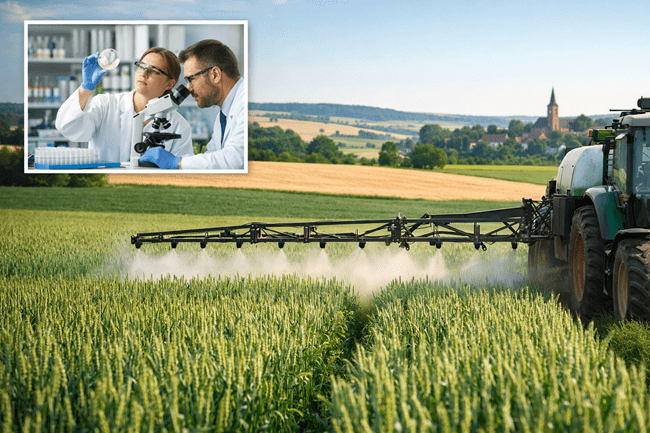
Why resistance pressure and regulatory tightening are forcing Europe’s cereal growers to look for new fungicide modes of action
European cereal production has reached a point where resistance management is no longer a technical concern but a systemic risk. Longstanding fungicide classes have seen declining efficacy across key wheat diseases, while regulatory reviews have steadily reduced the number of approved active ingredients available to growers. The resulting squeeze has left farmers with fewer rotation options and higher exposure to yield volatility.
Gilboa enters this landscape with a differentiated positioning. Classified under FRAC Group 32 and targeting nucleic acid metabolism, it represents a novel mode of action for cereals. In practical terms, this gives growers a new rotation tool that can be integrated into resistance management programs rather than stacked onto already stressed chemistry classes. That distinction is critical in Europe, where stewardship expectations increasingly shape both regulatory outcomes and retailer acceptance.
How the ADAMA Ltd and BASF Agricultural Solutions collaboration reshapes fungicide development economics
From a strategic perspective, the partnership allows each company to play to its strengths without duplicating capital-intensive development work. ADAMA Ltd contributes the proprietary active ingredient and its formulation expertise, while BASF Agricultural Solutions brings regulatory, development, and commercial scale across European markets.
This structure also reflects a shift in how crop protection innovation is being financed and delivered. Developing a new fungicide molecule through to registration has become increasingly expensive and time-consuming, particularly in Europe. By sharing development momentum around a single active ingredient while retaining commercial independence, both companies reduce risk while preserving competitive differentiation.
For BASF Agricultural Solutions, the collaboration supplements its existing fungicide portfolio at a moment when portfolio renewal is strategically important. For ADAMA Ltd, it significantly expands the reach and credibility of Gilboa in markets where regulatory navigation and farmer adoption can otherwise take years longer.
What the phased launch timeline signals about regulatory confidence and market readiness
The companies expect initial Gilboa-based formulations for wheat in Great Britain in 2027, followed by broader European launches in 2029, subject to regulatory approvals. The staggered timeline reflects both regulatory sequencing and market prioritization.
Great Britain has emerged as a relatively faster-moving regulatory environment compared with the European Union, making it a logical first launch market for new chemistry. A successful rollout there would provide real-world performance data and stewardship credibility ahead of wider European deployment.
The longer runway toward continental Europe also highlights the reality that even promising new molecules face extended approval pathways. Investors and industry observers should interpret the timeline not as hesitation but as a realistic acknowledgment of regulatory complexity.
Why Gilboa matters beyond wheat disease control and into long-term portfolio strategy
Gilboa is being positioned not only as a single-product solution but as a platform for broader formulation innovation. Its mode of action and molecular profile allow for combination products and tailored formulations that can address multiple disease pressures while aligning with resistance management guidelines.
This platform potential matters because future fungicide markets are likely to favor fewer, more flexible active ingredients deployed across multiple crops and geographies. Molecules that can support a family of formulations rather than a single SKU will be better positioned to justify development costs and survive regulatory scrutiny.
For ADAMA Ltd, this strengthens its reputation as a company capable of originating new chemistry rather than only optimizing legacy actives. For BASF Agricultural Solutions, it reinforces a strategy centered on portfolio depth rather than reliance on a small number of blockbuster products.
Why investors are increasingly favoring partnership-led crop protection innovation over standalone R&D risk
While neither company framed the agreement in financial terms, the collaboration aligns with broader investor expectations around capital discipline in agricultural inputs. Markets have grown cautious about standalone R&D bets that carry long regulatory timelines and uncertain returns. Partnerships that spread risk and accelerate time to market are increasingly viewed as pragmatic rather than defensive.
The crop protection sector has also seen consolidation and portfolio rationalization in recent years. Against that backdrop, targeted collaborations around differentiated technology stand out as a way to sustain innovation without overextending balance sheets.
What this ADAMA Ltd–BASF Agricultural Solutions partnership could signal for the future of Europe’s fungicide landscape
If Gilboa performs as expected in field conditions and secures timely approvals, it could become a reference point for how future fungicide innovation is brought to market in Europe. The combination of a new mode of action, shared development effort, and independent commercialization reflects a more modular approach to innovation.
The bigger implication is that European agriculture may increasingly rely on collaborative models to keep pace with disease pressure and regulatory expectations. For growers, success would translate into more durable disease control options. For the industry, it signals that innovation is still possible in Europe, but only with smarter structures and shared risk.
Key takeaways: What the ADAMA Ltd and BASF Agricultural Solutions Gilboa partnership means for the crop protection industry
- ADAMA Ltd and BASF Agricultural Solutions are using a co-development and parallel commercialization model to accelerate access to new fungicide chemistry without transferring pricing or market control, reflecting a more capital-disciplined approach to innovation.
- Gilboa introduces a new FRAC Group 32 mode of action for cereals at a time when resistance to existing fungicides and regulatory withdrawals are reducing effective treatment options for European wheat growers.
- The phased launch plan, starting with Great Britain in 2027 and expanding across Europe from 2029, signals regulatory realism and confidence in long-term market relevance rather than a short-cycle product push.
- For farmers, the partnership increases the likelihood of durable disease control by enabling better fungicide rotation strategies and reducing overreliance on legacy active ingredients.
- For the crop protection industry, the deal highlights a broader shift toward partnership-led innovation as the cost, risk, and regulatory complexity of bringing new molecules to market continue to rise.
- For investors, the collaboration suggests improved risk sharing and potentially steadier returns compared with standalone R&D programs that face long approval timelines and uncertain adoption.
- Strategically, Gilboa is positioned not as a one-off launch but as a platform molecule that can support multiple formulations and future product concepts across cereals and potentially other crops.
Discover more from Business-News-Today.com
Subscribe to get the latest posts sent to your email.