


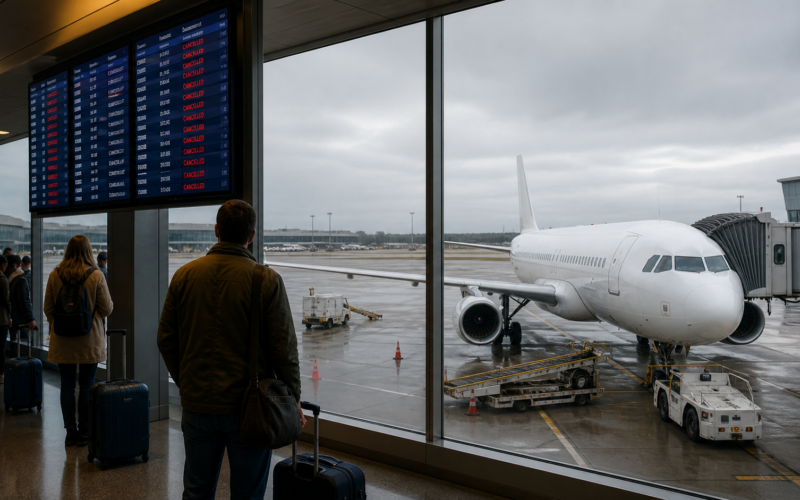
Spirit Aviation Holdings, Inc. (OTC: FLYYQ), the parent company of Spirit Airlines, LLC, said it was nearing completion of passenger refunds after Spirit Airlines abruptly stopped flying over the weekend and began winding down operations. The shutdown cancelled all flights, ended customer service availability, and pushed affected passengers toward refunds rather than rebooking support. For the U.S. airline sector, the immediate issue is no longer whether Spirit Airlines can recover, but how quickly competitors, airports, creditors, and regulators absorb the shock of a major ultra-low-cost carrier disappearing. Spirit Aviation Holdings shares were recently quoted around $1.05 on the over-the-counter market, with a 52-week range of $0.16 to $8.93, underscoring how far the equity story has shifted from turnaround speculation to liquidation math.
Why does Spirit Airlines nearing refund completion matter after its sudden shutdown?
Spirit Airlines’ refund progress matters because it separates the consumer protection question from the broader business failure. The airline said most customers who booked directly with credit or debit cards had received refunds by Saturday evening, although a smaller number of transactions were still being processed. That speed is operationally important because a messy refund backlog would have intensified regulatory pressure, card dispute volume, airport disruption, and reputational fallout at precisely the point when Spirit Airlines no longer has a functioning service infrastructure.
The sharper strategic issue is that refunds do not make passengers whole in economic terms. A refunded fare does not cover the replacement ticket bought at short notice, the missed hotel booking, the lost cruise departure, or the extra airport meal that suddenly costs more than the original base fare. Spirit Airlines’ model trained customers to separate the fare from the full trip cost, but the shutdown has exposed the other side of that bargain: when an airline exits abruptly, the cheapest ticket can become the most expensive travel decision in the itinerary.
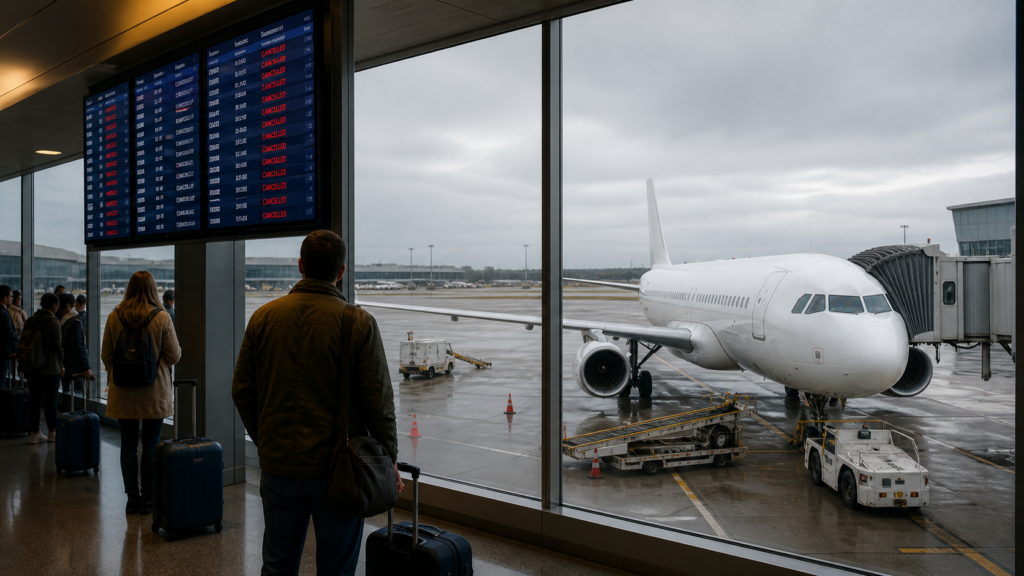
For regulators, the refund process will become an early test of the post-2024 U.S. automatic refund regime. U.S. Department of Transportation rules require automatic, prompt refunds when flights are cancelled, with credit card refunds due within seven business days and other payment methods generally due within 20 calendar days. If Spirit Airlines completes refunds within those windows for direct card bookings, the company may limit one layer of enforcement risk, but passengers with third-party bookings, vouchers, credits, or points are likely to face a more complicated route through travel agents, card issuers, or bankruptcy claims.
How did Spirit Airlines’ shutdown expose the financial fragility of the ultra-low-cost carrier model?
Spirit Airlines did not collapse because passengers stopped wanting cheap fares. The deeper problem was that the economics of cheap fares became harder to sustain when fuel, labor, aircraft availability, financing costs, and competitive pricing pressure all moved in the wrong direction. The airline had already faced repeated restructuring stress, and the latest shutdown came after efforts to secure fresh support failed while higher fuel costs added pressure to a business that had little margin for error.
The ultra-low-cost model depends on high aircraft utilization, dense seating, rapid turns, strong ancillary revenue, and a cost advantage large enough to keep base fares visibly below legacy carriers. That model works well when fuel is stable, aircraft are available, and demand is price-sensitive. It becomes brittle when network carriers offer basic economy products, when maintenance or engine constraints reduce fleet flexibility, and when travelers place more value on reliability after years of pandemic-era disruption.
Spirit Airlines’ collapse therefore sends a signal beyond one company. It suggests that the U.S. budget airline market may be entering a phase where scale, balance-sheet resilience, and airport slot quality matter as much as headline fare discipline. The cheeky yellow planes made low fares feel simple. The financial structure behind those fares was anything but simple.
What does the Spirit Airlines shutdown mean for Frontier Airlines, JetBlue Airways, Southwest Airlines, and larger U.S. carriers?
The most immediate beneficiaries are likely to be carriers with the ability to absorb displaced passengers, redeploy capacity, and target Spirit Airlines’ strongest leisure routes. Frontier Airlines, JetBlue Airways, Southwest Airlines, Delta Air Lines, and American Airlines were among carriers reported to have offered discounted fares or rescue options for stranded passengers. Those moves are humanitarian in presentation, but strategically they also represent customer acquisition at a moment when loyalty is suddenly up for grabs.
Frontier Airlines is the cleanest strategic comparison because it competes closest to Spirit Airlines on price-sensitive leisure demand. If Frontier Airlines can add capacity without weakening its own cost discipline, Spirit Airlines’ exit could reduce one of the most aggressive fare-setters in the market. That may improve pricing in some city pairs, especially where Spirit Airlines had been suppressing yields, but it also raises a policy question: when a low-cost competitor disappears, passengers may see fewer bargain fares even if service reliability improves.
JetBlue Airways faces a more complicated read-through. The blocked JetBlue Airways and Spirit Airlines merger remains part of the political debate around the collapse, but the commercial reality is that JetBlue Airways now has a chance to pick up some customers without paying the integration cost, debt burden, or operational complexity of acquiring Spirit Airlines. Larger network carriers may benefit selectively in Florida, the Caribbean, and Latin America, although their higher cost bases mean they are unlikely to fully replicate Spirit Airlines’ lowest fares. The market may gain stability, but not necessarily affordability.
Why are Spirit Aviation Holdings shares still volatile even as the airline winds down?
Spirit Aviation Holdings’ stock action reflects distressed speculation more than conventional equity valuation. The parent company’s shares traded around $1.05 on May 2, with an intraday range of $0.36 to $1.41 and a 52-week range of $0.16 to $8.93. That kind of volatility is not the market calmly discounting future earnings. It is the market trying to price optionality around creditor recoveries, liquidation proceeds, asset value, and any residual possibility of outside intervention.
The equity context is especially important because a passenger refund story can look operationally positive while the shareholder story remains deeply impaired. Refund completion reduces one liability category and lowers consumer-facing chaos, but it does not restore the airline’s enterprise value. In a liquidation or wind-down scenario, aircraft, gates, slots, loyalty assets, spare parts, receivables, and brand value may matter more than any near-term revenue metric because normal operations have stopped.
Investor sentiment is therefore split between tactical traders and fundamental holders. Traders may focus on extreme intraday swings and potential asset-sale headlines. Institutional investors and credit-focused analysts are more likely to focus on creditor hierarchy, lease obligations, restructuring claims, and whether any value remains after secured and priority claims are addressed. For common shareholders, the message is brutal but familiar: when an airline stops flying, the runway for equity recovery gets very short.
What are the regulatory and political consequences of Spirit Airlines’ collapse?
Spirit Airlines’ shutdown is already becoming a proxy fight over competition policy, industrial support, and consumer protection. The collapse follows the earlier failure of the proposed JetBlue Airways and Spirit Airlines merger, which had been blocked on competition grounds. Supporters of consolidation will argue that the decision removed a potential rescue path, while critics will argue that allowing stronger carriers to buy distressed rivals does not automatically protect consumers from higher fares.
The regulatory lesson is not as simple as saying consolidation is good or bad. Airline competition has to be measured route by route, airport by airport, and fare bucket by fare bucket. A merger could preserve jobs and aircraft utilization while still reducing price competition in certain markets. A liquidation preserves antitrust purity on paper, but it may still produce higher fares if the disappearing carrier was the main discounting force on key leisure routes.
The policy risk is that future airline distress may trigger louder calls for pre-emptive support, especially if fuel shocks or geopolitical events pressure weaker balance sheets. However, public support for airlines is politically sensitive because taxpayers remember prior rescues, passengers remember service failures, and competitors dislike subsidized rivals. Spirit Airlines’ collapse will likely sharpen the debate over whether the United States wants more resilient airlines, more competitors, or cheaper fares. The uncomfortable answer is that the country wants all three, preferably without paying for the contradiction.
What happens next for passengers, employees, airports, and the broader U.S. budget airline market?
For passengers, the next phase depends on booking channel. Direct credit and debit card customers appear to be the cleanest refund category, while third-party bookings may require claims through travel agencies or card issuers. Travelers holding vouchers, credits, points, or non-card forms of value face a more uncertain process because those claims can become entangled with bankruptcy procedures rather than ordinary customer service.
For employees, the damage is more severe than the passenger refund issue. A shutdown transfers labor supply into the broader airline market, and some carriers may selectively hire pilots, mechanics, dispatchers, airport staff, and corporate talent. However, redeployment will not be even. Workers tied to specific bases, seniority systems, union contracts, or specialized internal processes may face a tougher transition than public “we are hiring” messages imply.
For airports, the loss of Spirit Airlines capacity creates both a gap and an opportunity. Airports that relied on Spirit Airlines for leisure traffic will need replacement service quickly to preserve passenger volumes, concession revenue, and destination connectivity. Larger airports may backfill routes faster because rival airlines already operate there. Smaller or leisure-heavy airports could face a longer adjustment if Spirit Airlines had been one of the few carriers willing to stimulate traffic with low base fares.
Key takeaways on what the Spirit Airlines shutdown means for passengers, competitors, investors, and U.S. aviation
- Spirit Airlines’ near-completion of passenger refunds reduces one immediate consumer protection risk, but it does not resolve broader passenger losses tied to replacement travel, hotels, missed connections, and non-card bookings.
- The shutdown highlights the fragility of the ultra-low-cost carrier model when fuel prices, financing pressure, aircraft constraints, and legacy carrier basic economy competition converge at the same time.
- Spirit Aviation Holdings’ stock volatility reflects distressed trading and liquidation uncertainty rather than a normal reassessment of future airline earnings.
- Frontier Airlines, JetBlue Airways, Southwest Airlines, Delta Air Lines, and American Airlines may gain passengers and route opportunities, but the biggest strategic prize is Spirit Airlines’ price-sensitive customer base.
- The collapse may reduce fare pressure in markets where Spirit Airlines acted as the most aggressive discounter, creating possible yield benefits for rivals but higher travel costs for consumers.
- The blocked JetBlue Airways merger will remain politically contentious, although Spirit Airlines’ failure does not prove that every distressed airline merger should be approved.
- Refund execution under U.S. Department of Transportation rules will be watched closely because direct card refunds, third-party bookings, vouchers, and points sit in very different risk buckets.
- Airports exposed to Spirit Airlines capacity may need rapid route replacement to protect passenger volumes, tourism flows, and concession economics.
- Employees may find opportunities at rival airlines, but redeployment will vary sharply by role, base, seniority, and labor-market timing.
- The broader aviation signal is clear: cheap fares remain popular, but cheap-fare airlines need stronger balance sheets than the old playbook assumed.
Discover more from Business-News-Today.com
Subscribe to get the latest posts sent to your email.