




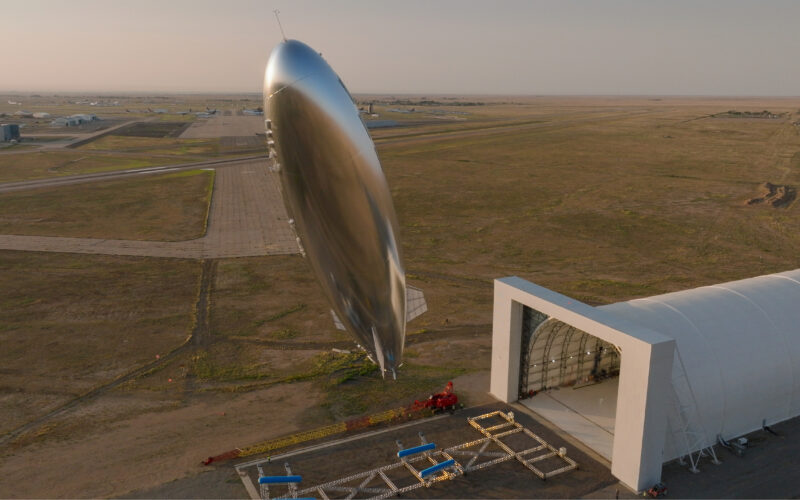
SoftBank Corp. (Tokyo Stock Exchange: 9434) and Sceye, Inc. have completed their most consequential High Altitude Platform Station connectivity demonstration yet, using a lighter-than-air stratospheric vehicle that travelled more than 15,000 kilometres from New Mexico to Japan before delivering mobile broadband directly to ordinary devices through SoftBank’s core network. Sceye’s Service Test 1 mission also demonstrated onboard edge computing, emergency communications and connectivity with drones while operating for more than seven days inside Japanese managed airspace. The flight advances SoftBank’s plan to create a three-dimensional communications network combining terrestrial infrastructure, satellites and HAPS, following its 2025 investment in Sceye and acquisition of exclusive Japanese service rights for the company’s platform. The technical milestone is more substantial than an isolated connectivity trial because it combines intercontinental deployment, station seeking, direct-to-device communications and network integration in one mission. Commercial readiness remains a separate question, however, because SoftBank now says full commercial HAPS services are expected from 2027 or later, while neither company has disclosed deployment economics, planned fleet size, customer pricing or the duration required for commercially sustainable station keeping.
Sceye launched ST1 from New Mexico on August 9, 2026, with the platform reaching Japan after 13 days in the stratosphere. During the Japanese phase, the vehicle operated at approximately 16.5 kilometres in altitude while demonstrating text messaging, voice calls, internet access and video streaming through SoftBank’s mobile infrastructure. Testing also included emergency calls, a mass-emergency alert messaging system, communications with drones and edge processing performed directly aboard the HAPS. At the time the companies announced the results, ST1 remained airborne and was travelling back across the Pacific toward the United States, extending the mission beyond the connectivity demonstrations already completed in Japan.
Why does Sceye’s 15,000-kilometre trans-Pacific flight matter more than another HAPS smartphone demonstration?
HAPS commercialization requires two capabilities that are easy to discuss separately but difficult to combine operationally: an aircraft must remain viable in the stratosphere for long periods, and the telecommunications payload must perform like useful network infrastructure while the vehicle is there. Sceye’s latest mission brings those requirements considerably closer together.
The company had already demonstrated stratospheric endurance during its earlier SE2 mission, which travelled more than 10,000 kilometres from New Mexico toward the Brazilian coast and remained airborne for more than 12 days. That flight included more than 88 hours of station keeping over designated operating areas and tested power management, flight controls, thermal systems and manufacturing improvements. ST1 moves the program into a new phase because the platform travelled substantially farther and then supported operational telecommunications testing inside another country’s managed airspace.
The Japan mission also tests deployment flexibility. A conventional terrestrial base station must already be physically installed where coverage is needed, while a satellite remains constrained by its orbital architecture. Sceye’s lighter-than-air platform can theoretically be repositioned through the stratosphere and then remain over a target region, creating a different infrastructure model for restoring connectivity after disasters or serving difficult terrain.
Sceye reported a station-seeking radius as low as five kilometres during the mission. That is useful progress because a telecommunications platform needs to maintain a sufficiently predictable position for antenna steering, spectrum management and service planning. Commercial deployments will still require more evidence of persistent positioning through varying seasonal winds and weather conditions, especially if aircraft are expected to remain over service areas for weeks or months rather than several days.
The test altitude also deserves attention. ST1 performed the reported telecommunications demonstrations at approximately 16.5 kilometres, while HAPS networks are generally designed around operations near 20 kilometres and the International Telecommunication Union formally defines HAPS stations within a higher stratospheric altitude range. SoftBank’s own commercial architecture has typically referenced operations around 20 kilometres. Performance at 16.5 kilometres is therefore an important service test rather than final proof of the complete commercial operating profile.
What did SoftBank and Sceye actually prove with direct-to-device connectivity and onboard edge computing in Japan?
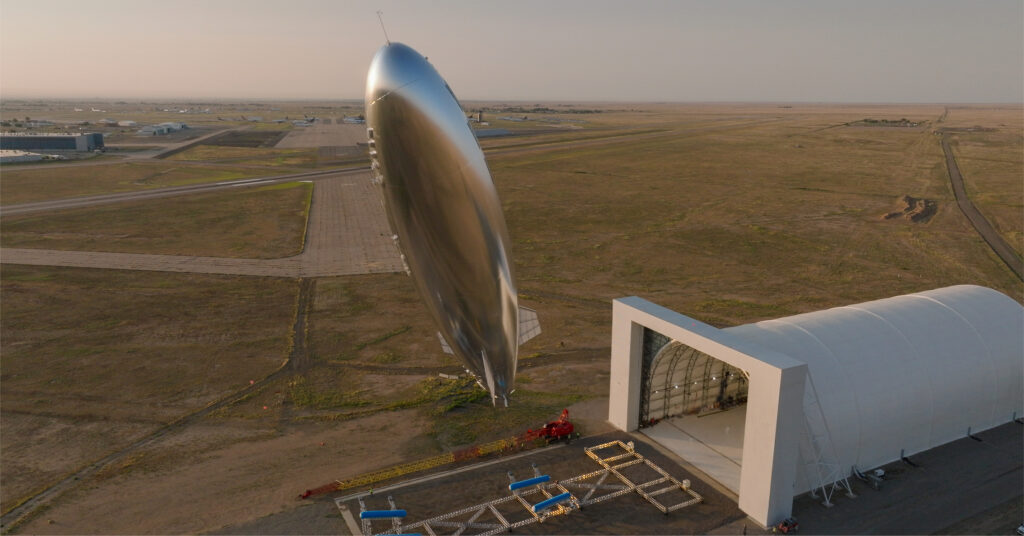
The most commercially relevant result is that the trial used ordinary mobile devices rather than requiring a dedicated satellite handset. SoftBank and Sceye connected smartphones through SoftBank’s existing core network, demonstrating voice calls, text messages, internet access and video streaming. Direct compatibility with conventional devices could materially reduce the adoption barrier because customers would not need a separate HAPS terminal simply to obtain connectivity.
SceyeCELL, the telecommunications payload aboard ST1, is designed to operate as an airborne cellular base station. Sceye says a full-scale deployment could cover an area equivalent to approximately 500 terrestrial cell towers, although that remains a company design claim rather than a measure of commercial network capacity independently demonstrated across 500 existing tower service areas. Actual coverage will vary with spectrum, terrain, user density, required throughput, antenna configuration and interference constraints.
The edge-computing result adds another dimension. Sceye and SoftBank placed a mobile core network and web server aboard the HAPS, allowing data processing to occur in the stratosphere rather than being routed through a remote internet cloud. The companies reported an average round-trip processing response of 68 milliseconds and said latency fell by more than 40% compared with the cloud-processing configuration used in the test.
That architecture could become important for applications where connectivity and computation need to move together. Disaster-response systems, drones, autonomous machines, environmental monitoring and future aerial mobility platforms may need more than a communications link; they may also need local processing without sending every data stream to a distant data centre. A HAPS carrying both radio and compute infrastructure could potentially provide temporary edge capacity over areas where terrestrial systems are unavailable or damaged.
Communication with drones during ST1 is therefore more than a secondary demonstration. SoftBank’s longer-term network vision extends communications vertically from ground users toward drones and other aircraft, moving beyond the essentially two-dimensional coverage design of conventional mobile networks. If aerial mobility expands as expected during the 6G era, network operators may eventually need coverage above terrestrial towers as well as between them.
How close is the Japan demonstration to SoftBank launching a commercial HAPS service?
The answer depends on the definition of commercialization. SoftBank announced in June 2025 that it intended to begin pre-commercial HAPS services in Japan during 2026 after investing in Sceye and securing exclusive Japanese rights to use its platform. ST1 delivers much of the technical validation expected from that pre-commercial program, including Japanese flight operations, core-network backhaul and direct communications with ordinary devices.
The timeline for a fully commercial offering is longer. In a July 2026 update ahead of the flight, SoftBank said it intended to begin commercial HAPS services in 2027 or later. The distinction matters because a successful demonstration proves that the architecture can work under controlled operating conditions, while commercial service requires repeatable aircraft availability, regulatory approvals, fleet operations, maintenance, sufficient network capacity and economics capable of supporting paying customers.
Several commercially important numbers remain undisclosed. SoftBank has not specified how many Sceye platforms it could initially deploy, what each aircraft costs, expected annual operating expenditure, usable network capacity per platform, service pricing or how often vehicles would need to return for maintenance. SoftBank’s 2025 equity investment in Sceye was also announced without a disclosed investment amount.
Endurance remains particularly important. SoftBank describes the Sceye platform as being designed for flights lasting several months, while Sceye’s completed endurance demonstrations have so far established operations measured in days. Progress from 12-day and multi-week missions toward genuinely months-long persistent operations would materially improve the commercial case because aircraft replacements, launches and repositioning become more expensive if each service platform needs frequent rotation.
A successful return of ST1 would provide another useful data point, but the larger proof will come when Sceye can repeatedly deploy vehicles to operating areas, maintain the required position for commercial periods and deliver predictable network availability rather than treating each mission as an experimental campaign.
Why does SoftBank need HAPS when it already offers Starlink Direct satellite connectivity in Japan?
SoftBank is not positioning HAPS as a replacement for satellite connectivity. Its strategy increasingly treats terrestrial networks, HAPS and satellites as complementary infrastructure layers serving different coverage and capacity requirements.
SoftBank launched Starlink Direct in Japan in April 2026 to connect ordinary smartphones in areas beyond conventional mobile coverage. Satellite direct-to-device systems can reach extremely large geographic areas and are particularly useful across mountains, remote islands, offshore regions and other locations where building terrestrial infrastructure is uneconomic.
SoftBank argues that HAPS can provide a different performance profile. Because a stratospheric platform operates dramatically closer to users than satellites in low Earth orbit, HAPS can potentially support lower latency and greater concentrated capacity over a specific service area. A platform can also be positioned over a disaster zone or other high-priority area rather than depending on satellites continuously moving overhead.
That flexibility becomes attractive in Japan because earthquakes, tsunamis, typhoons and landslides can damage terrestrial communications precisely when demand for connectivity becomes most critical. A HAPS platform positioned above a disaster region could restore a cellular coverage layer even where towers, fiber routes or electrical infrastructure have been disrupted. The ground gateway SoftBank installed in Kochi Prefecture for the ST1 program was designed with this type of deployment in mind and can connect the airborne platform back into the company’s mobile core.
HAPS also creates an intermediate layer between towers and satellites. SoftBank ultimately wants optical communications linking HAPS platforms with low-Earth-orbit satellites, creating a network where traffic can move between ground, stratosphere and space. A separate collaboration involving SoftBank, Japan’s National Institute of Information and Communications Technology, KIYOHARA OPTICS and ArkEdge Space aims to test bidirectional optical communications between satellites and HAPS in 2027.
How does Sceye’s platform compare with the Airbus-backed HAPS systems competing for Japan and global markets?
Sceye and SoftBank are not pursuing commercialization in an uncontested market. Japan has become one of the most strategically important early HAPS markets, with NTT DOCOMO and Space Compass backing AALTO HAPS, an Airbus subsidiary developing the solar-electric Zephyr fixed-wing platform. A Japanese consortium committed $100 million to AALTO in 2024 to support HAPS commercialization in Japan and elsewhere in Asia.
Zephyr follows a different engineering approach from Sceye. Sceye uses a lighter-than-air vehicle supported by buoyancy, while Zephyr is an ultra-light solar-electric fixed-wing aircraft. AALTO says Zephyr has accumulated 67 consecutive days of stratospheric flight and has demonstrated direct communications between a HAPS and a conventional 4G device. The company has been preparing for initial commercial service delivery from 2026.
Space42’s Mira Aerospace provides another competing architecture through its ApusNeo family of solar-powered fixed-wing HAPS. Space42 said in August that it was progressing development of ApusNeo18 and manufacturing the first ApusNeo30 prototype as it works toward larger-scale commercial deployment.
The competition is therefore not simply about which vehicle can reach the stratosphere. Operators must optimize payload weight, power generation, battery capacity, endurance, station keeping, regulatory compliance, manufacturing cost and telecommunications performance simultaneously. Improving one variable can make another more difficult. Carrying larger communications payloads, for example, can increase network capacity but add weight and power requirements that reduce flight endurance.
Sceye’s trans-Pacific deployment gives it a distinctive data point because ST1 demonstrated long-distance repositioning followed by direct-to-device service in the target country. AALTO retains a much longer demonstrated continuous-flight record. The commercial winner may ultimately differ by application, with lighter-than-air and fixed-wing platforms developing advantages for different mission profiles rather than one architecture displacing every competitor.
Why do spectrum, interference and regulatory approvals remain central to the HAPS business model?
HAPS becomes more commercially attractive when it can use spectrum already supported by ordinary smartphones. The difficulty is that those frequencies are also used by terrestrial mobile networks, creating potential interference when an airborne base station illuminates a very large geographic area.
SoftBank has spent years addressing this problem through international spectrum standardization and technical research. At the 2023 World Radiocommunication Conference, additional bands including 700 to 900 MHz, 1.7 GHz and 2.5 GHz were opened for broader HAPS use as International Mobile Telecommunications base stations under agreed conditions. SoftBank has also contributed propagation models that have subsequently been incorporated into International Telecommunication Union standards.
Interference management remains an engineering requirement rather than a solved policy problem. SoftBank demonstrated dynamic nullforming in 2025 and announced the results in April 2026, showing that an aerial base station could suppress radio emissions toward terrestrial base stations while the aircraft was moving. ST1 subsequently tested radio performance in Japan and, according to Sceye, achieved communications performance comparable with terrestrial networks while reducing interference with ground-based infrastructure.
Commercial services will need those capabilities to operate reliably at scale. One HAPS platform covering a sparsely populated disaster region presents a different spectrum-management challenge from multiple platforms simultaneously serving dense urban users alongside thousands of terrestrial cells. Network economics will therefore depend partly on how much real capacity operators can extract without degrading existing mobile infrastructure.
What does the Sceye milestone mean financially for SoftBank Corp. investors?
HAPS remains strategically interesting but financially small relative to SoftBank Corp.’s current scale. For the quarter ended June 30, 2026, SoftBank reported record first-quarter revenue of ¥1.815 trillion, up 9% year over year. Operating income reached ¥302.3 billion, while net income was approximately ¥150.1 billion after adjusting the comparative discussion for the prior-year one-time factor.
The company’s Enterprise segment is currently a more visible near-term technology growth engine. Enterprise revenue increased 11% to ¥260.4 billion in the quarter and operating income rose 28% to ¥62.2 billion, supported partly by 31% growth in Cloud & AI revenue. SoftBank expects artificial-intelligence infrastructure and services to become an increasingly important contributor while maintaining its telecommunications cash-flow base.
SoftBank has not separately disclosed HAPS revenue, expected return on investment or the size of its investment in Sceye. The Japan demonstration therefore should not be treated as a material earnings catalyst by itself. Its financial relevance is longer term: successful commercialization could create a new network layer that leverages SoftBank’s existing spectrum, mobile customers, core network, enterprise relationships and disaster-response role.
SoftBank shares closed September 1 at ¥241.1, up 1.7% for the session and only ¥0.5 below the ¥241.6 52-week high recorded on August 26. The shares were approximately 7.9% above their July 31 close of ¥223.4, indicating strong recent market performance before the ST1 results were announced. Because the Sceye release emerged around the start of September 2 trading in Japan, the September 1 gain cannot be attributed to the HAPS demonstration and a full post-announcement trading session was not yet available when the development was assessed.
The market capitalization was approximately ¥11.6 trillion at the September 1 close, reinforcing the scale comparison. Even a commercially successful HAPS program would need time to become financially visible within a company of that size. Investors are therefore more likely to judge the technology initially through milestones involving commercial launch, customer adoption and capital efficiency than through near-term earnings contribution.
What milestone would show that Sceye and SoftBank have finally crossed from HAPS testing into a viable business?
The next meaningful milestone is sustained service rather than another isolated connectivity record. Sceye needs to demonstrate that its platform can remain over an intended operating area for periods approaching the months-long endurance envisioned for commercial deployments while maintaining power, communications capacity and station control through repeated day-night cycles.
SoftBank then needs to convert that capability into an operational network service. A defined 2027 deployment, disclosed service territory, commercial customer or government disaster-response contract would provide considerably stronger evidence than another technical demonstration. Fleet size and unit economics would be especially useful because they would reveal how many HAPS platforms are required to provide continuous coverage and how their economics compare with additional terrestrial towers or satellite capacity.
ST1 nevertheless closes several important technical gaps at once. Sceye has moved a telecommunications-equipped platform across the Pacific, operated for more than a week in Japanese managed airspace, connected ordinary devices to SoftBank’s mobile network, demonstrated emergency communications and drones, and placed compute infrastructure directly aboard the aircraft. That is materially closer to operational telecommunications infrastructure than the aircraft-only endurance demonstrations that preceded it.
The central tension has therefore shifted. The question is no longer whether Sceye can fly a large lighter-than-air vehicle into the stratosphere or whether SoftBank can transmit cellular signals from the sky. The harder question is whether the partners can turn those capabilities into a repeatable fleet that remains over customers long enough, carries sufficient capacity and operates cheaply enough to compete with terrestrial and satellite alternatives. Commercial service from 2027 or later will provide the first meaningful answer.
What are the key takeaways from Sceye and SoftBank’s HAPS connectivity demonstration in Japan?
- Sceye’s ST1 HAPS travelled more than 15,000 kilometres from New Mexico to Japan in 13 days before conducting telecommunications tests.
- The platform operated inside Japanese managed airspace for more than seven days and achieved a station-seeking radius as low as five kilometres.
- ST1 delivered voice calls, text messaging, internet connectivity and video streaming to ordinary mobile devices through SoftBank Corp.’s core network.
- Sceye and SoftBank also demonstrated emergency communications, drone connectivity and onboard edge computing.
- Edge processing aboard the HAPS produced an average round-trip response of 68 milliseconds and reduced latency by more than 40% versus the cloud-processing configuration tested.
- The telecommunications demonstrations were conducted at approximately 16.5 kilometres altitude, while SoftBank’s intended HAPS service architecture generally targets operations around 20 kilometres.
- SoftBank invested in Sceye in 2025 and secured exclusive rights to provide Sceye-based HAPS services in Japan, but the investment amount was not disclosed.
- SoftBank originally targeted pre-commercial HAPS service activity in 2026 and now says full commercial service is expected in 2027 or later.
- Competitors including Airbus subsidiary AALTO HAPS and Space42’s Mira Aerospace are also advancing stratospheric connectivity platforms toward commercialization.
- The next decisive proof points are months-long station keeping, repeatable service operations, commercial customers, fleet requirements and disclosed economics.
Discover more from Business-News-Today.com
Subscribe to get the latest posts sent to your email.


