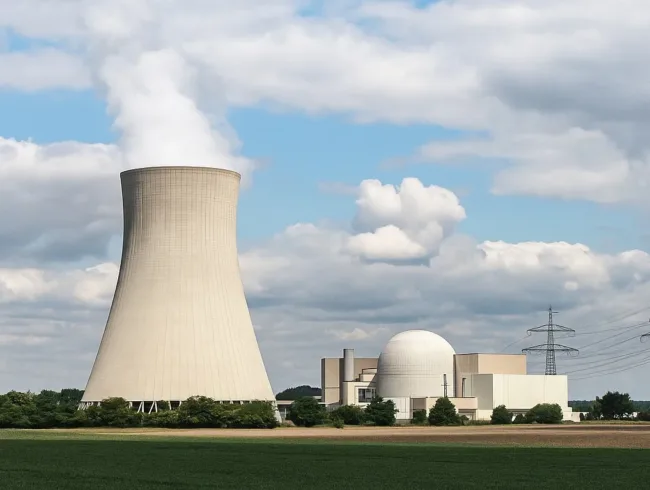


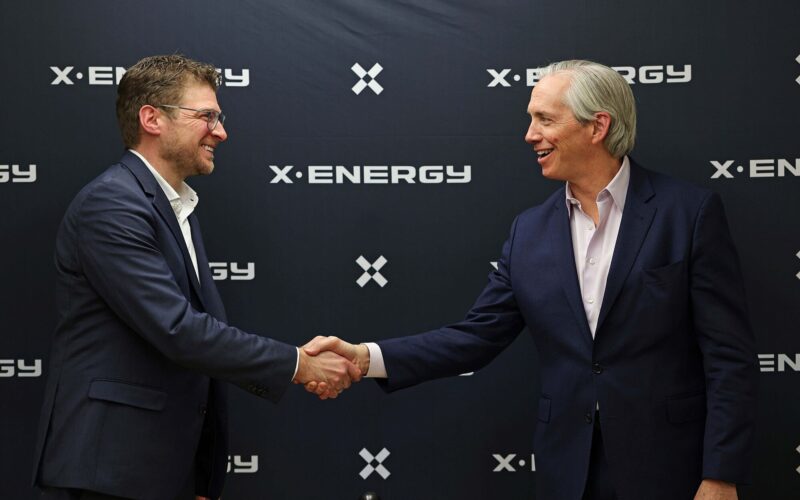
SGL Carbon SE (Xetra: SGL) has secured an additional contract worth approximately US$90 million from X-energy Reactor Company, LLC to supply specialised nuclear graphite for its Xe-100 high-temperature gas-cooled reactor technology, strengthening the German manufacturer’s position in the emerging small modular reactor supply chain. Announced on October 29, 2026, the order covers NBG-18 medium-grain isotropic graphite, a specialised material intended for use in X-energy’s reactor systems, and represents the second commercial order under a wider supply partnership between the businesses. SGL Carbon expects production of the newly ordered graphite billets to begin towards the end of 2026, while the companies continue expanding manufacturing capabilities in France and the United States. The development provides a tangible commercial milestone for the nuclear technology supply chain, although the order does not establish that all associated reactors have received construction approval or entered operation. SGL Carbon+2
The agreement builds on a ten-year framework established in January 2026, when the companies announced an initial graphite supply order for X-energy’s proposed commercial nuclear project with Dow Inc. in Seadrift, Texas. SGL Carbon has already delivered the first graphite components associated with that project, and the latest award indicates further purchasing activity beyond the original manufacturing programme. For investors, the commercial question is whether repeated orders can develop into a sustainable nuclear materials business as small modular reactor developers progress towards commercial deployment.
Why does X-energy need $90 million of specialised graphite for its Xe-100 small modular reactors?
The Xe-100 is a high-temperature gas-cooled nuclear reactor design that differs from conventional large light-water reactor technology. Graphite performs important functions within high-temperature reactor systems, including neutron moderation and supporting the reactor core’s required operating characteristics. These applications require material properties that are consistent, carefully controlled and suitable for prolonged use in a nuclear operating environment.
SGL Carbon’s NBG-18 material is a medium-grain isotropic graphite developed for demanding applications where material uniformity and performance are critical. Producing graphite for nuclear use involves specialised manufacturing, qualification and quality-control requirements that differ from many ordinary industrial applications. The commercial value therefore reflects not simply the quantity of carbon material supplied but also the technical capabilities required to manufacture products meeting nuclear specifications.
The US$90 million contract represents a second commercial order rather than a non-binding expression of interest. This is significant because the progression from framework discussions to purchase commitments can provide clearer revenue visibility for specialist equipment and material suppliers. However, the agreement’s detailed delivery schedule, payment milestones and expected profit margin were not disclosed, limiting the ability to calculate its immediate earnings contribution.
The order also needs to be distinguished from the total capital expenditure associated with building Xe-100 reactor facilities. Nuclear graphite represents one component of a much broader reactor system that requires fuel, control equipment, containment and supporting industrial infrastructure. The US$90 million figure is therefore attributable to the announced graphite supply order, not the construction value of a complete nuclear power plant.
For X-energy, securing specialised materials is an important element of preparing its technology for manufacturing at commercial scale. Reactor developers must establish reliable supply chains for components that may have long production lead times and demanding qualification requirements. Early procurement can reduce some manufacturing uncertainty, but it also requires careful coordination with reactor design, regulatory review and customer project schedules.
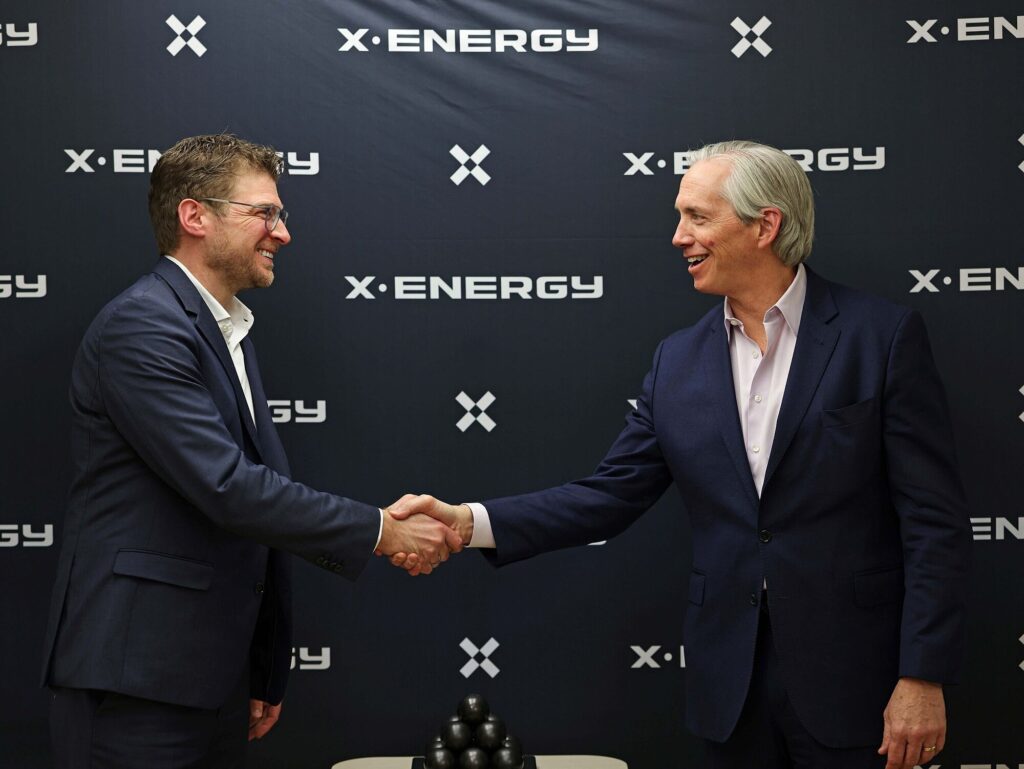
How are SGL Carbon and X-energy expanding nuclear graphite manufacturing in France and the United States?
The companies agreed in August 2026 to expand production capabilities for nuclear graphite across SGL Carbon’s manufacturing network. The programme includes additional NBG-18 graphite billet production at Chedde in France and expanded machining capabilities at St. Marys in the United States. These facilities form part of an effort to establish sufficient manufacturing capacity for future reactor component requirements.
The geographic distribution of the production process has operational significance. Manufacturing graphite billets and machining them into specialised components involve different stages of industrial production, each requiring appropriate equipment, technical expertise and quality controls. Expanding both capabilities can help address supply bottlenecks as reactor developers move from initial orders towards larger production programmes.
However, manufacturing expansion introduces its own execution considerations. Additional capacity may require capital investment, specialised equipment and workforce development before it can contribute fully to output. The financial attractiveness will depend on utilisation, the timing of customer deliveries and the ability to maintain product quality at higher production volumes.
SGL Carbon’s management has indicated that the manufacturing investment is intended to support growing demand for graphite associated with X-energy’s Xe-100 reactors. The strategic rationale is understandable because repeated orders can justify additional production capabilities. Nevertheless, future order volumes remain dependent on customer programmes and should not be assumed simply because additional capacity is being developed.
The first supply order and the latest US$90 million contract provide evidence of commercial progress, while the August manufacturing agreement demonstrates the preparation required to support potential future demand. Together, these milestones are more meaningful than an isolated technology announcement because they involve customer procurement and physical manufacturing activity.
What does the X-energy and Dow nuclear project in Seadrift reveal about commercial deployment opportunities?
X-energy’s partnership with Dow Inc. involves a proposed nuclear energy project at Dow’s industrial manufacturing complex in Seadrift, Texas. The development is intended to demonstrate the application of advanced nuclear technology to industrial electricity and process energy requirements. Such applications are attracting interest because energy-intensive industrial facilities often require dependable heat and power that cannot be supplied exclusively by intermittent renewable generation.
The initial SGL Carbon supply order announced in January 2026 was associated with this proposed commercial project, and the first graphite components have already been delivered. That progress shows that part of the reactor manufacturing supply chain has moved into physical production. However, delivery of components does not establish that the nuclear facility itself has completed construction, received every regulatory authorisation or begun generating electricity.
This distinction is central to assessing the investment opportunity. Advanced nuclear technology developers must navigate licensing, engineering, construction financing and customer requirements before their reactors can enter commercial operation. Component manufacturers may receive orders at earlier stages, creating revenue opportunities before the eventual electricity projects are completed.
Nevertheless, early-stage manufacturing can introduce risks if project designs, schedules or customer plans change. Specialised graphite components may be tailored to particular technical requirements, limiting their interchangeability with other applications. Suppliers therefore need to manage manufacturing capacity and inventory commitments alongside the timing of customer programmes.
X-energy has identified additional commercial relationships involving Amazon and Centrica, reflecting interest in advanced nuclear technology for electricity, industrial and data centre applications. These relationships broaden the prospective market, but they should not be treated as guarantees that every proposed reactor will proceed to construction or create equivalent graphite demand. Actual supply opportunities will depend on the scope and progress of individual projects.
Why did SGL Carbon shares jump after the nuclear graphite order, and what are the main investor risks?
SGL Carbon shares closed October 29 at €5.44 on Xetra, gaining approximately 9.35% from the previous session’s €4.975 close. Trading volume increased to roughly 508,000 shares, compared with approximately 149,700 on October 28, indicating a substantial rise in market activity around the announcement. Delayed October 30 quotations subsequently showed a partial reversal, demonstrating that the immediate investor enthusiasm had not translated into an uninterrupted increase.
The positive October 29 reaction is consistent with investors assigning commercial significance to the new order, although broader market conditions and other company-specific factors may also have contributed. The US$90 million contract represents a meaningful announced award for a specialist materials supplier, particularly because it follows a previous customer order and an agreement to expand manufacturing capabilities. However, the financial contribution will depend on the timing of revenue recognition, manufacturing costs and the profitability of the supplied materials.
SGL Carbon generated approximately €850 million of revenue during financial year 2025, according to the company’s October announcement. The new nuclear graphite order is therefore commercially relevant relative to its overall operating scale, although the contract is denominated in US dollars and may be fulfilled across more than one reporting period. It would be misleading to treat the entire amount as revenue or profit attributable to 2026.
The opportunity also creates concentration considerations. A growing relationship with a prominent advanced nuclear developer can support specialised manufacturing investment, but supplier economics may become sensitive to the timing of relatively few large customer projects. If construction schedules change or deployment plans develop more slowly than expected, the pace of future orders may differ from management’s assumptions.
Regulatory requirements provide another important consideration. Nuclear reactor projects depend on approvals covering reactor design, construction and operation, while component suppliers must satisfy relevant technical and quality requirements. Compliance can create barriers to entry for competing manufacturers, but it also increases the importance of reliable execution.
For investors, the strength of the announced order lies in its commercial status and the progress already demonstrated through component deliveries. The principal uncertainty concerns the scale and timing of future demand beyond the contracted work. These are different questions, and evaluating them separately is essential to understanding the opportunity.
Can SGL Carbon turn advanced nuclear reactor demand into a sustainable new growth market?
The commercial development of advanced nuclear energy could create opportunities for specialised materials suppliers capable of manufacturing reactor components at the required quality and scale. Unlike reactor developers, which must secure approval and financing for complete generating facilities, component suppliers can participate through manufacturing contracts tied to specific stages of deployment. This can create an earlier route to revenue, although it does not remove exposure to customer project schedules.
SGL Carbon’s agreement with X-energy provides a foundation for that opportunity. The ten-year framework, initial component deliveries, manufacturing expansion and latest US$90 million order collectively indicate a relationship progressing beyond preliminary technical cooperation. However, the framework duration does not establish a guaranteed order value for every year or confirm that all prospective reactor projects will be constructed.
The company’s ability to convert the opportunity into durable earnings will depend on manufacturing efficiency, the cost of capacity expansion and the level of future customer demand. A specialised product can offer differentiation, but maintaining nuclear-grade quality while increasing production can involve substantial operational requirements. Investors will consequently need evidence that commercial volumes support attractive margins.
The broader advanced nuclear industry is still progressing through a period in which commercial announcements often precede electricity generation by several years. Supply chain development is necessary for reactor deployment, but it should not be confused with completion of the projects that will eventually use those components. Maintaining this distinction helps separate measurable industrial progress from more speculative expectations.
SGL Carbon’s latest order is significant because it represents actual customer procurement for a specialised material required by a proposed nuclear reactor platform. The planned start of new graphite billet production towards the end of 2026 provides a near-term manufacturing milestone, while the larger question concerns how quickly X-energy’s commercial projects will require additional supplies.
For SGL Carbon shareholders, the opportunity is to participate in a potentially expanding nuclear technology supply chain through established materials expertise. The investment case will strengthen if repeated orders generate profitable revenue and manufacturing capacity is utilised effectively. Until those outcomes are demonstrated, the US$90 million award should be viewed as a meaningful commercial achievement rather than proof of a fully established mass-production market for small modular reactors.
Discover more from Business-News-Today.com
Subscribe to get the latest posts sent to your email.