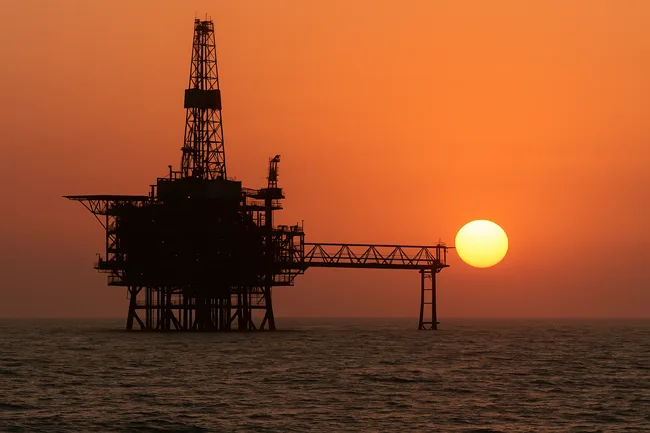



Saipem S.p.A. (Borsa Italiana: SPM) has formally started offshore operations for the $10.5 billion GranMorgu oil project operated by TotalEnergies SE (NYSE: TTE) in Suriname’s Block 58. The campaign began with the arrival of the Normand Navigator construction vessel at Jules Sedney Harbour in Paramaribo, where preliminary subsea and logistics work will be coordinated. GranMorgu is expected to produce as much as 220,000 barrels of oil per day after its planned 2028 start, making it Suriname’s first large-scale offshore oil development. TotalEnergies owns 40% of the project alongside APA Corporation (NASDAQ: APA) with 40% and state-owned Staatsolie with 20%. The mobilisation moves GranMorgu beyond engineering and fabrication into a marine execution phase where vessel coordination, subsea installation and local logistics will determine whether the project preserves its schedule and capital discipline.
Why does Saipem’s mobilisation represent a major turning point for Suriname’s first offshore oil project?
The arrival of the Normand Navigator is important because GranMorgu is no longer progressing only through engineering offices, fabrication yards and procurement schedules. Saipem has begun establishing the offshore logistics and marine infrastructure required to receive, store and deploy pipes, manifolds and other subsea equipment. This marks the practical beginning of the installation programme that must connect the Sapakara and Krabdagu reservoirs with the project’s floating production, storage and offloading vessel.
Saipem has established two marine support bases in Paramaribo. A logistics hub covering an estimated 30,000 to 40,000 square metres at Jules Sedney Harbour will handle incoming pipes, equipment and standard containers, while the DORDT support base will manage heavy subsea structures and manifolds. Separating standard cargo from high-tonnage structures should improve handling efficiency and reduce congestion as equipment volumes increase.
The milestone also increases schedule exposure. Once vessels, port space, fabrication packages and offshore crews begin operating as one programme, delays become more expensive. A late shipment can affect vessel utilisation, while a modification to one subsea structure can disrupt installation sequences planned months earlier.
This is why marine mobilisation is more significant than another supplier announcement. The project is now consuming vessel time, local infrastructure and offshore execution capacity. GranMorgu has entered the stage where physical progress becomes visible, but so do the costs of mistakes.

How does Saipem’s $1.9 billion subsea scope fit inside the wider GranMorgu development?
Saipem secured its $1.9 billion engineering, procurement, construction and installation contract from TotalEnergies in November 2024. The package covers the complete subsea umbilicals, risers and flowlines system, along with pre-commissioning and support during commissioning and start-up.
The scope includes approximately 100 kilometres of subsea production flowlines ranging from 10 to 12 inches in diameter. Saipem will also deliver about 90 kilometres of water and gas injection lines, together with the transportation and installation of flexible risers, umbilicals and associated subsea structures. The work extends across water depths ranging from about 100 metres to 1,100 metres.
Production flowlines will carry reservoir fluids from the wells toward the floating production vessel. Water and gas injection lines will help maintain reservoir pressure and improve oil recovery, while umbilicals will provide power, communication, chemicals and hydraulic control to subsea equipment.
Saipem plans to combine S-lay and J-lay installation methods during the 2027 and 2028 offshore campaigns. S-lay installation is generally suited to shallower and moderate-depth sections, while J-lay vessels can manage steeper pipe departure angles in deeper water. Using both methods allows Saipem to match installation technology with changing water depths and pipeline conditions.
The contract gives Saipem substantial revenue visibility through 2028, but it also exposes the contractor to engineering interfaces, marine weather and offshore productivity. Profitability will depend on vessel utilisation, procurement control and whether the equipment reaches Suriname in the sequence assumed during bidding.
Why is the 220,000 bpd GranMorgu FPSO central to TotalEnergies’ Suriname strategy?
GranMorgu will develop the Sapakara and Krabdagu discoveries, which contain estimated recoverable resources of nearly 760 million barrels of oil. The fields are located around 150 kilometres offshore Suriname in Block 58.
The development will centre on an FPSO capable of producing as much as 220,000 barrels of oil per day. The vessel will also process up to approximately 500 million cubic feet of associated gas per day and store around two million barrels of crude before export tankers collect the oil.
The production capacity places GranMorgu among the larger new deepwater projects expected to begin operating during the second half of this decade. At full output, the project would create an entirely new oil-export industry for Suriname rather than adding incremental barrels to an established producing basin.
The FPSO design draws on units already deployed in neighbouring Guyana, where similar reservoir conditions and deepwater operating environments have supported rapid project development. Reusing proven design principles can reduce engineering risk, accelerate procurement and limit the number of bespoke systems that must be qualified.
The vessel has also been designed to accept future satellite tiebacks. This creates the possibility that additional discoveries in Block 58 could be connected through subsea infrastructure rather than requiring another standalone FPSO. Successful exploration could therefore extend the production plateau and improve the economics of the original investment.
Can the partners control the capital exposure attached to a $10.5 billion deepwater investment?
TotalEnergies estimates total GranMorgu investment at approximately $10.5 billion. A simple proportional allocation would suggest gross exposure of about $4.2 billion each for TotalEnergies and APA Corporation and approximately $2.1 billion for Staatsolie, although the actual funding arrangements, financing costs and payment schedules may differ.
The scale is particularly significant for Staatsolie and Suriname. TotalEnergies and APA Corporation can fund the project within diversified international portfolios, while Staatsolie’s participation represents a large commitment relative to the size of Suriname’s economy and the national company’s existing business.
The partners must protect returns through equipment standardisation, contractor competition and disciplined management of design changes. Deepwater developments are particularly vulnerable to cost escalation because major packages require specialised vessels, fabrication yards and components that only a limited number of suppliers can provide.
GranMorgu entered final investment approval after appraisal was completed in 2023, reflecting an accelerated development schedule by offshore-industry standards. Rapid sanctioning can improve the value of discoveries by bringing revenue forward, but it leaves less time to absorb design revisions before fabrication and installation begin.
The strongest defence against cost overruns is early interface control. Saipem’s flowlines and structures must connect with TechnipFMC’s subsea production systems and flexible equipment, while both packages must integrate with the FPSO being delivered by SBM Offshore and Technip Energies. A delay or specification change within one contract can affect several other suppliers.
How will cooperation between Saipem and TechnipFMC reduce subsea interface risk?
Saipem is executing its subsea infrastructure scope in cooperation with TechnipFMC, which is responsible for the subsea production system, flexible risers and umbilical equipment packages. The arrangement builds on the commercial alliance established by the companies to pursue integrated subsea developments.
The collaboration is commercially relevant because subsea production equipment and pipeline infrastructure are often procured under separate contracts. When suppliers work independently, responsibility can become disputed if components do not connect correctly or performance issues arise during commissioning.
An integrated working model allows design information to move earlier between the production-system and flowline teams. Connection points, installation tolerances, testing procedures and offshore sequences can be agreed before equipment reaches the field.
This does not remove contractor risk. Saipem and TechnipFMC remain responsible for different packages, and each company must protect its scope, margins and contractual position. However, formal coordination should reduce the possibility that a problem is discovered only after an expensive installation vessel has arrived offshore.
GranMorgu could become a useful reference for future integrated projects if the collaboration shortens offshore installation time and limits interface claims. Poor coordination would produce the opposite result and remind operators why splitting large subsea developments among multiple contractors can become expensive.
What economic impact could GranMorgu create for Suriname before first oil arrives?
TotalEnergies expects between $1 billion and $1.5 billion of project expenditure to flow through local content over GranMorgu’s development and operating life. The company also estimates that more than 6,000 direct, indirect and induced jobs could be created.
Paramaribo will function as the project’s administrative, logistics and operations-support centre. Local companies are expected to participate in port services, transportation, logistics, well support and the installation and operation of subsea and FPSO systems.
Saipem’s dual-base strategy provides an early example of this local economic activity. The company is using Surinamese port facilities, docks and transport networks rather than coordinating the entire offshore programme from a foreign logistics centre.
The economic opportunity extends beyond construction jobs. Offshore operations require long-term maintenance, aviation, marine transport, catering, inspection, safety services and technical training. Suriname can capture a larger share of this value if local businesses develop the certifications and reliability required by international operators.
There is also a concentration risk. A project of this scale can create high expectations around employment, government revenue and public spending before production begins. Suriname will need to avoid building permanent fiscal commitments around oil revenue that remains exposed to project delays and future crude prices.
The most durable outcome would be an offshore supply chain capable of supporting GranMorgu and subsequent developments. Construction activity is temporary, while technical capability and competitive local suppliers can remain economically relevant for decades.
Can GranMorgu deliver lower operating emissions without changing its fossil-fuel exposure?
TotalEnergies has designed GranMorgu around an all-electric FPSO configuration with no routine flaring. Associated gas is intended to be reinjected into the reservoirs, while waste-heat recovery, optimised seawater cooling and permanent methane-monitoring systems are expected to reduce operational emissions.
The company estimates scope 1 and scope 2 emissions intensity below 16 kilograms of carbon dioxide equivalent per barrel of oil equivalent. This would place GranMorgu toward the lower-emission end of new offshore production, assuming operating performance matches the design assumptions.
Lower operational emissions can improve competitiveness as governments, lenders and customers increasingly compare the carbon intensity of different crude supplies. Projects with efficient equipment, limited flaring and strong methane controls may retain greater resilience if future policy places higher costs on production emissions.
The design does not eliminate the carbon dioxide released when customers ultimately refine and consume the oil. GranMorgu remains a large fossil-fuel investment whose commercial case depends on continued oil demand beyond 2028.
The relevant strategic argument is therefore narrower. TotalEnergies is attempting to develop oil that is relatively low-cost and less emissions-intensive during production, rather than claiming that the final product is carbon-free.
What do Saipem, TotalEnergies and APA share prices reveal about current investor sentiment?
Saipem shares traded around €4.49 on June 23, approximately 2.4% below their June 16 closing level but about 6.1% above their May 22 close. The stock remained within a 52-week range of roughly €2.17 to €4.85, placing it close to the upper end of its annual trading range.
The share performance indicates broadly positive medium-term sentiment toward Saipem’s offshore backlog, fleet utilisation and margin recovery, even though the stock had retreated from its recent high. GranMorgu strengthens that narrative because the $1.9 billion contract is now moving into revenue-generating execution rather than remaining an order-book entry.
TotalEnergies American depositary shares traded near $80.60, down approximately 4.2% from June 16 and around 12% from May 22. The shares were within a 52-week range of approximately $57.48 to $94.17.
APA Corporation shares traded near $34.32, broadly flat compared with June 16 but about 11.5% below their May 22 close of $38.80. The stock’s 52-week range was approximately $17.74 to $45.66.
The weaker one-month performance of TotalEnergies and APA Corporation reflects broader oil-price and energy-sector sentiment rather than a reassessment of GranMorgu alone. The project is too far from first oil to materially influence near-term earnings, but successful execution could strengthen production and cash flow from 2028 onward.
For Saipem, the relationship is more immediate. Engineering, logistics and offshore installation activity can contribute revenue throughout the construction period. The contractor’s valuation is therefore more directly connected to schedule, vessel utilisation and project-margin performance.
What construction milestones will determine whether GranMorgu reaches first oil in 2028?
The first immediate milestone will be completion of Saipem’s preliminary marine-base and equipment-handling activities in Paramaribo. The logistics system must be capable of receiving, storing and loading large volumes without creating delays between the port and offshore vessels.
The next stage will involve installation of subsea structures, production flowlines and injection lines. Saipem must coordinate several vessels and installation methods across water depths that change substantially along the route.
FPSO construction is progressing separately through SBM Offshore and Technip Energies. Hull and topside fabrication, module integration, commissioning and sailaway must remain aligned with subsea readiness, because an early FPSO can become an expensive idle asset while a late vessel can strand completed wells.
Drilling and well completion will become another critical path. The fields require enough production and injection wells to support start-up and ramp toward 220,000 barrels per day. Reservoir performance will ultimately determine whether the plateau forecast can be sustained.
The final integration stage will test subsea controls, pipelines, risers, processing equipment, gas reinjection and export systems as one operating development. Initial oil flow is only the beginning. GranMorgu must then increase production safely without damaging reservoirs or overloading equipment.
The June 23 mobilisation is one of the project’s most consequential milestones since the final investment decision. It confirms that offshore execution has begun and that Suriname’s first major development is progressing toward physical installation. It also means the project’s remaining risks are becoming more operational, visible and expensive.
What are the key takeaways from Saipem starting GranMorgu offshore operations?
- Saipem has started offshore operations for GranMorgu following the arrival of the Normand Navigator vessel in Paramaribo.
- GranMorgu is Suriname’s first large-scale offshore oil project and carries an estimated investment of $10.5 billion.
- The Sapakara and Krabdagu fields contain nearly 760 million barrels of recoverable resources.
- The project’s FPSO is designed to produce up to 220,000 barrels per day and store about two million barrels of crude.
- Saipem’s $1.9 billion contract covers approximately 190 kilometres of production, water-injection and gas-injection lines.
- The contractor will use local logistics hubs and a combination of S-lay and J-lay vessels during offshore installation.
- TotalEnergies and APA Corporation each own 40%, while Staatsolie holds the remaining 20%.
- Saipem shares remain near the upper end of their 52-week range, although short-term performance has weakened.
- TotalEnergies and APA Corporation shares have declined over the past month amid wider commodity-market volatility.
- Vessel coordination, FPSO construction, drilling and subsea integration will determine whether first oil arrives in 2028.
Discover more from Business-News-Today.com
Subscribe to get the latest posts sent to your email.