

Rheinmetall AG, listed in Germany as RHM, has secured a €5.7 billion Romanian defence contract package covering Lynx combat vehicles, Skyranger air-defence systems, ammunition, offshore patrol vessels and diver support vessels. The contracts were signed under the European Union’s Security Action for Europe framework and are scheduled for deliveries from 2028 through 2030. The package gives Rheinmetall one of its largest international defence awards in recent years and creates a major industrial expansion opportunity in Romania, where more than half of the programme value is expected to be generated locally or with Romanian partners. Rheinmetall shares traded around €1,077.30 to €1,097.20 on July 28, recovering strongly in recent sessions but still trading far below their 52-week high of about €2,008. The strategic significance is clear: Romania is not only buying equipment, it is trying to convert rearmament funding into a domestic manufacturing base on NATO’s Black Sea flank.
The award deserves attention as a feature because it connects several of Europe’s biggest defence themes in one transaction. It includes armoured vehicles, mobile counter-drone protection, naval platforms, ammunition supply, technology transfer and local industrialisation. It also shows how European Union financing is changing procurement behaviour by giving governments more room to place large, multi-domain orders rather than buying small batches of unrelated equipment.
Why does Rheinmetall’s €5.7 billion Romania contract matter beyond the order value?
The €5.7 billion value is large enough to be material for Rheinmetall, but the contract’s deeper importance lies in scope and location. Romania is acquiring land systems, air defence, naval assets and ammunition within one programme, giving Rheinmetall a role across several layers of national defence rather than a narrow platform sale.
The contract includes 298 Lynx vehicles, with most expected to be armoured personnel carriers and additional variants covering mortar carrier, command post and medical roles. That vehicle volume can support a meaningful production run, supply-chain planning and local workforce development. It also gives Romania a modern tracked combat-vehicle fleet designed to replace older armoured platforms and strengthen mechanised forces.
The package also includes Skyranger air-defence systems based on the Lynx platform, medium-calibre ammunition, two offshore patrol vessels and two diver support vessels. That mix is unusual because it links ground manoeuvre, short-range air defence, naval patrol and undersea support in one industrial relationship.
For Rheinmetall, this reduces reliance on a single product line. The company can use the Romanian programme to sell platforms, turrets, guns, sensors, ammunition, naval designs, sustainment and local production services. That multi-domain exposure can increase contract quality if execution remains disciplined.
For Romania, the package gives faster access to NATO-compatible systems while embedding technology transfer and domestic manufacturing. The risk is that a broad programme creates coordination challenges. Vehicle assembly, air-defence integration, ammunition production and shipbuilding each have their own certification, supply-chain and workforce requirements.
How does the Romanian order strengthen NATO’s Black Sea and eastern-flank posture?
Romania occupies a critical geographic position for NATO. It borders Ukraine, faces the Black Sea and sits near the Danube region where Russian attacks on Ukrainian infrastructure have repeatedly raised regional security concerns. A stronger Romanian Army and Navy therefore has alliance-wide significance.
The Lynx combat vehicles address ground mobility and protection. They can help Romania modernise mechanised units and improve interoperability with NATO partners using Western weapons, communications and support systems. That matters because eastern-flank defence increasingly depends on rapid reinforcement, common logistics and shared operating standards.
The Skyranger systems address the low-altitude threat environment. Drones, loitering munitions and cruise missiles have become central to modern conflict, and Romania’s location makes short-range air defence a practical requirement rather than a procurement fashion statement.
Skyranger’s integration onto the Lynx platform gives Romania a mobile very-short-range air-defence layer that can move with ground forces. This is important because fixed air-defence systems protect bases and infrastructure, but manoeuvre units also need protection against drones and low-flying threats while deployed.
The naval assets add a Black Sea dimension. Offshore patrol vessels and diver support vessels are not headline-grabbing in the same way as frigates or submarines, but they support maritime presence, patrol activity, port security, special operations and underwater support missions. In a contested maritime region, those are not small tasks.
The Romanian package therefore reads like a response to the operating reality of Europe’s eastern flank. It addresses mobility, air defence, drone threats, ammunition demand and maritime security rather than betting on one prestige platform.
Why is local production in Romania central to Rheinmetall’s strategic opportunity?
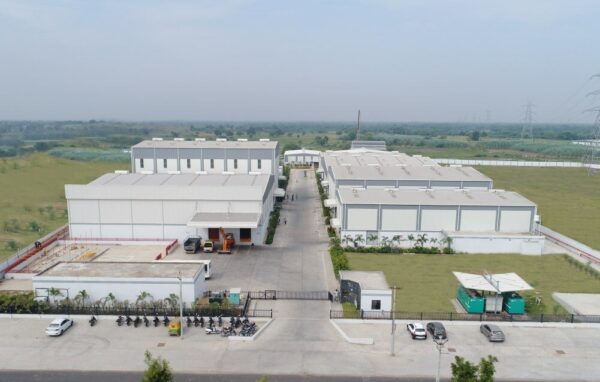
Rheinmetall has said it will significantly expand its Romanian capacities and ensure technology transfer, with a large proportion of the value added generated in Romania. The company already operates Rheinmetall Automecanica in Mediaș and has described Romania as one of its home markets.
This local-production element changes the contract from a conventional export deal into a defence-industrial partnership. Romania is not simply importing a package of finished systems from Germany. It is positioning the contract as a way to rebuild national defence manufacturing and integrate local companies into a wider European supply chain.
The programme is expected to create thousands of jobs and involve more than 200 subcontractors. That could strengthen Romania’s domestic industrial base if supplier qualification, workforce training and investment are handled properly.
For Rheinmetall, local value creation can improve political durability. Defence programmes that generate domestic employment and supplier activity are often harder for future governments to cancel or reduce. They also create a local support base for maintenance, upgrades and future production.
The trade-off is complexity. Localisation can slow execution if suppliers lack experience, facilities require upgrading or quality standards are not met quickly. Rheinmetall must balance Romanian workshare with delivery commitments running from 2028 to 2030.
The company’s ability to turn Romania into a scalable industrial node will determine whether this contract becomes a one-off national order or a platform for broader eastern European growth.
How do Lynx vehicles and Skyranger systems fit the new battlefield shaped by drones?
The pairing of Lynx and Skyranger is one of the most important elements of the contract. Armoured formations now need protection from threats that older mechanised doctrine did not fully anticipate, especially small drones, loitering munitions and precision artillery enabled by persistent surveillance.
Lynx gives Romania a modern tracked armoured vehicle family. Its value lies not only in troop transport but in modularity. Different variants can support command, medical, mortar and other functions, reducing the need to operate many unrelated vehicle types.
Skyranger adds the air-defence layer. The system combines sensors, tracking and a 35 mm cannon capable of using programmable airburst ammunition. That matters because drones and low-altitude threats can be too numerous or too cheap to justify a missile response every time.
Programmable ammunition can improve the cost-exchange equation. Instead of firing an expensive missile at a small drone, a gun-based system can create an airburst effect near the target. That gives armies another engagement option between electronic disruption and missile interception.
This is exactly the gap European militaries are trying to close. Traditional air defence focused heavily on aircraft and missiles. Recent conflicts have shown that the lower end of the threat spectrum can be strategically disruptive because it is cheap, abundant and hard to detect consistently.
Romania’s decision to buy Skyranger on Lynx therefore reflects a battlefield lesson, not just a product preference. Armoured units must be protected from above, and mobile air defence must be integrated into manoeuvre formations rather than parked only around fixed bases.
What role do ammunition and naval systems play inside the wider Romanian package?
The ammunition component is commercially important because munitions demand has become one of the most stressed parts of Europe’s defence supply chain. Medium-calibre ammunition for air defence and armoured personnel carriers will support both Skyranger systems and vehicle operations.
Ammunition is also recurring by nature. Vehicles and ships may be purchased in defined quantities, but training, stockpiling and operational use create continuing demand. For Rheinmetall, ammunition linked to installed systems can create longer-term revenue beyond the original platform deliveries.
The naval side adds another strategic layer. Rheinmetall’s acquisition of Naval Vessels Lürssen gave the company a shipbuilding and naval-design platform, and the Romanian order includes two offshore patrol vessels and two diver support vessels based on its new Naval Systems segment.
This is important because Rheinmetall is trying to become more than a land-systems and munitions company. The Romanian award gives its naval business an export reference shortly after that segment entered the group’s reported structure.
For Romania, the vessels support maritime security in the Black Sea and related coastal missions. Offshore patrol vessels can contribute to surveillance, presence, maritime law enforcement and crisis response. Diver support vessels can support underwater work, special missions, harbour security and mine-related activity.
The industrial challenge is that shipbuilding timelines, supplier structures and certification requirements differ from armoured-vehicle manufacturing. Rheinmetall must prove that its enlarged portfolio can manage cross-domain delivery without overextending managerial capacity.
How does European Union SAFE financing change the procurement picture?
The contract falls under the European Union’s Security Action for Europe programme, which is designed to support increased defence investment across member states. This is a critical part of the story because financing affects procurement speed and scale.
European countries have announced many defence ambitions since Russia’s invasion of Ukraine, but budget limits often slow actual orders. SAFE-backed financing gives governments more room to accelerate contracts that might otherwise be delayed or divided into smaller purchases.
Romania’s use of the programme shows how European rearmament is becoming more institutionalised. Instead of relying only on national budget cycles, countries can use European-level mechanisms to support large procurement packages.
That creates opportunity for defence suppliers with European manufacturing capacity. Companies such as Rheinmetall can position themselves as industrial partners for governments seeking not only equipment but also local production, technology transfer and NATO interoperability.
However, financing does not eliminate execution risk. A funded procurement framework can create contracts, but it cannot instantly create skilled labour, qualified suppliers, steel, electronics, sensors, guns, engines or test capacity. The physical supply chain still has to do the hard work.
SAFE also raises expectations around European industrial benefit. If public financing is tied to security and resilience, governments will want domestic or regional manufacturing content rather than simple imports. Rheinmetall’s Romanian localisation plan fits that logic, but delivery performance will determine whether the model is credible.
How significant is the Romania contract for Rheinmetall’s backlog, revenue and 2026 outlook?
Rheinmetall entered 2026 with a rapidly expanding order base. By the first quarter, the group indicated that backlog had reached roughly €73 billion after order intake and the initial recognition of Naval Systems backlog. The €5.7 billion Romania contract is therefore equivalent to about 7.8% of that first-quarter backlog level.
The order is also significant relative to Rheinmetall’s 2026 sales guidance. The company has guided for 2026 sales of €14.0 billion to €14.5 billion. The Romanian contract equals roughly 40% of the midpoint of that annual sales outlook, although revenue will be recognised over several years rather than immediately.
This is why the delivery schedule matters. Deliveries are planned to begin in 2028 and run through 2030, meaning the contract is more important for medium-term visibility than for the current year’s reported sales.
The programme also supports several Rheinmetall divisions. Vehicle Systems benefits from the Lynx family, Air Defence benefits from Skyranger, Weapon and Ammunition benefits from medium-calibre ammunition, and Naval Systems benefits from patrol and support vessels.
That broad participation can improve group-level strategic value, but it complicates margin forecasting. Different product lines carry different profitability, working-capital needs and execution risks.
Investors should not assume that all €5.7 billion produces the same margin profile. Vehicle production, ammunition, naval construction and air-defence integration are economically different businesses. The value of the award will ultimately depend on cost control, payment milestones and the pace of local industrial ramp-up.
Why did Rheinmetall shares rebound on July 28 despite remaining far below their 52-week high?
Rheinmetall shares traded around €1,077.30 to €1,097.20 on July 28, rising strongly during the session and extending a recent recovery. The stock’s 52-week range stood at roughly €900.20 to €2,008.00, leaving the shares still well below their annual high despite the rebound.
The share-price context matters because Rheinmetall has become a high-expectation defence stock. Investors have rewarded the company for Europe’s rearmament cycle, but they have also punished it when delays, contract uncertainty or valuation concerns appeared.
The Romania contract supports the long-term growth case, but it did not remove broader market concerns. The stock remains deeply below its peak because investors are still testing whether Rheinmetall can convert a massive order pipeline into revenue, profit and cash flow without operational strain.
The near-term rebound suggests renewed confidence ahead of first-half results expected in early August. Large orders, defence-spending momentum and the company’s expanding backlog all support sentiment.
However, the valuation debate is not finished. Rheinmetall must show that production ramps across ammunition, vehicles, air defence and naval systems can be delivered profitably. High-growth defence stocks can fall hard when the market senses that expectations have outrun execution capacity.
The Romanian programme adds a strong medium-term catalyst. It also adds another execution yardstick. Investors will watch whether Rheinmetall can turn a politically attractive industrial promise into actual production in Romania by 2028.
What competitive signal does the Romania award send to European defence peers?
The award strengthens Rheinmetall’s position against other European land-systems and air-defence suppliers. The company is not selling one vehicle or one turret. It is providing a multi-domain package with local production and a major NATO-eastern-flank customer.
This could increase pressure on competitors such as KNDS, BAE Systems, Leonardo, Thales, Saab and other European defence groups. Future customers may increasingly ask for integrated industrial packages rather than isolated equipment bids.
The order also supports standardisation around Rheinmetall systems. If Romania builds its mechanised and short-range air-defence modernisation around Lynx and Skyranger, follow-on purchases, training, sustainment and upgrades may naturally favour Rheinmetall.
That installed-base advantage can be commercially powerful. Once a country adopts a vehicle family, turret architecture, ammunition type and support system, switching suppliers becomes expensive and operationally disruptive.
Competitors may respond by offering stronger local manufacturing terms, financing support or broader partnership structures. This is where European defence procurement is heading: systems, factories, supply chains and political alignment are being negotiated together.
Rheinmetall’s challenge is to avoid becoming overextended. Winning large packages across multiple countries can create growth, but too many simultaneous localisation promises can strain engineering talent, managers and suppliers.
What risks could affect Rheinmetall’s ability to deliver the Romania programme by 2030?
The first risk is supplier capacity. Lynx vehicles, Skyranger systems, ammunition and naval platforms require different supply chains. Engines, armour, electronics, sensors, guns, ship components and energetic materials all need timely availability.
The second risk is Romanian industrial absorption. More than half of the programme value is expected to be generated locally or with Romanian partners. That is politically attractive, but local suppliers must meet defence quality standards quickly.
The third risk is schedule discipline. Deliveries are expected from 2028 through 2030, leaving a limited window for facility expansion, subcontractor integration, qualification, production and acceptance.
The fourth risk is cost inflation. European defence manufacturing is competing for labour, steel, electronics, explosives and energy. If costs rise faster than contract assumptions, margins could come under pressure.
The fifth risk is programme management. A €5.7 billion package spanning land, air defence and naval systems requires careful coordination between Rheinmetall, Romanian authorities, subcontractors and European financing structures.
The sixth risk is politics. Defence contracts signed under one government must remain supported through future budget debates, policy changes and alliance priorities. Local job creation helps reduce cancellation risk, but it does not eliminate it.
Rheinmetall has the product portfolio to execute the programme. The harder question is whether it can scale multiple production lanes at once while keeping delivery promises and protecting margins.
What should investors and suppliers watch next after the Romania contract?
The first indicator will be facility expansion in Romania. Rheinmetall’s investment commitments need to become visible in production capacity, supplier agreements, workforce training and certified manufacturing activity.
The second indicator will be subcontractor integration. More than 200 suppliers are expected to be part of the network. The quality and readiness of that network will directly influence schedule performance.
The third indicator will be first delivery progress. The 2028 starting point is the most important milestone because it will show whether the programme is moving from contract announcement into operational output.
The fourth indicator will be divisional reporting. Investors should watch Vehicle Systems, Air Defence, Weapon and Ammunition, and Naval Systems for order intake, revenue conversion and margin signals tied to Romania and similar programmes.
The fifth indicator will be additional eastern European awards. If Romania becomes a reference model, Rheinmetall could use the same package logic in other NATO countries seeking local production and rapid modernisation.
The sixth indicator will be cash conversion. Large defence contracts often require inventory, suppliers, working capital and capital expenditure before revenue recognition fully catches up.
The Romania award gives Rheinmetall a powerful platform for growth, but it also creates a very public test of European rearmament execution. The company has won the order. Now it has to build the vehicles, air-defence systems, ammunition and vessels, while also building part of the industrial base that will support them.
Key takeaways on Rheinmetall’s €5.7 billion Romania defence contract
- Rheinmetall has secured a €5.7 billion Romanian defence package covering Lynx vehicles, Skyranger air defence, ammunition, offshore patrol vessels and diver support vessels.
- The contracts were awarded under the European Union’s Security Action for Europe framework, linking Romanian procurement to broader European rearmament financing.
- Deliveries are expected to begin in 2028 and be completed by 2030, making the order more important for medium-term visibility than near-term revenue.
- The package includes 298 Lynx vehicles across armoured personnel carrier, mortar carrier, command post and medical variants.
- Skyranger systems mounted on Lynx platforms will strengthen Romania’s mobile short-range air-defence and counter-drone capability.
- More than half of the programme value is expected to be generated in Romania or with local companies, creating a major technology-transfer and industrialisation component.
- The order could support thousands of jobs and integrate more than 200 subcontractors into Rheinmetall’s Romanian supply network.
- The contract equals roughly 7.8% of Rheinmetall’s first-quarter 2026 backlog of about €73 billion and about 40% of the midpoint of 2026 sales guidance.
- Rheinmetall shares rebounded strongly on July 28 but remained far below their 52-week high, showing that investors still expect proof of execution.
- The main risks are supplier bottlenecks, Romanian localisation complexity, cost inflation, schedule pressure and the challenge of managing land, air-defence and naval production together.
Discover more from Business-News-Today.com
Subscribe to get the latest posts sent to your email.