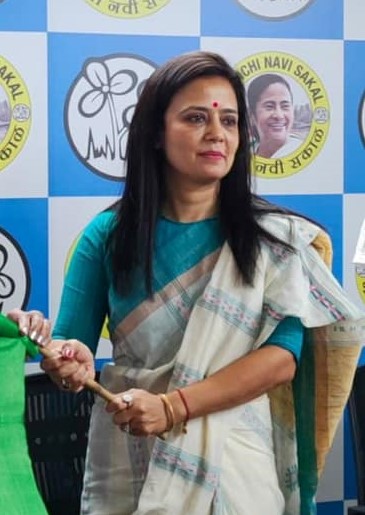



President Droupadi Murmu has assigned Cabinet Minister Pralhad Joshi additional charge of India’s Ministry of Education after accepting Dharmendra Pradhan’s resignation from the Union Council of Ministers with immediate effect on July 25, 2026.
The presidential decision was issued on the advice of Prime Minister Narendra Modi under Article 75(2) of the Constitution of India. The official order stated that Pralhad Joshi would handle the Ministry of Education in addition to his existing portfolio, but it did not specify an end date for the arrangement or name a separate permanent successor.
Pralhad Joshi already serves as Minister of Consumer Affairs, Food and Public Distribution and Minister of New and Renewable Energy. The additional responsibility places three major ministries under a senior Cabinet member during a politically sensitive period for the Narendra Modi government.
Dharmendra Pradhan’s resignation followed weeks of youth-led demonstrations over examination paper leaks, alleged irregularities in national entrance examinations and broader concerns about accountability in India’s education system. Protesters had made Dharmendra Pradhan’s removal one of their principal demands.
The leadership change gives Pralhad Joshi immediate responsibility for stabilising the Education Ministry, overseeing the government’s promised examination reforms and rebuilding confidence among students affected by cancellations, retests and allegations of compromised examination processes.
The appointment is therefore more than a routine portfolio adjustment. It transfers one of the government’s most difficult political and administrative challenges to a minister who must simultaneously manage consumer affairs, food distribution and India’s renewable energy programme.
What exactly did Rashtrapati Bhavan order after Dharmendra Pradhan resigned from the Union Council of Ministers?
The Rashtrapati Bhavan communiqué contained two distinct decisions. President Droupadi Murmu first accepted Dharmendra Pradhan’s resignation from the Union Council of Ministers with immediate effect, acting on the advice of Prime Minister Narendra Modi.
The wording is important because Dharmendra Pradhan did not merely relinquish the Education Ministry while remaining a Cabinet minister without a portfolio. His resignation was accepted from the Union Council of Ministers itself under Article 75(2) of the Constitution of India.
The second decision assigned Pralhad Joshi charge of the Ministry of Education in addition to his existing portfolio. The order did not use the phrase “temporary Education Minister,” did not announce a fixed interim period and did not state that another appointment would necessarily follow within a particular timeframe.
Pralhad Joshi can therefore exercise ministerial responsibility for the Education Ministry while retaining his existing Cabinet assignments. The government remains free to continue the arrangement or revise the allocation through a later presidential order issued on the advice of the Prime Minister.
The constitutional process also clarifies the respective institutional roles. The Prime Minister determines the political allocation of ministerial responsibilities, while the President formally accepts resignations and assigns portfolios on the Prime Minister’s advice.
The communiqué provided immediate administrative continuity after Dharmendra Pradhan’s departure. It ensured that the Education Ministry did not remain without Cabinet-level leadership while the government addressed the examination crisis and the consequences of the protest movement.
Why has Pralhad Joshi received additional charge instead of a separately announced permanent appointment?
Assigning additional charge allowed the government to fill the vacancy immediately without announcing a wider Cabinet reshuffle. Pralhad Joshi is already a member of the Union Cabinet and can assume responsibility without the procedural delay associated with inducting a new minister.
The form of the appointment also gives Prime Minister Narendra Modi flexibility. The government can assess whether the political controversy has stabilised, whether examination reforms require a dedicated minister and whether a broader reallocation of portfolios is necessary.
However, the official communiqué did not characterise Pralhad Joshi’s new responsibility as an interim arrangement. Any description of the appointment as lasting only until a permanent successor is chosen would go beyond the wording of the presidential order.
Pralhad Joshi’s seniority and administrative experience make him a logical choice for immediate charge. He has previously held portfolios covering coal, mines and parliamentary affairs, and he currently oversees large national programmes involving food distribution, consumer protection and renewable energy.
His earlier experience as Minister of Parliamentary Affairs could be particularly relevant if the government advances new legislation or amendments concerning examination malpractice. Education reform may require coordination with the Ministry of Home Affairs, investigative agencies, state governments and Parliament.
The appointment also avoids creating uncertainty at the top of the ministry during a period when students, universities and examination bodies are waiting for clear decisions. Administrative continuity is especially important when examination schedules, investigations and possible reform measures are moving simultaneously.
What political and administrative crisis does Pralhad Joshi inherit at the Education Ministry?
Pralhad Joshi takes charge after a national medical entrance examination paper leak led to cancelled results and a retest affecting approximately two million students. The controversy became a wider challenge to the credibility of India’s competitive examination system.
The protests were led by the Cockroach Janta Party, a youth movement that mobilised students, professionals, families and activists. Demonstrations began in late June and expanded from demands for examination reform into a broader campaign focused on government accountability, employment prospects and the treatment of young people.
Dharmendra Pradhan’s resignation became the protesters’ most visible demand. The demonstrations intensified when thousands of protesters attempted to march towards Parliament and police used tear gas to control the crowd.
The protest movement continued despite government announcements involving faster action against examination fraud and proposed reforms. Dharmendra Pradhan eventually announced that he had sent his resignation to Prime Minister Narendra Modi after considering the situation at Jantar Mantar and across the country.
Following the resignation, Union Minister Jagat Prakash Nadda and Minister of State in the Prime Minister’s Office Jitendra Singh held talks with representatives of the protest movement. The government said it had accepted demands involving examination reform, police cases against protesters and compensation for families affected by student deaths linked by protesters to examination distress.
The Cockroach Janta Party subsequently withdrew its agitation and urged supporters to leave protest sites peacefully. That decision reduced the immediate political pressure on the government, but it did not resolve the institutional weaknesses that allowed the examination controversy to develop.
Pralhad Joshi therefore inherits a ministry in which political authority and administrative credibility have both been damaged. His first decisions will be examined for evidence that the Cabinet change is producing structural reform rather than only ending a public confrontation.
How will Pralhad Joshi manage the Education Ministry alongside two major existing portfolios?
Pralhad Joshi retains responsibility for the Ministry of Consumer Affairs, Food and Public Distribution and the Ministry of New and Renewable Energy. Both portfolios involve extensive national programmes, major budgetary commitments and complex relationships with state governments and private-sector participants.
The food and public distribution portfolio covers procurement, food security programmes, storage, distribution networks and the administration of systems serving hundreds of millions of beneficiaries. Consumer affairs includes market regulation, consumer protection, product standards and oversight of essential commodities.
The renewable energy portfolio is central to India’s solar, wind, green hydrogen, energy-storage and clean-manufacturing ambitions. It requires coordination with power-sector institutions, project developers, investors, manufacturers and state governments.
The Education Ministry adds another broad administrative structure covering schools, universities, national educational institutions, research, scholarships, digital learning and entrance examinations. It also supervises departments responsible for school education and higher education.
Managing the three areas together will require substantial delegation to Ministers of State, secretaries and senior officials. The Education Ministry currently includes Jayant Chaudhary and Sukanta Majumdar as Ministers of State, providing an existing political structure beneath the Cabinet minister.
The workload does not automatically make the arrangement unworkable, but it creates a demanding coordination challenge. Examination reform requires sustained attention because delays, contradictory announcements or unclear lines of responsibility could quickly revive student dissatisfaction.
Pralhad Joshi must also ensure that the Education Ministry crisis does not divert attention from food distribution or renewable energy programmes. Conversely, competing priorities in his existing portfolios cannot be allowed to slow urgent decisions affecting national examinations.
What immediate examination reforms will determine whether the leadership change restores public trust?
The first test will be whether the government publishes a clear roadmap for securing national entrance examinations. Students need more than assurances that those responsible for leaks will be punished after an incident has already compromised the process.
A credible reform programme must examine the entire examination chain. That includes the selection of question setters, printing and digital preparation, storage, transportation, examination centres, third-party contractors, invigilators, cybersecurity systems and result processing.
The government must also define how it will respond when irregularities are detected. Candidates need predictable rules governing cancellations, retests, result delays, compensation and the preservation of valid scores.
Communication will be equally important. Conflicting announcements can magnify anxiety among students who have spent years preparing for highly competitive examinations and may have invested heavily in coaching, travel and application costs.
Investigations must distinguish between individual cheating, organised criminal networks and institutional failure. Arresting candidates or intermediaries will not be sufficient if weaknesses within examination bodies, contractors or security systems remain unaddressed.
The Education Ministry will also need to coordinate with state governments because criminal investigations and examination administration often cross jurisdictional boundaries. A paper may be prepared in one location, printed in another, transported through several states and distributed digitally across the country.
Pralhad Joshi’s leadership will ultimately be judged during the next major examination cycle. The strongest evidence of reform will be secure tests, timely results, transparent grievance mechanisms and rapid responses to credible allegations.
Why does Dharmendra Pradhan’s resignation carry wider political significance for Narendra Modi?
Dharmendra Pradhan had served as Education Minister since July 2021 and was a senior figure within the Bharatiya Janata Party. His departure was therefore more consequential than the removal of a junior office-holder or a routine portfolio reassignment.
Cabinet resignations directly linked to sustained public pressure have been uncommon during Narendra Modi’s tenure. The decision demonstrated that a prolonged protest movement involving students and young professionals could produce a ministerial consequence.
The timing also matters because young voters represent an important political constituency. Examination security, access to education and employment opportunities are closely connected in a country where millions compete for a limited number of university places and government positions.
Opposition parties supported the protesters’ demand for Dharmendra Pradhan’s resignation and repeatedly raised the issue in Parliament. The controversy therefore combined street mobilisation with parliamentary pressure and public debate over the government’s accountability.
For the Bharatiya Janata Party, assigning Pralhad Joshi additional charge creates an opportunity to reset the government’s response. It allows the administration to acknowledge the seriousness of the crisis while placing the reform process under an experienced Cabinet minister.
The political risk is that the resignation may be remembered as an isolated concession if promised changes are delayed. Students who celebrated the departure are likely to judge the government by whether examinations become demonstrably more secure.
The leadership transition will therefore influence public perceptions of whether the Narendra Modi government has responded to the substance of the protests or only to their immediate political force.
What remains unresolved after the Cockroach Janta Party ended its demonstrations in New Delhi?
The withdrawal of the protests ended the immediate confrontation at Jantar Mantar, but implementation remains the central issue. Government assurances must now be converted into formal decisions, administrative instructions and measurable reforms.
The handling of police cases against protesters requires clarity. Participants will need confirmation of which cases are being withdrawn, whether fresh action will be avoided and how the government will distinguish peaceful protesters from any individuals accused of separate offences.
Compensation for affected families will also require verification, eligibility rules and a transparent payment process. The government must define the basis on which claims will be assessed rather than leaving the issue at the level of a political assurance.
Examination reform is the largest unresolved commitment because it involves multiple institutions and cannot be completed through a single announcement. Changes to security, administration and legal enforcement will require detailed implementation across central and state systems.
The government must also decide how much information to release about investigations into paper leaks. Excessive secrecy may deepen distrust, while premature disclosure could interfere with criminal proceedings.
Pralhad Joshi’s additional charge places him at the centre of these decisions. His ministry must balance legal constraints, administrative feasibility and the demand for visible accountability.
The protest movement has ended its current agitation, but its leaders have indicated that youth-related advocacy will continue. The government therefore has a limited window to demonstrate progress before dissatisfaction potentially returns in another form.
What are the key takeaways from Pralhad Joshi receiving additional charge of the Education Ministry?
- President Droupadi Murmu accepted Dharmendra Pradhan’s resignation from the Union Council of Ministers with immediate effect on July 25, 2026, acting on the advice of Prime Minister Narendra Modi under Article 75(2) of the Constitution of India.
- Rashtrapati Bhavan directed Cabinet Minister Pralhad Joshi to take charge of the Ministry of Education in addition to his existing portfolio, without announcing a fixed duration for the arrangement or naming another permanent successor.
- Pralhad Joshi continues to serve as Minister of Consumer Affairs, Food and Public Distribution and Minister of New and Renewable Energy while assuming Cabinet-level responsibility for India’s Education Ministry.
- Dharmendra Pradhan’s resignation followed weeks of youth-led protests over examination paper leaks, alleged irregularities and demands for greater accountability within India’s national entrance examination system.
- The medical entrance examination controversy resulted in cancelled results and a retest affecting approximately two million students, helping transform an examination-security failure into a major political crisis for the Narendra Modi government.
- The Cockroach Janta Party withdrew its agitation after government discussions produced assurances involving examination reform, treatment of police cases against protesters and compensation for families affected by examination-related student distress.
- Pralhad Joshi’s immediate priorities include strengthening examination security, coordinating investigations, establishing transparent retest and grievance procedures and ensuring that promised reforms are implemented before future national examination cycles.
- The additional-charge arrangement gives the government immediate administrative continuity, but Pralhad Joshi must manage the Education Ministry alongside two other major portfolios covering food distribution, consumer affairs and renewable energy.
Discover more from Business-News-Today.com
Subscribe to get the latest posts sent to your email.