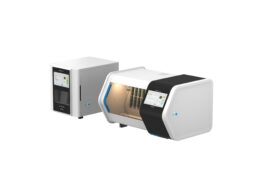





Penumbra, Inc. (NYSE: PEN) said new 90-day data from its randomized STORM-PE trial showed that computer assisted vacuum thrombectomy plus anticoagulation delivered significantly better functional outcomes than anticoagulation alone in patients with acute intermediate-high risk pulmonary embolism. The results were presented at the Society of Interventional Radiology annual meeting and add a longer-term recovery dimension to an evidence package that had already pointed to faster reperfusion and improved right ventricular recovery. For Penumbra, the update matters because pulmonary embolism remains one of the company’s clearest vascular expansion opportunities inside its broader thrombectomy business. It also arrives while Penumbra stock trades near $330, below its 52-week high of $362.41 but still materially above its 52-week low of $221.26, suggesting investors continue to value the company as a premium medtech growth story rather than a plain-vanilla device maker.
Why do Penumbra’s STORM-PE 90-day results matter more than a routine clinical update for pulmonary embolism treatment?
The headline number was not simply that patients improved. It was that they improved in ways that are much harder for physicians, hospitals, and eventually guideline writers to ignore. According to the company, patients treated with Penumbra’s computer assisted vacuum thrombectomy plus anticoagulation walked 479 meters on the six-minute walk test at 90 days versus 368 meters for patients receiving anticoagulation alone, while 97% of the intervention arm reached New York Heart Association Class I compared with 76% in the control group. Safety through 90 days was described as comparable between the groups, with no device-related mortality and no difference in symptomatic pulmonary embolism recurrence. Those are patient-centered recovery measures, and that matters because device companies often win early attention with acute physiological endpoints but struggle to prove the intervention changes what recovery looks like after discharge. Penumbra is now building an argument that its system may influence both the clot and the comeback.
That distinction matters in pulmonary embolism because the real treatment debate has never been only about removing clot. It has been about deciding which patients benefit enough from intervention to justify the procedure. Anticoagulation remains the default standard for many patients, while more aggressive therapy tends to be reserved for severe or deteriorating cases. A randomized data set that begins to show better medium-term functional recovery gives interventionists and hospitals a more practical talking point: not just survival or imaging improvement, but whether a patient is likely to get back to normal life faster. In medtech, that is where commercial traction often becomes stickier. Doctors can debate surrogate markers all day. Patients walking farther at 90 days is a much less slippery story.
How does this pulmonary embolism data fit into Penumbra, Inc.’s broader thrombectomy growth strategy in 2026?
Penumbra is not pitching pulmonary embolism in isolation. The company has spent the last several years expanding its computer assisted vacuum thrombectomy platform across arterial, venous, and pulmonary indications, with Lightning Flash positioned as a core system for venous and pulmonary thrombus. In its 2025 filings and earnings materials, Penumbra highlighted thrombectomy as its largest revenue engine, and full-year 2025 results showed global thrombectomy revenue of $254.7 million in the fourth quarter and $1.4037 billion in total company revenue for the year, up 17.5% from 2024. U.S. thrombectomy revenue for full-year 2025 rose 19.3% to $771.5 million. That tells you Penumbra is already scaling the commercial platform that would benefit if pulmonary embolism intervention expands from a selective use case into a more broadly accepted treatment pathway.
This is also why the STORM-PE update carries more strategic weight than a one-off conference abstract. If Penumbra can keep adding randomized and real-world evidence around pulmonary embolism, it strengthens the case that Lightning Flash is not just another catheter in a crowded toolbox but part of a category-defining treatment approach. The company has already pointed to STRIKE-PE, a larger prospective real-world study of up to 1,500 patients, as the next layer of evidence development. The combination of randomized data and broader real-world follow-up is exactly the sort of sequencing companies pursue when they want to shift practice patterns, support reimbursement conversations, and ultimately widen procedural adoption. In plain English, Penumbra is not merely trying to sell hardware. It is trying to sell a treatment thesis.
What does the STORM-PE update mean for competition in the pulmonary embolism device market?
The pulmonary embolism thrombectomy market is attractive precisely because it sits at the intersection of large patient numbers, procedural urgency, and still-evolving treatment pathways. That usually means a commercial knife fight with a lot of conference slides. Penumbra is hardly alone in seeing the opportunity. Inari Medical helped turn pulmonary embolism thrombectomy into a major medtech category, and Boston Scientific’s January 2026 agreement to acquire Penumbra for roughly $14.5 billion underscored how strategically valuable these vascular platforms have become. Boston Scientific said the deal would expand its presence in large, underserved thrombectomy, embolization, and neurovascular markets, while Penumbra’s own preliminary and full-year disclosures highlighted the strength of its growth profile entering 2026.
That acquisition context changes how investors should read the STORM-PE data. As a standalone company, Penumbra benefits because the data reinforce the premium strategic logic behind its platform. As an acquisition target, the data also help validate why Boston Scientific was willing to pay up. Buyers in medtech do not spend billions just for current revenue. They pay for proof that a platform can open new procedure pools, defend pricing, and support multi-year growth. Every piece of randomized evidence that makes pulmonary embolism intervention look more clinically justifiable also makes the acquisition thesis look less speculative.
The competitive implication is that evidence quality may become the decisive differentiator. Many device markets start with engineering claims and physician preference. Mature ones are won by companies that can show better clinical evidence, better workflow economics, or both. Penumbra now has more ammunition on the evidence side. Competitors will need to answer not only with device design or procedural familiarity, but with their own proof of durable patient benefit.
Could stronger 90-day functional outcomes eventually influence clinical guidelines and hospital adoption decisions?
That is the real prize, and also the part that requires patience. One randomized trial with 100 patients across 22 international sites is important, but it is not the same as final victory. Hospitals and physicians usually want a broader body of evidence before meaningfully changing care pathways, especially in areas where risk stratification is nuanced and patient selection is everything. Guideline committees will also want to see consistency across endpoints, reproducibility in larger cohorts, and a clearer sense of which patients benefit most. Still, STORM-PE gives Penumbra something more persuasive than aspiration theory and procedural enthusiasm. It gives the company comparative data that link intervention to longer-term function.
Hospital administrators may care for a separate reason. Better recovery trajectories can potentially influence readmissions, rehabilitation burden, length of downstream care, and patient satisfaction, even if those benefits are not yet fully quantified in this trial. Medtech adoption is often presented as if physicians decide and everyone else salutes. Reality is messier. Procurement teams, service line leaders, and finance departments want a credible story about why a more intervention-heavy approach changes outcomes enough to justify the spend. Functional recovery data are useful because they speak to both clinical and operational stakeholders.
Why has the market kept valuing Penumbra, Inc. at a premium even after the Boston Scientific deal announcement?
As of April 13, 2026, Penumbra shares were trading around $330.04, with a 5-day performance of roughly negative 0.03% and a 1-month decline of about 1.92%, according to market data sources. That leaves the stock below the $374 per share cash offer value referenced in deal coverage, which is not surprising in a pending transaction that still carries closing timing, regulatory, and deal-structure considerations. Even so, Penumbra remains valued at nearly $9.9 billion by the finance tool and around $12.9 billion on some quote pages, reflecting source timing and methodology differences, but in either case well above where the shares traded at their 52-week low. The broader message is that the market has not treated Penumbra like a business whose best days are behind it. It has treated it like an asset with strategic scarcity.
That premium comes with a catch. High expectations are great until they become allergic to disappointment. Penumbra’s valuation has long implied that investors expect durable double-digit growth, product leadership, and continued evidence expansion in thrombectomy. STORM-PE helps support that narrative, but it does not eliminate the usual execution risks. The company still needs continued commercial uptake, physician education, disciplined product iteration, and clean integration if the Boston Scientific deal closes. Medtech investors have seen this movie before: great technology, strong data, messy rollout. The plot twist is never impossible.
What are the main risks investors and industry watchers should still watch after the STORM-PE update?
The first risk is overextension of the evidence. Functional gains at 90 days are compelling, but they do not automatically mean all intermediate-high risk pulmonary embolism patients should receive intervention. Patient selection remains critical, and the trial was not huge. The second risk is competitive response. A good data release tends to wake up rivals faster than a triple espresso at an earnings roadshow. If competing platforms generate their own strong evidence or benefit from entrenched operator familiarity, the commercial advantage may narrow.
The third risk is that corporate ownership can change the tone of execution. If Boston Scientific completes the acquisition, Penumbra’s technology gains a larger distribution and scale platform, which is positive. But integration always introduces distractions, portfolio prioritization choices, and culture questions. Finally, there is the reimbursement and practice-pattern reality. Even strong clinical data can take time to shift hospital protocols and physician behavior. Investors looking for an overnight market-share land grab may need to bring a sandwich.
What do the key takeaways say about Penumbra, Inc., pulmonary embolism treatment, and the medtech landscape in 2026?
- Penumbra has moved the pulmonary embolism conversation beyond acute clot removal and toward measurable recovery at 90 days.
- STORM-PE strengthens the argument that thrombectomy in intermediate-high risk pulmonary embolism may deliver benefits patients actually feel, not just imaging improvements.
- The new data support Penumbra’s broader computer assisted vacuum thrombectomy platform strategy across venous and pulmonary use cases.
- Stronger evidence can improve physician confidence, hospital adoption discussions, and eventually guideline relevance, though broader validation is still needed.
- Pulmonary embolism remains one of the clearest underpenetrated growth pockets within Penumbra’s vascular portfolio.
- The Boston Scientific acquisition thesis looks better when Penumbra keeps adding randomized evidence in a large procedural market.
- Competitive advantage in pulmonary embolism is likely to depend increasingly on evidence quality, not just device design or sales execution.
- Investors should view the update as strategically important, but not as a signal that adoption barriers or patient-selection questions have disappeared.
- Penumbra’s premium valuation still reflects expectations for sustained growth, platform durability, and clinical leadership in thrombectomy.
- For the wider medtech sector, STORM-PE is another sign that high-growth device categories are being won by companies that can connect intervention to long-term functional outcomes.
Discover more from Business-News-Today.com
Subscribe to get the latest posts sent to your email.