




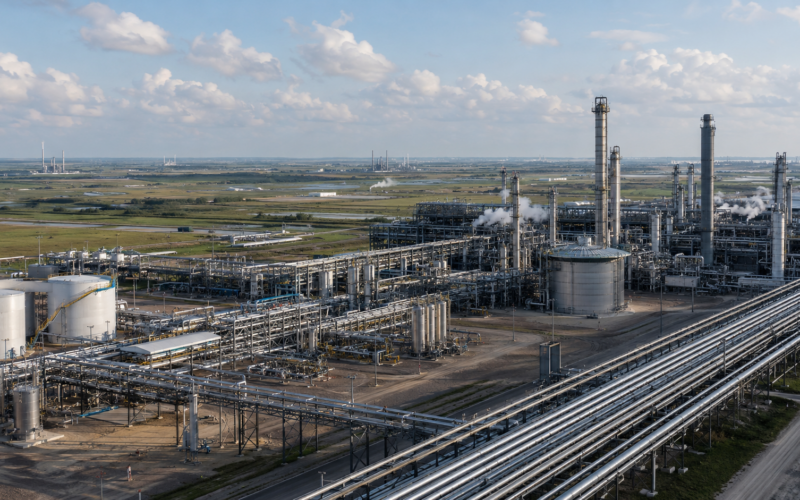
Pembina Pipeline Corporation (TSX: PPL; NYSE: PBA) has sanctioned the Heartland Extraction Plant, a 750 million cubic feet per day straddle facility that will pull natural gas liquids from the Yellowhead Pipeline in Alberta’s Industrial Heartland, alongside a reworked long-term ethane supply agreement with Dow. The roughly C$570 million project carries an expected EBITDA build multiple of 5 to 7 times and an in-service daFte in late 2029, and it lifts Pembina Pipeline’s total ethane commitment to Dow to 57,500 barrels per day, a 15 percent increase over the original deal. For Calgary-based Pembina Pipeline, the sanction converts a previously dormant set of extraction rights into a contracted, fee-and-margin cash flow stream while supporting its stated target of 5 to 7 percent fee-based adjusted EBITDA per share growth through 2030. The announcement lands with the stock trading near its 52-week high on both the Toronto Stock Exchange and the New York Stock Exchange, a market backdrop that frames how investors are likely to read a measured, capital-light growth signal rather than a transformational bet.
What does the Heartland Extraction Plant sanction actually change for Pembina Pipeline’s NGL strategy in Alberta?
The most important shift is that Pembina Pipeline is monetizing a right it already held rather than building speculative capacity into an uncertain demand environment. The Heartland Extraction Plant draws on Pembina Pipeline’s liquids extraction rights on the Yellowhead Pipeline, which means the company is capturing value from gas volumes that were always going to move through the system. That distinction matters because it lowers the demand risk that usually accompanies a new straddle plant. The volumes are tied to existing pipeline throughput and a contracted offtake partner, not to a forecast of future drilling activity that may or may not materialize.
The project is also an explicit evolution of the previously disclosed Yellowhead Extraction Plant. Pembina Pipeline has upsized the concept to 750 million cubic feet per day and built in incremental capacity designed to absorb future opportunities in the Alberta Industrial Heartland without a second round of major capital outlay. This is the kind of design choice that reads well to a capital allocation committee. By oversizing on a capital-efficient basis now, Pembina Pipeline avoids the punitive economics of brownfield expansions later, where the marginal cost of squeezing additional capacity onto a constrained site can run well above greenfield rates.
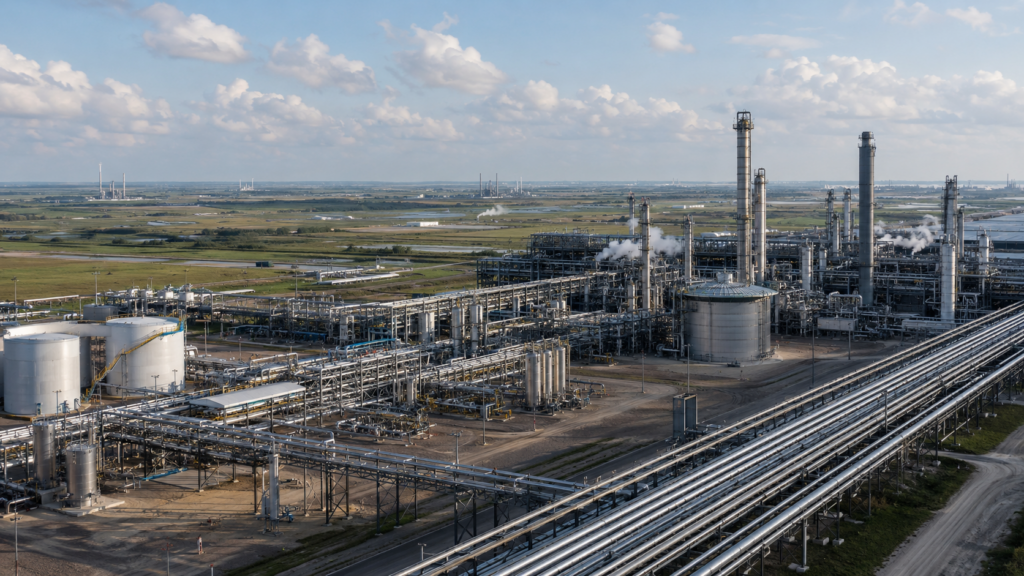
The second-order consequence is competitive positioning in the Heartland petrochemical and NGL cluster. The Alberta Industrial Heartland is one of North America’s densest concentrations of gas processing, fractionation, and petrochemical capacity, and control of extraction infrastructure at scale is a structural advantage. By anchoring a new straddle plant adjacent to its existing Redwater Complex and to Dow’s Fort Saskatchewan facility, Pembina Pipeline reinforces an integrated position that is difficult for competitors to replicate without comparable pipeline rights and downstream fractionation.
Why does the restructured Dow ethane supply agreement strengthen Pembina Pipeline’s contracted cash flow profile?
The Dow relationship is the commercial spine of this announcement, and the restructuring is more consequential than the headline capacity numbers suggest. Pembina Pipeline and Dow have amended their earlier ethane supply agreement so that Pembina Pipeline now supplies 35,000 barrels per day from its existing portfolio, sourced through its deep cut gas processing plants, its ethane-plus transportation franchise, and its fractionation capabilities. Layered on top is the new Heartland Extraction Plant commitment, which scales to 22,500 barrels per day by the end of 2030. The combined 57,500 barrels per day represents a 15 percent uplift on the original 50,000 barrel per day arrangement.
What makes this a genuine improvement rather than a simple volume increase is the alignment of timing and risk. The original commitment was structured around an earlier version of Dow’s Path2Zero project schedule. By resetting volumes and start dates to match Dow’s revised timeline, Pembina Pipeline reduces the risk of stranded capacity or contractual mismatch, where it might have been obligated to deliver volumes ahead of a customer ready to take them. For a midstream operator, the worst outcome is committed capacity that sits idle because a downstream project slipped, so synchronizing the supply ramp to the actual demand ramp protects the economics on both sides.
There is also a meaningful margin distinction in how the cash flows break down. The Heartland Extraction Plant EBITDA is described as a blend of fixed-fee revenue and frac spread exposure, with Pembina Pipeline retaining the propane-plus production and benefiting from downstream fractionation and marketing of up to 9,500 barrels per day. That structure gives the project a contracted floor through the fixed-fee component while preserving upside through commodity-linked frac spread economics. It is a deliberately balanced exposure, and it aligns with the company’s recent results, where more favorable NGL spreads helped first quarter adjusted EBITDA come in ahead of consensus and prompted an upward revision to full-year guidance. The risk, of course, runs in both directions. Frac spreads can compress as quickly as they widen, and the propane-plus marketing margin is the most volatile element of the package.
How does the project fit Pembina Pipeline’s capital discipline and its 2030 EBITDA per share growth target?
The financial framing here is conservative by design. At approximately C$570 million, the Heartland Extraction Plant is a substantial but not balance-sheet-defining commitment for a company carrying a midstream asset base of this scale. The 5 to 7 times EBITDA build multiple, calculated on long-term average historical pricing, sits comfortably within the range that midstream investors expect from contracted infrastructure. A build multiple in that band implies a return profile that should be accretive to the company’s overall cost of capital while avoiding the aggressive assumptions that have burned developers chasing higher headline returns on commodity-exposed projects.
Sanctioning the project is also a concrete data point in support of Pembina Pipeline’s recently announced target of 5 to 7 percent fee-based adjusted EBITDA per share growth through 2030. Growth targets of that kind require a visible pipeline of sanctioned projects to be credible, and the market tends to discount aspirational guidance that is not backed by committed capital. By converting extraction rights into a sanctioned, contracted facility with a defined in-service date, Pembina Pipeline gives investors a tangible building block rather than a slide-deck ambition. The execution risk is real but contained. A late 2029 in-service date leaves roughly three and a half years of construction and commissioning runway, and straddle plant construction in an established corridor like the Heartland carries lower technical and permitting risk than frontier infrastructure.
The broader signal concerns capital allocation philosophy. Pembina Pipeline is choosing incremental, customer-anchored growth over large acquisitions or speculative greenfield expansion, a posture consistent with a company already absorbing significant infrastructure commitments, including its Cedar LNG joint venture and the recent reshaping of ownership in Pembina Gas Infrastructure. For a midstream business funding a dividend yield in the mid-four percent range against a high payout ratio, the ability to grow EBITDA per share without straining the balance sheet or the distribution is precisely what income-oriented holders want to see.
What does the market reaction and analyst positioning suggest about how investors are reading the sanction?
The announcement arrives with Pembina Pipeline shares trading near the top of their 52-week range. On the Toronto Stock Exchange, PPL has been trading in the low-to-mid C$60s, against a 52-week span that runs from roughly C$48 to the mid-C$60s, while the NYSE-listed PBA has been changing hands near US$46. Over the past several weeks, multiple sell-side firms have raised price targets, with TD Securities and Scotiabank moving to C$65 and RBC Capital lifting to C$68, even as the consensus rating clusters around a mix of buy and hold calls. That pattern is typical for a stable, dividend-heavy midstream name. The stock is valued for reliability and yield rather than for explosive growth, and the analyst community is rewarding execution and guidance upgrades rather than swinging hard on any single project.
In that context, the Heartland Extraction Plant sanction is unlikely to be a dramatic share-price catalyst on its own, and it should not be read as one. The more important market function is confirmatory. The sanction validates the credibility of the 2030 growth target and demonstrates that Pembina Pipeline can source accretive, contracted projects from within its existing footprint rather than overpaying for external growth. For a stock already trading near its highs after a strong first quarter and a guidance raise, that kind of confirmation supports the current valuation more than it re-rates it.
The risk worth flagging is the gap between the company’s robust operating momentum and the cautious tone embedded in analyst price targets, several of which imply limited upside or modest downside from current levels. That tension reflects a legitimate debate about how much of Pembina Pipeline’s recent NGL-spread-driven outperformance is structural versus cyclical. The Heartland Extraction Plant, with its blend of fixed-fee and frac spread economics, sits squarely in the middle of that debate. It adds contracted cash flow that should comfort the cautious camp while preserving commodity upside that appeals to the bulls.
Key takeaways on what the Heartland Extraction Plant sanction means for Pembina Pipeline, its competitors, and the NGL sector
- Pembina Pipeline is monetizing existing Yellowhead Pipeline extraction rights rather than taking speculative demand risk, which materially lowers the project’s risk profile relative to a conventional greenfield straddle plant.
- The upsized 750 million cubic feet per day design embeds future expansion capacity on a capital-efficient basis, a deliberate move to avoid expensive brownfield expansions and to entrench a structural position in the Alberta Industrial Heartland.
- The restructured Dow agreement matters more for timing alignment than for raw volume, syncing Pembina Pipeline’s supply ramp to Dow’s revised Path2Zero schedule and reducing stranded-capacity risk on both sides.
- The combined 57,500 barrels per day ethane commitment to Dow, a 15 percent uplift, deepens a strategic customer relationship that is hard for competitors to dislodge given the integrated pipeline, processing, and fractionation footprint involved.
- The blended fixed-fee and frac spread EBITDA structure gives the project a contracted floor with commodity upside, but it also imports frac spread volatility that can cut against the company in weaker NGL pricing environments.
- At roughly C$570 million and a 5 to 7 times build multiple, the project is accretive and balance-sheet-friendly, supporting the 5 to 7 percent fee-based adjusted EBITDA per share growth target to 2030 without straining the dividend.
- The sanction functions as confirmation of guidance credibility rather than a standalone catalyst, with the stock already near 52-week highs and analysts having recently lifted targets toward C$65 to C$68.
- The central investor debate is whether recent NGL-spread outperformance is structural or cyclical, and this project’s hybrid economics speak to both sides of that argument without resolving it.
- For midstream peers, the move underscores that the most defensible growth in the current cycle comes from extracting value out of existing rights and corridors rather than from acquisition-led expansion.
- Execution risk is contained by a multi-year construction runway in an established corridor, leaving customer project timing and frac spread direction as the principal variables to watch through to the late 2029 in-service date.
Discover more from Business-News-Today.com
Subscribe to get the latest posts sent to your email.


