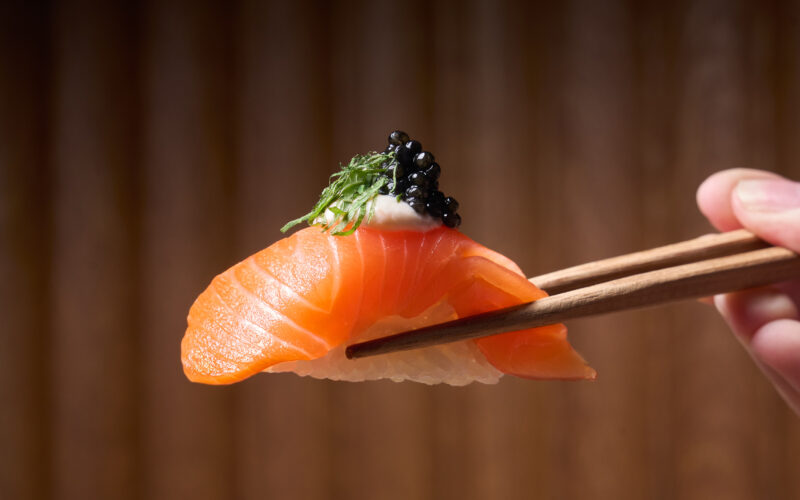
OMAKAI Sushi has unveiled a new expansion phase centred on its first Chicago location alongside planned openings in Orlando and Miami’s Brickell district, marking one of the clearest attempts yet to turn the Miami-born restaurant business into a broader regional and potentially national hospitality brand. The company currently operates its core OMAKAI Sushi restaurants in Wynwood, Aventura, Coconut Grove and Doral, while its separate OMAKAI hand roll bar concept has expanded the brand into a more compact, walk-in format. Chicago is strategically the most significant part of the latest announcement because it takes OMAKAI outside Florida and into a large, highly competitive restaurant market where the brand cannot rely on its established South Florida following. Orlando adds another important test within Florida, while the new Brickell site strengthens OMAKAI’s position in a Miami district the company already knows well.
The expansion represents a notable change in scale for a business that began in Wynwood in 2019. OMAKAI was founded by brothers Diego Quijada and Pedro Quijada with Nicolas Sayavedra and chef Aaron Pate, initially positioning itself around an approachable version of the traditional omakase experience rather than the high-priced tasting menus associated with many premium sushi restaurants. Its current menu illustrates that positioning, with structured OMA offerings beginning around the mid-$30 range and a more elaborate OMAKAI Experience priced at $75, alongside à la carte nigiri, sashimi and hand rolls. The commercial challenge is now whether a concept built around accessible pricing, carefully sourced seafood and a recognisable service format can maintain those characteristics as the restaurant network becomes geographically more complex.
Why does OMAKAI Sushi’s Chicago debut matter more than simply adding another restaurant?
Chicago changes the strategic profile of the expansion because it is the first announced move that clearly takes OMAKAI beyond its Florida operating base. Opening another restaurant in Miami allows management to use established suppliers, existing brand recognition, local management infrastructure and consumer familiarity, whereas Chicago introduces new labour, logistics, real-estate, seafood-sourcing and customer-acquisition requirements. A successful opening would provide evidence that OMAKAI’s appeal comes from the underlying concept rather than primarily from its position within Miami’s dining ecosystem.
The location also raises the competitive bar. Chicago has a mature restaurant industry spanning high-end Japanese dining, traditional sushi, omakase counters and more casual hand-roll concepts, meaning OMAKAI will need to establish differentiation without depending solely on the novelty that supported some of its earlier South Florida growth. The company’s strongest potential advantage is its position between casual sushi and expensive tasting-menu omakase, offering customers a structured chef-led experience while retaining prices that permit repeat visits rather than reserving the format for special occasions.
That positioning has been central to OMAKAI since its launch. Its menu currently includes multiple fixed-price OMA options together with individual nigiri, sashimi and hand-roll selections, allowing customers to move between curated and à la carte dining within the same brand. The model potentially gives OMAKAI a larger addressable market than a traditional high-ticket omakase counter, but geographical expansion will test whether management can preserve quality and service while increasing restaurant count.
How does the Orlando opening extend OMAKAI beyond its existing South Florida operating cluster?
Orlando represents a different type of expansion risk because it remains within Florida while moving the business outside its established South Florida cluster. Corporate records show an active entity called OMAKAI HRB Mills LLC associated with 845 North Mills Avenue in Orlando, with Diego Quijada and Pedro Quijada listed as managers. The entity name indicates a connection to OMAKAI’s hand roll bar format, although the company’s recently crawled public location pages had not yet added Orlando to their live restaurant directory.
That format could be especially useful for geographic expansion because OMAKAI hand roll bar is operationally distinct from the company’s broader sushi restaurants. OMAKAI describes the hand roll bar as an interactive, walk-in concept in which diners sit at the counter and watch chefs prepare their food, while the main OMAKAI Sushi business offers a wider omakase-style experience and accepts reservations. A more focused menu and smaller physical footprint can potentially reduce the complexity of entering a new city, although seafood sourcing, chef training and service consistency remain essential to the brand proposition.
The Orlando move can therefore serve as an intermediate step between Miami-area clustering and full interstate expansion. Management can test how efficiently its operating systems travel several hundred kilometres away from its existing base while remaining under the same state regulatory environment. If Orlando develops without requiring a disproportionate increase in management overhead, it could strengthen the case for replicating the concept across other high-density Sun Belt markets.
Why is OMAKAI opening another Brickell location after already operating in the district?
The Brickell component of the expansion is less about geographic diversification and more about strengthening OMAKAI’s exposure to one of Miami’s densest combinations of residents, office workers and hospitality spending. Florida East Coast Realty disclosed in June that OMAKAI had signed a lease for a 2,248-square-foot ground-floor restaurant space at The Club at Brickell Bay, located at 1200 Brickell Bay Drive. The site is expected to open in early 2027 and sits within a 643-unit condominium tower close to Brickell City Centre, Mary Brickell Village and public transport connections.
OMAKAI’s hand roll bar website now lists the 1200 Brickell Bay Drive location as coming in early 2027. That is notable because the company originally launched its first hand roll bar at 186 Southeast 12th Terrace in Brickell in August 2024, using a compact 996-square-foot space with 27 counter seats. The new site is more than twice that size based on disclosed square footage, suggesting the Brickell strategy is evolving from an experimental compact format into a larger restaurant footprint.
The additional space can create opportunities for higher throughput, greater seating capacity and potentially stronger peak-period economics, but bigger units also increase fixed occupancy and staffing exposure. Restaurant expansion becomes financially attractive only when additional capacity generates sufficient customer traffic to absorb rent, labour and food costs. OMAKAI has not publicly disclosed restaurant-level revenue or margins, so the economics of the enlarged Brickell footprint cannot yet be independently assessed.
How quickly has OMAKAI expanded since opening its first Wynwood restaurant in 2019?
OMAKAI’s growth has accelerated progressively rather than through a single large rollout. The company launched its original Wynwood restaurant in 2019 and subsequently developed an Aventura operation, followed by a Coconut Grove restaurant that opened in May 2023. The Aventura business evolved from a delivery and takeaway operation into a 74-seat full-service restaurant in September 2024, while Doral later became the fourth location currently listed under the main OMAKAI Sushi concept.
Management also created OMAKAI hand roll bar as a second format, initially opening in Brickell in August 2024 before adding Downtown Miami. The two formats give the company greater flexibility when assessing new sites because management does not necessarily need to install the same restaurant configuration in every market. A neighbourhood suited to full-service omakase may support OMAKAI Sushi, while dense pedestrian or office districts may be better matched to a faster, counter-focused hand roll operation.
That portfolio approach resembles strategies used by larger restaurant groups that create multiple formats around common sourcing, culinary expertise and brand recognition. OMAKAI is still far smaller than national restaurant chains, however, and its ability to exploit those efficiencies remains unproven. Growing from a handful of closely clustered locations into several cities requires management systems that can operate without founders being present at every restaurant.
Can OMAKAI maintain accessible omakase pricing while seafood, labour and property costs vary by city?
Pricing will become one of the more difficult variables as OMAKAI expands. The company’s value proposition depends partly on offering a chef-led sushi experience without requiring the spending associated with many traditional omakase restaurants. Its current menu lists an OMA lunch configuration at $34, OMA Deluxe at $42 and a nine-course OMAKAI Experience at $75, while dinner versions of some packages are priced higher.
Replicating that equation across cities will require disciplined procurement because premium seafood is a significant input and supply chains can differ materially between Miami, Orlando and Chicago. OMAKAI must also accommodate different wage levels, rents, occupancy costs and customer expectations without allowing price increases to weaken the accessibility that differentiates its concept. Menu standardisation can create purchasing efficiencies, but excessive standardisation could make a chef-led restaurant experience feel formulaic.
The company has an advantage in having spent several years developing a defined menu architecture rather than expanding immediately after launch. Customers encounter a consistent combination of curated OMA menus, specialty nigiri, hand rolls and à la carte items across the core concept, while the hand roll bar strips the offer down further. That maturity gives management a stronger operating template for expansion, but Chicago will provide a much more demanding test of whether the economics remain attractive outside the company’s home market.
What will show whether OMAKAI is becoming a scalable restaurant brand rather than a successful Miami concept?
Restaurant count alone will not determine whether this expansion works. The more meaningful indicators will be whether Orlando and Chicago open on schedule, how quickly the new restaurants develop stable customer traffic and whether OMAKAI can add locations without compromising food quality or creating excessive management complexity. The company’s progression from Wynwood to Coconut Grove, Aventura and Doral shows that it has already reproduced the main format across several neighbourhoods, while the hand roll concept demonstrates an ability to operate a second restaurant model.
Chicago will nevertheless be the clearest proof point because customer familiarity with the Miami brand will be materially lower. Strong initial demand could demonstrate that OMAKAI’s combination of accessible omakase, premium seafood and flexible menu formats has broader appeal, while slower adoption would suggest that additional marketing or local adaptation is necessary before further interstate expansion. Neither outcome would be unusual for an emerging restaurant company entering its first distant market.
OMAKAI’s decision to expand simultaneously in Chicago, Orlando and Brickell therefore represents more than another round of restaurant openings. It moves the company from a largely Miami-centred growth story toward a model in which operating discipline, supply-chain consistency and brand portability become increasingly important. The Brickell opening can deepen an established market, Orlando can test regional replication and Chicago can test national portability, giving management three very different forms of expansion risk within the same programme.
If those openings develop successfully, the company will have evidence that its two-format strategy can support growth across distinct urban markets. The next measurable proof will come from completed openings and sustained customer demand rather than additional announced locations, because a restaurant brand becomes scalable only when new units can reproduce the economics and customer experience of the original business without depending disproportionately on its founders or home-market reputation.
What are the key takeaways from OMAKAI Sushi’s Chicago, Orlando and Brickell expansion?
OMAKAI Sushi is moving beyond its established South Florida footprint with a Chicago debut, an Orlando expansion and another Brickell location. Chicago represents the largest strategic test because it takes the brand outside Florida, while Orlando offers a lower-distance test of whether the company’s operating model can travel beyond South Florida. The new Brickell restaurant at The Club at Brickell Bay is expected to occupy approximately 2,248 square feet and open in early 2027, significantly larger than the company’s original compact Brickell hand roll bar. OMAKAI now operates two related restaurant formats, giving management flexibility in matching concepts to different neighbourhoods and real-estate profiles. The next meaningful evidence will be completed openings, customer retention, consistent food quality and proof that operating complexity does not rise faster than restaurant count.
Discover more from Business-News-Today.com
Subscribe to get the latest posts sent to your email.