


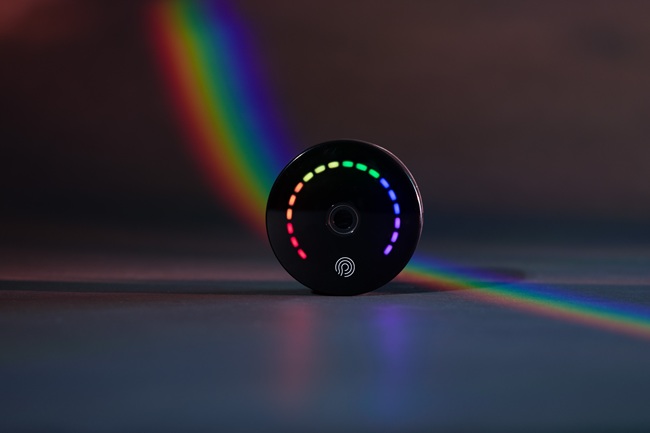
Nu Skin Enterprises Inc. (NYSE: NUS) has launched Prysm iO in the United States, giving consumers access to a handheld wellness device that measures skin carotenoid levels and produces a personalized nutrition score in about 15 seconds. The move is strategically important because it pushes Nu Skin Enterprises beyond conventional supplement and beauty selling into a more data-led consumer wellness model. That shift matters at a time when Nu Skin Enterprises is still trying to stabilize revenue, defend relevance, and convince investors that its transformation story is more than presentation-deck optimism in a lab coat. With NUS trading around $7.42 on April 3, 2026, and still sitting far below its 52-week high of $14.62, the market is clearly not handing out free applause.
What changed is straightforward enough. Prysm iO is now generally available to U.S. consumers after an earlier phased rollout to brand representatives, and Nu Skin Enterprises says broader market launches will follow in coming months. The device uses a fingertip scan, AI-based interpretation, and the company’s carotenoid research base to deliver a “Nutrition Health Score,” which is then meant to help users evaluate diet and supplement habits over time. In plain business terms, Nu Skin Enterprises is not just selling a device. It is trying to create a measurable feedback loop that makes the company’s broader supplement ecosystem feel more personalized, more evidence-based, and more repeatable.
Why does the Prysm iO launch matter for Nu Skin Enterprises’ 2026 growth strategy and brand repositioning?
The real significance of Prysm iO is that it changes the kind of company Nu Skin Enterprises wants investors and consumers to think they are looking at. Direct selling businesses have long struggled with a credibility problem in modern consumer markets because product claims can sound broad, repetitive, and difficult to verify in day-to-day life. Prysm iO gives Nu Skin Enterprises a tool that appears more measurable and behavior-based. It lets the company say, in effect, “do not just trust the supplement story, scan and watch what happens.” That is a more contemporary pitch, and it aligns better with a market increasingly shaped by dashboards, scores, sensors, and self-quantification.
This is also an attempt to move the conversation away from simple product selling and toward ecosystem monetization. The uploaded release says Prysm iO integrates with several Nu Skin-certified supplements, which means the company is clearly designing the device as an anchor product inside a broader wellness stack. That matters because hardware can increase engagement, but only if it improves attachment to recurring products and not just initial curiosity. If consumers use Prysm iO once, nod thoughtfully, and then place it next to the forgotten massage gun and the abandoned smart water bottle, the strategy weakens quickly. If they scan repeatedly and adjust supplement purchases around the score, the device becomes commercially meaningful.
Nu Skin Enterprises has hinted for months that Prysm iO would be an important 2026 initiative. The company flagged the platform during its January ICR presentation and described a limited sales leader preview in late 2025 before a broader 2026 consumer launch. That means this was not a spontaneous product drop. It was part of a longer effort to define Nu Skin Enterprises as an “intelligent” beauty and wellness company, which is management’s way of saying the group wants to look less like a legacy seller of bottles and jars and more like a platform business with data-driven engagement.
How credible is Nu Skin Enterprises’ science case for Prysm iO in the consumer wellness market?
The science angle is important here because the product’s commercial pitch depends on perceived legitimacy. Nu Skin Enterprises says Prysm iO is built on more than 20 years of carotenoid research, uses Spectral Rai technology, and draws on a database of more than 20 million antioxidant scans. Those claims position the platform as something more substantial than a slick app attached to a shiny puck. The company is trying to show that Prysm iO belongs in the consumer-health-adjacent zone where convenience and some degree of scientific grounding can coexist without crossing into a fully regulated medical device posture.
The supporting validation data helps, at least to a point. The company cited a study led by dermatologist Zoe Draelos involving 97 participants, with reported correlations between Prysm iO skin measurements and blood serum carotenoid levels in the R² 0.75 to 0.77 range. That does not turn a fingertip scan into a clinical diagnostic, and Nu Skin Enterprises would be wise not to pretend otherwise. But it does offer enough technical substance to make the product more than pure wellness theater. In a category where many companies promise “insight” while essentially selling vibes with Bluetooth, that matters.
The bigger issue is not whether the measurement can correlate. It is whether the measurement becomes indispensable. Consumer health technology often wins early attention by showing a novel signal, then loses momentum when users realize the signal is interesting but not necessarily life-changing. That is the mountain Prysm iO must climb. Nu Skin Enterprises needs users to feel that repeated scans guide decisions in a way that is practical, understandable, and worth paying for. Otherwise, the device risks becoming another example of the wellness industry’s favorite pastime, which is turning curiosity into a temporary subscription to self-awareness.
What do current NYSE: NUS stock performance and market sentiment suggest about investor confidence?
The stock tells a more cautious story than the product launch copy. Yahoo Finance showed NUS with a 52-week range of $5.32 to $14.62 and a recent price around $7.42, while MarketWatch showed the stock up 1.38% over five days but down 3.92% over one month. In other words, there is no obvious sign that the market has decided Prysm iO changes the investment case overnight. Investors appear willing to acknowledge the product as strategically interesting while still waiting for hard proof that it can translate into better retention, higher revenue quality, or a less fragile growth profile.
That restraint makes sense given the broader financial backdrop. Nu Skin Enterprises reported fourth-quarter and full-year 2025 results within guidance in February and said it expected a return to revenue growth by year-end 2026, but its guidance still reflected a business under pressure. The company guided first-quarter 2026 revenue to $320 million to $340 million and full-year 2026 revenue to $1.35 billion to $1.50 billion. That is not the language of a business already back in full stride. It is the language of a company trying to prove it can stop shrinking first, then grow later. Prysm iO therefore matters because it potentially strengthens the bridge to that hoped-for stabilization.
From a sentiment perspective, the launch is more likely to be read as a strategic signal than as an immediate earnings driver. Investors generally give some credit when a challenged company introduces a product that fits a real market trend and appears internally coherent. But they usually wait to rerate the stock until evidence shows up in the numbers. For Nu Skin Enterprises, that evidence would likely mean higher device adoption, better supplement pull-through, more stable repeat behavior, and signs that the company’s affiliate-driven model can still generate durable consumer demand in a more skeptical era. Until then, Prysm iO is a promising lever, not a proven rescue act.
Could Prysm iO help Nu Skin Enterprises compete more effectively in digital wellness and personalized nutrition?
Prysm iO gives Nu Skin Enterprises a stronger narrative in the broader personalized wellness race because it adds measurability to an industry that often leans too hard on aspiration. Consumers increasingly expect wellness platforms to do something observable, not just say something uplifting. A fast skin scan with a repeatable score is easier to demonstrate, easier to talk about, and easier to build habit around than abstract claims about supporting general wellness. That should help Nu Skin Enterprises compete for attention in a market where apps, wearables, at-home tests, and supplement brands are all trying to own the same consumer desire for personalized health.
At the same time, the launch raises the bar for execution. Once a company moves into quantified wellness, consumers and investors begin to expect cleaner evidence, stronger user experience, and a more consistent product journey. That means Nu Skin Enterprises will need to get several things right at once: device reliability, training quality, interpretation clarity, and ongoing engagement. The company also has to avoid overcomplicating the experience. Personalized wellness products often fail not because the science is weak but because the consumer journey becomes homework with a charging cable.
Pricing also matters. At $375 in the U.S., Prysm iO is neither a casual add-on nor an elite clinical purchase. It sits in the premium-consumer zone where buyers need to believe they are getting ongoing value, not just a moment of novelty. That makes the product’s long-term fate closely tied to whether users perceive meaningful changes in their score over time and whether those changes influence supplement behavior. Nu Skin Enterprises is effectively betting that measurable reinforcement will drive better consumer stickiness than conventional product claims alone. That is a rational bet. It is not a guaranteed one.
What execution risks could limit the commercial impact of Nu Skin Enterprises’ Prysm iO rollout?
The first risk is behavioral. Consumers may appreciate fast, noninvasive wellness feedback, but appreciation does not always translate into routine usage. Many products in this category produce a strong first impression and then fade because the insight does not feel concrete enough to sustain weekly or monthly engagement. Nu Skin Enterprises needs Prysm iO to avoid that trap by turning scores into decisions that feel useful rather than ceremonial. Otherwise, it becomes an elegant demo in search of a durable habit.
The second risk is narrative inflation. Nu Skin Enterprises is sensibly presenting Prysm iO as a science-backed wellness tool, but it will need discipline in how that message travels through sales and marketing channels. If end-market messaging starts sounding more clinical than the evidence supports, credibility can erode quickly. The company does not need Prysm iO to behave like a medical device. It needs it to behave like a trustworthy consumer wellness platform that delivers useful, repeatable feedback without overselling what the score means.
The third risk is organizational. Nu Skin Enterprises is not simply launching a product. It is trying to align hardware, supplements, AI interpretation, and channel execution inside a company already dealing with broader revenue pressure. That is harder than announcing an “ecosystem” and hoping the word does the heavy lifting. If international expansion follows quickly, complexity rises further across logistics, training, support, and localization. Hardware-led wellness strategies can create a moat. They can also create a headache with batteries.
What does the Prysm iO launch signal about the future direction of the consumer wellness industry?
At a broader industry level, Prysm iO reflects a shift toward low-friction, noninvasive measurement tools that occupy the middle ground between lifestyle and medical care. Consumers want more personalization, but they do not necessarily want lab visits, long questionnaires, or high-friction onboarding. Companies want recurring revenue, but they often prefer to avoid the regulatory and reimbursement complexity that comes with formal diagnostics. That middle territory is becoming one of the most commercially attractive areas in consumer wellness, and Nu Skin Enterprises is trying to claim a place in it.
For Nu Skin Enterprises specifically, Prysm iO is best viewed as a credibility test for its next chapter. If the platform gains traction, it could improve product attachment, sharpen brand differentiation, and give management a more convincing story about how the company evolves beyond legacy direct-selling playbooks. If it disappoints, investors may conclude that the company has a more fundamental demand problem that no amount of intelligent-wellness language can fully mask. Either way, Prysm iO is not just a device launch. It is a referendum on whether Nu Skin Enterprises can turn measurement into momentum.
What are the key takeaways on what Nu Skin Enterprises’ Prysm iO launch means for the company, competitors, and the industry?
- Prysm iO is a strategic platform product, not just a gadget launch, because it is designed to pull consumers deeper into Nu Skin Enterprises’ supplement ecosystem.
- Nu Skin Enterprises is trying to reposition itself from a legacy direct-selling model toward a more measurable, data-led wellness proposition.
- The launch aligns with a broader consumer-health trend favoring fast, noninvasive, at-home insight tools over vague wellness claims.
- Scientific validation gives Prysm iO more credibility than many adjacent wellness products, but correlation alone will not guarantee durable demand.
- The most important commercial question is repeat usage, because one-time novelty does not create the recurring revenue logic investors want to see.
- Current stock performance suggests the market sees the launch as strategically interesting but not yet strong enough to change the NYSE: NUS investment case.
- The $375 price point is workable only if users perceive ongoing value and connect the score to real behavior changes and product choices.
- Execution risk remains meaningful across training, consumer understanding, messaging discipline, and international rollout complexity.
- If Prysm iO succeeds, it could improve retention, product attachment, and brand modernization for Nu Skin Enterprises.
- If Prysm iO underwhelms, investors may view it as another clever wellness concept that failed to fix a tougher core growth problem.
Discover more from Business-News-Today.com
Subscribe to get the latest posts sent to your email.