


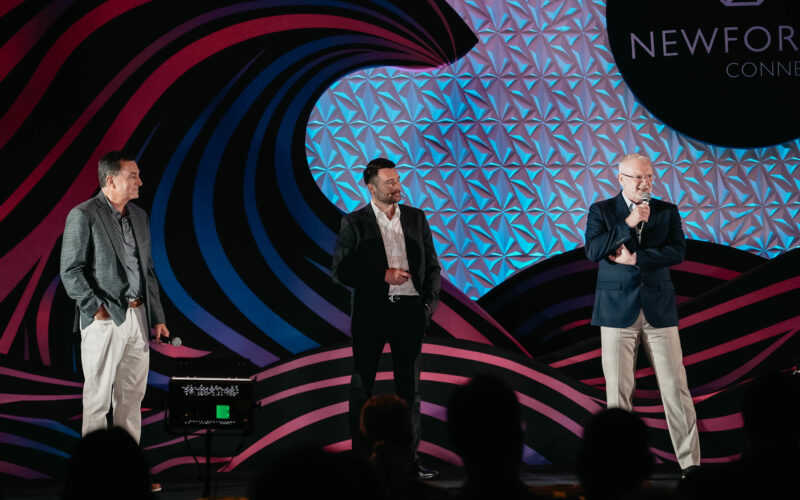
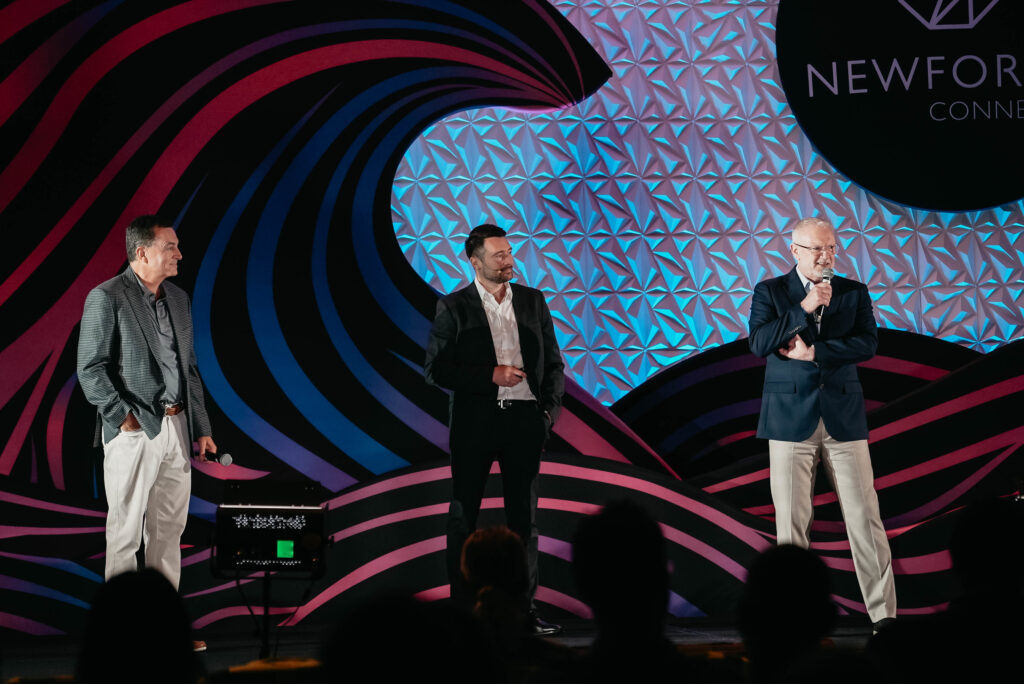
Newforma has announced a new wave of AI-powered product capabilities and ecosystem integrations at Newforma World 2026, positioning its project information management platform around intelligent automation, open connectivity and hybrid modernization for architecture, engineering, construction and owner organizations (AECO firms). The company introduced Vojo, an AI assistant designed to help users search project information, analyze documents and models, and support workflow tasks such as submittal review. The announcement matters because AECO firms are under pressure to modernize fragmented project delivery systems without losing control of records, compliance workflows and long-running project data. Newforma’s strategy is therefore not just another software feature update, but a signal that AI adoption in construction technology may increasingly depend on whether vendors can improve visibility without forcing customers into disruptive platform migrations.
Why is Newforma using AI to target project information friction across the AECO sector?
The strategic logic behind Newforma’s AI roadmap starts with a familiar pain point in architecture, engineering and construction: project teams generate enormous volumes of emails, models, submittals, RFIs, documents and compliance records, but much of that information remains scattered across disconnected tools. That fragmentation is not merely inconvenient. It can create risk when teams cannot quickly prove what was communicated, when a decision was made, or which version of a document governed a project milestone.
Vojo appears designed to address that problem by making project information more searchable, contextual and actionable. Newforma described initial capabilities around natural language search across project data, AI-driven analysis across BIM models and documents, and AI-assisted submittal review workflows. In practical terms, the value proposition is not AI novelty. It is time recovery, defensible recordkeeping and faster access to project intelligence that already exists inside customer environments but is often hard to retrieve.
That distinction matters in the AECO software market because many firms are not looking for abstract AI demonstrations. They want tools that reduce administrative drag without weakening project governance. Newforma’s focus on everyday workflows such as Smart Email Filing suggests the company understands that adoption will depend less on dramatic AI branding and more on whether the technology removes repetitive work from architects, engineers, project managers and owners.
Smart Email Filing is especially important because email remains one of the most persistent systems of record in construction and design workflows. If AI can automatically associate emails with projects and recommend filing locations for RFIs, submittals and action items, the benefit is not just inbox hygiene. It is a more complete project record, which can become valuable in claims management, handovers, audits and post-project reviews.
How does Vojo change Newforma’s position in AI-driven construction technology?
Vojo gives Newforma a clearer AI identity at a time when construction technology vendors are racing to attach intelligence layers to document management, collaboration and project control systems. The assistant’s agent-driven framework suggests Newforma is trying to move beyond basic search and retrieval toward task execution inside project workflows. That is where the competitive stakes become more interesting.
The AECO software market has no shortage of platforms promising collaboration, cloud access and document control. What is harder to deliver is intelligence that works across fragmented historical records, live project data and mixed software environments. Newforma’s long presence in project information management gives it a potentially useful data foundation, particularly among firms that have accumulated years of structured and semi-structured project records inside Newforma Project Center and related systems.
However, that same advantage comes with execution pressure. AI quality depends heavily on data structure, permissioning, context and user trust. If Vojo surfaces incomplete information, misunderstands project context or creates uncertainty around records, adoption could stall quickly. In an industry where contractual clarity matters, a wrong answer is not just an annoyance. It can create real operational and legal exposure.
Newforma’s decision to begin with targeted use cases such as project search, model and document analysis, submittal review and email filing is therefore sensible. These are areas where AI can assist without necessarily taking over high-risk decision-making. The strategy appears to be about augmentation first, automation second. That is likely the more credible route for AECO customers who are interested in AI but cautious about delegating judgment to software.
Why does Newforma’s AWS collaboration matter for secure and scalable AI adoption?
Newforma’s collaboration with Amazon Web Services adds an infrastructure layer to the announcement and helps explain how the company intends to scale AI functionality across complex customer environments. For AECO firms, cloud infrastructure is not simply a hosting question. It affects data security, system reliability, compliance posture and the ability to run advanced AI workloads across large document sets and model files.
The AWS relationship gives Newforma a clearer answer to the infrastructure credibility question. AI assistants in enterprise and project environments require secure compute, scalable storage and modern data architecture. Without those foundations, even well-designed product features can struggle when deployed across large firms, multi-year projects and geographically distributed teams.
There is also a strategic signaling effect. By aligning its AI roadmap with AWS infrastructure, Newforma is positioning itself within the broader enterprise cloud ecosystem rather than attempting to build every layer independently. That can reduce execution risk and potentially improve customer confidence among organizations already using Amazon Web Services in other parts of their technology stack.
The risk, however, is that infrastructure partnerships do not automatically solve the harder problem of workflow trust. AECO firms still need to understand how data is accessed, how permissions are respected, how records are protected, and how AI-generated recommendations are governed. Newforma’s future success with Vojo will depend on whether customers see the AWS-backed architecture as a secure enablement layer rather than another black box added to an already complex software environment.
How does Newforma’s cloud-first but not cloud-forced strategy address modernization resistance?
One of the most strategically important parts of Newforma’s announcement is its decision to reinforce a “cloud-first, not cloud-forced” approach. That language speaks directly to a tension across the AECO sector. Many firms want cloud-connected workflows, better integrations and AI-enabled automation, but they may not be ready to abandon on-premises systems or re-platform long-running projects on a vendor’s timeline.
This is where Newforma’s hybrid modernization strategy becomes more than a customer-friendly slogan. Construction and design projects can run for years, sometimes across multiple phases, stakeholders and contractual arrangements. Forcing customers into abrupt cloud migrations can create disruption, retraining costs and data continuity concerns. Newforma’s decision to keep Newforma Project Center as a strategic part of its roadmap acknowledges that many customers need modernization pathways rather than hard cutovers.
That approach may help Newforma defend its installed base while expanding cloud-connected adoption. Customers that feel pressured by cloud-only mandates may be more willing to adopt AI and integration upgrades if they can preserve existing workflows during the transition. In a conservative enterprise software category, flexibility can become a competitive advantage.
The trade-off is complexity. Supporting on-premises, cloud-hosted and hybrid environments can stretch product development resources. It can also make user experience consistency harder to maintain. Newforma will need to prove that hybrid flexibility does not slow innovation or leave customers on uneven capability tiers. The company is effectively betting that gradual modernization will win more trust than forced acceleration.
What do Newforma’s Bluebeam, Egnyte, Microsoft Teams and Autodesk Build integrations reveal?
Newforma’s integration strategy points to a vendor-agnostic view of AECO software adoption. The company announced new and expanded connections involving Bluebeam and Newforma Konekt, Egnyte, Microsoft Teams and OFCDESK for Autodesk Build workflows. The message is clear: Newforma wants to sit across the project information layer rather than compete as a closed platform that demands exclusive customer loyalty.
That matters because AECO firms rarely operate on a single technology stack. Design review, document storage, collaboration, BIM coordination, field management and owner communication often happen across multiple systems. Any vendor that wants to become more central to project delivery must either replace those systems or connect them intelligently. Newforma appears to be choosing the second path.
The Microsoft Teams integration is particularly relevant because collaboration tools have become informal project records, even when they were not originally designed for that purpose. Capturing defensible communication records from Teams could help firms reduce gaps between real-time collaboration and formal project documentation. That is an increasingly important issue as hybrid work and distributed project teams become normal operating conditions.
The Bluebeam and Autodesk Build-related integrations also place Newforma closer to core design and construction workflows. Rather than asking users to leave familiar environments, Newforma is trying to improve visibility across them. That strategy can reduce adoption friction, although it also means Newforma’s value depends partly on the reliability and depth of third-party integrations. In platform ecosystems, connectivity is powerful only if it remains stable, useful and easy to govern.
Why is Newforma changing its licensing model alongside product innovation?
Newforma’s simplified, modular user-based licensing model may sound less exciting than an AI assistant, but it could be equally important for commercial adoption. Software buyers in AECO organizations often need to align technology spending with role-specific usage. A modular user-based structure can make procurement easier by allowing firms to match purchases more closely to the needs of project managers, administrators, technical users and executives.
This is especially relevant when vendors introduce AI capabilities. Customers increasingly want clarity on what they are paying for, which users need advanced functions and how pricing scales as adoption grows. If licensing feels too rigid, AI features can become budget conversations before they become productivity tools. Newforma’s model appears intended to reduce that friction.
The broader implication is that AECO software buying is becoming more outcomes-driven. Firms do not want sprawling license structures that force unnecessary seats or unclear entitlements. They want pricing that maps to workflow value. Newforma’s licensing update suggests the company is trying to lower commercial barriers at the same time it raises product ambition.
The risk is that modular pricing can also become confusing if the packaging is not clear. Customers will need to understand which capabilities sit where, how AI functions are priced, and whether the model remains predictable as usage expands. For Newforma, commercial simplicity will be important because AI-led modernization already demands trust. Pricing complexity would work against that trust.
How could FedRAMP Moderate work change Newforma’s appeal to regulated customers?
Newforma’s FedRAMP Moderate initiative signals an ambition to serve more compliance-sensitive customers, including public sector and regulated project environments. For AECO firms working with government agencies, infrastructure owners or sensitive facilities, security and compliance posture can influence vendor selection as much as functionality.
This is a meaningful move because AI and project information management intersect with sensitive records. Documents may include design details, owner communications, procurement information, security-sensitive site data and contractual materials. As AI tools begin to operate across those data sets, buyers will likely scrutinize governance, access controls and compliance readiness more aggressively.
FedRAMP Moderate work could help Newforma strengthen its position with firms that need cloud modernization but cannot compromise on regulatory expectations. It also aligns with the company’s broader argument that modernization should be secure, flexible and customer-directed.
The execution challenge is that compliance initiatives can be lengthy, resource-intensive and operationally demanding. Achieving and maintaining advanced compliance standards requires sustained investment, not one-time messaging. If Newforma succeeds, however, the payoff could be meaningful. It would make the company more credible in public-sector-adjacent AECO workflows where the bar for trust is higher.
What does Newforma’s roadmap signal about the future of AECO software competition?
Newforma’s announcement reflects a broader shift in AECO software competition from digitization to orchestration. The first wave of construction technology moved paper-heavy workflows into digital systems. The next wave is about connecting those systems, extracting intelligence from records, and reducing manual friction across project lifecycles. Newforma is trying to position itself for that second wave.
The competitive pressure will come from several directions. Large construction technology platforms can use scale to deepen ecosystem control. Cloud storage and collaboration vendors can expand into project workflows. AI-native startups can attack narrow pain points with faster product cycles. Newforma’s advantage is domain familiarity and embedded customer workflows, but those advantages only remain durable if the company can convert them into measurable productivity and risk-reduction outcomes.
The company’s open ecosystem strategy is therefore both offensive and defensive. It helps Newforma remain relevant in mixed technology environments, while reducing the risk that customers migrate entirely to more vertically integrated platforms. If Vojo becomes a useful layer across project records, Newforma could strengthen its position as an intelligence and information management hub. If adoption remains shallow, the roadmap may be seen as necessary catch-up in a market where AI expectations are rising quickly.
The real test will be whether customers experience Newforma’s AI roadmap as practical workflow improvement rather than another layer of software complexity. AECO firms are not short of tools. They are short of time, clean records and confidence that the right information is visible when decisions have to be made. That is the gap Newforma is trying to close.
Key takeaways on what Newforma’s AI roadmap means for AECO software strategy
- Newforma’s Vojo launch moves the company deeper into AI-assisted project information management, with early emphasis on search, document analysis, BIM content and submittal workflows.
- The company’s focus on Smart Email Filing targets a real AECO pain point because project emails remain critical records but are often poorly structured across teams.
- Newforma’s AWS collaboration strengthens the infrastructure story behind its AI roadmap, especially for customers evaluating scalability, security and enterprise readiness.
- The “cloud-first, not cloud-forced” strategy may help Newforma retain customers that want modernization without abrupt migration risk.
- Newforma’s expanded integrations with Bluebeam, Egnyte, Microsoft Teams and Autodesk Build workflows suggest a deliberate move toward open ecosystem orchestration.
- The modular licensing model could reduce commercial friction if Newforma keeps packaging simple and clearly tied to role-specific value.
- The FedRAMP Moderate initiative points to a stronger compliance push, which could matter for public-sector and regulated AECO project environments.
- Newforma’s competitive challenge will be proving that AI capabilities deliver measurable productivity gains rather than simply adding another software layer.
- The broader AECO software market is shifting from digitizing records to making project information searchable, connected and decision-ready.
- Newforma’s roadmap will ultimately be judged by whether customers trust Vojo to improve visibility while preserving defensible project records.
Discover more from Business-News-Today.com
Subscribe to get the latest posts sent to your email.