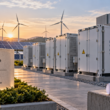

Matrix Renewables has completed a multi-asset financing covering 859 MWdc of utility-scale solar capacity and 167 MWh of battery energy storage across California, Idaho and Texas. The TPG Rise-backed private renewable energy platform secured more than $470 million of construction-to-term debt, approximately $400 million of tax-equity bridge financing and about $100 million of letter-of-credit facilities, while DESRI committed $210 million of preferred equity to two projects under construction. The portfolio represents more than $1.3 billion of investment and combines the 457 MWdc Tormes Solar project in Texas, the 86.5 MWh Alamo battery project in California and two operating solar assets that are being refinanced. The transaction gives Matrix Renewables construction capital, refinances completed infrastructure and creates a scalable funding model for additional projects in its United States pipeline. The strategic test is whether bundling operating and construction-stage assets can reduce financing costs without concentrating project, tax-credit and merchant-market risks inside one portfolio.
Why does Matrix Renewables’ multi-asset financing matter beyond the $1.3 billion headline?
The transaction is significant because Matrix Renewables has not financed one isolated solar farm. It has assembled projects in different markets, at different development stages and with different technology profiles into one coordinated financing platform.
The portfolio includes two assets already generating electricity and two projects still under construction. Operating projects can provide proven production data and established revenue, while construction assets offer future growth but carry schedule, equipment and commissioning risks. Combining them may give lenders greater diversification than financing a single greenfield project whose entire repayment capacity depends on one construction programme.
The structure also allows Matrix Renewables to refinance capital already invested in Gaskell West and Pleasant Valley Solar. Refinancing can release sponsor equity tied up in completed projects, allowing that capital to be reused for new construction, acquisitions or development spending. This capital-recycling model is central to the economics of privately owned renewable platforms that want to grow faster than retained cash alone would permit.
However, portfolio financing can create interconnected risk. If one construction asset experiences cost escalation or delay, lenders may have access to protections involving the wider portfolio. The benefits of diversification must therefore be balanced against the possibility that underperformance at one asset affects distributions or financing flexibility across several projects.
The real achievement is not simply raising a large amount of money. It is constructing a capital stack that combines senior debt, bridge financing, letters of credit, preferred equity and future tax-equity funding without making the projects financially unmanageable.
How do the $470 million loan, $400 million bridge and $210 million equity commitment work together?
The announced debt facilities include more than $470 million of construction-to-term financing. During construction, this capital can fund engineering, equipment procurement, civil work and installation. Once projects satisfy completion and operating conditions, part of the facility can convert into longer-duration term debt supported by project cash flow.
Construction-to-term structures reduce refinancing uncertainty. A developer does not need to return to capital markets immediately after commissioning to replace a short-term construction loan. The facility already establishes a pathway into permanent financing, subject to completion tests and contractual requirements.
The approximately $400 million tax-equity bridge facility serves a different purpose. Solar and storage projects may qualify for federal tax credits, but tax-equity investors normally contribute much of their capital only after specific construction or placed-in-service milestones are achieved. Bridge debt allows the developer to borrow against the expected tax-equity contribution during construction.
The bridge loan and eventual tax-equity funding should not be counted as two separate permanent sources of project value. Tax-equity proceeds are generally used to repay the bridge facility when the investment closes or when contractual milestones are met. Treating both amounts as independent long-term capital would overstate the financing available.
The approximately $100 million letter-of-credit package supports contractual obligations such as interconnection security, equipment payments, construction guarantees or power-purchase commitments. Letters of credit may not be fully drawn as cash, but they consume banking capacity and provide counterparties with assurance that Matrix Renewables can meet defined obligations.
DESRI’s $210 million preferred-equity commitment sits between conventional debt and common sponsor equity. Preferred equity normally receives priority distributions or defined return protections ahead of ordinary equity while remaining exposed to more risk than senior lenders. DESRI’s capital lowers the amount that Matrix Renewables must fund directly, but it also creates another layer of claims on project cash flow.
Why is the 457 MWdc Tormes Solar project the largest execution test within the portfolio?
Tormes Solar is the portfolio’s largest construction-stage asset at 457 MWdc and is being developed in Navarro County, Texas. Matrix Renewables and SOLV Energy formally started construction in May 2026, describing the project as representing more than $750 million of investment in renewable infrastructure and the surrounding region.
Its size makes Tormes central to the financing case. More than half of the portfolio’s total solar capacity is concentrated in this one Texas project, meaning construction progress, equipment delivery and interconnection readiness will materially influence the portfolio’s overall economics.
Texas offers strong power-demand growth, a competitive electricity market and a large pipeline of generation development. It also exposes projects to volatile wholesale prices, transmission congestion and periods when abundant solar generation depresses midday electricity value.
The quality of Tormes’ revenue arrangements has not been fully detailed in the financing announcement. Matrix Renewables must manage the balance between contracted income and merchant exposure, particularly if the project relies partly on future ERCOT market prices.
SOLV Energy is responsible for the engineering, procurement and construction package. A full EPC arrangement can reduce interface risk by giving one principal contractor responsibility for design, equipment coordination, field construction and delivery. The protection is only as strong as the contract terms, contractor balance sheet and treatment of inflation, tariffs and scope changes.
Tormes will also use equipment from American manufacturers, supporting domestic-content eligibility under United States Treasury guidelines. Domestic sourcing can increase available tax-credit value, but compliance requires detailed documentation covering manufacturing origin, cost allocation and project qualification. A paperwork failure would be a rather unglamorous way to damage the returns of a $750 million solar development.
What does the Alamo battery project add to a portfolio dominated by solar generation?
Alamo BESS is an 86.5 MWh battery energy storage project under construction in Kern County, California, adjacent to Matrix Renewables’ operating Gaskell West solar-plus-storage facilities. BEI Construction is overseeing its engineering and construction requirements, while Tesla is among the named equipment suppliers supporting the wider portfolio.
The project gives the portfolio greater technological and market diversification. Solar assets produce electricity according to sunlight conditions, while batteries can charge when power is abundant and discharge during periods of higher demand or market value.
The financing announcement does not disclose Alamo BESS’s power rating in megawatts. Without that figure, investors cannot calculate the project’s discharge duration or determine whether the battery is primarily designed for shorter grid services, multi-hour energy shifting or a combination of revenue streams.
Its location beside Gaskell West may offer infrastructure advantages. The projects could share elements of site access, operational expertise or transmission infrastructure, depending on the final configuration. Co-locating storage near existing solar generation can also improve the ability to manage congestion and shift renewable output into more valuable hours.
California remains one of the largest storage markets in the United States because high solar penetration creates a pronounced need to move electricity from midday into the evening. The market opportunity is substantial, but competition is intense and battery revenues may be exposed to changing price spreads, capacity arrangements and ancillary-service saturation.
Alamo BESS therefore provides growth and diversification, but it also introduces battery degradation, augmentation, fire-safety and warranty risks that do not arise in the same form at solar-only assets.
How does refinancing Gaskell West strengthen Matrix Renewables’ capital-recycling strategy?
Gaskell West consists of 143 MWdc of solar generation paired with an 80 MWh battery system in Kern County, California. The facilities reached commercial operation in May 2023 and are supported by five long-term power-purchase agreements with California cities and utilities.
Because Gaskell West is already operating, lenders can examine actual generation, battery performance and customer payments rather than relying only on engineering forecasts. This operating history can improve financing confidence and potentially support more attractive debt terms.
Refinancing the project allows Matrix Renewables to replace earlier construction and project-level capital with a new portfolio structure. The proceeds may be used to repay existing obligations, optimise financing costs or release equity for deployment elsewhere.
Gaskell West also provides a stabilising asset within the wider portfolio. Its contracted revenue can partially offset the greater uncertainty attached to Tormes Solar and Alamo BESS during construction.
However, operating status does not eliminate risk. Solar output varies with weather, panels degrade gradually and battery capacity declines over time. The project must continue meeting its contractual obligations while maintaining sufficient cash flow for debt service, operations, maintenance and future equipment replacement.
The five separate power-purchase agreements provide customer diversification, but they also create administrative complexity. Different buyers may have distinct pricing, scheduling and performance provisions, requiring disciplined contract management throughout the financing term.
Why is Pleasant Valley Solar strategically connected to data-centre electricity demand?
Pleasant Valley Solar is a 261 MWdc, 200 MWac operating project in Ada County, Idaho. Matrix Renewables acquired a controlling interest from rPlus Energies, which retained a minority ownership position, and the facility entered commercial operation in 2025.
The project supplies electricity into the Idaho Power system through an arrangement linked to Meta’s data-centre operations in Kuna. It was enabled through an agreement structure allowing Meta to support renewable generation serving the grid associated with its local electricity consumption.
This makes Pleasant Valley relevant to one of the power sector’s fastest-growing investment themes. Technology companies are increasing electricity procurement as cloud computing and artificial-intelligence infrastructure expand, creating demand for new generation near data-centre markets.
The project also illustrates how utilities, corporate customers and developers can coordinate rather than requiring technology companies to own power plants directly. Idaho Power manages the electricity system, Matrix Renewables and rPlus Energies own the generation asset, and Meta supports the commercial demand.
Pleasant Valley gives the financing portfolio an operating solar project in a market different from California and Texas. Geographic diversification reduces dependence on one regional weather pattern, pricing system or regulatory framework.
It does not completely protect the portfolio from correlated risks. Federal tax policy, equipment tariffs, interest rates and technology costs affect renewable projects across state boundaries. The advantage is that local congestion, curtailment and customer conditions are not identical across every asset.
How does domestic-content qualification change the project economics and supply-chain risks?
Matrix Renewables identified First Solar, Nextpower and Tesla as equipment suppliers supporting domestic-content qualification under United States Treasury guidelines. The projects can potentially secure additional tax-credit value if they satisfy required thresholds for domestically manufactured components and construction materials.
The domestic-content bonus can materially improve project returns because it increases the tax benefits available to qualifying developments. That value can support higher tax-equity investment, reduce sponsor-capital requirements or improve resilience against construction-cost increases.
The qualification process is not automatic merely because an American manufacturer supplies part of the equipment. Developers must document eligible costs, manufacturing locations and compliance with detailed federal rules.
Equipment sourcing also creates concentration and schedule risks. Solar modules, trackers, battery systems, transformers and power electronics must be delivered in line with the construction programme. A delay affecting one major supplier can leave civil works complete but prevent energisation.
Domestic procurement can reduce exposure to some shipping and trade-policy risks. It may also expose projects to a smaller supplier pool, higher labour costs or competition for factory capacity as more developers attempt to satisfy the same tax-credit requirements.
Matrix Renewables must therefore balance tax optimisation with delivery certainty. The highest theoretical tax credit is not especially useful if equipment arrives after the project’s contracted completion date.
What does the transaction reveal about Matrix Renewables’ private-company business model?
Matrix Renewables operates as an integrated renewable developer, investor and independent power producer backed by TPG Rise. The company develops projects, acquires third-party opportunities, arranges financing, oversees construction and retains selected assets for long-term operation.
This model creates several sources of value. Development activity can increase the worth of land, interconnection rights and permits. Construction converts development-stage opportunities into operating infrastructure, while ownership generates contracted and merchant electricity income.
The model is capital intensive because projects require substantial spending before commercial operation. Matrix Renewables therefore depends on institutional equity, project debt, tax-equity investors and minority capital partners rather than funding its entire portfolio from its own balance sheet.
The latest transaction demonstrates how the company is moving toward multi-asset financing rather than arranging every project independently. A scalable financing template can reduce transaction costs, accelerate future closings and create stronger relationships with banks that understand the platform’s contracting and operational systems.
Matrix Renewables said the transaction takes its United States portfolio of operating, under-construction and ready-to-build assets to approximately 1.5 GW. It also reports ownership of more than 8.7 GW across projects at different stages in five United States regional markets and a global portfolio exceeding 15.5 GW across solar, storage and green hydrogen.
These pipeline figures indicate expansion potential, but development capacity should not be treated like operating generation. Projects can remain in development for years or fail because of interconnection costs, permitting, customer demand or financing conditions.
Why would DESRI provide preferred equity rather than buying the projects outright?
DESRI has committed $210 million of preferred equity to Tormes Solar and Alamo BESS. The arrangement allows DESRI to gain project-level economic exposure without acquiring complete control of the assets or taking responsibility for the entire development platform.
Preferred equity can offer a defined return position ahead of Matrix Renewables’ ordinary sponsor capital. It may receive priority cash distributions, redemption rights or other protections negotiated around construction and operating performance.
For Matrix Renewables, the commitment reduces the common equity it must invest in the two construction projects. This preserves corporate capital for the wider development pipeline and limits concentration in individual assets.
The cost of preferred equity is generally higher than senior debt because the investor accepts more risk and ranks behind lenders. Matrix Renewables must therefore believe that retaining project ownership after paying DESRI’s preferred return creates more value than selling the assets or contributing additional common equity itself.
DESRI also brings project-investment expertise and may provide an additional layer of oversight around construction and capital management. That can strengthen discipline, though it also means another sophisticated investor will closely monitor schedule, budget and performance.
The structure reflects a broader shift in renewable financing. Developers increasingly combine institutional preferred capital with debt and tax equity rather than choosing between full ownership and outright asset sales.
What risks could undermine the economics of the four-project financing portfolio?
Construction risk is concentrated primarily in Tormes Solar and Alamo BESS. Cost escalation, equipment delays, labour shortages, grid-connection problems or poor weather could postpone revenue and increase financing expenses.
Tax-credit compliance creates another material exposure. The portfolio’s financing relies partly on tax-equity commitments, bridge debt and domestic-content qualification. Changes in interpretation, incomplete documentation or failure to meet placed-in-service requirements could reduce the anticipated tax benefit.
Interest-rate and refinancing risks remain relevant even within a construction-to-term structure. Debt pricing, hedging arrangements and conversion conditions will affect the amount of cash available to equity investors.
Market risk differs across California, Idaho and Texas. California projects face congestion, curtailment and changing battery-market economics. Texas assets operate in a highly competitive energy market with volatile prices and transmission constraints. Pleasant Valley depends on the performance of its contracted and utility arrangements within Idaho.
Portfolio diversification reduces some of these risks but cannot remove them. Solar production across several states can still be affected by equipment defects, federal policy or common supplier problems.
There is also complexity risk. Coordinating multiple lenders, tax-equity investors, DESRI, EPC contractors and equipment suppliers creates substantial legal and administrative work. The structure may lower capital costs, but it leaves little room for weak project controls.
Which milestones will show whether Matrix Renewables’ financing structure is working?
The first milestone will be continued construction progress at Tormes Solar. Module delivery, tracker installation, substation work and grid interconnection will indicate whether the project remains aligned with its budget and schedule.
The second will be completion of Alamo BESS and disclosure of its power rating, operating strategy and commercial-operation timetable. These details are necessary to evaluate the project’s duration and revenue potential.
The third will be conversion of the tax-equity commitments into funded investment. This should allow the associated bridge debt to be repaid and confirm that the assets have satisfied required tax and completion conditions.
The fourth will be construction-to-term conversion of the debt facilities. Lenders will generally require mechanical completion, testing, commercial operation and other conditions before long-duration financing becomes effective.
The fifth will be continuing performance at Gaskell West and Pleasant Valley. These assets must deliver the operating stability that justified including them as the lower-risk component of the portfolio.
The sixth will be evidence that Matrix Renewables uses released capital to advance additional projects without weakening its balance sheet or overloading its development organisation.
The financing is strategically important because it connects project development, operating assets, institutional equity and federal tax policy within one platform. The structure becomes a competitive advantage only if Matrix Renewables delivers the construction projects and repeats the approach without allowing complexity to erode returns.
What are the key takeaways from Matrix Renewables’ US portfolio financing?
- Matrix Renewables has financed and refinanced a portfolio containing 859 MWdc of solar capacity and 167 MWh of battery storage.
- The transaction covers four projects across California, Idaho and Texas with total investment exceeding $1.3 billion.
- Debt facilities include more than $470 million of construction-to-term financing, approximately $400 million of tax-equity bridge debt and roughly $100 million of letters of credit.
- DESRI has committed $210 million of preferred equity to the Tormes Solar and Alamo BESS construction projects.
- Tormes Solar is the largest portfolio asset at 457 MWdc and represents more than $750 million of investment in Texas.
- Gaskell West provides operating solar-plus-storage revenue supported by five long-term power-purchase agreements.
- Pleasant Valley Solar supplies the Idaho Power network through an arrangement connected with Meta’s data-centre electricity requirements.
- Domestic equipment sourcing could increase tax-credit value but introduces documentation, supplier-capacity and schedule risks.
- Multi-asset financing allows Matrix Renewables to recycle capital and diversify risk, but it creates tighter financial links between individual projects.
- Construction delivery, tax-equity funding and debt conversion will determine whether the structure becomes a repeatable growth platform.
Discover more from Business-News-Today.com
Subscribe to get the latest posts sent to your email.