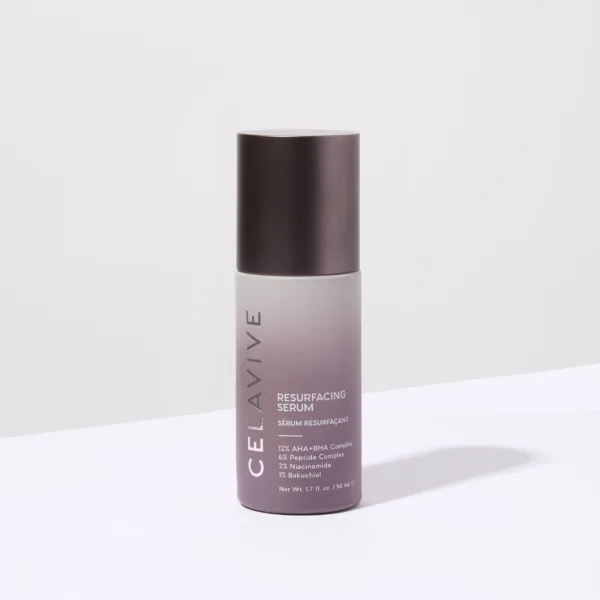




L’Oréal S.A. (Euronext Paris: OR) has agreed to acquire a majority stake in Innovist, the Indian personal care company behind Bare Anatomy, Chemist at Play and SunScoop. Financial terms and the exact ownership percentage were not disclosed, while Innovist’s founders will retain minority interests and continue operating the business alongside L’Oréal India. The transaction will place Innovist within L’Oréal’s Consumer Products Division and gives L’Oréal rights to acquire the remaining shares in the future. Completion is expected after regulatory approvals and customary conditions, with Innovist’s sales consolidated from the closing date. The strategic value lies in giving L’Oréal a locally developed, digital-first platform that can reach younger Indian consumers faster than extending only its established international brands.
Why is L’Oréal buying control of Innovist instead of relying only on its global beauty brands in India?
L’Oréal already operates some of the beauty industry’s most recognised consumer brands in India, including L’Oréal Paris, Garnier, Maybelline New York and NYX Professional Makeup. The Innovist transaction therefore does not fill a basic distribution gap. It addresses a more difficult strategic challenge, which is how a multinational company can compete against younger Indian brands that are built around local routines, climate conditions, price expectations and digital shopping behaviour.
Innovist was founded in 2019 by Rohit Chawla, Sifat Khurana and Vimal Bhola. Its portfolio currently includes Bare Anatomy in haircare, Chemist at Play in skincare and body care, and SunScoop in sun protection. These brands use ingredient-focused communication, targeted product claims and digitally native merchandising that appeal to consumers who research formulations before purchasing.
Acquiring control gives L’Oréal access to consumer insight that would be difficult to reproduce simply by launching another global product range. Innovist already understands how Indian shoppers discover products through social media, online marketplaces, direct-to-consumer channels and quick-commerce applications. It also has products developed around local concerns such as humidity, dandruff, hair fall, pigmentation, sun exposure and textured skin.
The transaction suggests that L’Oréal sees India as more than a future volume market for international brands. It increasingly views the country as a source of locally created intellectual property, formulation expertise and brand-building models. That is an important shift because global beauty companies have historically brought products into India, whereas the next phase may involve building Indian brands that can eventually travel into other markets.
The strategic risk is that L’Oréal could weaken the qualities that made Innovist attractive. Digital-first brands often move quickly, experiment with products and communicate in a less formal manner than multinational companies. Additional approval processes, global compliance requirements and corporate reporting could slow that pace unless Innovist retains meaningful operating freedom.
How do Bare Anatomy, Chemist at Play and SunScoop strengthen L’Oréal’s Consumer Products Division?
Bare Anatomy gives L’Oréal additional exposure to specialised haircare, an area that was already one of the strongest contributors to the company’s first-quarter 2026 growth. The brand offers products addressing hair fall, dandruff, frizz, damage, scalp oil, curls and colour protection. Its focus on individual hair concerns allows it to sell routines and treatments rather than competing only through basic shampoo and conditioner.
Chemist at Play expands the opportunity into body care and accessible skincare. The brand sells products including exfoliating body washes, roll-ons, moisturisers, cleansers, serums and lotions, often highlighting ingredients such as ceramides, salicylic acid, lactic acid and niacinamide. This positioning sits between conventional mass-market personal care and higher-priced dermatological beauty.
SunScoop provides a position in India’s evolving sun-care category. Sunscreen use has historically been lower in India than in several developed beauty markets, but consumer awareness is increasing as brands introduce lighter textures, higher protection factors and products designed for humid conditions. A growing sun-care habit could create repeat demand because sunscreen requires frequent application and replenishment.
Together, the three brands give L’Oréal a broader portfolio across hair, skin, body and sun care without requiring every category to operate under the same master brand. This house-of-brands structure can help L’Oréal target distinct consumer communities while sharing manufacturing, research, data and distribution capabilities behind the scenes.
The structure also creates complexity. L’Oréal must decide how much capital to allocate among three brands with different levels of awareness, category potential and channel economics. Supporting everything equally can spread resources too thinly, while concentrating on one winner could leave the rest of the portfolio underdeveloped.
There is also potential overlap with L’Oréal’s existing products. Bare Anatomy may compete with Garnier and L’Oréal Paris haircare, while Chemist at Play could move closer to mass skincare ranges already within the group. L’Oréal will need clear price positioning and consumer segmentation so that Innovist adds incremental demand rather than shifting sales between brands owned by the same company.
Why does Innovist’s digital-first distribution model matter to L’Oréal’s growth strategy in India?
Innovist sells through its own platforms, major ecommerce marketplaces, quick-commerce services and offline retail partnerships. That channel mix offers L’Oréal access to purchasing behaviour that is increasingly important in India, particularly among urban consumers who expect fast delivery, frequent product launches and price comparisons across multiple applications.
Quick commerce is especially relevant for personal care because it turns beauty products into immediate-purchase items. A consumer who runs out of shampoo, sunscreen or body wash can order a replacement within minutes rather than waiting for a scheduled shopping trip. This can increase convenience and purchase frequency, although it may also make brands more dependent on promotional placement within third-party applications.
Direct-to-consumer operations provide richer customer data and greater control over product education. Innovist can use its platform to sell bundles, recommend routines, test new products and observe which ingredients attract attention. L’Oréal can combine those insights with its research, advertising and category-management capabilities.
However, online growth can be expensive. Beauty brands frequently use discounts, influencer campaigns and marketplace advertising to remain visible. Revenue can rise quickly while margins remain thin because customer acquisition costs, platform commissions, fulfilment expenses and promotional spending absorb a large share of sales.
L’Oréal’s challenge will be to improve Innovist’s economics without suppressing growth. Global procurement, supply-chain planning and media buying could reduce costs, while L’Oréal’s relationships with physical retailers could expand distribution. The danger is that rapid offline expansion may increase inventory and working-capital requirements before demand becomes predictable.
A successful omnichannel model would allow Innovist to use digital platforms for discovery and physical stores for scale. Consumers could research products online, test or purchase them in stores and reorder through quick commerce. That integration could become more valuable than treating ecommerce and retail as separate businesses.
Can L’Oréal scale Innovist through offline retail without damaging its digital brand identity?
Offline retail offers Innovist access to consumers who remain hesitant to purchase unfamiliar beauty products without seeing packaging, textures or ingredient information in person. Physical availability can also increase trust because a product stocked by a recognised retailer appears more established than one available only through social media advertisements.
L’Oréal can potentially accelerate this transition through existing relationships with supermarkets, beauty specialists, pharmacies, department stores and regional retailers. It can also improve shelf placement, merchandising and sales training. These capabilities could take Innovist into cities where online awareness is growing but digital conversion remains uneven.
The economics of physical retail are different from direct-to-consumer sales. Retailers require margins, inventory support, promotional funding and sometimes listing or display expenditure. Products must also compete for limited shelf space against Hindustan Unilever Limited, Procter & Gamble Company, Marico Limited, Honasa Consumer Limited, Dabur India Limited and numerous independent brands.
Innovist must avoid becoming visually indistinguishable from conventional mass-market personal care once it enters more stores. Ingredient transparency, concern-led products and scientific positioning are central to its identity. Retail expansion should make those attributes easier to understand rather than reducing the brands to discount labels on crowded shelves.
Product assortment will require discipline. A broad online catalogue can serve niche concerns because consumers can search for exact solutions. Retail stores may support only a smaller number of high-velocity products. L’Oréal will need to identify hero products that attract first-time buyers while using digital channels to sell more specialised routines.
The timing of expansion will also matter. Moving too slowly could allow competitors to occupy attractive retail positions, while moving too quickly could create unsold stock and discounting. The beauty shelf can be glamorous, but it is not charitable. Products that do not move are replaced.
Why are Innovist’s in-house research and manufacturing capabilities strategically important?
Innovist’s research, development and manufacturing capabilities give L’Oréal more than a collection of consumer-facing brands. They provide a local product-development platform that can formulate, test and produce products closer to the market. This can shorten development cycles and improve responsiveness to Indian consumer trends.
Local manufacturing may also support more competitive pricing by reducing exposure to imported finished products, international freight and currency fluctuations. Beauty products designed and produced in India can be adjusted around locally available ingredients, packaging costs and retail price points.
L’Oréal brings considerably larger scientific resources, including a global research network and specialist teams across formulation, safety, consumer testing, digital technology and regulatory compliance. Combining those capabilities with Innovist’s local knowledge could improve product efficacy and allow successful concepts to scale more reliably.
The integration must nevertheless preserve speed. A start-up may launch a product after a focused development process, while a multinational company may require broader testing and approval. Those controls can improve quality and reduce risk, but they can also delay launches in categories where consumer trends move rapidly.
Manufacturing expansion could require capital expenditure if Innovist volumes grow materially. L’Oréal must determine whether to expand existing facilities, use third-party manufacturers or integrate production into the wider L’Oréal network. Each option affects cost, quality control and operational flexibility.
Regulatory scrutiny is another consideration. Ingredient claims, sunscreen protection, clinical language and performance statements must be supported and communicated carefully. Greater scale increases visibility, which means marketing claims that attracted limited attention as a start-up may face closer examination once backed by L’Oréal.
What does the founder retention structure reveal about L’Oréal’s acquisition strategy?
Innovist’s founders will remain shareholders and continue operating the business with L’Oréal India. This structure reduces the risk of an abrupt leadership transition and keeps product, marketing and consumer knowledge inside the company. It also aligns the founders with the value created after the transaction because their remaining ownership can benefit from future growth.
L’Oréal has secured rights to acquire the minority shares in full later. That gives the group a pathway to complete ownership while avoiding the need to integrate everything immediately. It also allows L’Oréal to observe how Innovist performs under the partnership before committing to the final purchase.
The undisclosed valuation makes it difficult for investors to judge the financial return. Innovist is unlikely to be material relative to L’Oréal’s €44.05 billion of 2025 sales in the near term, but the strategic option value could be meaningful if one or more brands become national category leaders.
Founder retention can create governance tensions. Entrepreneurs may want speed, experimentation and aggressive reinvestment, while a listed multinational company must consider profitability, risk controls and portfolio priorities. Decision rights over hiring, marketing expenditure, product launches and distribution will determine whether the partnership remains genuinely entrepreneurial.
The eventual minority buyout mechanism also matters. Founders need incentives to maximise long-term value rather than focus narrowly on metrics used to determine a future sale price. L’Oréal needs protection against paying excessively for growth created largely through its own capital and distribution.
The best outcome would combine local autonomy with global resources. The worst would produce a company that is too controlled to behave like a start-up but too separate to benefit fully from L’Oréal. The legal ownership structure may be straightforward, but cultural integration will be the real transaction.
How could the Innovist acquisition change competition in India’s beauty and personal care market?
The acquisition increases pressure on Indian digital beauty brands by demonstrating that global groups are willing to buy local platforms rather than compete only through their existing portfolios. Founders may view strategic acquisitions as a more credible exit route, while investors may become more selective about which brands possess genuinely differentiated products and repeat demand.
Honasa Consumer Limited has already shown both the possibilities and difficulties of scaling a house of digital-first beauty brands. Other companies, including Good Glamm Group, Minimalist, Sugar Cosmetics and Plum, have also pursued combinations of online distribution, offline retail and category expansion. Innovist will now compete with the resources of L’Oréal behind it.
Traditional consumer companies may respond through acquisitions, minority investments or faster internal launches. Hindustan Unilever Limited, Marico Limited and Dabur India Limited have strong Indian distribution and consumer understanding, while multinational groups bring research and marketing scale. The competitive gap between independent start-ups and strategic-owner-backed brands could widen.
The deal may also raise valuations for businesses with owned manufacturing, proven repeat purchases and several viable brands. However, beauty investors have become less willing to fund growth supported mainly by discounting and influencer spending. Strategic buyers will examine gross margins, retention, channel dependence and product credibility more closely than follower counts.
Consumers could benefit from better products, broader availability and increased competition. The risk is that consolidation reduces experimentation if acquired brands become cautious or begin resembling the portfolios of their parent companies. The industry needs scale, but it also needs brands willing to be slightly inconvenient.
For L’Oréal, the competitive advantage will come from converting Innovist’s local insight into faster category expansion. Simply placing the L’Oréal name behind the business will not be enough. Success requires product relevance, affordable pricing and execution across India’s fragmented retail environment.
Pallavi MadhirajubusinessnewstodayEdit Profile
What does L’Oréal’s current share performance suggest about investor sentiment toward the Innovist deal?
L’Oréal shares closed at €381.00 on July 10, 2026, compared with €382.45 on July 3. That represents a decline of approximately 0.4% across the latest five trading sessions. The shares were about 0.8% below their June 10 close of €384.05.
The stock remained within a 52-week range of €338.85 to €408.35 and traded approximately 6.7% below the upper end. This indicates broadly resilient sentiment rather than a significant market reaction to the Innovist agreement. The transaction is strategically interesting but too small to alter near-term group earnings materially.
L’Oréal entered the deal from a position of operating strength. First-quarter 2026 sales reached €12.15 billion, with adjusted like-for-like growth of 6.7%. The Consumer Products Division generated €4.37 billion of sales and adjusted like-for-like growth of 4.1%, with India identified as one of the emerging-market growth drivers.
That performance gives L’Oréal room to invest in businesses whose immediate financial contribution is limited. Investors are likely to judge the Innovist transaction as part of a wider portfolio-building strategy rather than a standalone earnings catalyst. The relevant question is whether repeated investments in local and specialist brands can sustain growth without making the portfolio excessively complex.
The acquisition also follows other significant portfolio moves, including the integration of Color Wow, Medik8 and Kering Beauté. L’Oréal is using acquisitions to strengthen several areas at once, from professional haircare and skincare to luxury fragrance and emerging-market consumer products.
The risk is that management attention becomes stretched across multiple integrations. L’Oréal’s valuation reflects confidence in consistent execution, category leadership and margin discipline. Innovist will not determine the share price, but poor integration across several acquisitions could eventually affect that confidence.
What are the key takeaways from L’Oréal acquiring a majority stake in Innovist?
- L’Oréal gains control of an Indian digital-first beauty platform rather than relying exclusively on its established global brands for India growth.
- Bare Anatomy, Chemist at Play and SunScoop expand L’Oréal’s exposure across haircare, skincare, body care and sun protection.
- Innovist will join the Consumer Products Division, where India is already contributing to strong emerging-market growth.
- The founders will retain minority ownership and continue managing the business, helping preserve local knowledge and entrepreneurial speed.
- L’Oréal has secured rights to acquire the remaining shares, creating a pathway to full ownership if the partnership performs as expected.
- Innovist’s direct-to-consumer, ecommerce, quick-commerce and offline channels give L’Oréal a broader view of Indian beauty purchasing behaviour.
- L’Oréal can accelerate physical retail expansion, but poor inventory discipline or excessive discounting could weaken brand economics.
- Local research and manufacturing capabilities may support faster product development and pricing better suited to Indian consumers.
- The transaction increases competitive pressure on independent Indian beauty brands and may encourage additional strategic acquisitions.
- L’Oréal’s share performance shows limited deal-specific reaction, leaving execution and long-term brand scaling as the main investor tests.
Discover more from Business-News-Today.com
Subscribe to get the latest posts sent to your email.