




L3Harris Technologies Incorporated (NYSE:LHX) has secured a United States Navy contract worth up to $98 million to supply proximity fuzes through the Naval Surface Warfare Center Indian Head Division. The award strengthens the company’s role in a weapons segment that is becoming more important as the United States military looks for scalable ways to counter drones, cruise missiles and low-cost airborne threats. For L3Harris Technologies Incorporated, the contract is not large enough to reshape near-term financial expectations, but it reinforces the company’s position in missile components, precision effects and naval weapons support. The development matters because proximity fuzes can improve the effectiveness of existing munitions, allowing forces to adapt current weapons for a battlefield where targets are smaller, cheaper, faster and more numerous.
Why does L3Harris’ U.S. Navy proximity fuze contract matter for counter-drone defence?
L3Harris Technologies Incorporated’s proximity fuze contract matters because the economics of air defence are changing quickly. Armed forces are increasingly being asked to defeat drones and low-cost aerial threats without using interceptors that cost far more than the targets they destroy. That cost imbalance has become one of the clearest lessons from recent conflicts, where relatively inexpensive drones can force defenders to spend expensive missiles, absorb operational disruption or expose gaps in layered air defence.
Proximity fuzes are important because they can make existing munitions more effective against difficult targets. Instead of requiring a direct hit, a proximity fuze can trigger a warhead when it reaches an optimal distance from the target. That can improve lethality against drones, small aircraft, cruise missiles and other airborne threats that may be hard to hit precisely, especially during fast-moving engagements. In a counter-drone environment, that difference can matter because the target may be small, manoeuvring or approaching in numbers.
The United States Navy angle is particularly relevant because ships face a demanding threat environment. Naval vessels must defend against missiles, drones, aircraft and swarming threats while operating far from fixed infrastructure. A component such as a proximity fuze may not sound as dramatic as a new missile or destroyer, but it can materially affect the kill probability of weapons already in inventory. That makes the contract strategically interesting even if the headline value is modest by major defence programme standards.
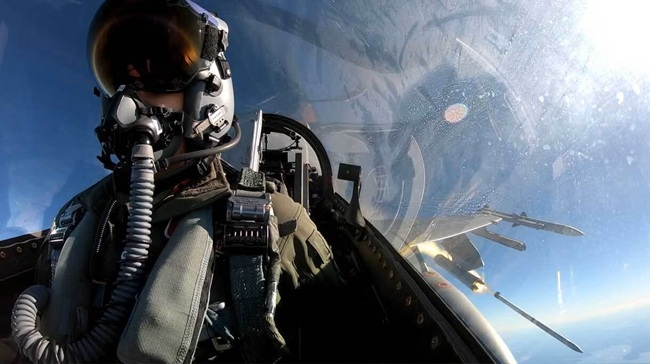
How could proximity fuzes improve the battlefield value of existing precision weapons?
Proximity fuzes can improve the battlefield value of existing weapons by increasing their effectiveness against target sets that are not ideally suited to direct-impact engagements. This is especially relevant for weapons such as guided rockets, where the combination of relatively low cost, precision guidance and improved fuzing can create a more economical air-defence or precision-strike option. The point is not only to make one munition more lethal. It is to make a large existing weapons ecosystem more adaptable.
That matters because military buyers are trying to stretch inventories while responding to fast-changing threats. Building a new missile from scratch can take years, while improving fuzing, guidance or seeker packages can sometimes increase capability faster. Defence planners increasingly want upgrades that can be integrated into current production lines and fielded without waiting for entirely new platforms. L3Harris Technologies Incorporated’s contract sits inside that practical procurement logic.
The wider implication is that the counter-drone race is not only about directed-energy systems, high-end interceptors or advanced radars. It is also about the unglamorous but crucial components that make existing weapons more useful. Fuzes, seekers, guidance kits and warhead effects may decide whether militaries can counter massed drones affordably. In defence procurement, the quiet components often do the loud work.
Why is the United States Navy focusing on scalable solutions for drone and missile defence?
The United States Navy is focusing on scalable defence solutions because the threat to ships is expanding across both sophistication and volume. High-end anti-ship missiles remain a central concern, but navies must also deal with drones, loitering munitions, decoys and cheaper airborne systems that can be launched in larger numbers. This creates a layered-defence challenge where no single weapon type can handle every threat economically.
Scalability is the key word. A destroyer or amphibious ship cannot rely solely on high-cost interceptors if it faces repeated drone attacks or saturation tactics. The Navy needs a mix of electronic warfare, guns, missiles, guided rockets, sensors and command systems that can be matched to the threat. Proximity fuzes improve that mix by making lower-cost or existing munitions more capable against airborne targets.
There is also a sustainment dimension. In a prolonged conflict, the availability of munitions and components becomes as important as peak performance. A system that can be produced consistently, integrated efficiently and supplied in meaningful numbers may be more valuable than a technically elegant solution that is too scarce. This is where component suppliers such as L3Harris Technologies Incorporated can become strategically important without always being in the headline position.
What does the contract signal about L3Harris Technologies’ defence portfolio strategy?
The contract signals that L3Harris Technologies Incorporated is continuing to position itself in high-priority defence segments that sit around missiles, sensors, communications, electronic systems and mission-specific components. The company is not merely competing in large platform markets. It is also building relevance in the enabling technologies that make weapons and networks more effective. That portfolio structure can be attractive because it exposes L3Harris Technologies Incorporated to several modernisation priorities at once.
The fuze award fits with a broader defence market where incremental upgrades can have significant operational value. Defence ministries may continue buying aircraft, ships and missiles, but they are also spending heavily on the components that improve accuracy, survivability, lethality and resilience. These areas can produce repeat contracts if the technology proves reliable and production capacity holds up.
For L3Harris Technologies Incorporated, the strategic upside depends on whether such contracts expand into follow-on production, adjacent weapons programmes or wider adoption across services. A fuze contract by itself is not a corporate transformation. However, it reinforces the company’s role in a defence procurement environment where the United States military wants faster upgrades, more adaptable munitions and greater inventory depth.
How should investors read L3Harris Technologies stock sentiment after the U.S. Navy award?
L3Harris Technologies Incorporated shares recently traded around $307.63, with a market capitalisation of roughly $57.31 billion. The stock was little changed in the latest available market snapshot, suggesting investors are not treating this contract as a standalone re-rating event. That is understandable because an award worth up to $98 million is strategically useful but financially small relative to L3Harris Technologies Incorporated’s revenue base and defence portfolio.
The more relevant investor takeaway is that the contract supports the company’s exposure to missile-related components and scalable defence technologies. L3Harris Technologies Incorporated has been working to sharpen its defence portfolio around higher-priority mission areas, including communications, space systems, electronic warfare, missile components and propulsion-linked opportunities. Contracts tied to counter-drone and naval weapons demand can strengthen the quality of that portfolio narrative.
Investor sentiment will still depend on larger issues such as margin performance, cash generation, integration discipline, programme execution and the company’s ability to translate defence demand into profitable growth. The fuze contract adds a positive data point, but it does not erase broader scrutiny. The market tends to applaud defence backlog only when it believes the work can be delivered without margin leakage. Defence investors are patient, but not saintly.
Why are proximity fuzes becoming more important as drone warfare reshapes air defence economics?
Proximity fuzes are becoming more important because drone warfare has created a battlefield where precision must be combined with affordability. A drone may cost far less than the missile used to destroy it. If defenders repeatedly rely on high-cost interceptors, adversaries can exploit the imbalance by launching cheaper systems in volume. Improved fuzing helps address that problem by making lower-cost weapons more effective against aerial threats.
The technology also matters because many drone threats do not behave like traditional aircraft. They may fly low, move slowly, appear in groups or present small radar and visual signatures. Direct hits can be difficult, especially in cluttered environments or during rapid engagements. A proximity fuze improves the chances of disabling the target without requiring perfect impact geometry.
This does not mean proximity fuzes solve the drone problem alone. Counter-drone defence requires detection, tracking, classification, command decisions and layered engagement options. However, fuzes improve the final part of the chain, where a weapon must actually defeat the threat. That final step is where theory becomes either protection or paperwork.
What execution risks could limit the impact of the L3Harris fuze contract?
The first execution risk is production consistency. Fuzes must meet strict reliability and safety standards because they are critical to weapon performance. Manufacturing defects, qualification issues or delivery delays can create problems for the broader weapons programme. In a market where munitions demand is rising, customers will care about production speed, but not at the expense of reliability.
The second risk is integration performance. A proximity fuze must work with the munition, launcher, engagement profile and operational environment for which it is intended. If integration is narrow or operational performance varies across conditions, the customer’s confidence can weaken. The Navy will want systems that perform consistently under maritime conditions, where weather, motion, corrosion and combat stress are all part of the operating picture.
The third risk is threat evolution. Drone and missile threats are changing quickly. Adversaries can modify flight profiles, use decoys, alter materials or deploy swarming tactics. L3Harris Technologies Incorporated and other defence suppliers must keep improving components so that weapons remain relevant. A fuze that works against today’s drone threat may need upgrades tomorrow. The battlefield, annoyingly, refuses to stay still.
Could the fuze contract open a broader market for L3Harris in naval and joint-service weapons?
The fuze contract could support broader opportunities if the United States Navy and other services continue adapting existing weapons for counter-drone and precision engagement roles. The United States military is increasingly interested in affordable mass, which means weapons that can be produced at scale and used in sufficient numbers without exhausting budgets. Components that improve lethality or engagement flexibility can become important enablers of that strategy.
There may also be allied demand. NATO countries, Indo-Pacific partners and Middle Eastern militaries are all watching drone warfare closely. Many are looking for ways to strengthen air defence without relying exclusively on expensive interceptors. If L3Harris Technologies Incorporated can demonstrate that its fuzes improve performance in operationally relevant conditions, the company could benefit from wider procurement interest, subject to export approvals and programme fit.
The larger market lesson is that defence value is shifting toward modular improvements. Militaries want to upgrade what they already own while also developing new systems for future threats. That creates room for companies that can supply mission-critical components rather than only large platforms. L3Harris Technologies Incorporated’s opportunity is to make itself indispensable inside the weapons ecosystem, one component at a time.
Key takeaways on what L3Harris’ U.S. Navy proximity fuze contract means for defence markets
- L3Harris Technologies Incorporated’s contract worth up to $98 million strengthens its role in proximity fuzes for United States Navy weapons programmes.
- The award is strategically relevant because proximity fuzes can improve the effectiveness of existing munitions against drones, cruise missiles and small airborne threats.
- The contract supports the wider shift toward affordable counter-drone solutions as militaries try to avoid using expensive interceptors against low-cost targets.
- The United States Navy needs scalable layered-defence options because ships face a growing mix of missiles, drones, decoys and saturation tactics.
- For L3Harris Technologies Incorporated, the award adds a positive signal around missile components and mission-critical defence electronics, but it is not a near-term financial catalyst by itself.
- Investor sentiment is likely to remain driven by larger issues such as margin discipline, cash flow, programme execution and portfolio restructuring.
- The main execution risks include manufacturing reliability, integration performance, maritime operating conditions and the pace at which drone threats continue to evolve.
- The contract highlights how small components can have outsized battlefield relevance when they improve the lethality and affordability of existing weapons.
- Allied demand could emerge if proximity fuze upgrades become part of broader NATO and Indo-Pacific counter-drone procurement strategies.
- The broader defence-market signal is clear: counter-drone warfare is becoming a volume game, and companies that improve cost-effective engagement options may gain durable relevance.
Discover more from Business-News-Today.com
Subscribe to get the latest posts sent to your email.
