




JERA Co., Inc., Dell Technologies Inc. (NYSE: DELL) and London-headquartered RHAELM Holdings Ltd. have signed a memorandum of understanding to develop a standardised model for national-scale artificial intelligence infrastructure in Japan, beginning with a project requiring more than $15 billion of capital deployment at JERA’s Chiba Thermal Power Station near Tokyo. The planned facility would support up to 400 megawatts of power capacity, begin operations in phases around 2028 and ultimately become Japan’s largest single-site artificial intelligence infrastructure deployment if completed at the proposed scale.
Apollo Global Management, Inc. is expected to participate as a strategic investment and financing partner to RHAELM. JERA would provide the site and power infrastructure, RHAELM would lead data-centre development, financing and operations, and Dell Technologies would supply standardised rack-scale computing through its Dell AI Factory architecture.
Dell Technologies shares closed October 1 at $541.74, up about 0.7% for the day. The modest reaction suggests the market did not treat the memorandum as a near-term earnings event for Dell, which is reasonable because no customer orders, hardware quantities or revenue recognition schedule have yet been disclosed.
Why is putting a data centre beside a power plant strategically important?
Electricity has become one of the hardest constraints in artificial intelligence infrastructure. GPUs and servers can be manufactured faster than new transmission lines, substations and grid connections can often be approved and built, creating a situation in which data-centre developers may control land and financing but still wait years for sufficient electrical capacity.
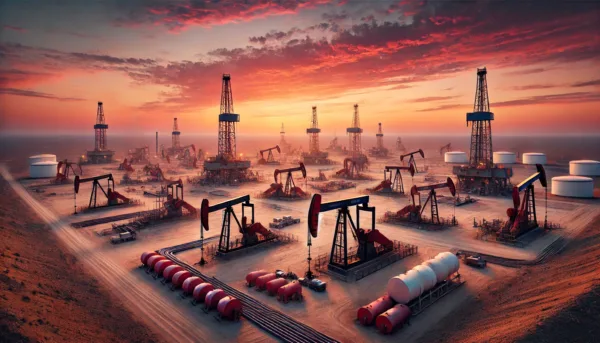
The Chiba model attempts to bypass part of that bottleneck. JERA plans to make land adjacent to its existing thermal power station available for the project, allowing the proposed computing campus to use behind-the-meter power rather than depending entirely on a conventional new grid connection. JERA says the arrangement could bring capacity online years earlier than a traditional grid-connected development schedule.
That architecture changes the value proposition of an existing power station. Historically, the plant’s strategic value would be measured primarily by electricity sold into the broader grid. Under the proposed model, part of the site becomes a platform for colocating enormous computing loads directly beside generation.
Artificial intelligence therefore creates a convergence between industries that previously operated at some distance from one another. Power generators are becoming infrastructure-development partners, technology companies are increasingly concerned with energy procurement, and private capital groups are financing facilities whose economics depend simultaneously on electricity markets and computing demand.

How large is the Chiba AI infrastructure project compared with ordinary data centres?
A 400 MW facility is enormous. The project is expected to require more than $15 billion across land, power infrastructure, facility construction and artificial intelligence computing equipment, according to JERA.
The capital figure should not be interpreted as a signed construction contract or committed funding package. The companies have signed a memorandum of understanding, and several major commercial variables remain undisclosed, including end customers, accelerator suppliers, detailed financing commitments and project phasing.
That distinction is important because artificial intelligence infrastructure announcements increasingly carry eye-catching multi-billion-dollar numbers long before final investment decisions are made. The Chiba proposal is significant because JERA already controls the power asset and land, but the project still needs to progress from framework to execution.
JERA said operations are targeted to begin around 2028, while Reuters reported that the partners expect full 400 MW capacity to be reached in 2029. JERA would provide electricity under an arrangement expected to last between 15 and 25 years, creating the type of long-duration demand visibility power generators increasingly seek from data-centre customers.
Why does Japan need such a large domestic AI infrastructure buildout?
Japan possesses world-class semiconductor equipment, robotics, industrial technology and electronics capabilities, yet it has materially less hyperscale computing capacity than the United States or China. Artificial intelligence is increasing the strategic cost of that gap because access to compute increasingly influences corporate innovation, national research capacity and the ability to train or operate advanced domestic models.
JERA, Dell Technologies and RHAELM are therefore presenting Chiba not merely as a data centre but as the first implementation of a repeatable national infrastructure framework. Instead of engineering every new data-centre campus from the beginning, the partners want to standardise generation, electrical systems, cooling and computing architecture so subsequent sites can be deployed more quickly.
If the model works, JERA could potentially use other power-station locations as future artificial intelligence infrastructure sites. The company says the ambition is to support multi-gigawatt-scale capacity across Japan during the 2030s.
This is strategically attractive because existing generating sites often possess grid connections, industrial land, fuel infrastructure and experienced operating personnel. Repurposing parts of that footprint may be faster than building entirely new energy and computing campuses in locations lacking those advantages.
What does Dell Technologies gain from the JERA and RHAELM partnership?
Dell Technologies is positioning itself as the standardised computing layer. That means the company is not merely trying to sell individual servers but to provide repeatable rack-scale infrastructure that can be deployed across very large artificial intelligence campuses.
Rack-scale design has become increasingly important as artificial intelligence systems consume more power and require complex networking and cooling. Customers increasingly evaluate complete infrastructure units rather than buying processors, servers and networking as independent components.
The Chiba model could therefore become commercially valuable if it is replicated. A single 400 MW campus can require enormous quantities of computing equipment, but the larger opportunity lies in establishing Dell AI Factory architecture as the standard for subsequent sites.
No accelerator supplier has been formally identified in JERA’s announcement, so it would be premature to assume which graphics processing units or other accelerators will ultimately populate the facility. That omission may reflect the long construction timeline because hardware expected to enter service in 2028 or 2029 could be several generations beyond products available today.
For Dell Technologies investors, the important question is whether the memorandum converts into booked infrastructure orders. The company’s stock has already benefited strongly from artificial intelligence server demand, meaning expectations around future data-centre spending are elevated.
Why is Apollo Global Management involved?
Artificial intelligence data centres are increasingly becoming an asset-financing problem as much as a technology problem. A project exceeding $15 billion requires huge amounts of long-duration capital before customer revenues begin flowing.
Apollo Global Management intends to serve as a strategic investment and financing partner to RHAELM, bringing private-credit and infrastructure-financing capabilities to a project that sits between digital infrastructure, energy and industrial development.
That financing role is important because hyperscale computing investment is moving beyond the balance sheets of technology companies. Infrastructure funds, private-credit managers, banks and institutional investors increasingly provide capital to developers that build facilities and lease computing or data-centre capacity to technology customers.
The model can spread financial risk but also adds complexity. Investors need to understand who ultimately guarantees customer payments, which party bears construction overruns and how financing behaves if hardware becomes obsolete more quickly than expected.
Chiba’s behind-the-meter electricity structure could improve financing visibility because the power connection problem is partly addressed through the existing JERA asset. Yet demand risk remains until long-term computing customers are disclosed.
What are the biggest risks to the $15bn Chiba project?
Financing is the first. Apollo’s intended participation is meaningful, but the announcement does not state that the entire capital requirement has been fully committed.
Customer concentration is another major unknown. A 400 MW artificial intelligence facility needs enormous demand, and the announcement does not identify hyperscalers, sovereign customers or model developers that have committed to use the infrastructure.
Technology risk also matters. Computing hardware purchased for a project with a multi-year construction timeline can become outdated rapidly, which is one reason standardised and modular architectures are increasingly attractive.
The energy profile could also become a policy issue because JERA explicitly describes reliable gas-fired generation and its liquefied natural gas supply chain as central to the model. Artificial intelligence infrastructure is driving enormous electricity demand at the same time Japan and other developed markets remain committed to long-term decarbonisation, creating an unavoidable tension between computing speed, energy security and emissions reduction.
JERA says it still targets net-zero carbon dioxide emissions across domestic and overseas businesses by 2050. The commercial challenge will be reconciling that objective with potentially multi-gigawatt additions to round-the-clock power demand.
Could power-station data centres become a global model?
The Chiba project matters because the solution is potentially repeatable outside Japan. Many developed economies possess power stations with available land, grid infrastructure and fuel connections, while new data-centre projects face delays securing electricity.
Locating computing directly beside generation can dramatically shorten the distance between energy production and consumption. Similar concepts are already being explored around nuclear stations, gas plants and renewable-energy hubs in several markets.
The strongest argument for the JERA model is therefore speed. Artificial intelligence companies cannot monetise computing capacity that spends four or five years sitting in an interconnection queue.
The strongest counterargument is concentration. Putting huge computing facilities directly beside individual generation assets creates dependence on those plants and potentially reinforces fossil-fuel infrastructure where gas generation is involved.
Chiba will become an unusually important test of whether the power industry can industrialise artificial intelligence data-centre development in the same way manufacturers standardise factories. If the partners move from a memorandum to financed construction, the $15 billion figure may eventually become less interesting than the architecture itself.
Discover more from Business-News-Today.com
Subscribe to get the latest posts sent to your email.