


At least 37 people were injured after a magnitude 5.9 earthquake struck southern Ibaraki Prefecture early on August 23, 2026, shaking Tokyo and surrounding prefectures strongly enough to trigger emergency alerts, temporarily disrupt rail services and prompt authorities to warn residents about the possibility of further significant aftershocks.
The Japan Meteorological Agency located the earthquake beneath southern Ibaraki at approximately 2 am local time, at a depth of around 70 kilometres. Maximum shaking reached lower 5 on Japan’s seven-level seismic intensity scale in locations including parts of Ibaraki, Saitama and Chiba, while Tokyo’s wards recorded strong shaking.
There was no tsunami warning, no major structural destruction was immediately reported and nuclear facilities in the affected region reported no abnormalities. Most injuries were relatively minor, although at least one elderly woman suffered a serious hip injury after falling from bed.
Where was the August 23 Japan earthquake strongest?
The earthquake’s hypocentre was located at approximately 36.0 degrees north and 140.1 degrees east beneath southern Ibaraki Prefecture.
JMA measured its magnitude at 5.9 and calculated a focal depth of about 70 kilometres. Its moment-magnitude estimate was 5.8, reflecting a slightly different method of measuring the earthquake’s physical size.
Maximum seismic intensity reached 5-lower in several locations. On Japan’s intensity scale, that level can make it difficult for people to move normally, cause unsecured objects and furniture to shift or fall and create noticeable stress on buildings even when serious structural damage remains limited.
Parts of Tokyo recorded intensity 4, while long-period ground motion reached level 2 at observation points in southern Saitama, northwestern Chiba and Tokyo. Long-period motion can be particularly noticeable in high-rise buildings because taller structures respond differently to slower seismic waves.
The earthquake was therefore moderate by Japan’s national seismic standards but sufficiently close to the enormous Tokyo metropolitan population to produce widespread public impact.
How were 37 people injured despite limited structural damage?
Many injuries occurred because people were asleep when the earthquake struck shortly after 2 am.
Sudden shaking can cause residents to fall while getting out of bed, collide with furniture or be struck by objects falling from shelves. At least 37 injuries were reported across Tokyo, Ibaraki, Saitama, Chiba and Kanagawa by later on August 23.
One elderly resident of Yokohama sustained a serious hip injury after falling from bed. Other incidents involved comparatively minor falls, cuts and impacts as residents reacted to the shaking.
This injury pattern is common during earthquakes that produce strong interior movement without widespread building collapse. Modern Japanese construction standards reduce the probability of catastrophic structural failure, but they cannot stop unsecured furniture, shelves and household objects from becoming hazards.
The event therefore provides another reminder that earthquake preparation extends beyond building strength. Anchoring large furniture, keeping evacuation paths clear and storing heavy objects low can reduce injuries during exactly this type of moderate but abrupt nighttime earthquake.
How did the earthquake affect Tokyo trains and infrastructure?
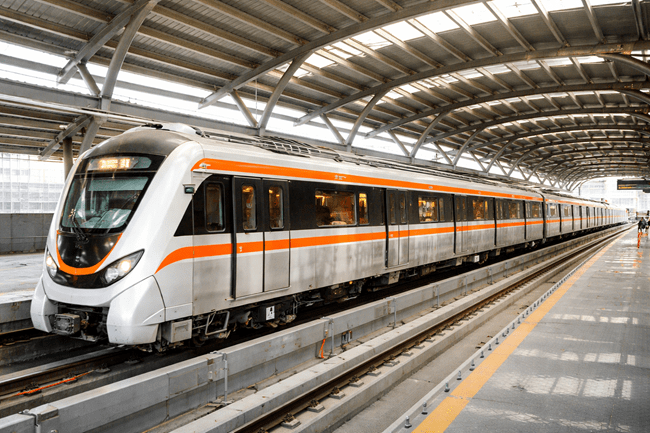
Train operators temporarily slowed or suspended some services while checking tracks and safety systems.
Express rail services serving Narita Airport experienced delays, while Japan’s Shinkansen bullet-train network continued operating without major disruption. The difference reflects both local shaking levels and automated procedures used by separate rail systems when earthquake sensors detect potentially dangerous movement.
A water pipe also burst in Tokyo’s Koto ward, although authorities were able to address the incident relatively quickly.
No major utility collapse or sustained transportation shutdown followed. That distinguishes the event from much larger earthquakes capable of paralysing metropolitan transport and overwhelming emergency services.
Government authorities nevertheless activated a response team to collect damage reports and coordinate information across affected prefectures.
Why is Japan warning about aftershocks over the next week?
The Japan Meteorological Agency advised residents in areas that experienced the strongest shaking to remain alert for earthquakes capable of producing intensity 5-lower during roughly the following week.
Aftershocks occur as stresses around the section of crust disturbed by an earthquake continue adjusting. Most are smaller than the initial event, but a subsequent earthquake can occasionally produce comparable or stronger shaking.
The risk is most important immediately after the main shock and generally decreases with time.
Japan’s warnings intentionally emphasise preparedness rather than predicting that another damaging earthquake definitely will occur. Residents are encouraged to check unstable furniture, damaged walls or roof elements and other items that may have become more vulnerable during the first earthquake.
Infrastructure operators can similarly use the period to conduct additional inspections where necessary.
How does the Ibaraki earthquake compare with Japan’s deadly July 2026 quake?
The latest event comes less than a month after a much more destructive magnitude 7.1 earthquake struck the Kyushu region on July 28.
That earthquake produced Japan’s highest seismic intensity of 7 in parts of Kumamoto, killing 38 people and injuring more than 360, according to subsequent reporting.
The two events should not automatically be interpreted as directly connected. Japan experiences frequent earthquakes because several tectonic plates interact around the archipelago, and seismic activity in separate regions can occur without one event causing another.
The contrast nevertheless illustrates why magnitude alone does not determine consequences. Depth, distance from populated areas, local geology, building vulnerability and the exact nature of ground motion all affect damage.
For greater Tokyo, the August 23 earthquake was powerful enough to injure dozens and remind millions of residents of the region’s seismic exposure, yet sufficiently deep and moderate that the city avoided a major disaster.
The immediate emergency has therefore shifted towards monitoring rather than rescue. With no tsunami, no fatalities reported and transportation largely restored, attention now centres on possible aftershocks and whether inspections reveal damage not apparent in the first hours after the quake.
Discover more from Business-News-Today.com
Subscribe to get the latest posts sent to your email.