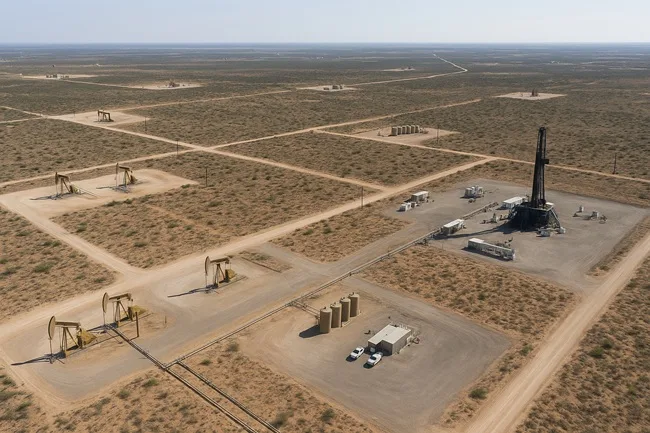
Ithaca Energy plc (LSE: ITH) shares fell sharply on 15 June 2026 as oil prices dropped after hopes of a United States-Iran peace deal reduced the geopolitical risk premium across energy markets. The London-listed United Kingdom North Sea producer traded around 231p, down nearly 7%, even though its latest quarterly update showed resilient production, strong liquidity and dividend guidance trending above $500 million for 2026. The immediate strategic relevance is that Ithaca Energy plc is being judged less on operational delivery and more on whether lower oil and gas prices could narrow future cash returns. ITH remains an income-heavy energy stock, but today’s selloff shows that investors are still treating the dividend case as highly sensitive to commodity prices, policy risk and North Sea execution.
Why did Ithaca Energy shares fall so sharply after oil prices lost their Middle East risk premium?
Ithaca Energy plc’s share price fall was a commodity-sentiment move more than a company-specific operational warning. Brent crude fell below $83 per barrel after fresh hopes that the Strait of Hormuz could reopen and that a wider Middle East supply crisis might ease. That instantly changed the risk-reward setup for listed oil producers, because a large part of the recent energy trade had been supported by supply-disruption fears rather than only by underlying demand strength.
For Ithaca Energy plc, the reaction was amplified because the stock carries a cash-return narrative. Investors have been drawn to the company’s dividend yield and North Sea production base, but those attractions are tied to realised oil and gas prices. When the oil-risk premium falls, the market naturally reassesses how much free cash flow may be available for distributions, deleveraging and project investment. That does not mean the dividend is suddenly broken. It means the margin of comfort has become the central debate.
The selloff also shows how quickly energy investors can rotate when macro conditions change. A peace-deal headline can be good for airlines, industrials and consumers, but painful for oil producers that had benefited from elevated crude prices. Ithaca Energy plc did not need to miss guidance for ITH to fall. The oil market simply removed some of the adrenaline. Unfortunately for energy equities, adrenaline is often priced like earnings until it disappears.
How strong is Ithaca Energy’s operating base despite the oil price reset?
Ithaca Energy plc’s latest operating update gives the company a stronger foundation than the share price move alone might suggest. Q1 2026 average production was 126 kboe/d, broadly stable despite adverse weather conditions that affected operating capacity in January and the first half of February. Full-year production guidance of 120 to 130 kboe/d was reaffirmed, which indicates that management still sees the asset base tracking within plan.
The financial profile also remains robust. Adjusted EBITDAX of $571 million in Q1 demonstrates the cash-generating capacity of the portfolio, while available liquidity increased to $1.6 billion. Adjusted net debt to pro forma adjusted EBITDAX stood at only 0.54 times, giving Ithaca Energy plc a balance-sheet position that many smaller North Sea producers would happily borrow, probably with both hands and a thank-you note.
The strategic significance is that Ithaca Energy plc has scale. It is not a single-field speculative producer. The company has a diversified United Kingdom Continental Shelf portfolio, a material production base and a pipeline of development opportunities. That scale helps absorb weather impacts, maintenance cycles and asset-level variability. The risk is that scale also increases exposure to United Kingdom fiscal and regulatory uncertainty, which continues to weigh on North Sea valuations.
Why is Ithaca Energy’s dividend guidance central to the ITH investment case?
Ithaca Energy plc’s dividend guidance is the centre of the equity story because the company has positioned shareholder distributions as a core part of its value proposition. The group said its 2026 dividend is expected to be above $500 million and trending toward the upper end of its $470 million to $520 million range. For investors looking at a stock with a dividend yield close to 10%, that is a major reason to own ITH.
The challenge is that a high dividend yield can mean two different things. It can signal attractive cash returns from a resilient asset base, or it can signal that the market doubts those returns are sustainable. Ithaca Energy plc currently sits between those interpretations. Its Q1 liquidity, leverage and production numbers support the dividend case. The share price decline shows that investors are still questioning how durable that payout will be if oil prices fall further or if United Kingdom North Sea policy becomes more restrictive.
This is why the oil price reversal matters. A dividend policy based on a percentage of post-tax cash flow can flex with commodity prices. That gives management financial discipline, but it also means investors must watch Brent, gas prices, tax payments and capital spending closely. The dividend is attractive, but it is not a bank deposit wearing a hard hat. It is linked to barrels, taxes and project timing.
What does Ithaca Energy’s balance sheet say about resilience in a lower oil price environment?
Ithaca Energy plc’s balance sheet is one of the strongest defences against the current oil price reset. Adjusted net debt to pro forma adjusted EBITDAX of 0.54 times gives the company meaningful flexibility. Available liquidity of $1.6 billion also provides headroom to manage capital expenditure, dividends and development commitments without immediately stressing the financing structure.
That matters because the North Sea is capital-intensive and politically complex. Operators must fund maintenance, decommissioning obligations, development activity and tax payments while managing commodity-price volatility. A low leverage ratio gives Ithaca Energy plc more strategic optionality than peers that are forced to preserve cash during downturns. It also strengthens the company’s ability to remain committed to shareholder returns if market conditions soften temporarily.
The risk is that low leverage today does not remove future capital demands. Ithaca Energy plc is progressing major development opportunities and portfolio optimisation activity, including projects such as Rosebank, Fotla, Tornado and Tobermory-linked growth. These opportunities can create long-term value, but they also require capital discipline. If oil prices weaken and project spending rises at the same time, the market may start demanding a clearer trade-off between dividends and growth.
How important are Rosebank, Fotla and West of Shetland growth to Ithaca Energy’s future?
Ithaca Energy plc’s longer-term story depends on more than current production. The company’s portfolio includes growth opportunities that could extend reserve life, improve production visibility and keep the company relevant as older North Sea assets mature. The Rosebank development is particularly important because it is one of the United Kingdom’s most significant offshore projects, while the Fotla farm-down to Harbour Energy and the Tobermory farm-in show the company is actively managing risk and opportunity.
These moves matter because North Sea producers must constantly replace decline. Existing fields naturally deplete, and the best operators are those that can balance cash returns today with enough investment to sustain production tomorrow. Ithaca Energy plc’s long-term rig-sharing agreement through to 2030 also supports activity across development and decommissioning, which should help planning and cost control.
The risk is that development projects in the North Sea face environmental scrutiny, fiscal uncertainty and execution complexity. Rosebank has already attracted political and climate attention. Fotla and other tie-back opportunities can be lower risk than standalone megaprojects, but they still require final investment decisions, partner alignment and cost discipline. For ITH investors, the question is whether growth projects can protect future cash flow without consuming too much of today’s dividend capacity.
What does the North Sea policy backdrop mean for Ithaca Energy’s valuation?
The United Kingdom North Sea remains a difficult valuation environment because tax and regulatory policy have changed repeatedly. Producers face the Energy Profits Levy, decommissioning responsibilities, emissions expectations and uncertainty over future licensing and fiscal treatment. That creates a structural discount for North Sea-focused equities, even when production and cash generation are strong.
Ithaca Energy plc is particularly exposed because its asset base is concentrated in the United Kingdom Continental Shelf. That concentration provides operational focus, but it also means the company has less geographic diversification than global oil majors. If United Kingdom policy becomes more punitive, ITH cannot simply lean on another region to offset the impact. The market is aware of that, and it is one reason the dividend yield remains high.
However, the same policy backdrop can also support strategic relevance. The United Kingdom still needs domestic oil and gas during the energy transition, especially as mature fields decline and imports remain exposed to global shocks. Ithaca Energy plc can argue that responsible domestic production supports energy security, tax revenue, jobs and lower reliance on imported hydrocarbons. The challenge is turning that strategic argument into stable policy treatment. Investors like energy security, but they like predictable tax rules even more.
How does Ithaca Energy compare with Shell, BP and other North Sea-exposed producers?
Ithaca Energy plc offers a much more concentrated North Sea exposure than Shell plc, BP p.l.c. or diversified international producers. Shell and BP are global integrated majors with refining, trading, LNG, renewables and downstream exposure. Ithaca Energy plc is more directly tied to upstream United Kingdom oil and gas production. That makes ITH cleaner for investors who want North Sea cash flow, but riskier for investors seeking diversification.
Compared with smaller independent producers, Ithaca Energy plc has scale, liquidity and a stronger balance sheet. That gives it advantages in project participation, portfolio transactions and capital market access. The company’s production base of 126 kboe/d in Q1 puts it well above many AIM-style energy names, which often trade more on exploration hope than operating cash flow.
The trade-off is that larger scale brings larger political visibility. Ithaca Energy plc is big enough to matter in the North Sea debate, but not large enough to dilute United Kingdom policy risk across a global empire. That makes ITH a sharper instrument for investors. It can deliver attractive income and leverage to oil prices, but it also reacts quickly when the market questions commodity prices or policy stability.
What does the ITH share price movement say about investor sentiment and valuation risk?
ITH trading around 231p, down nearly 7%, shows that investor sentiment remains highly sensitive to oil price direction. The stock’s market capitalisation around £3.8 billion gives Ithaca Energy plc mid-cap scale, but the share price move shows that scale does not protect it from commodity rotation. Energy stocks can look calm until crude prices move, then suddenly everyone remembers the business model is still attached to a barrel.
The valuation setup is interesting because the stock offers a high dividend yield, low leverage and material production, yet still trades with a clear discount for commodity and policy risk. A P/E ratio around 19 times may look higher than some oil peers, but earnings in this sector can move quickly with price assumptions, taxes and non-cash charges. Cash flow and dividend coverage are therefore more important than a single headline multiple.
The market is essentially asking whether Ithaca Energy plc is an income stock, a cyclical oil-price trade, or a North Sea policy-risk discount story. The answer is all three. That is why the stock can attract yield investors when oil is firm and then sell off sharply when crude falls. The dividend is the attraction. The oil price is the remote control.
What should investors watch after today’s Ithaca Energy share price fall?
The first thing to watch is whether oil prices stabilise after the initial peace-deal reaction. If Brent holds near the low-$80s or weakens further, investors may continue reassessing cash flow expectations across North Sea producers. If the Middle East deal proves fragile and risk premiums return, energy shares could recover some of today’s losses.
The second thing to watch is Ithaca Energy plc’s next production and trading update. Investors will want confirmation that Q2 production has continued the positive trend from late Q1 and that full-year guidance remains intact. Any sign that weather disruption, maintenance or asset performance is pressuring guidance would be badly timed after today’s commodity-driven selloff.
The third thing to watch is capital allocation. The company needs to maintain confidence in the 2026 dividend while progressing development options and keeping leverage low. If management can show that dividend guidance remains well supported at lower oil prices, ITH sentiment could recover. If the market begins to question that support, the high yield may start being read as a warning rather than a reward.
Key takeaways on what Ithaca Energy’s 15 June share price fall means for ITH stock and North Sea investors
- Ithaca Energy plc shares fell nearly 7% on 15 June 2026 as oil prices dropped after hopes of a United States-Iran peace deal reduced the geopolitical risk premium.
- The selloff was driven more by commodity sentiment than company-specific weakness, as Ithaca Energy plc’s latest Q1 update showed resilient production and strong liquidity.
- Q1 2026 average production of 126 kboe/d keeps the company on track with full-year guidance of 120 to 130 kboe/d.
- Adjusted EBITDAX of $571 million and available liquidity of $1.6 billion support the company’s cash-generation and balance-sheet resilience story.
- The dividend remains central to the ITH investment case, with 2026 guidance trending above $500 million and toward the upper end of the stated range.
- A dividend yield close to 10% is attractive, but today’s share price fall shows that investors still question the payout’s sensitivity to oil prices, gas prices and United Kingdom taxation.
- Low leverage gives Ithaca Energy plc flexibility, but development commitments across Rosebank, Fotla, Tobermory and other assets still require disciplined capital allocation.
- The United Kingdom North Sea policy backdrop continues to weigh on valuation because tax and regulatory uncertainty can offset the appeal of domestic energy security.
- Compared with Shell plc and BP p.l.c., Ithaca Energy plc offers cleaner North Sea upstream exposure but less geographic diversification.
- The next re-rating catalyst for ITH stock will depend on oil price stabilisation, confirmed production momentum and evidence that dividend guidance remains secure even after the crude price reset.
Discover more from Business-News-Today.com
Subscribe to get the latest posts sent to your email.