

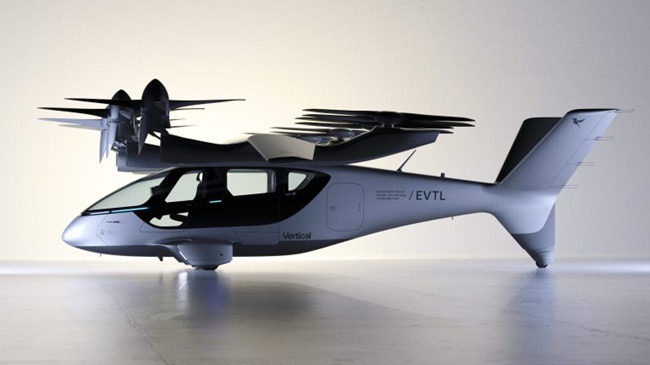
Vertical Aerospace Ltd. (NYSE: EVTL) is betting that hybrid-electric propulsion could be the critical enabler for the next phase of electric vertical take-off and landing (eVTOL) operations. While most of the industry focuses on pure-electric flight for short urban hops, Vertical Aerospace has quietly confirmed plans to develop a hybrid-electric variant of its Valo aircraft—an admission that batteries alone may not deliver the range, flexibility, and regulatory adaptability required for full-scale commercial use.
This development is more than a technical footnote. It reflects a broader industry shift toward pragmatism in the face of energy density limitations, certification bottlenecks, and the emerging need for mission diversity beyond inner-city air taxi routes. In a market increasingly divided between idealism and executable pathways, the hybrid Valo could represent a third way: a bridge between early demonstration flights and scaled regional air mobility.
Why are battery energy density limits driving renewed interest in hybrid eVTOLs?
The promise of zero-emission air mobility hinges on one inconvenient technical constraint: current battery chemistries simply do not store enough energy per kilogram to support long-distance flight without significant trade-offs in payload, safety margins, or reserve requirements. While lithium-ion technologies continue to evolve, most commercially available packs still offer less than 300 watt-hours per kilogram, a ceiling that imposes hard limits on range, redundancy, and operational uptime.
For eVTOL aircraft, which must take off vertically and then transition to efficient cruise flight, the energy burden is particularly unforgiving. Vertical Aerospace’s pure-electric Valo is targeting a range of up to 100 miles, suitable for city-to-airport transfers or urban corridors, but insufficient for regional connectivity, cargo logistics, or emergency response missions.
Hybrid-electric propulsion—typically combining electric motors with a turbogenerator or combustion engine—offers a pathway to extend range while preserving the distributed propulsion and flight control benefits of electric design. It also enables longer loiter times, quick refueling, and greater tolerance for weather or route diversions, which are essential for non-scheduled operations.
How does Vertical Aerospace’s hybrid approach compare to other players in the eVTOL market?
While most eVTOL manufacturers have committed to fully electric platforms, a growing subset is exploring hybrid architectures to unlock new use cases. Vertical Aerospace’s hybrid Valo would join a small but strategic group of aircraft aimed at extending mission profiles and simplifying early adoption.
Beta Technologies, based in the United States, is developing a version of its Alia platform with hybrid support. Originally conceived as a pure-electric cargo aircraft with a 250-mile range, the company has acknowledged the need for auxiliary propulsion to meet certain U.S. Air Force and medical logistics missions. Its platform uses a lift-plus-cruise configuration optimized for aerodynamic efficiency, which can benefit more from hybrid augmentation compared to heavier tiltrotor designs.
Tier 1 Engineering has taken a retrofit approach, converting Robinson R44 helicopters to electric and hybrid variants. While this strategy allows for rapid proof of concept and operational testing, it is constrained by legacy airframes not optimized for energy efficiency or modular systems integration. However, Tier 1’s partnership with Lung Biotechnology and organ transport missions demonstrates a real-world application where hybrid range extensions can save lives.
Pipistrel, now part of Textron, offers perhaps the clearest certification benchmark with its Velis Electro and Panthera Hybrid platforms. The Velis Electro was the first electric aircraft certified under EASA regulations, while the Panthera Hybrid uses a gasoline engine paired with electric motors to reduce emissions on takeoff and climb. Although not vertical takeoff vehicles, Pipistrel’s certification wins and operational data have made them a reference point for hybrid propulsion viability.
Against this backdrop, Vertical Aerospace’s hybrid Valo stands out as one of the few tiltrotor-inspired eVTOLs to explicitly pursue a hybrid roadmap from the outset. This could give the company a certification and operational edge, especially in markets where grid infrastructure, weather resilience, and route diversity are early adoption barriers.
What certification advantages could hybrid variants have over pure-electric eVTOLs?
Certification pathways for eVTOLs remain complex and evolving, with regulators such as the United Kingdom Civil Aviation Authority and the European Union Aviation Safety Agency working to reconcile rotorcraft safety baselines with electric propulsion novelty. Pure-electric aircraft must meet stringent safety, thermal management, and battery containment requirements, often without the benefit of prior regulatory precedent.
Hybrid systems, while mechanically more complex, offer fallback propulsion modes that can satisfy redundancy requirements using well-established combustion engine standards. In scenarios where battery-only designs struggle to achieve regulatory compliance due to limited energy reserves, hybrids can meet or exceed minimum endurance thresholds and fault-tolerant flight control conditions.
Additionally, hybrids may face fewer charging infrastructure constraints, enabling more flexible route approvals and easier integration into existing aviation operations. For example, regional airports or rural vertiports with limited grid capacity may be better suited to hybrids with onboard fuel capacity than fully electric vehicles dependent on fast-charging stations and high-voltage grid connections.
However, hybrids also introduce certification complexities around noise, emissions, and mechanical failure modes. The burden shifts from battery safety to integration of power management, fuel systems, and failover logic. Regulators will need to balance this against operational benefits when shaping future special conditions and airworthiness standards.
How could hybrid eVTOLs reshape mission flexibility in the early deployment phase?
Perhaps the most compelling argument for hybrid variants lies in mission flexibility. While inner-city passenger transport has dominated the eVTOL narrative, many early use cases will be non-passenger and outside urban cores. Cargo logistics, humanitarian aid, organ transport, border patrol, and offshore support missions all require greater range, payload, and loiter time than current batteries can reliably deliver.
Hybrid eVTOLs are better suited to these roles, offering the endurance of conventional aircraft with the agility and safety advantages of distributed electric propulsion. In the case of disaster response or remote area access, the ability to operate independently of charging infrastructure is a strategic advantage.
Vertical Aerospace’s hybrid Valo could also open new markets in regions where electrification is delayed, grid stability is inconsistent, or route diversity requires more than 100 miles of range. By starting with hybrid operations and transitioning to pure-electric variants as infrastructure matures, manufacturers can build operational familiarity, prove economics, and drive certification forward without waiting for perfect battery breakthroughs.
What does this signal about the evolving realism of the eVTOL sector?
The move toward hybrid propulsion marks a subtle but significant shift in tone across the eVTOL industry. While early fundraising and media narratives were dominated by visions of silent, all-electric urban flight, the current focus is on executable business models, flexible certification paths, and practical route structures.
Vertical Aerospace is not abandoning its zero-emissions ambition. The hybrid Valo is a complementary strategy designed to accelerate adoption, secure multi-mission demand, and de-risk certification while preserving the company’s long-term electric aviation roadmap. In doing so, it joins a growing cadre of developers acknowledging that the path to commercial viability may not be purely electric at every stage.
Investors, regulators, and operators are increasingly recognizing that hybridization offers a middle path—one that enables real-world deployment in the near term while preserving the sustainability gains of electric flight. For a sector defined by both technological disruption and regulatory inertia, this balance may prove essential.
Discover more from Business-News-Today.com
Subscribe to get the latest posts sent to your email.