



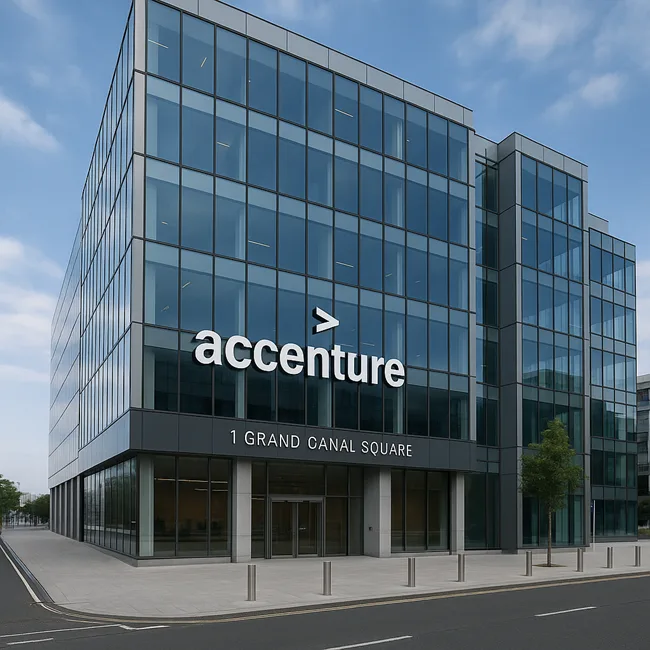
Accenture plc (NYSE: ACN) has strengthened its presence in Southeast Asia’s financial services market by acquiring Aristal Solutions Sdn Bhd, a Malaysia-based consulting and digital transformation firm specializing in core banking modernization. Announced on July 21, 2025, this is Accenture’s first banking-focused acquisition in Malaysia and marks a strategic shift toward building localized expertise to serve regional banks. The deal aims to enhance Accenture’s ability to manage post-merger integrations, modernize legacy banking platforms, and deliver AI-driven digital transformation across Southeast Asia.
Aristal, founded in 2006, has earned recognition for delivering large-scale core banking transitions and operating model redesigns for leading financial institutions in Malaysia, Indonesia, Singapore, and Thailand. Its senior team of 30 consultants will now join Accenture’s Financial Services practice in Malaysia, giving Accenture immediate access to specialized local talent. This move signals a broader regional strategy, as Malaysia positions itself to compete with Singapore and Indonesia as a key hub for banking technology services.
How does the Aristal acquisition fit into Accenture’s broader Southeast Asia financial services strategy, and can Malaysia overtake Singapore and Indonesia as its key growth market?
The acquisition highlights a deliberate pivot in Accenture’s regional strategy. For years, Singapore has served as its primary hub for high-value consulting and digital twin innovation, while Indonesia has been targeted for large-scale retail banking and mobile banking contracts. However, Malaysia’s regulatory reforms, rising consolidation among mid-sized banks, and government incentives for digital banking are reshaping its importance in the region.
Industry estimates project that the global core banking market will grow from USD 13–15 billion in 2024 to nearly USD 28.8 billion by 2027, with Southeast Asia driving a significant portion of that growth. Malaysia’s banks, many of which are now upgrading outdated platforms to cloud-ready, AI-enhanced systems, represent a lucrative opportunity. By integrating Aristal’s local expertise, Accenture gains an advantage in securing transformation contracts that require deep understanding of Malaysian compliance frameworks and customer behavior. Market observers believe this combination of local talent and global capability could allow Malaysia to challenge Singapore’s dominance as Accenture’s primary financial services hub in Southeast Asia.
Accenture’s acquisition of Aristal also complements its other regional initiatives. In 2024, Accenture acquired Percipient in Singapore to enhance its digital twin banking capabilities, and it recently launched the AI Refinery Engineering Hub to support financial institutions with advanced analytics and machine learning. While Singapore remains the center for innovation, Malaysia’s cost efficiency and expanding talent pool make it suitable for delivery operations, especially for mid-tier banks seeking scalable and cost-effective transformation projects.
Analysts suggest that this balanced regional approach could make Accenture more competitive against rivals such as Capgemini and IBM, which have also been expanding in Southeast Asia. Malaysia’s growing base of digital banks and its proximity to other emerging markets such as Thailand and Vietnam further strengthen its potential role as a secondary hub for project execution.
Institutional sentiment surrounding the acquisition is generally positive, with analysts viewing the move as a cost-effective way to expand regional delivery capabilities without the long ramp-up times associated with building teams from scratch. Some caution remains, however, as the success of the acquisition will depend on integrating Aristal’s boutique consulting culture into Accenture’s larger global framework. Maintaining Aristal’s strong client relationships while scaling operations will be critical in winning high-value contracts.
Looking ahead, industry watchers expect the first signs of impact within the next 12 to 18 months. Early indicators will include Accenture winning new core banking transformation contracts in Malaysia and possibly extending Aristal’s expertise to support Indonesian and Thai banks undergoing post-merger system upgrades. If these projects succeed, Accenture may deepen its investment in Malaysia, potentially expanding managed services operations and increasing its headcount in the country. Such moves could gradually shift the regional balance, positioning Malaysia not just as a delivery center but as a co-lead hub alongside Singapore in Accenture’s Southeast Asia financial services strategy.
Accenture’s acquisition of Aristal marks a clear intent to localize expertise while maintaining its global technology leadership. By combining Aristal’s strong track record in core banking transitions with its own AI and cloud infrastructure, Accenture is preparing to capture a larger share of Southeast Asia’s rapidly growing banking technology market. While Malaysia has yet to overtake Singapore in strategic importance, the Aristal deal places it firmly on the map as a critical growth market that could reshape Accenture’s regional financial services footprint.
Discover more from Business-News-Today.com
Subscribe to get the latest posts sent to your email.